MCQ
In a transistor:
- AThe emitter has the least concentration of impurity.
- BThe collector has the least concentration of impurity.
- CThe base has the least concentration of impurity.
- DAll the three regions have equal concentrations of impurity.
Generate a complete, print-ready paper with questions like this in minutes — across 16+ boards, with answer keys.
If current flowing through shell of previous objective is equal to i, then energy density at a point distance 2R from axis of the shell varies according to the graph
|
(a)
|
(b)
|
(c)
|
(d)
|
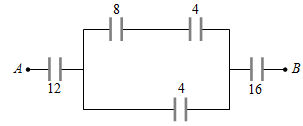
What is the equivalent capacitance between A and B in the given figure (all are in farad)
|
(a) |
(b) |
(c) |
(d) |
The neutron was discovered by
|
(a) Marie Curie |
(b) Pierre Curie |
(c) James Chadwick |
(d) Rutherford |
If m1 and m2 are the refractive indices of the materials of core and cladding of an optical fibre, then the loss of light due to its leakage can be minimised by having
|
(a) m1 > m2 |
(b) m1 < m2 |
(c) m1 = m2 |
(d) None of these |
The magnitude of electric field intensity E is such that, an electron placed in it would experience an electrical force equal to its weight is given by
|
(a) mge |
(b) |
(c) |
(d) |
A concave mirror gives an image three times as large as the object placed at a distance of 20 cm from it. For the image to be real, the focal length should be
|
(a) 10 cm |
(b) 15 cm |
(c) 20 cm |
(d) 30 cm |


