MCQ
In pure rotation,
  • A
    All particles of the body move in a straight line.
  • B
    All particles of body move in concentric circles.
  • All particles of body move in non-concentric circles.
  • D
    All particles of body have same speed.

Answer

Correct option: C.
All particles of body move in non-concentric circles.

Need a full question paper?

Generate a complete, print-ready paper with questions like this in minutes — across 16+ boards, with answer keys.
Start Generating Free

Similar questions

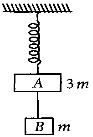
Two blocks $A$ and $B$ of masses $3\,m$ and $m$ respectively are connected by a massless and inextensible string. The whole system is suspended by a massless spring as shown in figure. The magnitudes of acceleration of $A$ and $B$ immediately after the string is cut, are respectively
A trolley is carrying a box on its surface having coefficient of static friction equal to $0.3.$ Now the trolley starts moving with increasing acceleration. Find the maximum acceleration of the trolley so that the box does not slide back on the trolley.
A ball hits a floor and rebounds after an inelastic collision. In this case:
  1. The momentum of the ball just after the collision is same as that just before the collision.
  2. The mechanical energy of the ball remains the same during the collision.
  3. The total momentum of the ball and the earth is conserved.
  4. The total energy of the ball and the earth remains the same.
The stream of a river is flowing with a speed of $2\,km/h.$ A swimmer can swim at a speed of $4\,km/h.$ ....... $^o$ should be the direction of the swimmer with respect to the flow of the river to cross the river straight .
A shell is fired from a cannon, it explodes in mid air, its total:
The $x-t$ graph representing an object at rest is:
A girl holds a book of mass $m$ against a vertical wall with a horizontal force $F$ using her finger, so that the book does not move. The frictional force on the book by the wall is
$Assertion$ : Frictional forces are conservative forces.
$Reason$ : Potential energy can be associated with frictional forces.
If the distance covered by an object is directly proportional to time, then we can say that the object :
A body of mass $4 \,kg$ weighs $4.8\,kg$ when suspended in a moving lift. The acceleration of the lift is