Question
Read the passage given below and answer the following questions: Due to intermolecular hydrogen bonding, the boiling points of alcohols and phenols are much higher than those of corresponding haloalkanes, haloarenes, aliphatic and aromatic hydrocarbons. Among isomeric alcohols, the boiling points follow the order: primary > secondary > tertiary. Boiling points of ethers are much lower than those of isomeric alcohols. The solubility of alcohols in water decreases as the molecular mass of alcohols increases. Amongst isomeric alcohols solubility increases with branching. The solubility of phenols in water is much lower than that of alcohols. Lower ethers such as dimethyl ether and ethyl methyl ether are soluble in water, but the solubility decreases as the molecular mass increases. In these questions (Q. No. i-iv), a statement of assertion followed by a statement of reason is given. Choose the correct answer out of the following choices.
- Assertion and reason both are correct statements and reason is correct explanation for assertion.
- Assertion and reason both are correct statements but reason is not correct explanation for assertion.
- Assertion is correct statement but reason is wrong statement.
- Assertion is wrong statement but reason is correct statement.
- Assertion: Alcohols have higher boiling points than ethers of comparable molecular masses.
- Assertion: The solubility of phenols in water is much lower than that of alcohols.
- Assertion: Among n-butane, ethoxyethane, 1-propanol and 2-propanol, the increasing order of boiling points is, 1-butanol < 1-propanol < ethoxyethane < n-butane.
- Assertion: Dimethyl ether and diethylether are soluble in water.
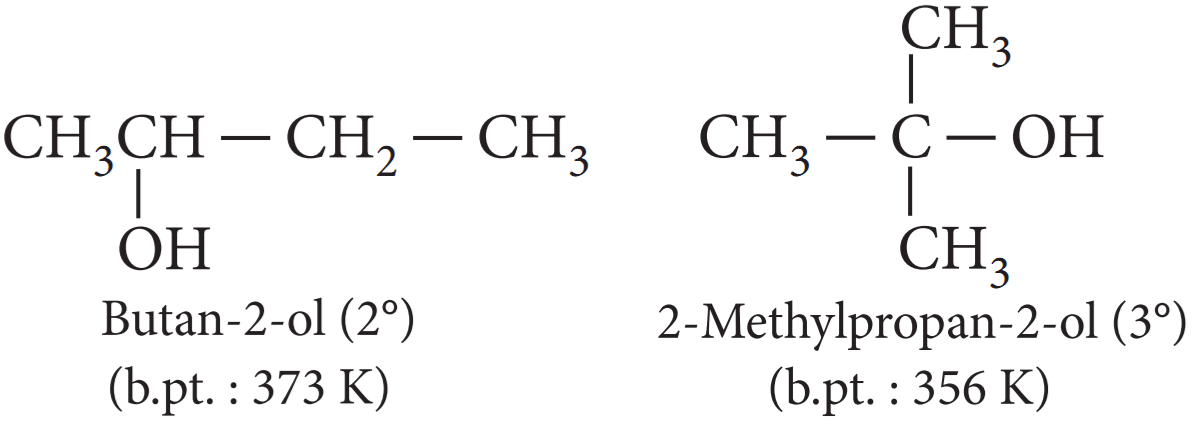
- Assertion: Butan-2-ol has higher boiling point than 2-methylpropan-2-ol.
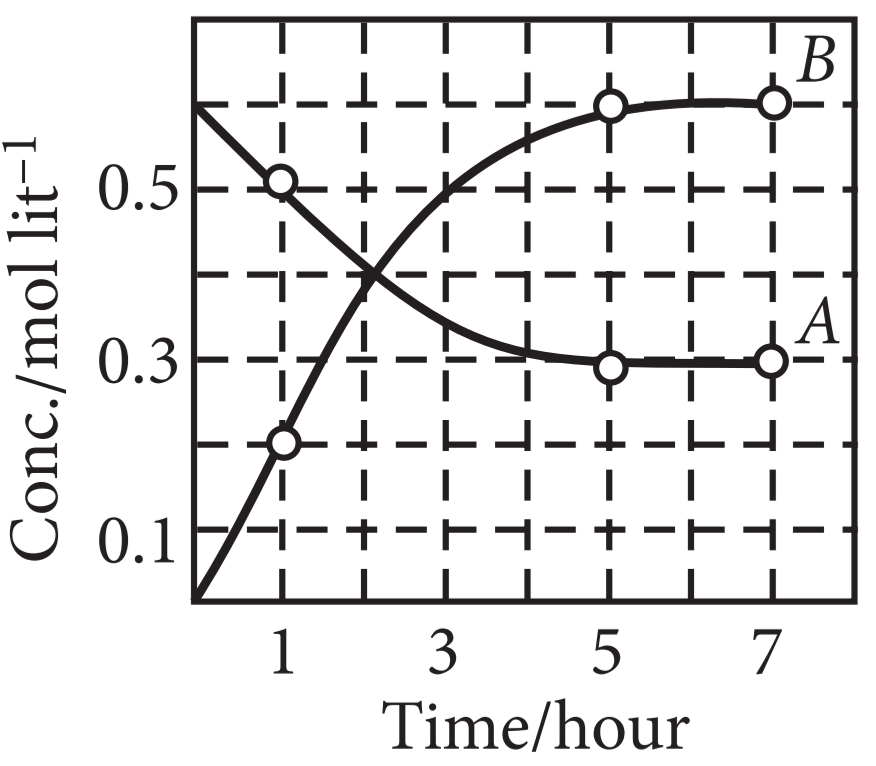
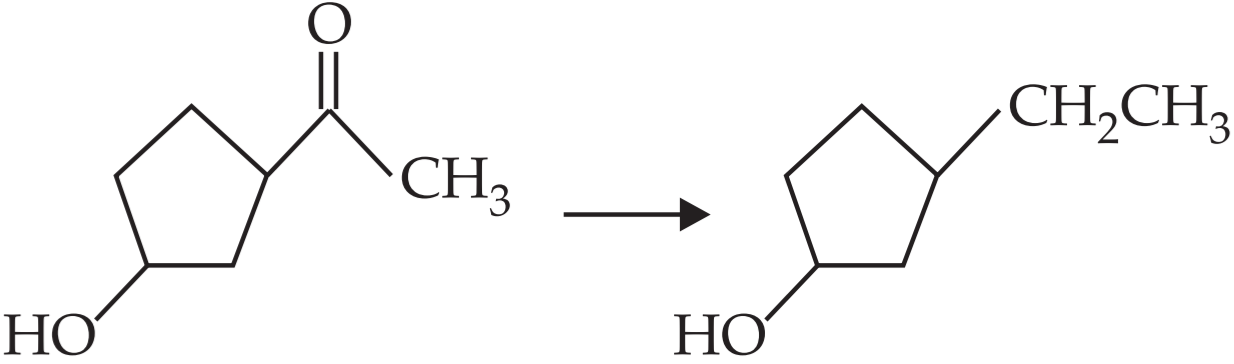
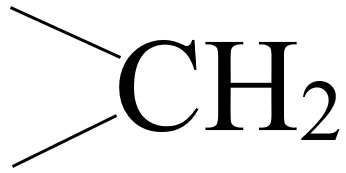 group on treatment with $\ce{Zn-Hg}$ and cone. $\text{HCl} \ ($Clemmensen reduction$)$ or with hydrazine followed by $\ce{NaOH}$ or $\text{KOH}$ in highly boiling solvent such as ethylene glycol $($Wolff $-$ Kishner reduction).Aldehydes differ from ketones in their oxidation reactions. Aldehydes are easily oxidised to carboxylic acids on treatment with $\ce{HNO_3, KMnO_4, K_2Cr_2O_7}$ etc. Even mild oxidising agents mainlyTollens' reagent and Fehling's solution also oxidise aldehydes. Ketones are generally oxidised under vigorous conditions i.e., strong oxidising agents and at elevated temperatures, to give mixture of carboxylic acids having lesser number of $C-$ atoms than the parent ketone.
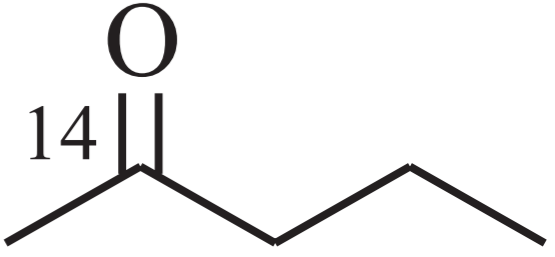 by acidified $\ce{K_2Cr_2O_7},$ the products are: