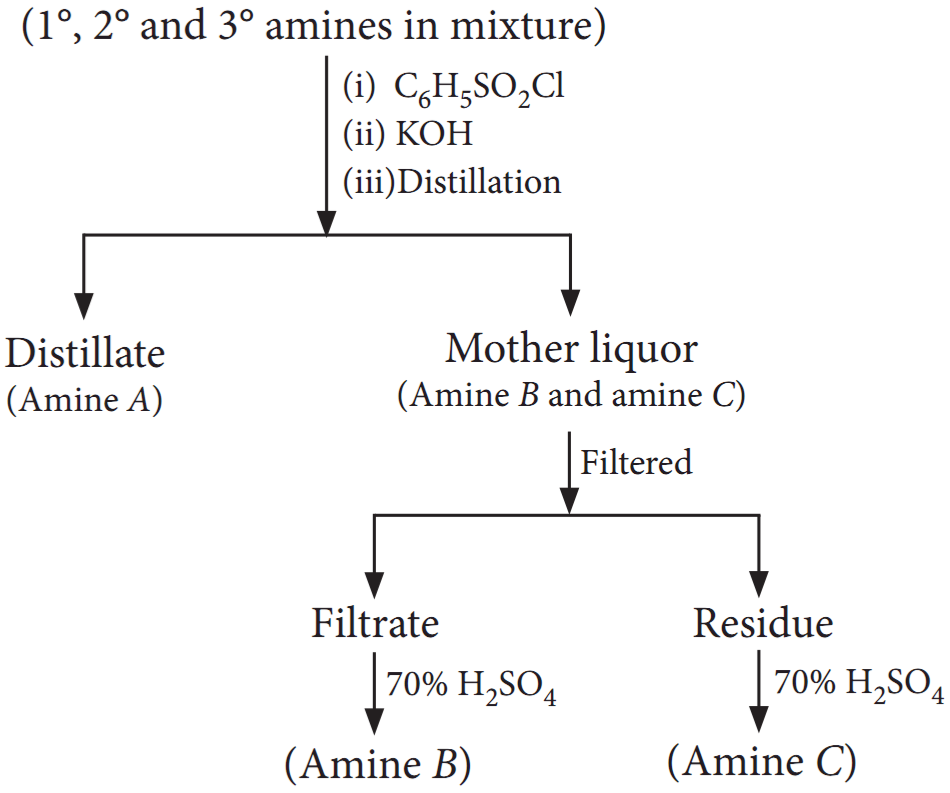
Question
The potential of each electrode is known as electrode potential. Standard electrode potential is the potential when concentration of each species taking part in electrode reaction is unity and the reaction is taking place at $298K$. By convention, the standard electrode potential of hydrogen $\text{(SHE)}$ is $0.0V$. The electrode potential value for each electrode process is a measure of relative tendency of the active species in the process to remain in the oxidised/ reduced form. The negative electrode potential means that the redox couple is stronger reducing agent than $\frac{\text{H}^+}{\text{H}_2}$ couple. A positive electrode potential means that the redox couple is a weaker reducing agent than the $\frac{\text{H}^+}{\text{H}_2}$ couple. Metals which have higher positive value of standard reduction potential form the oxides of greater thermal stability. In these questions $(Q$. No. $i-iv),$ a statement of assertion followed by a statement ofreason is given. Choose the correct answer out of the following choices.
- Assertion and reason both are correct statements and reason is correct explanation for assertion.
- Assertion and reason both are correct statements but reason is not correct explanation for assertion.
- Assertion is correct statement but reason is wrong statement.
- Assertion is wrong statement but reason is correct statement.
- Assertion : An electrochemical cell can be set $-$ up only if the redox reaction is spontaneous.
- Assertion : The standard electrode potential of hydrogen is $0.0V.$
- Assertion : The more negative is the standard reduction potential, greater is its ability to displace $H_2 $ from acid.
- Assertion : The negative value of standard reduction potential means that reduction takes place on this electrode with reference to hydrogen electrode.
- Assertion : The absolute value of electrode potential cannot be determined experimentally.
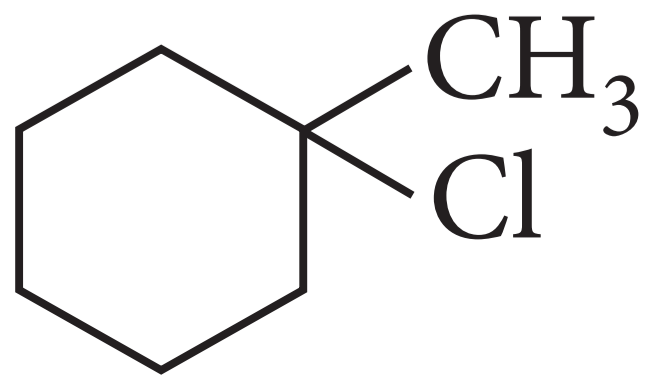 is more reactive than
 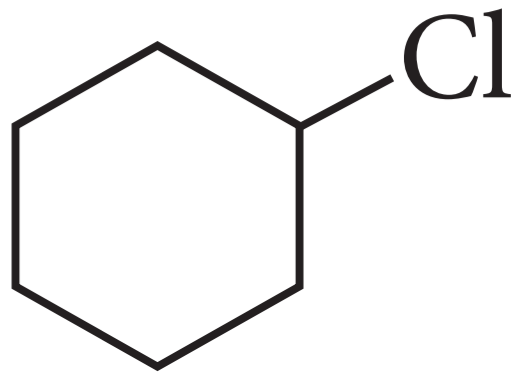 towards nucleophilic substitution reactions.