MCQ
Which will undergo deprotonation most readily in basic medium?
  • $a$ only
  • B
    $c$ only
  • C
    Both $a$ and $c$
  • D
    $b$ only

Answer

Correct option: A.
$a$ only
a
Most easily deprotonation

Need a full question paper?

Generate a complete, print-ready paper with questions like this in minutes — across 16+ boards, with answer keys.
Start Generating Free

Similar questions

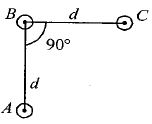
An arrangement of three parallel straight wires placed perpendicular to plane of paper carrying same current $'I'$ along the same direction as shown in figure. Magnitude of force per unit length on the middle wire $'B'$ is given by 
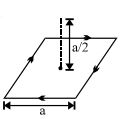
The magnetic field due to a current carrying square loop of side a at a point located symmetrically at a distance of $a/2$ from its centre (as shown is)
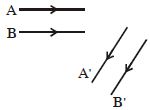
Figure shows two rays $A$ and $B$ being reflected by a mirror and going as $A'$ and $B'$. The mirror
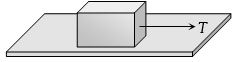
In the figure shown, a block of weight $10 \,N$ resting on a horizontal surface. The coefficient of static friction between the block and the surface ${\mu _s} = 0.4$. A force of $3.5\, N$ will keep the block in uniform motion, once it has been set in motion. A horizontal force of $3 \,N$ is applied to the block, then the block will
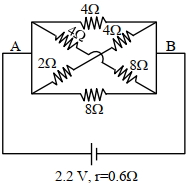
In the given figure, the $emf$ of the cell is $2.2\, {V}$ and if internal resistance is $0.6\, \Omega$. Calculate the power dissipated in the whole circuit: (in $W$)
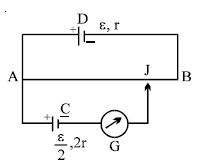
In the figure, the potentiometer wire $AB$ of length $L$ and resistance $9r$ is joined to the cell $D$ of $\mathrm{emf}$ $\varepsilon$ and internal resistance $r$. The cell $C’s$ $\mathrm{emf}$ is $\varepsilon /2$ and its internal resistance is $2r$. The galvanometer $G$ will show no deflection when the length $AJ$ is
A uniform solid sphere of mass $M$ and radius $R$ is surrounded symmetrically by a uniform thin spherical shell of equal mass and radius $2R$. The value of gravitational potential at a distance $\frac{3}{2}\,R$ from the centgre is 
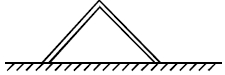
Two equal rods joined at one end are kept on a smooth surface as shown and released. Trajectory of centre of mass of both rods is 
An observer is moving with half the speed of light towards a stationary microwave source emitting waves at frequency $10\ GHz$. What is the frequency of the microwave measured by the observer?.......$GHz$ ( speed of light $= 3 \times  10^8 $ $ms^{-1}$)
Assertion : Diamond glitters brilliantly.

Reason : Diamond does not absorb sunlight.