Question types

Magnetic Effects of Electric Current question types

1,013 questions across 18 question groups — pick any mix to generate a Science paper with step-by-step answer keys.

1,013
Questions
18
Question groups
5
Question types
Sample Questions

Magnetic Effects of Electric Current questions

One sample from each question group in this chapter. Select any group above to see the full set with answer keys.

Q 1M.C.Q1 Mark
Assertion : A compass needle is placed near a current carrying wire. The deflection of the compass needle decreases when the magnitude of the current in the wire is increased.
Reason : The strength of a magnetic field at a point near the conductor increases on increasing the current.
  • A
    Both A and R are true, and R is the correct explanation of A.
  • B
    Both A and R are true, and R is not the correct explanation of A
  • C
    A is true but R is false.
  • A is false but R is true.

Answer: D.

View full solution
Q 2M.C.Q1 Mark
Change in number of magnetic field lines induces :
  • A
    Current in coil
  • $\ce{EMF}$ in the coil
  • C
    Frequency in coil
  • D
    Both $A$ and $C$

Answer: B.

View full solution
Q 3M.C.Q1 Mark
The unit of what is named oersted in honour of Hans Oersted :
  • Magnetic field strength
  • B
    Magnetic field
  • C
    Magnetism
  • D
    Electromagnetism

Answer: A.

View full solution
Q 4M.C.Q1 Mark
An electron beam is moving from left to right of the observer and magnetic field is acting vertically upwards. The direction of force acting on electron is :
  • A
    Towards the observer
  • Away from the observer
  • C
    Downwards
  • D
    Upwards

Answer: B.

View full solution
Q 5M.C.Q1 Mark
$A$ is false, but $R$ is true.
Assertion : In a conductor, free electrons keep on moving but no magnetic force acts on a conductor in a magnetic field.
Reason : Force on free electron due to magnetic field always acts perpendicular to its direction of motion.
  • A
    Both $A$ and $R$ are true, and $R$ is correct explanation of the assertion.
  • B
    Both $A$ and $R$ are true, but $R$ is not the correct explanation of the assertion.
  • $A$ is true, but $R$ is false.
  • D
    $A$ is false, but $R$ is true

Answer: C.

View full solution
For two statements are given $-$ one labelled Assertion $(A)$ and the other labelled Reason $(R)$. Select the correct answer to these questions from the codes $\ce{(a), (b), (c)}$ and $(d)$ as given below:
Assertion : In electric circuits, wires carrying currents in opposite directions are often twisted together.
Reason : If the wire are not twisted together, the combination of the wires forms a current loop. The magnetic field generated by the loop might affect adjacent circuits or components.
  • Both $A$ and $R$ are true, and $R$ is correct explanation of the assertion.
  • B
    Both $A$ and $R$ are true, but $R$ is not the correct explanation of the assertion.
  • C
    $A$ is true, but $R$ is false.
  • D
    $A$ is false, but $R$ is true.

Answer: A.

View full solution
For two statements are given $-$ one labelled Assertion $(A)$ and the other labelled Reason $(R)$. Select the correct answer to these questions from the codes $\ce{(a), (b), (c)}$ and $(d)$ as given below :
Assertion : When two long parallel wires, hanging freely are connected in parallel to a battery, they come closer to each other.
Reason : Wires carrying current in opposite directions repel each other.
  • A
    Both $A$ and $R$ are true, and $R$ is correct explanation of the assertion.
  • Both $A$ and $R$ are true, but $R$ is not the correct explanation of the assertion.
  • C
    $A$ is true, but $R$ is false.
  • D
    $A$ is false, but $R$ is true.

Answer: B.

View full solution
For two statements are given $-$ one labelled Assertion $(A)$ and the other labelled Reason $(R).$ Select the correct answer to these questions from the codes $\ce{(a), (b), (c)}$ and $(d)$ as given below :
Assertion : A moving coil galvanometer is based on magnetic effect of current.
Reason : On heating, the coil starts to rotate in direction of moving coil galvanometer.
  • A
    Both $A$ and $R$ are true, and $R$ is correct explanation of the assertion.
  • B
    Both $A$ and $R$ are true, but $R$ is not the correct explanation of the assertion.
  • $A$ is true, but $R$ is false.
  • D
    $A$ is false, but $R$ is true.

Answer: C.

View full solution
For two statements are given $-$ one labelled Assertion $(A)$ and the other labelled Reason $(R).$ Select the correct answer to these questions from the codes $\ce{(a), (b), (c)}$ and $(d)$ as given below :
Assertion : When a charged particle moves perpendicular to magnetic field then its kinetic energy and momentum gets affected.
Reason : Force does not change velocity of charged particle.
  • A
    Both $A$ and $R$ are true, and $R$ is correct explanation of the assertion.
  • B
    Both $A$ and $R$ are true, but $R$ is not the correct explanation of the assertion.
  • C
    $A$ is true, but $R$ is false.
  • $A$ is false, but $R$ is true.

Answer: D.

View full solution
For two statements are given $-$ one labelled Assertion $(A)$ and the other labelled Reason $(R)$. Select the correct answer to these questions from the codes $\ce{(a), (b), (c)}$ and $(d)$ as given below :
Assertion : Magnetic field interacts with a moving charge and not with a stationary charge.
Reason : A moving charge produces a magnetic field.
  • Both $A$ and $R$ are true, and $R$ is correct explanation of the assertion.
  • B
    Both $A$ and $R$ are true, but $R$ is not the correct explanation of the assertion.
  • C
    $A$ is true, but $R$ is false.
  • D
    $A$ is false, but $R$ is true.

Answer: A.

View full solution
Q 16True-False1 Mark
State whether the following statement is true or false:
An electric motor converts mechanical energy into electrical energy.
View full solution
Q 20True-False1 Mark
State whether the following statements are true or false:
  1. A generator works on the principle of electromagnetic induction.
  2. A motor works on the principle of electromagnetic induction.
View full solution
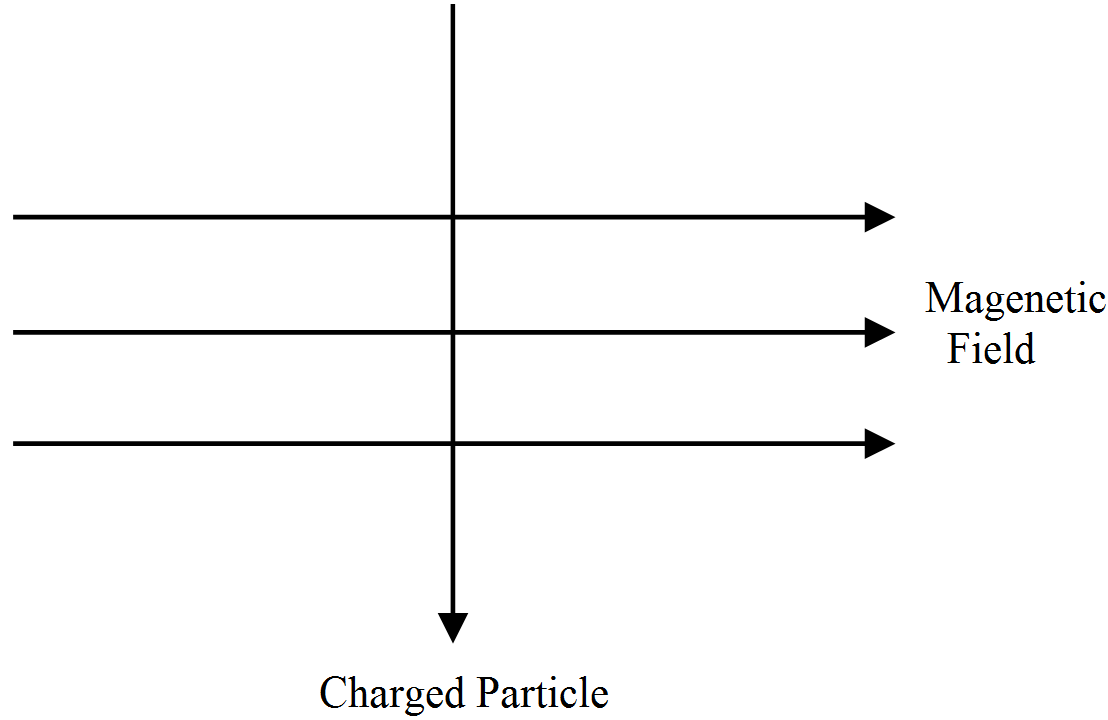
A charged particle enters at right angles into a uniform magnetic field as shown. What should be the nature of charge on the particle if it begins to move in a direction pointing vertically out of the page due to its interaction with the magnetic field?
View full solution
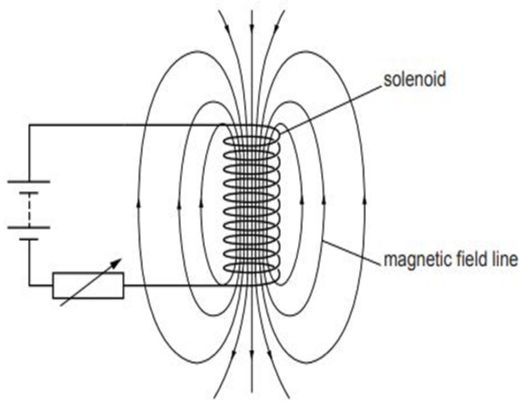
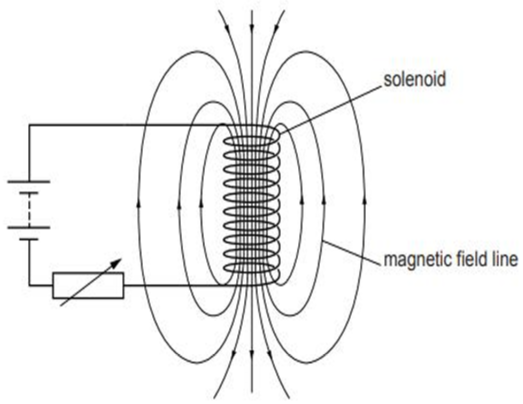
Refer to the image below and state how the magnetic field pattern indicates regions where the magnetic field is stronger outside the magnet? What happens to the magnetic field when the current in the circuit is reversed?
Image
View full solution
What is a solenoid? Draw the pattern of magnetic field lines of a solenoid through which a steady current flows. What does the pattern of field lines inside the solenoid indicate?
View full solution
A coil of insulated wire is connected to a galvanometer. What would be seen if a bar magnet with its north pole towards one face of the coil is:
  1. Moved quickly towards it.
  2. Moved quickly away from the coil.
  3. Placed near its one face?
  4. Name the phenomenon involved.
View full solution
Anannya responded to the question: Why do electrical appliances with metallic bodies are connected to the mains through a three pin plug, whereas an electric bulb can be connected with a two pin plug?
She wrote: Three pin connections reduce heating of connecting wires.
(i) Is her answer correct or incorrect? Justify.
(ii) What is the function of a fuse in a domestic circuit?
View full solution
What is short circuiting? State one factor/ condition that can lead to it. Name a device in the household that acts as a safety measure for it. State the principle of its working.
View full solution
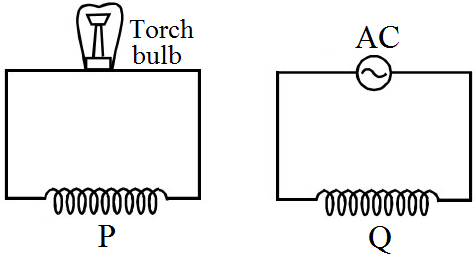
A coil P is connected to a torch bulb and placed to another coil Q as shown in figure below:

Explain the following observations:
  1. Bulb lights and.
  2. Bulb gets dimmer, if the coil P is moves upwards.
View full solution
Draw a labelled diagram to show the domestic electric wiring from an electric pole to a room. Give the wiring for a bulb and a three-pin socket only.
View full solution
It is established that an electric current through a metallic conductor produces a magnetic field around it. Is there a similar magnetic field produced around a thin beam of moving (i) alpha particles, (ii) neutrons? Justify your answer.
View full solution
Describe an activity to:
  1. Demonstrate the pattern of magnetic field lines around a straight conductor carrying current.
  2. Find the direction of the field produced for a given direction of current in the conductor. Name and state the rule to find the direction of magnetic field associated with a current carrying conductor. Apply this rule to determine the direction of the magnetic field inside and outside a current carrying circular loop lying horizontally in the plane of a table. Assume that the current through the loop is clockwise.
View full solution
What is electromagnetic induction? State different ways of inducing current in a coil. Suggest the most convenient situation for inducing current in a coil. State the situation in which the induced current in the coil is found to be the highest. Name and state the rule used to know the direction of the induced current.
View full solution
  1. What is a solenoid? Draw a sketch of the pattern of field lines of the magnetic field through and around a current carrying solenoid.
  2. Consider a circular loop of wire lying in the plane of the table. Let the current pass through the loop clockwise. Apply the right hand rule to find out the direction of the magnetic field inside and outside the loop.
View full solution
  1. What is a magnetic field? How can the direction of magnetic field lines at a place be determined?
  2. State the rule for the direction of the magnetic field produced around a current carrying conductor. Draw a sketch of the pattern of field lines due to a current flowing through a straight conductor.
View full solution
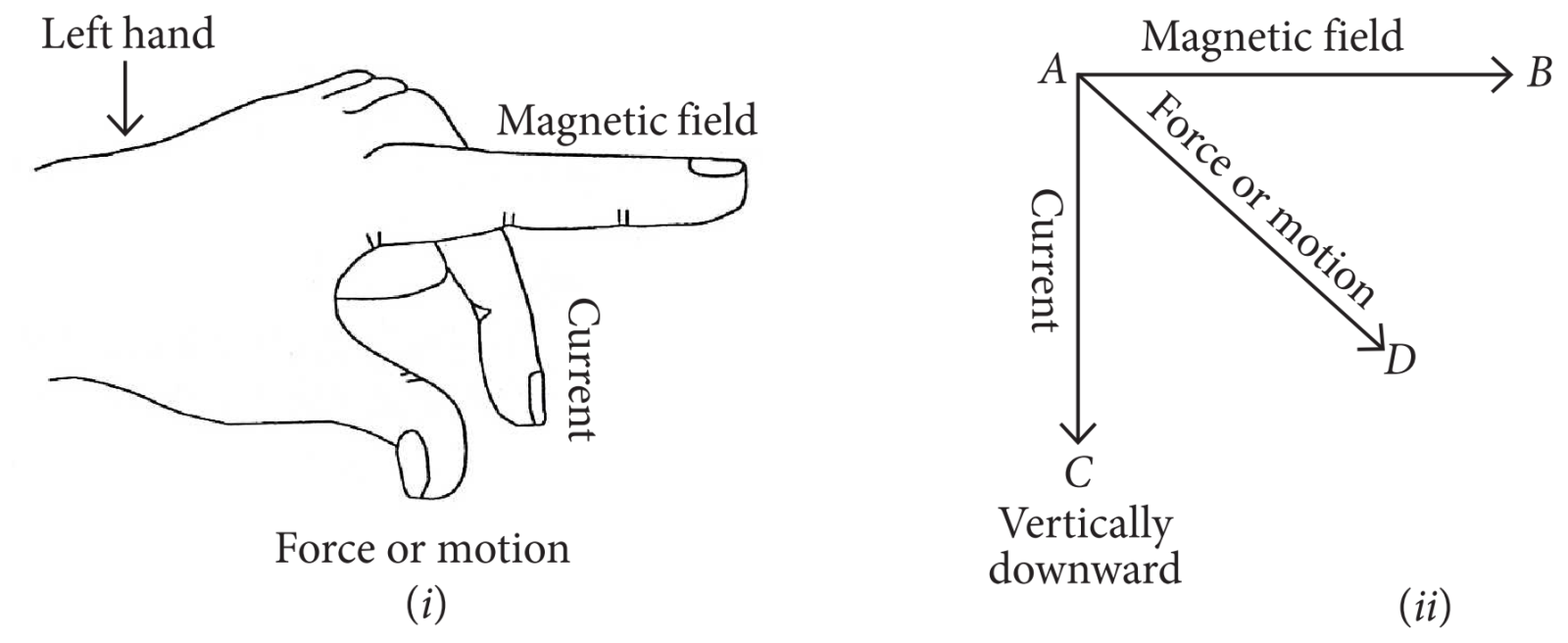
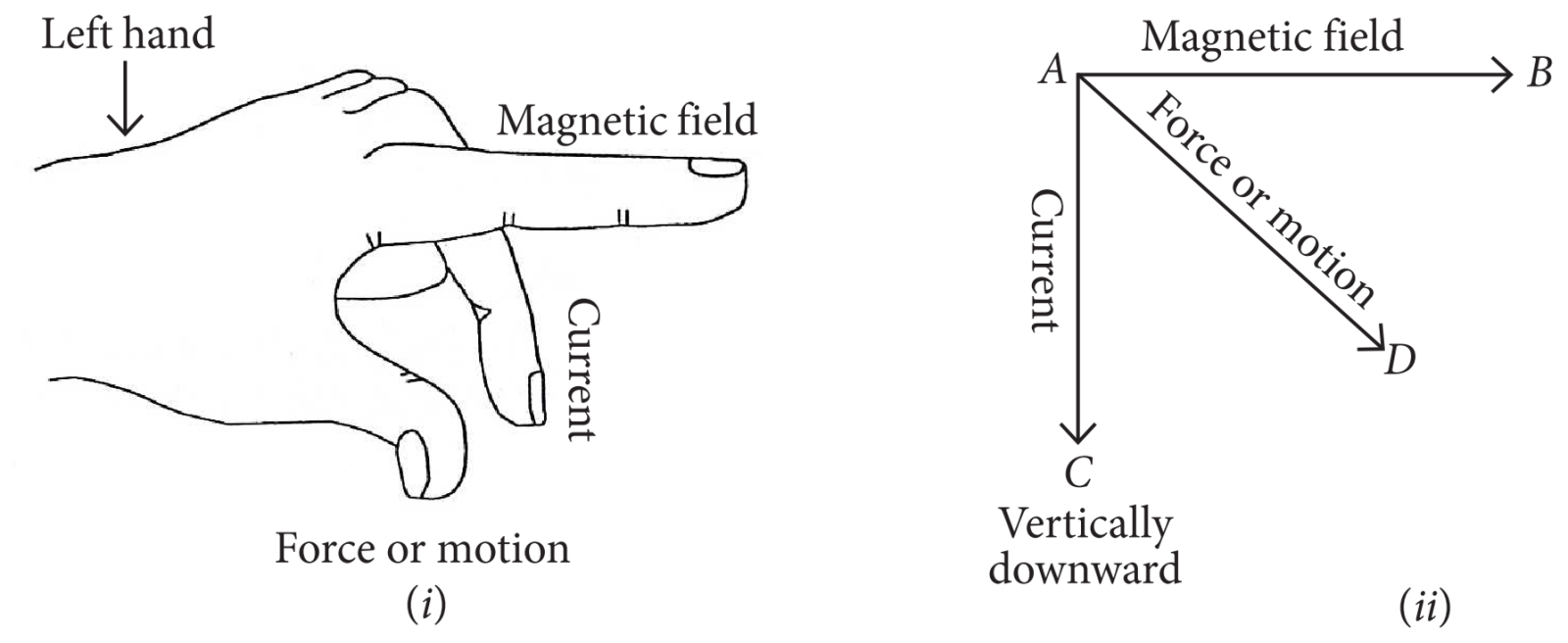
  1. State Fleming’s left hand rule.
  2. Write the principle of working of an electric motor.
  3. Explain the function of the following parts of an electric motor.
  1. Armature.
  2. Brushes.
  3. Split ring.
View full solution

Read the following and answer any three questions from (i) to (iv).
Andre Marie Ampere suggested that a magnet must exert an equal and opposite force on a current carrying conductor, which was experimentally found to be true. But we know that current is due to charges in motion. Thus, it is clear that a charge moving in a magnetic field experience a force, except when it is moving in a direction parallel to it. If the direction of motion is perpendicular to the direction of magnetic field, the magnitude of force experienced depends on the charge, velocity (v), strength of magnetic field (B), and sine of the angle between v and B. Direction of magnetic force is given by Fleming's left-hand rule.
  1. If an electron is travelling horizontally towards east. A magnetic field in vertically downward direction exerts a force on the electron along which side?
     
  2. If a charged particle is moving along a magnetic field line. The magnetic force on the particle will?
     
  3. a) A magnetic field exerts no force on?
    b) what Andre Marie Ampere suggested?
     
  4. What is fleming's left hand rule?
View full solution

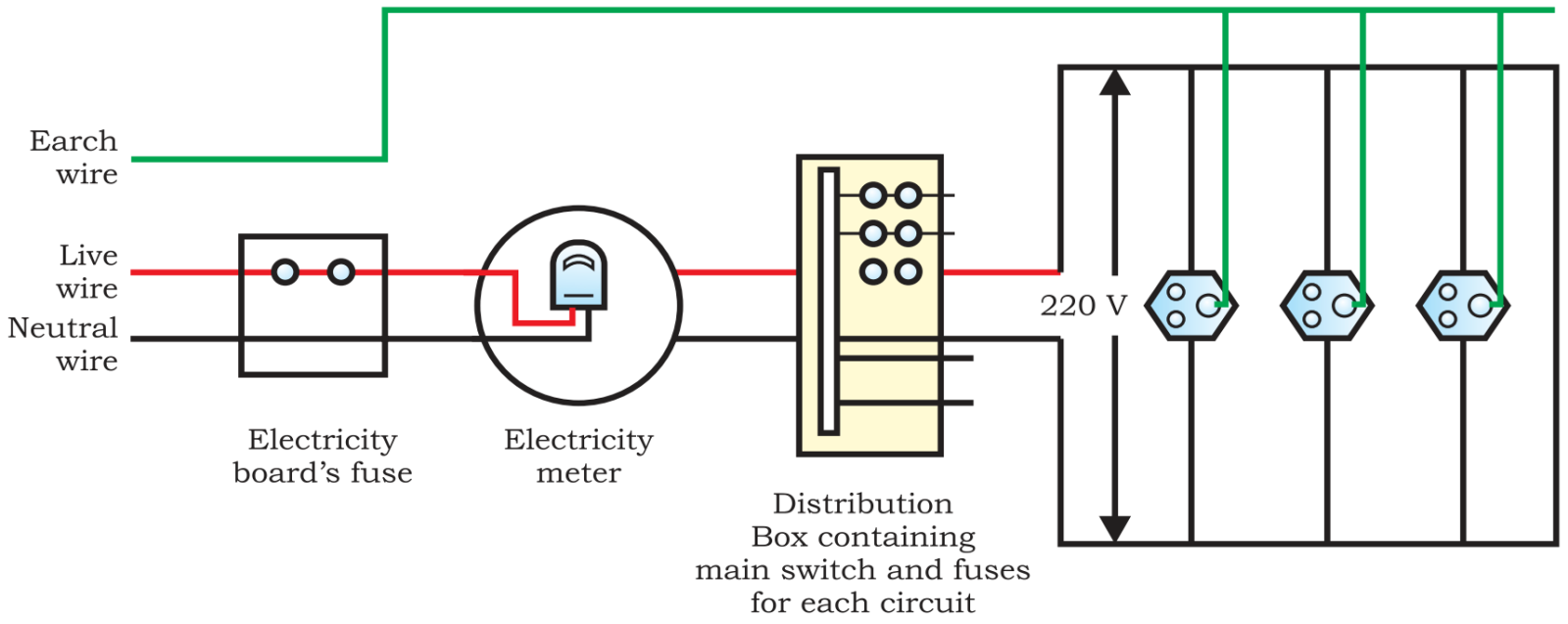
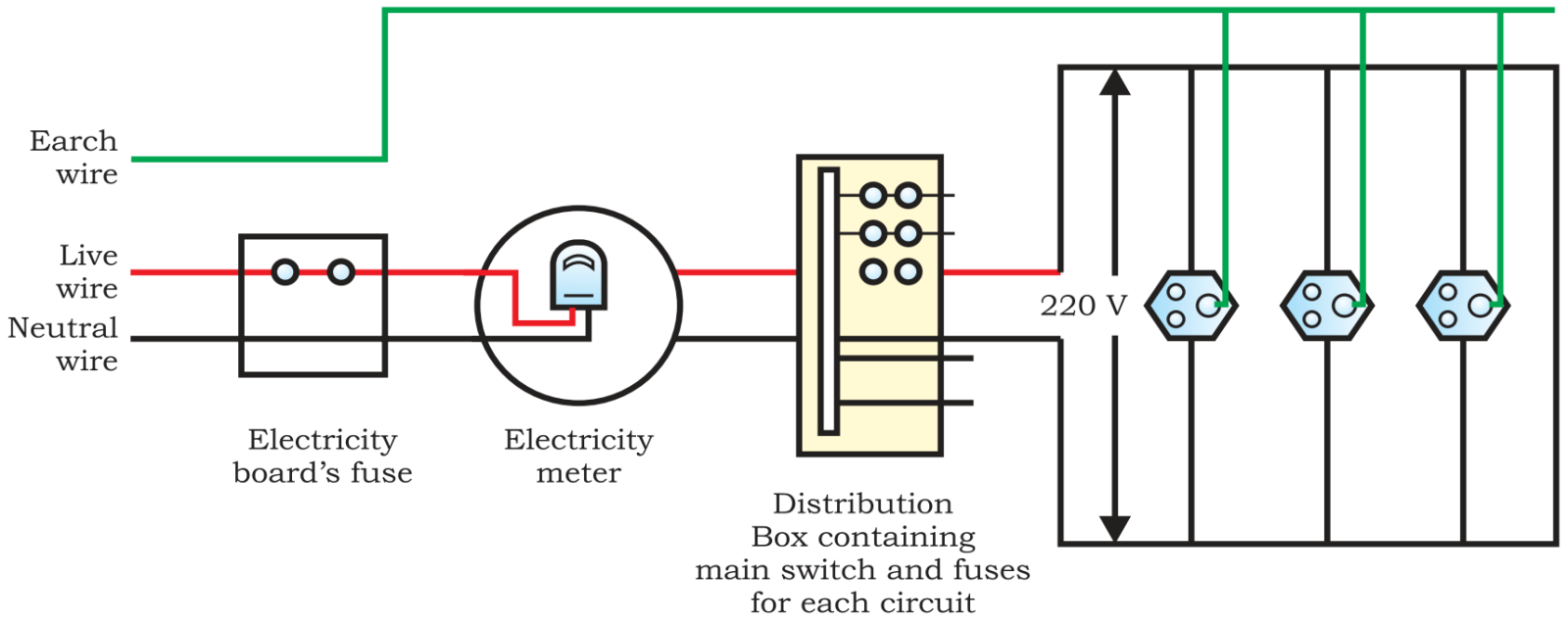
  1. The figure shows a domestic electric circuit. Study this circuit carefully and list any three errors in the circuit and justify your answer.
  2. Give one difference between the wires used in the element of an electric heater and in a fuse.
  3. List two advantages of parallel connection over series connection.1 image attached.
View full solution
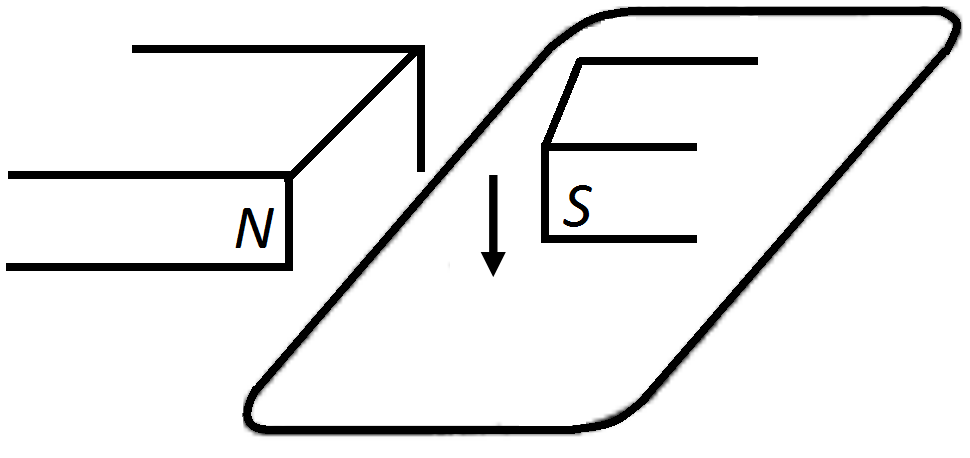
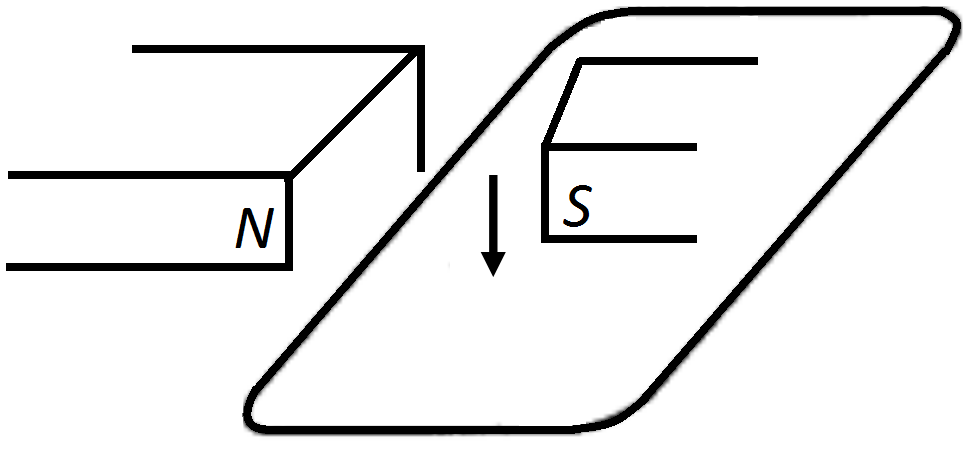
The wire in Figure below is being moved downwards through the magnetic field so as to produce induced current.

What would be the effect of:
  1. Moving the wire at a higher speed?
  2. Moving the wire upwards rather than downwards?
  3. Using a stronger magnet?
  4. Holding the wire still in the magnetic field?
  5. Moving the wire parallel to the magnetic field lines?
View full solution
Read the following and answer any three questions from (i) to (iv).An insulated copper wire wound on a cylindrical cardboard tube such that its length is greater than its diameter is called a solenoid. When an electric current is passed through the solenoid, it produces a magnetic field around it. The magnetic field produced by a current-carrying solenoid is similar to the magnetic field produced by a bar magnet. The field tines inside the solenoid are in the form of parallel straight tines. The strong magnetic field produced inside a current-carrying solenoid can be used to magnetise a piece of magnetic material, like soft iron, when placed inside the solenoid. The strength of magnetic field produced by a current carrying solenoid is directly proportional to the number of turns and strength of current in the solenoid.
  1. The strength of magnetic field inside a long current-carrying straight solenoid is called?
     
  2. The north-south polarities of an electromagnet can be found easily by using which rule?
     
  3. Define a solenoid?
     
  4. A long solenoid carrying a current produces a magnetic field B along its axis. If the current is double and the number of turns per cm is halved, then new value of magnetic field will be?
View full solution
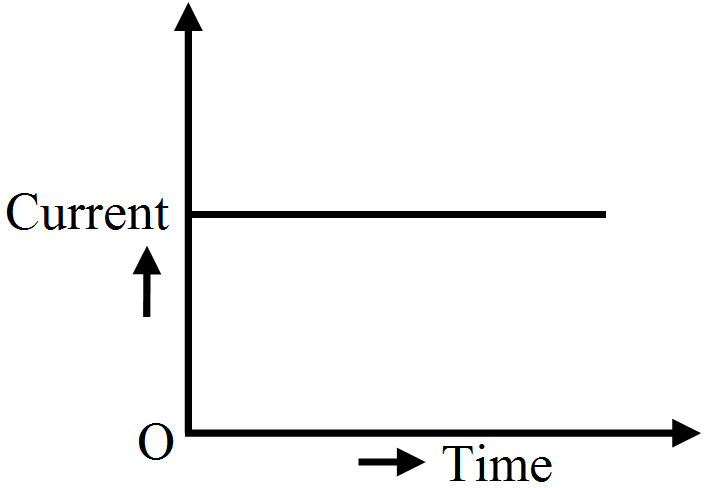
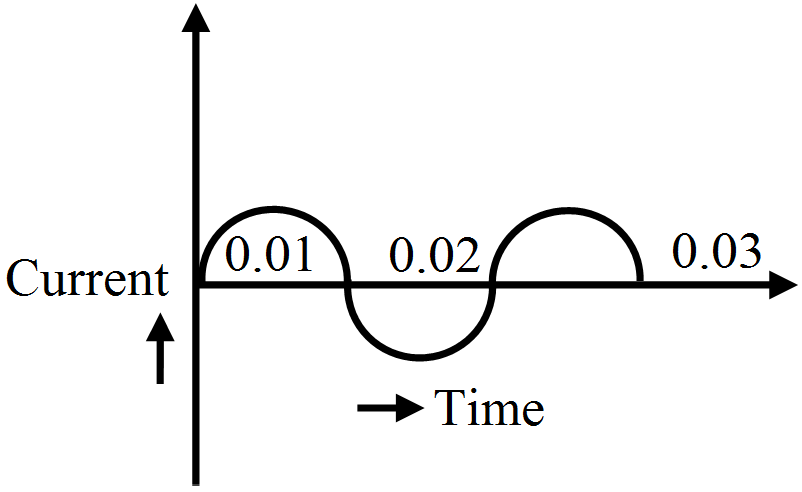
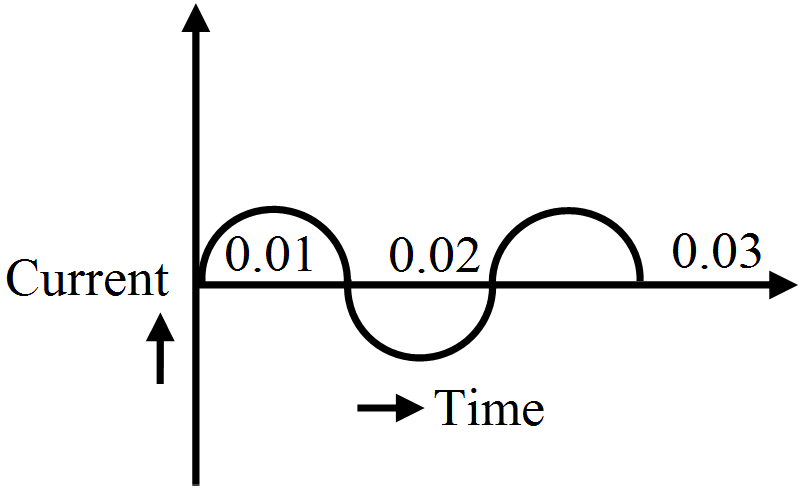
You are given the following current- time graphs from two different sources:
Now, answer the following questions:
  1. Name the type of current in two cases.
  2. Identify any one source for each type of these currents.
  3. What is the frequency of current in case (b) in India?
Use above graphs to write two differences between the current in two cases.
View full solution
Q 46M.C.Q-[Phy-1M]1 Mark
At the time of short circuit, the current in the circuit,
  • A
    Reduces substantially.
  • B
    Does not change.
  • C
    Increases heavily.
  • D
    Vary continuously.
View full solution
Q 47M.C.Q-[Phy-1M]1 Mark
Which of the following correctly describes the magnetic field near a long straight wire?
  • A
    The field consists of straight lines perpendicular to the wire.
  • B
    The field consists of straight lines parallel to the wire.
  • C
    The field consists of radial lines originating from the wire.
  • D
    The field consists of concentric circles centred on the wire.
View full solution
Q 48M.C.Q-[Phy-1M]1 Mark
Assertion : A compass needle is placed near a current carrying wire. The deflection of the compass needle decreases when the magnitude of the current in the wire is increased.
Reason : The strength of a magnetic field at a point near the conductor increases on increasing the current.
  • A
    Both A and R are true, and R is the correct explanation of A.
  • B
    Both A and R are true, and R is not the correct explanation of A
  • C
    A is true but R is false.
  • A is false but R is true.

Answer: D.

View full solution
Q 50M.C.Q-[Phy-1M]1 Mark
Why does a current carrying freely suspended solenoid rest along a particular direction?
  • A
    It points towards the geometric poles of the earth
  • B
    A current carrying solenoid behaves like a bar magnet
  • C
    It points in the direction of the flow of current
  • D
    None of the above
View full solution
In the followin questions, a statement of Assertion is given by to corresponding statement of Reason. Of the statement mark the correct answer as:
  1. If both Assertion and Reason are true and Reason is the correct explanation of Assertion.
  2. If both Assertion and Reason are true, but Reason is not the correct explanation of Assertion.
  3. If Assertion is true, but Reason is false.
  4. If Assertion is false, but Reason is true.
  5. If Assertion and Reason both are false.
Assertion: To avoid risk of electrical shock, the metal body of electric appliances is earthed.
Reason: Earthing saves us from electrical shocks.
View full solution
In the followin questions, a statement of Assertion is given by to corresponding statement of Reason. Of the statement mark the correct answer as:
  1. If both Assertion and Reason are true and Reason is the correct explanation of Assertion.
  2. If both Assertion and Reason are true, but Reason is not the correct explanation of Assertion.
  3. If Assertion is true, but Reason is false.
  4. If Assertion is false, but Reason is true.
  5. If Assertion and Reason both are false.
Assertion: In an AC generator slip-rings type of commutator is used.
Reason: Slip-rings are full rings with which the ends of coil are in contact.
View full solution
In the followin questions, a statement of Assertion is given by to corresponding statement of Reason. Of the statement mark the correct answer as:
  1. If both Assertion and Reason are true and Reason is the correct explanation of Assertion.
  2. If both Assertion and Reason are true, but Reason is not the correct explanation of Assertion.
  3. If Assertion is true, but Reason is false.
  4. If Assertion is false, but Reason is true.
  5. If Assertion and Reason both are false.
Assertion: An electric current produced in a closed circuit by changing magnetic field is called induced current.
Reason: The direction of induced current is given by Fleming's right hand rule.
View full solution
For two statements are given-one labelled Assertion (A) and the other labelled Reason (R). Select the correct answer to these questions from the codes (a), (b), (c) and (d) as given below:
  1. Both A and R are true, and R is correct explanation of the assertion.
  2. Both A and R are true, but R is not the correct explanation of the assertion.
  3. A is true, but R is false.
  4. A is false, but R is true.
Assertion: When two long parallel wires, hanging freely are connected in parallel to a battery, they come closer to each other.
Reason: Wires carrying current in opposite directions repel each other.
View full solution
For two statements are given-one labelled Assertion (A) and the other labelled Reason (R). Select the correct answer to these questions from the codes (a), (b), (c) and (d) as given below:
  1. Both A and R are true, and R is correct explanation of the assertion.
  2. Both A and R are true, but R is not the correct explanation of the assertion.
  3. A is true, but R is false.
  4. A is false, but R is true.
Assertion: When a charged particle moves perpendicular to magnetic field then its kinetic energy and momentum gets affected.
Reason: Force does not change velocity of charged particle.
View full solution
State whether the following statements are true or false:
  1. A generator works on the principle of electromagnetic induction.
  2. A motor works on the principle of electromagnetic induction.
View full solution
Imagine that you are sitting in a chamber with your back to one wall. An electron beam, moving horizontally from back wall towards the front wall, is deflected by a strong magnetic field to your right side. What is the direction of magnetic field?
View full solution
Refer to the image below and state how the magnetic field pattern indicates regions where the magnetic field is stronger outside the magnet? What happens to the magnetic field when the current in the circuit is reversed?
Image
View full solution
State the rule to determine the direction of a (i) magnetic field produced around a straight conductor-carrying current, (ii) force experienced by a current-carrying straight conductor placed in a magnetic field which is perpendicular to it, and (iii) current induced in a coil due to its rotation in a magnetic field.
View full solution
Anannya responded to the question: Why do electrical appliances with metallic bodies are connected to the mains through a three pin plug, whereas an electric bulb can be connected with a two pin plug?
She wrote: Three pin connections reduce heating of connecting wires.
(i) Is her answer correct or incorrect? Justify.
(ii) What is the function of a fuse in a domestic circuit?
View full solution
With the help of an activity, explain the method inducing electric current in a coil with a moving magnet. State the rule used to find the direction of electric current thus generated in the coil.
View full solution
With the help of a labelled circuit diagram illustrate the pattern of field lines of the magnetic field around a long current carrying straight conducting wire. How is the right hand thumb rule useful to find direction of magnetic field associated with a current carrying conductor?
View full solution
You are given the following current- time graphs from two different sources:


Now, answer the following questions:
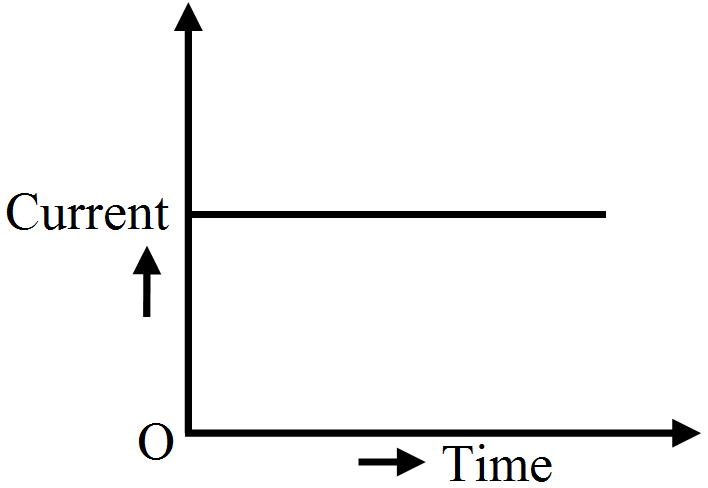
  1. Name the type of current in two cases. 
  2. Identify any one source for each type of these currents. 
  3. What is the frequency of current in case (b) in India?
Use above graphs to write two differences between the current in two cases.
View full solution
The wire in Figure below is being moved downwards through the magnetic field so as to produce induced current.


What would be the effect of:
  1. Moving the wire at a higher speed?
  2. Moving the wire upwards rather than downwards?
  3. Using a stronger magnet?
  4. Holding the wire still in the magnetic field?
  5. Moving the wire parallel to the magnetic field lines?
View full solution
Read the following and answer any three questions from (i) to (iv).

Andre Marie Ampere suggested that a magnet must exert an equal and opposite force on a current carrying conductor, which was experimentally found to be true. But we know that current is due to charges in motion. Thus, it is clear that a charge moving in a magnetic field experience a force, except when it is moving in a direction parallel to it. If the direction of motion is perpendicular to the direction of magnetic field, the magnitude of force experienced depends on the charge, velocity (v), strength of magnetic field (B), and sine of the angle between v and B. Direction of magnetic force is given by Fleming's left-hand rule.

  1. If an electron is travelling horizontally towards east. A magnetic field in vertically downward direction exerts a force on the electron along which side?

  2. If a charged particle is moving along a magnetic field line. The magnetic force on the particle will?

  3. a) A magnetic field exerts no force on?
    b) what Andre Marie Ampere suggested?

  4. What is fleming's left hand rule?

View full solution
Read the following and answer any three questions from (i) to (iv).

An insulated copper wire wound on a cylindrical cardboard tube such that its length is greater than its diameter is called a solenoid. When an electric current is passed through the solenoid, it produces a magnetic field around it. The magnetic field produced by a current-carrying solenoid is similar to the magnetic field produced by a bar magnet. The field tines inside the solenoid are in the form of parallel straight tines. The strong magnetic field produced inside a current-carrying solenoid can be used to magnetise a piece of magnetic material, like soft iron, when placed inside the solenoid. The strength of magnetic field produced by a current carrying solenoid is directly proportional to the number of turns and strength of current in the solenoid.

  1. The strength of magnetic field inside a long current-carrying straight solenoid is called?

  2. The north-south polarities of an electromagnet can be found easily by using which rule?

  3. Define a solenoid?

  4. A long solenoid carrying a current produces a magnetic field B along its axis. If the current is double and the number of turns per cm is halved, then new value of magnetic field will be?
View full solution

 
  1. The figure shows a domestic electric circuit. Study this circuit carefully and list any three errors in the circuit and justify your answer.
  2. Give one difference between the wires used in the element of an electric heater and in a fuse.
  3. List two advantages of parallel connection over series connection.1 image attached.
View full solution
What is electromagnetic induction? State different ways of inducing current in a coil. Suggest the most convenient situation for inducing current in a coil. State the situation in which the induced current in the coil is found to be the highest. Name and state the rule used to know the direction of the induced current.
View full solution
Describe an activity to:
  1. Demonstrate the pattern of magnetic field lines around a straight conductor carrying current.
  2. Find the direction of the field produced for a given direction of current in the conductor. Name and state the rule to find the direction of magnetic field associated with a current carrying conductor. Apply this rule to determine the direction of the magnetic field inside and outside a current carrying circular loop lying horizontally in the plane of a table. Assume that the current through the loop is clockwise.
View full solution
  1. What is a solenoid? Draw a sketch of the pattern of field lines of the magnetic field through and around a current carrying solenoid.
  2. Consider a circular loop of wire lying in the plane of the table. Let the current pass through the loop clockwise. Apply the right hand rule to find out the direction of the magnetic field inside and outside the loop.
View full solution
  1. What is a magnetic field? How can the direction of magnetic field lines at a place be determined?
  2. State the rule for the direction of the magnetic field produced around a current carrying conductor. Draw a sketch of the pattern of field lines due to a current flowing through a straight conductor.
View full solution

Generate a Magnetic Effects of Electric Current paper free

Pick question groups from the list above, set marks and difficulty, and export a branded PDF with step-by-step answer keys. First 3 chapters free — no signup.

Download App