Question types

MODEL PAPER 4 question types

49 questions across 6 question groups — pick any mix to generate a Science paper with step-by-step answer keys.

49
Questions
6
Question groups
5
Question types
Sample Questions

MODEL PAPER 4 questions

One sample from each question group in this chapter. Select any group above to see the full set with answer keys.

Q 1M.C.Q1 Mark
Assertion (A): Flow of energy in a food chain is unidirectional.
Reason (R): Energy captured by autotrophs does not revert back to the solar input and it passes to the herbivores.
  • Both A and R are true and R is the correct explanation of A.
  • B
    Both A and R are true but R is not the correct explanation of A.
  • C
    A is true but R is false.
  • D
    A is false but R is true.

Answer: A.

View full solution
Q 2M.C.Q1 Mark
Assertion (A): Deflection of the iron filings changes when current in the conductor varies.
Reason (R): Magnitude of the magnetic field does not change with the magnitude of current.
  • A
    Both A and R are true and R is the correct explanation of A.
  • B
    Both A and R are true but R is not the correct explanation of A.
  • A is true but R is false.
  • D
    A is false but R is true.

Answer: C.

View full solution
Q 3M.C.Q1 Mark
Assertion (A): Vagina is also called a birth canal.
Reason (R): During birth, the baby passes through the vagina.
  • Both A and R are true and R is the correct explanation of A.
  • B
    Both A and R are true but R is not the correct explanation of A.
  • C
    A is true but R is false.
  • D
    A is false but R is true.

Answer: A.

View full solution
Q 4M.C.Q1 Mark
Assertion (A): Corrosion of iron is commonly known as rusting.
Reason (R): Corrosion of iron occurs in presence of moist air.
  • A
    Both A and R are true and R is the correct explanation of A.
  • Both A and R are true but R is not the correct explanation of A.
  • C
    A is true but R is false.
  • D
    A is false but R is true.

Answer: B.

View full solution
Q 5M.C.Q1 Mark
Exposure to ultraviolet radiation causes eye disease like:
  • A
    Conjunctivitis
  • Cataract
  • C
    Short-sightedness
  • D
    Colour blindness

Answer: B.

View full solution
In today's digital world, every human spends around a minimum eight hours with the digital electronic items which make their eyes to strain more and causes many eye problems. Still they undergo many exercises for their eyes during their working hours what would be your medical suggestion to reduce the stress and strain caused in the eyes?
View full solution
Alisha digs a pit in her garden and puts the following items in it.
• paper cups
• glass bowls
• fruit peels
• rubber slippers
She then covers the pit with soil. Which item will decompose first?
View full solution
A $6 \ cm$ tall object is placed perpendicular to the principal axis of a concave mirror of focal length $30 \ cm.$ The distance of the object from the mirror is $45 \ cm$. Use mirror formula to determine the position, nature and size of the image formed. Also draw labelled ray diagram to show the image formation in this case.
View full solution
An electric geyser rated at $1500 W, 250 V$ is connected to a $250 V$ line mains. Solve
$i.$ the electric current drawn by it. and the energy consumed by it in $50 h.$
$ii.$ cost of energy consumed if each unit costs $Rs.6.$
View full solution
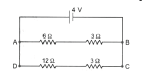
For the circuit shown in the given diagram:
Image
What is the value of
$i. $current through $6\Omega $ resistor?
$ii.$ potential difference across $12\Omega$ resistor?
View full solution
Sudha finds out that the sharp image of window pane of her science laboratory is formed at a distance of $15 \ cm$ from the lens. She now tries to focus the building visible of her outside the window instead of the window pane without disturbing the lens. In which direction will she move the screen to obtain a sharp image of the building? What is the approximate focal length of this lens?
View full solution
Name the plant Mendel used for his experiment. What type of progeny was obtained by Mendel in $F_1$ and $F_2$ generations when he crossed the tall and short plants? Write the ratio he obtained in $F_2$ generation plants.
View full solution
A student has three concave mirrors A, B and C of focal lengths 20 cm, 15 cm and 10 cm, respectively. For each concave mirror, he performs the experiment of image formation for three values of object distance of 30 cm, 10 cm and 20 cm.
Give reasons for the following:
i. For the three object distances, identify the mirror which will form an image equal in size to that of object. Find at least one value of object distance.
ii. Out of the three mirrors, identify the mirror which would be preferred to be used for shaving purpose.
iii. For the mirror B, draw ray diagram for image formation for any two given values of object distance.
View full solution
i. Name the mode of reproduction of the following organisms and state the important feature of each mode:
a. Planaria
b. Hydra
c. Rhizopus
ii. We can develop new plants from the leaves of Bryophyllum. Comment.
iii. List two advantages of vegetative propagation over other modes of reproduction.
View full solution
A compound$ A ($molecular formula $C_3H_6O_2)$ reacts with sodium metal to form compound B and evolves a gas which burns with a pop sound. The compound $A$ on treatment with alcohol $C,$ found in beer$,$ in presence of concentrated sulphuric acid$,$ forms a sweet smelling compound $D ($molecular formula $C_5H_{10}O_2)$. On addition of $\text{NaOH}$ to $A$ it also gives $B$ and water. $D$ on treatment with $\text{NaOH}$ gives back $B$ and $C.$ Identify $\text{A, B, C}$ and $D$ and write down the chemical equations of the reactions involved.
View full solution
A student fixes a sheet of white paper on a drawing board using some adhesive materials. She places a bar magnet in the centre of it and sprinkles some iron filings uniformly around the bar magnet using a salt sprinkler.
On tapping the board gently, she observes that the iron filings have arranged themselves in a particular pattern.
(a) What makes iron filings arrange in a definite pattern?
(b) Draw a diagram to show this pattern of iron filings.
(c) How is the direction of magnetic field at a point determined using the field lines? Why do two magnetic
field lines not cross each other?
OR
How are the magnetic field lines of a bar magnet drawn using a small compass needle? Draw one magnetic field line each on both sides of the magnet.
View full solution
We have seen that the different parts of our body have specific functions. Our mouth waters when we see the food we like without our meaning to. Our heart's beat without our thinking about it. In fact, we cannot control these actions easily by thinking about them even if we wanted to. So, in between the simple reflex actions like change in the size of the pupil, and the thought out actions such as moving a chair, there is another set of muscle movements over which we do not have any thinking control. Many of these involuntary actions are controlled by the mid-brain and hind-brain. All these involuntary actions including blood pressure, salivation and vomiting are controlled by the medulla in the hind-brain. Think about activities like walking in a straight line, riding a bicycle, picking up a pencil. These are possible due to a part of the hind-brain called the cerebellum. It is responsible for the precision of voluntary actions and maintaining the posture and balance of the body. Imagine what would happen if each of these events failed to take place if we were not thinking about it.
Image
(a) Identify the part of the nervous system which controls the reflex action.
(b) Does reflex action involve all parts of the voluntary nervous system?
(c) Identify the part of the autonomic nervous system which controls involuntary actions.
OR
Beating of heart muscles, which type of action is this? Out of voluntary and involuntary action which is slower?
View full solution
The strength of acid and base depends on the number of $H^+$ and the number of $OH-$ respectively. If we take hydrochloric acid and acetic acid of the same concentration, say one molar, then these produce different amounts of hydrogen ions. Acids that give rise to more $H+$ ions are said to be strong acids, and acids that give less $H+$ ions are said to be weak acids. Can you now say what weak and strong bases are?
$(a)$ Fresh milk has a $pH$ of $6$. How do you think the $pH$ will change as it turns into curd?
$(b)$ Is Gastric juice a weak acid?
OR
Milk of magnesia is an acid or base? For what purpose it can be used?
View full solution

Generate a MODEL PAPER 4 paper free

Pick question groups from the list above, set marks and difficulty, and export a branded PDF with step-by-step answer keys. First 3 chapters free — no signup.

Download App