Questions · Page 2 of 3

3 Marks Question

Question 513 Marks
What will be the effect of the following on the Accounting Equation?
  1. Harish started business with cash ₹ 1,80,000.
  2. Purchased goods for cash ₹ 60,000 and on credit ₹ 30,000.
  3. Sold goods for cash ₹ 40,000; costing ₹ 24,000.
  4. Rent paid ₹ 5,000; and rent outstanding ₹ 2,000.
  5. Sold goods on credit ₹ 50,000 (costing ₹ 38,000).
  6. Salary paid in advance ₹ 3,000.
View full question & answer
Question 523 Marks
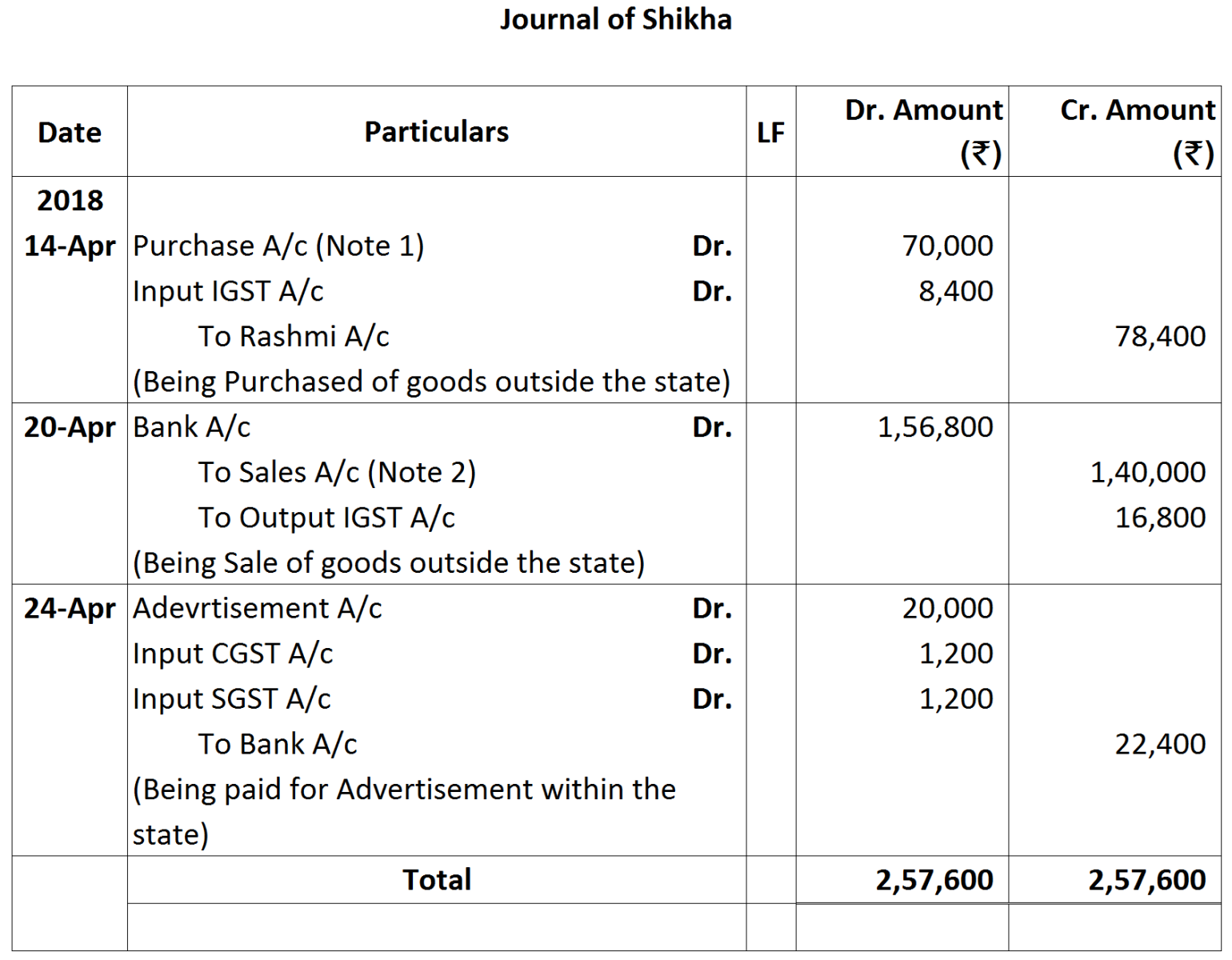
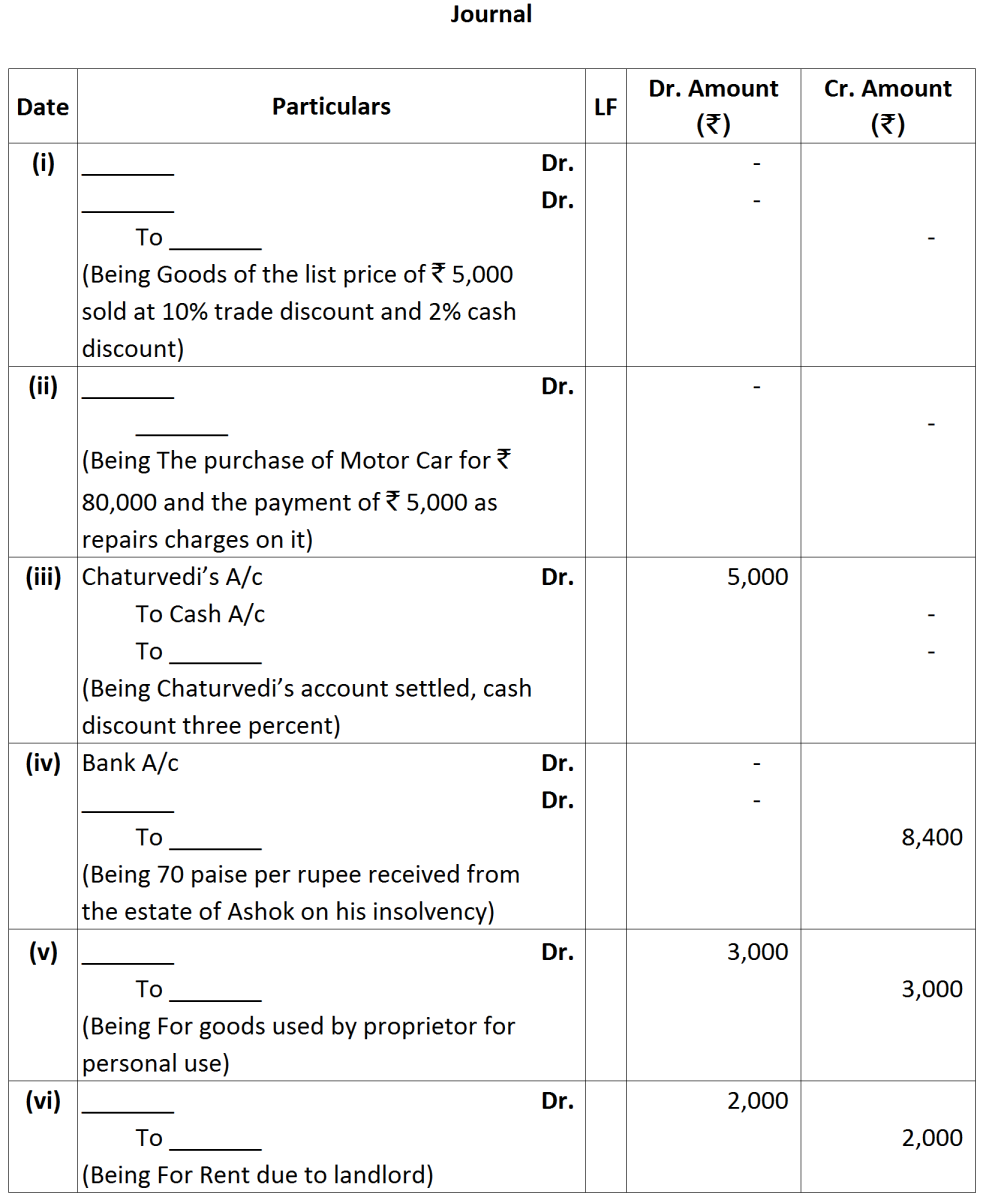
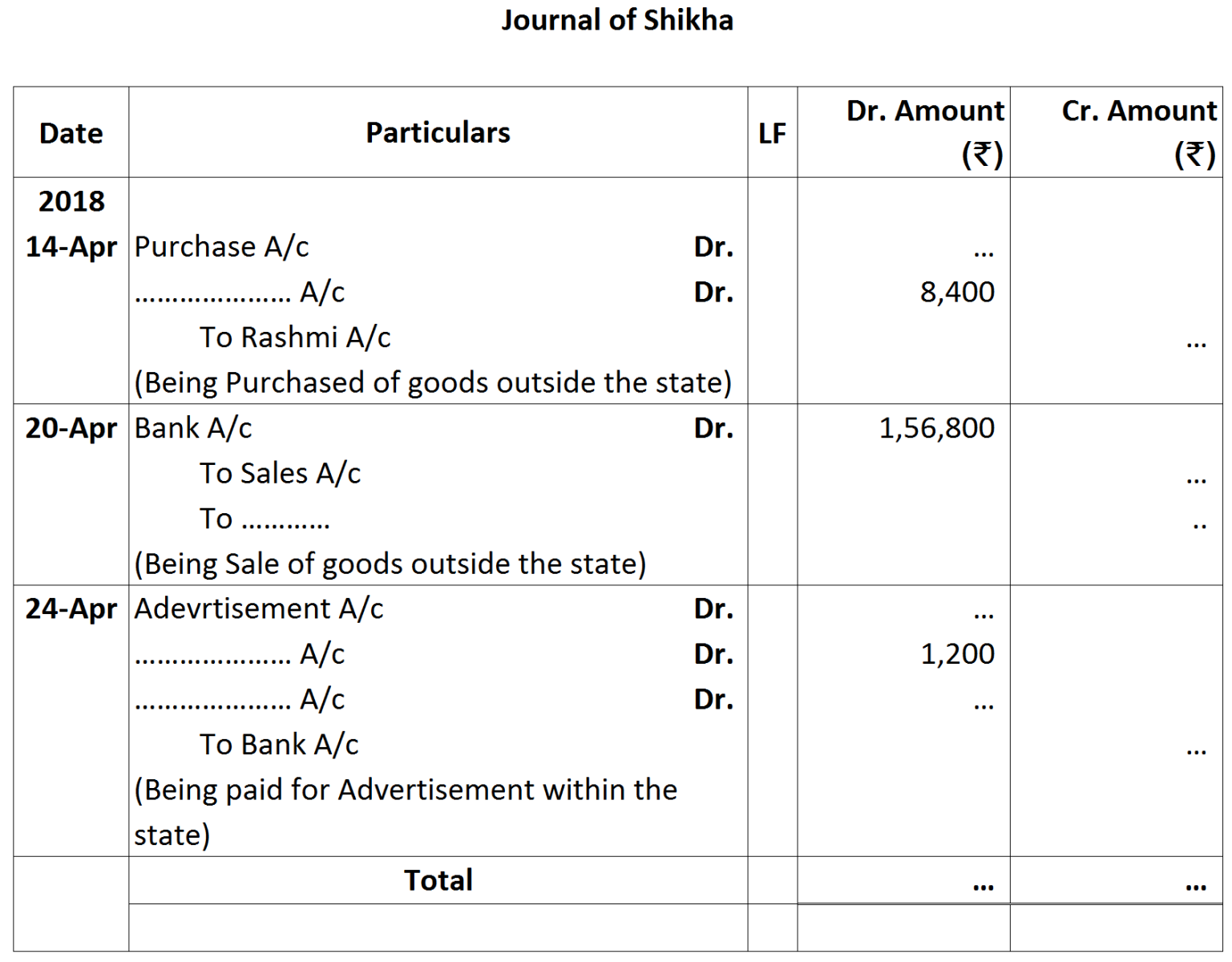
Fill in the missing assuming CGST @ 6% and SGST @ 6%:
Answer

$8,400\times\frac{100}{12}=₹\ 70,000$
$1,56,800\times\frac{100}{112}=₹\ 1,40,000$
View full question & answer
Question 533 Marks
Enter the following transactions in the Journal of Manohar Lal & Sons:
2019
 
Jan. 6
Sold goods for cash
36,000
Jan. 8
Sold goods to Hari
30,000
Jan. 14
Received cash from Hari
18,000
Jan. 26 Received Commission
750
Jan. 27
Paid Salary to Gopal
1,200
Jan. 28
Received cash from Hari
12,000
Jan. 29
Withdrew cash from office for personal use
4,000
Jan. 30
Wages paid
7,200
Jan. 30 Bought Machinery for Cash 8,000
View full question & answer
Question 543 Marks
Describe the events recorded in accounting systems and the importance of source documents in those systems?
Answer
It is beyond human capabilities to memorise each financial transaction and that is why, source documents have their own importance in accounting system. They are considered as an evidence of transactions and can be presented in the court of law. Transactions supported by evidence can be verified. Source documents also ensure that transactions recorded in the books are free from personal biases.
A few events that are supported by source document are given below.
  1. Sale of goods worth ₹ 200 on credit, supported by sales invoice/ bill.
  2. Purchase of goods worth ₹ 500 on credit, supported by purchase invoice/ bill.
  3. Cash sales worth ₹ 1,000, supported by cash memo.
  4. Cash purchase of goods worth ₹ 400, supported by cash memo.
  5. Goods worth ₹ 100 returned by customer, supported by credit note.
  6. Return of goods purchased on credit worth ₹ 200, supported by debit note.
  7. Payment worth ₹ 1,200 through bank, supported by cheques.
  8. Deposits into bank worth ₹ 500, supported by pay-in slips.
Out of the above events, only those events that can be expressed in monetary terms, are recorded in the books of accounts. However, the non-monetary events are not recorded in accounts; for example, promotion of manger cannot be recorded but increment in salary can be recorded at the time when salary is paid or due.
Source document in accounting is important because of the below given reasons.
  1. It provides evidence that transaction has actually occurred.
  2. It provides information about the date, amount and parties involved and other details of a particular transactions.
  3. It acts as an evidence in the count of law.
  4. It helps in verifying the transaction during the auditing process.
View full question & answer
Question 553 Marks
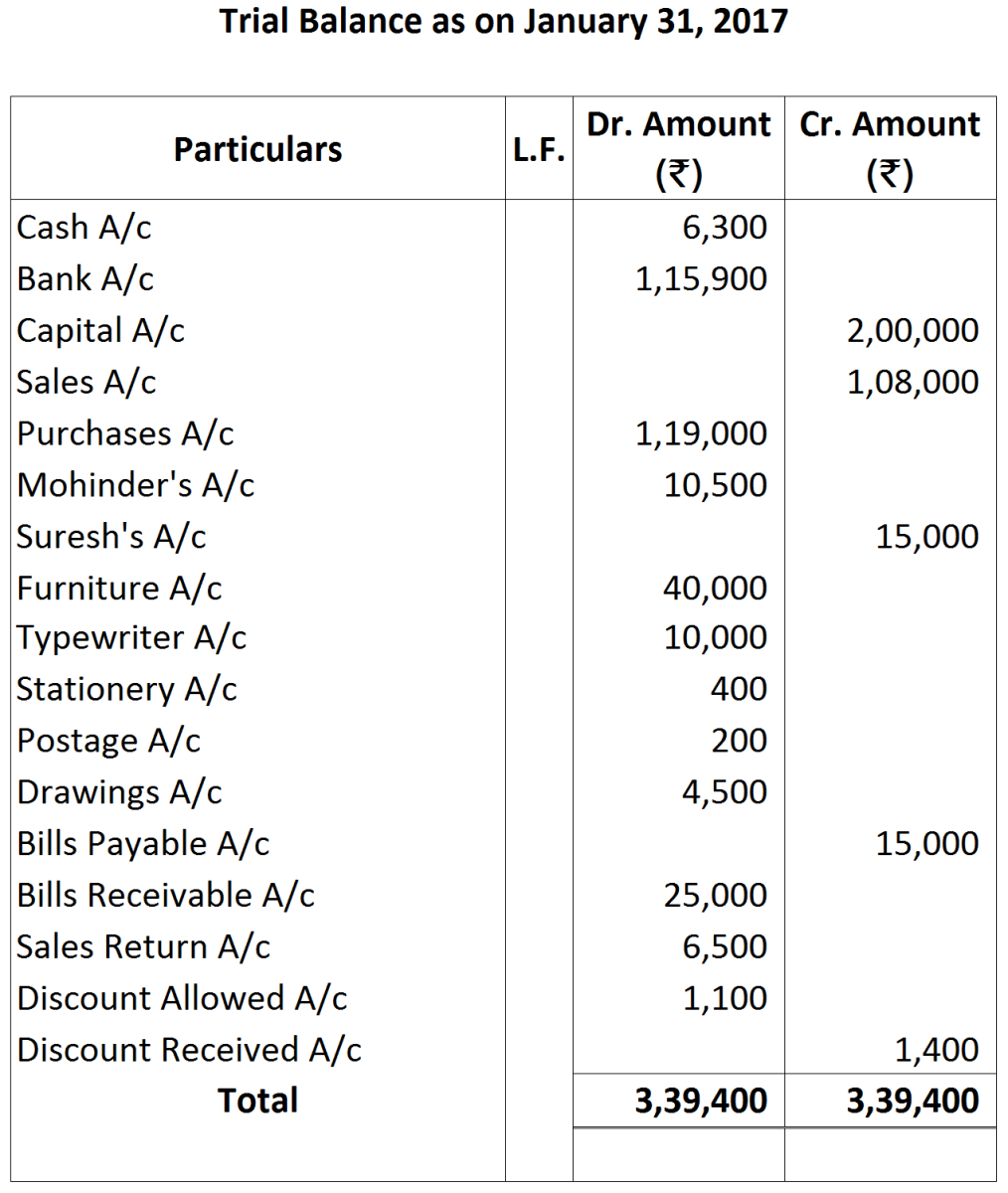
Following balances appeared in the books of Ram & Shyam on January 1, 2017:
Assets: Cash in hand ₹ 30,000; Stock ₹ 36,000; Lal Chand ₹ 7,600; Mukesh Khanna ₹ 16,200; Furniture ₹ 8,000.
Liabilities: Ghanshyam ₹ 6,000; Vinod ₹ 8,000.
Following transactions took place during Jan. 2017:
2017
 
Jan. 2
Purchased Typewriter for ₹ 7,500
Jan. 4
Sold goods for Cash of the list price of ₹ 25,000 at 20% trade discount and 5% Cash discount
Jan. 6
Sold goods to Gopal Seth for ₹ 10,000
Jan. 8
Gopal Seth returned goods for ₹ 1,500
Jan. 12
Purchased goods from Arun ₹ 12,000, and from varun ₹ 15,000
Jan. 13
Settled Arun's account in full after deducting 5% for cash discount
Jan. 14
Paid cash to Ghanshyam in full settlement of his account
Jan. 16
Received ₹ 7,500 from Lal Chand in full settlement of his account
Jan. 17
Purchased a Scooter for office use ₹ 18,000
Jan. 20
Sold goods for cash 20,000
Jan. 22
Received from Gopal Seth ₹ 4,850 and discount allowed ₹ 150
Jan 27
Paid for Wages ₹ 7,000 and Salaries ₹ 3,000.
Jan. 28
Withdrew goods for ₹ 2,000 and Cash ₹ 1,500 for private use
Jan. 29
Paid for Life Insurance Premium of the Proprietor ₹ 1,600
Journalise the above transactions, post them into Ledger, balance them and prepare a Trial Balance.
View full question & answer
Question 563 Marks
Describe how accounts are used to record information about the effects of transactions?
Answer
Every transaction is recorded in the original book of entry (journal) in order of their occurrence; however, if we want to know that how much we receive from our debtors or how much to pay to the creditors, it is not possible to determine at a single movement.
Hence, we prepare accounts to know the position of business activities in the meantime.
There are some steps to record transactions in accounts; it can be easily understood with the help of an example.
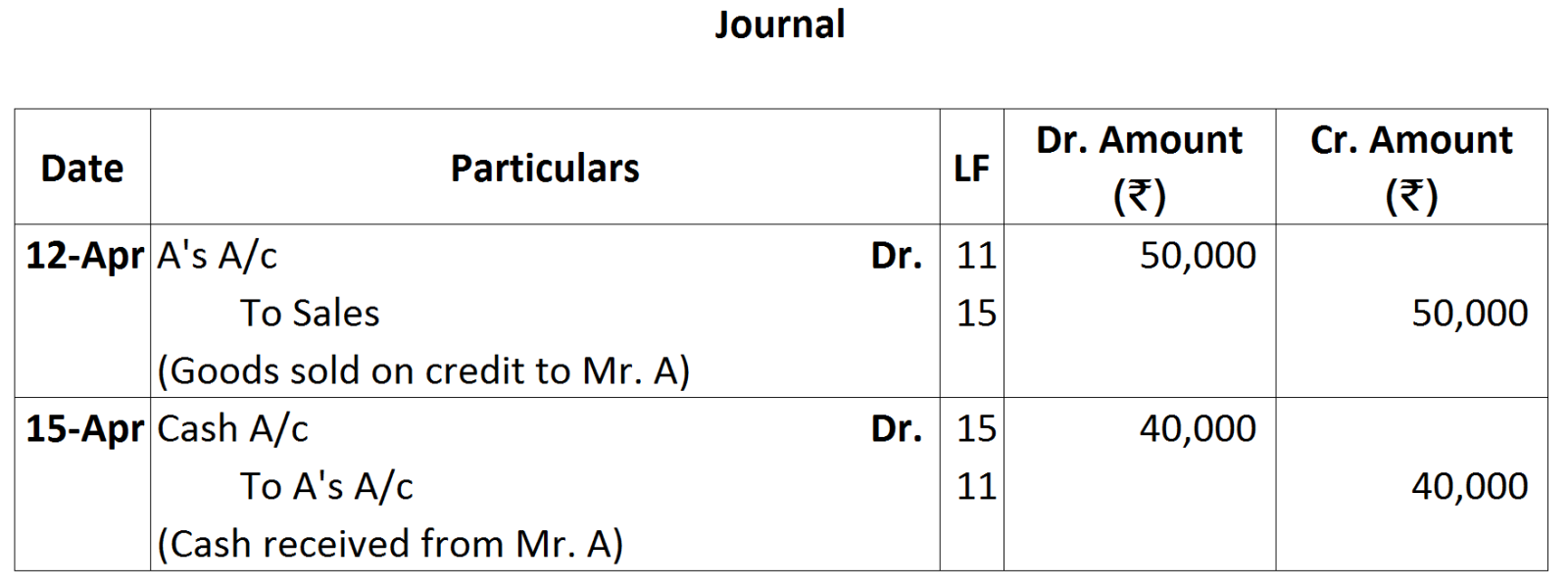
Sold goods to Mr A worth ₹ $50,000$ on $12^{th}$ April and received payment ₹ $40,000$ on $25^{th}$ April. The following journal entries will be recorded:

Step 1: Locate the account in ledger, i.e., Mr A’s Account.
Step 2: Enter the date of transaction in the date column of the debit side of Mr A’s Account.
Step 3: In the ‘Particulars’ column of the debit side of Mr A’s Account, the name of corresponding account is to be written, i.e., ‘Sales’.
Step 4: Enter the page number of the ledger in the Journal Folio (J.F.) column of Mr A’s Account.
Step 5: Enter the amount in the ‘Amount’ column.
Step 6: Same steps are to be followed to post entries in the credit side of Mr A’s Account.
Step 7: After entering all the transactions for a particular period, balance the account by totalling both sides and write the difference in shorter side, as ‘Balance c/d’.
Step 8: Total of account is to be written on either sides.
View full question & answer
Question 573 Marks
Prove that the Accounting Equation is satisfied in all the following transactions of Rajaram. Also prepare a Balance Sheet:
  1. Started business with Cash ₹ 1,20,000.
  2. Purchased a typewriter for Cash for ₹ 8,000 for office use.
  3. Purchased goods for ₹ 50,000 for cash.
  4. Purchased goods for ₹ 40,000 on credit.
  5. Goods costing ₹ 60,000 sold for ₹ 80,000 on credit.
  6. Paid for Rent ₹ 1,500 and for salaries ₹ 2,000.
  7. Received ₹ 800 for Commission.
  8. Withdrew for private use ₹ 5,000 in cash.
View full question & answer
Question 583 Marks
Record journal entries for the following transactions in the books of Anudeep of Delhi:
  1. Bought goods ₹ 2,00,000 from Kanta of Delhi (CGST @ 9%, SGST @ 9%)
  2. Bought goods ₹ 1,00,000 for cash from Rajasthan (IGST @ 12%)
  3. Sold goods ₹ 1,50,000 to Sudhir of Punjab (IGST @ 18%)
  4. Paid for Railway Transport ₹ 10,000 (CGST @ 5%, SGST @ 5%)
  5. Sold goods ₹ 1,20,000 to Sidhu of Delhi (CGST @ 9%, SGST @ 9%)
  6. Bought Air-Condition for office use ₹ 60,000 (CGST @ 9%, SGST @ 9%)
  7. Sold goods ₹ 1,50,000 for cash to Sunil to Uttar Pradesh (IGST 18%)
  8. Bought Motor Cycle for business use ₹ 50,000 (CGST 14%, SGST @ 14%)
  9. Paid for Broadband services ₹ 4,000 (CGST @ 9%, SGST @ 0%)
  10. Bought goods ₹ 50,000 from Rajesh, Delhi (CGST @ 9%, SGST @ 9%)
View full question & answer
Question 593 Marks
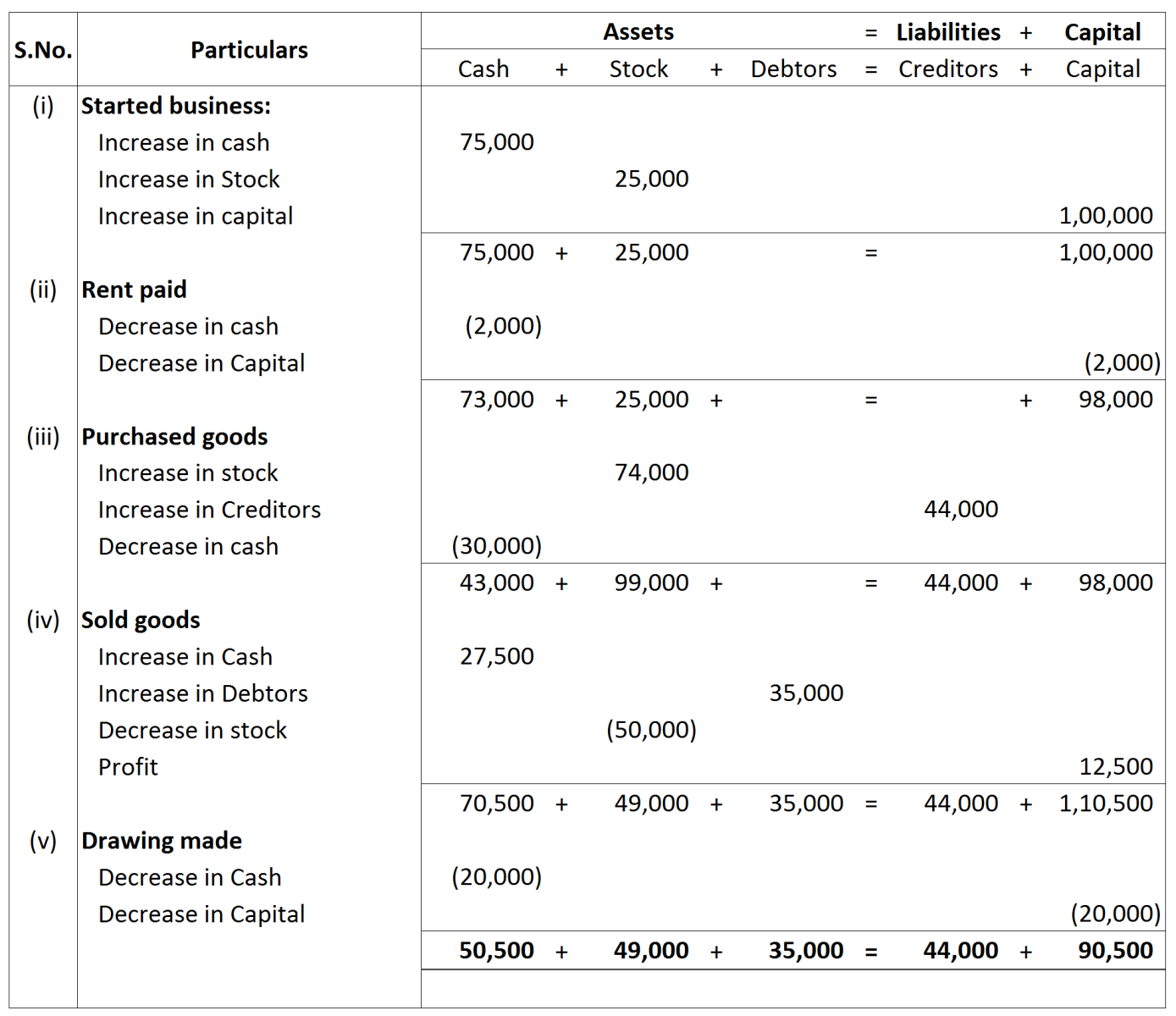
Prepare Accounting Equation from the following:
  1. Started business with cash ₹ 75,000 and goods ₹ 25,000.
  2. Paid for Rent ₹ 2,000.
  3. Bought goods for cash ₹ 30,000 and on credit for ₹ 44,000.
  4. Goods costing ₹ 50,000 sold at a profit of 25%, out of which ₹ 27,500 received in Cash.
  5. Purchased a Motor-cycle for personal use ₹ 20,000.
Answer

Working Note:
Calculation of Selling Price
Cost of Goods Sold = 50,000
Add: Profit 25% of ₹ 50,000 = 12,500
Selling Price = $\overline{62,500}$
Less: Cash Received = 27,500
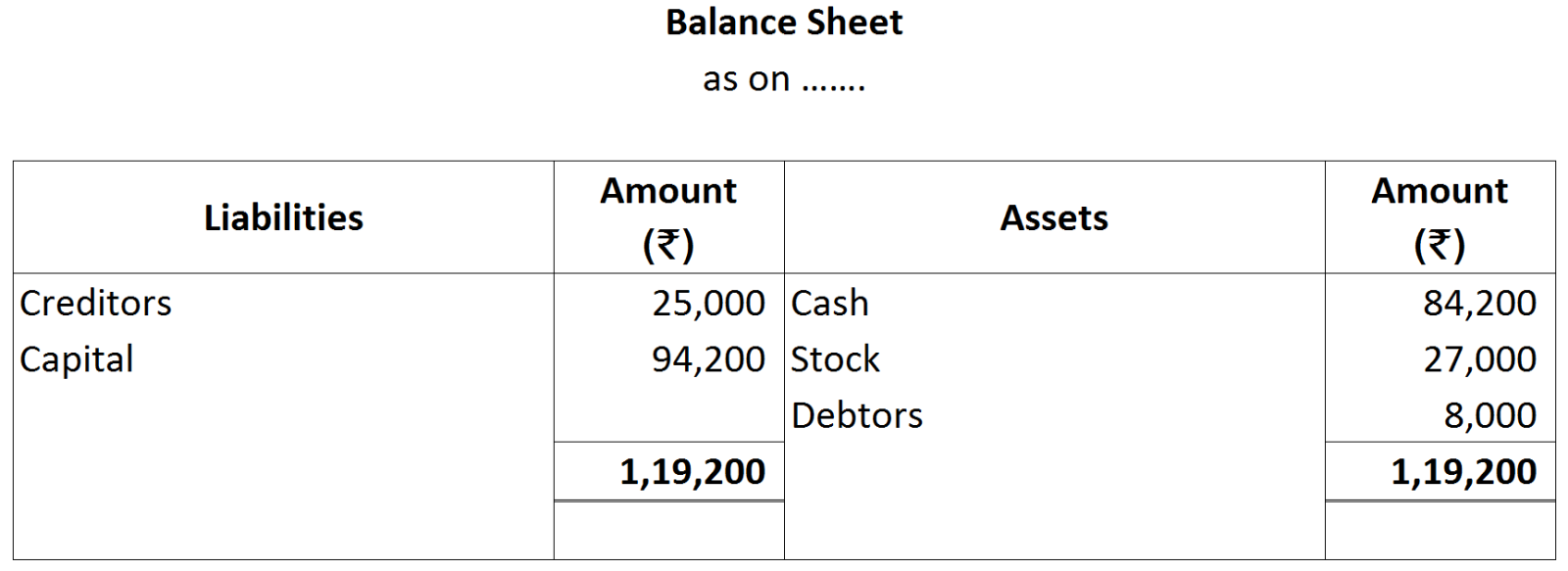
Credit Sales = $\overline{35,000}$
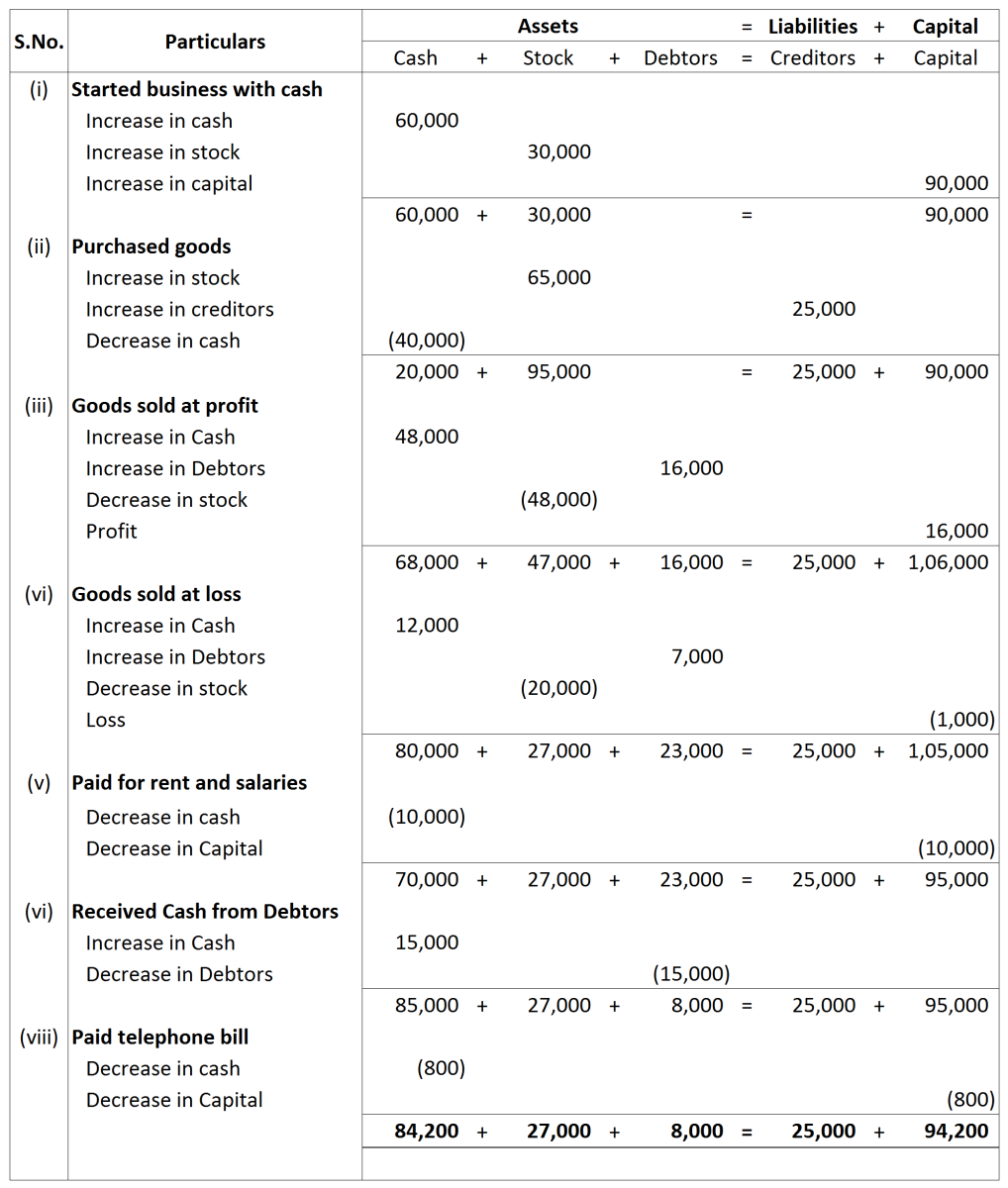
View full question & answer
Question 603 Marks
Describe how debits and credits are used to analyse transactions.
Answer
Debit originated from the Italian word debito, which in turn is derived from the Latin word debeo, which means ‘owed to proprietor’ and credit comes from the Italian word credito, which is derived from the Latin word credo, which means belief, i.e., ‘owed by proprietor’.
According to the dual aspect concept, all the business transactions that are recorded in the books of accounts, have two aspects- debit and credit. The dual aspect can be better understood by the help of an example; bought goods worth ₹ 500 on cash.
This transaction affects two accounts with the same amount simultaneously. As goods are brought in exchange of cash, so the cash balances in the business reduce by ₹ 500, i.e. why the cash account is credited.
Simultaneously, the amount of goods increases by ₹ 500, so purchases account will be debited. Debit and credit depend on the nature of accounts involved; such as assets, expenses, income, liabilities and capital. There are five types of Accounts.
  1. Assets: These include all properties or legal rights owned by a firm for its operations, such as cash in hand, plant and machinery, bank, land, building, etc. All assets have debit balance. If assets increase, they are debited and if assets decrease, they are credited.
For example, furniture purchased and payment made by cheque. The journal entry is:
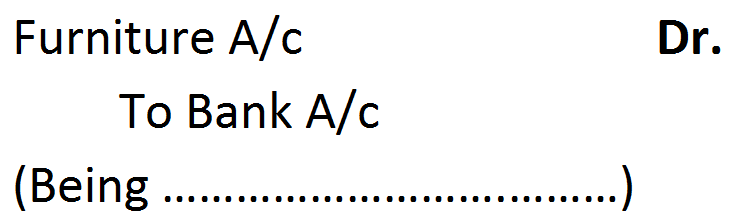


Here, furniture and bank balance, both are assets to the firm. As furniture is purchased, so furniture account will increase, and will be debited. On the other hand, payment of furniture is being made by cheque that reduces the bank balance of the business, so bank account will be credited.
  1. Expense: It is made to run business smoothly and to carry day to day business activites.
All expenses have debit balance. If an expense is incurred, it must be debited.

For example, rent paid. The journal entry is:
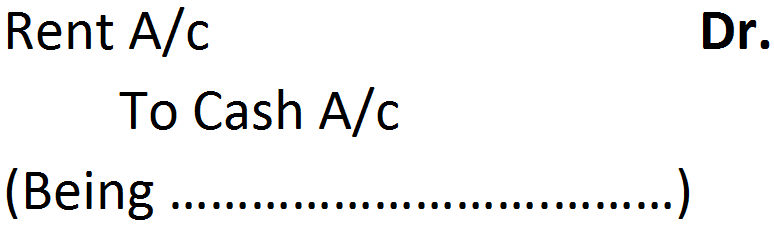


Here, rent is an expense. All expenses have debit balance. Hence, rent is debited. On the other hand, as rent is paid in cash that reduces the cash balances, so cash account is credited.
  1. Liability: Liability is an obligation of business. Increase in liability is credited and decrease in liability is debited.
For example, loan taken from bank. The journal entry is:
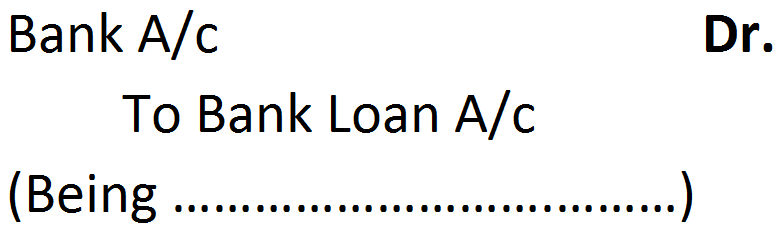


Here, loan from bank is a liability to the firm. As all liabilities have credit balance, so loan from bank has been credited because it increases the liabilities.
  1. Income: Income means profit earned during an accounting period from any source. Income also means excess of revenue over its cost during an accounting period. Income has credit balance because it increases the balance of capital.
For example, rent received from tenant. The journal entry is:
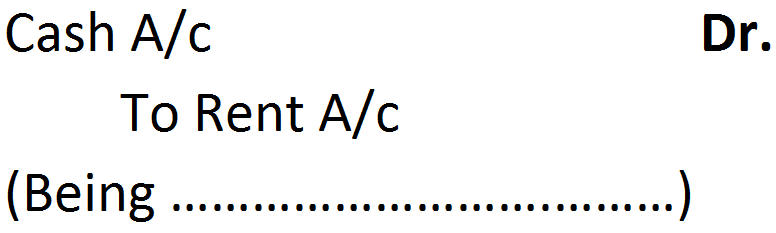


Here, rent is an income; hence, rent account has been credited and cash has been debited, as rent received increases the cash balances.
  1. Capital: Capital is the amount invested by the proprietor in the business. Capital has credit balance. Increase in capital is credited and decrease in capital is debited
For example, additional capital introduced by owner. The journal entry is:
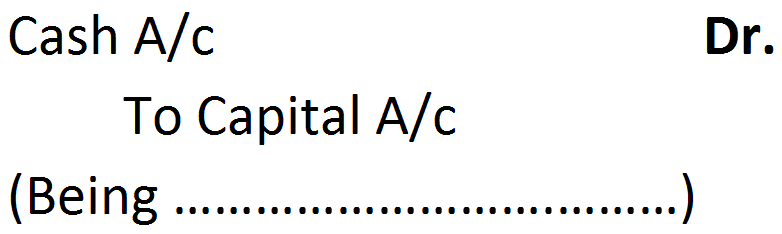


As additional capital is introduced, so the amount of capital will increase, i.e. why, capital account is credited. On the other hand, as capital is introduced in form of cash, so the cash balances decrease, i.e. why, cash account is debited.
View full question & answer
Question 613 Marks
Show the accounting equation on the basis of the following transactions and present a Balance Sheet of the last new equation balance:
    (₹)
i. Mohan commenced business with 70,000
ii. Purchased goods on Credit 14,000
iii. Withdrew for private use 1,700
iv. Purchased goods for Cash 10,000
v. Paid wages 300
vi. Paid to Creditors 10,000
vii. Sold goods on Credit at par 15,000
viii. Sold goods for Cash (cost price was ₹ 3,000) 4,000
ix. Purchased furniture for cash 500
View full question & answer
Question 623 Marks
Enter the following transactions in the Journal of Manohar Lal & Sons:
2019
 
March 1
Manohar Lal & Sons started business with cash
60,000
March 2
Purchased furniture for cash
10,000
March 4
Purchased goods for cash
25,000
March 5
Bought goods from Kamlesh
15,000
March 10
Paid cash to Kamlesh
15,000
March 16
Purchased goods from Sohan
6,000
March 18
Purchased goods from Sohan for cash
8,000
March 20
Paid rent for the office
1,000
View full question & answer
Question 633 Marks
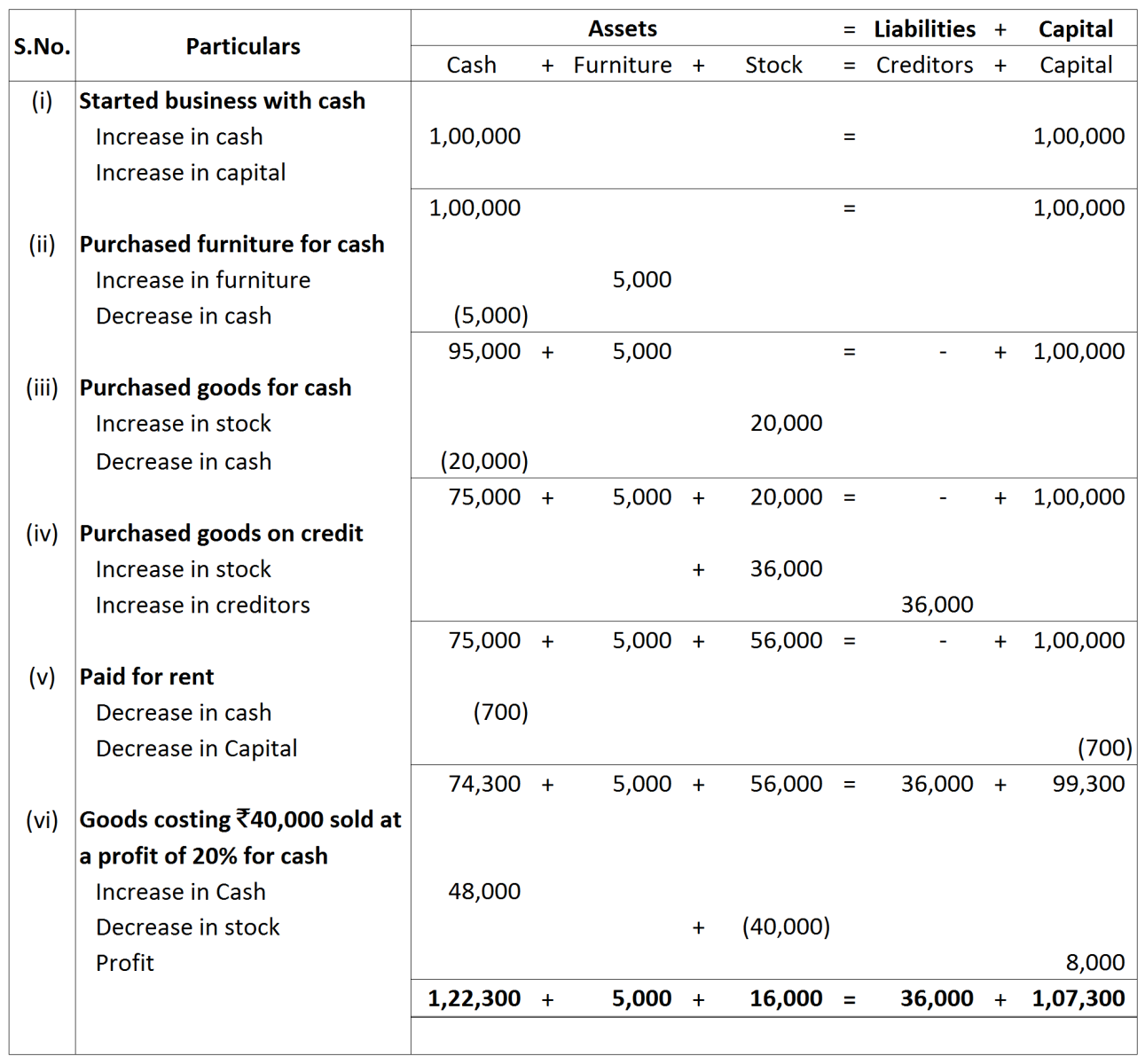
Prepare Accounting Equation from the following:
 
 
i.
Sandeep started business with Cash
1,00,000
ii.
Purchased furniture for cash
5,000
iii.
Purchased goods for cash
20,000
iv.
Purchased goods on credit
36,000
v.
Paid for rent
700
vi.
Goods costing ₹ 40,000 sold at a profit of 20% for cash
 
Answer

Working Note:
Calculation of Sale Price
Cost of goods sold
=
40,000
Add: Profit 20% of ₹ 40,000
=
8,000
$\therefore$ Selling price
=
$\overline{48,000}$
View full question & answer
Question 643 Marks
Pass entries in the books of Ganguli & Sons. assuming all transactions have been entered in the state of West Bengal:
1.
Purchased goods for ₹ 2,00,000 and payment made by cheque.
2.
Sold goods for ₹ 1,60,000 to Devki Nandan & Sons.
3.
Purchased goods for ₹ 50,000 on credit.
4.
Paid for printing and stationery ₹ 4,000.
5.
Received for commission ₹ 5,000.
6.
Output GST adjusted against Input GST.
Assume CGST @ 6% and SGST @ 6%.
View full question & answer
Question 653 Marks
Following balances appeared in the books of Ashok, Delhi on 1st April, 2019:
Assets: Cash ₹ 50,000; Stock ₹ 30,000; Debtors−Ram ₹ 50,000; Machinery ₹ 60,000.
Liabilities: Creditor−Rajesh ₹ 30,000.
The following transactions took place in April, 2019:
2019
 
April 4
Sold goods for cash
7,000
April 6
Goods returned by Ram, Delhi
1,000
April 10
Purchased goods from Rajesh, Jaipur (Rajasthan) of list price 10,000 for
9,000
April 15
Bought goods of list price of ₹ 15,000 from Rakesh, Kolkata less 10% trade discount and 5% cash discount and paid 40% of amount immediately.
 
April 20
Paid to Rajesh in full settlement of his account*
38,600
April 25
Paid for the life insurance premium of the proprietor*
500
April 30
Received commission (Including CGST and SGST @ 6% each)
2,000
CGST and SGST @ 6% each is levied on intra-state transactions and IGST is levied @ 12% on inter-state transactions. Transactions marked with (*) are not subject to levy of GST.
Pass Journal entries for the above transaction, post them into the Ledger and prepare the Trial Balance on 30th April, 2019.
View full question & answer
Question 663 Marks
Enter the following transactions in a Double Column Cash Book and Journal Proper and post them into Ledger∶
May 1
Balance of Cash in Hand ₹ 12,400; Bank Overdraft ₹ 36,000
May 3
Direct deposit by Mr. Ganesh in our bank account ₹ 10,000. Discount allowed ₹ 200
May 5
Issued a cheque of ₹ 7,700 to Mr. Suresh in full settlement of his account of ₹ 8,000
May 6
Received a cheque from X for ₹ 12,000. Discount allowed ₹ 500. This cheque was deposited into bank on 7th May
May 8
Received Cash ₹ 22,000 and cheque of ₹ 8,000 for cash sale
May 12
Cash sale ₹ 70,000 of which ₹ 55,000 banked
May 15
Cheque received on 8th May endorsed to Mr. Sunil. Discount received ₹ 150
May 20
Discounted a B/R of ₹ 10,000 at 1% through bank
May 24
Cheque received from X dishonoured, Bank debits ₹ 20 in respect of bank charges
May 25
Purchased goods for ₹ 50,000 at a trade discount of 10%. Payment was made in cash
May 26
Withdrew from bank ₹ 10,000 for office use and ₹ 2,000 for personal use
May 31
Interest debited by Bank ₹ 4,500
View full question & answer
Question 673 Marks
Journalise the following:
2017
 
March 4
Purchased building for ₹ 1,50,000 and incurred expenses of ₹ 10,000 on its purchase.
March 10
Satish who owed us ₹ 20,000 is declared insolvent and 60 paise per ₹ is received from his estate.
March 15
Paid ₹ 500 for repairing the office furniture.
March 18
Proprietor withdrew for his personal use cash ₹ 5,000 and goods worth ₹ 2,000.
March 20
Purchased the following items for business: Iron Safe ₹ 15,000; Filing Cabinet ₹ 5,000; Computer ₹ 12,000; Postage ₹ 200 and Stationery ₹ 150
March 28
Paid electricity charges ₹ 1,600.
March 31
Charge depreciation on Machinery @ 10% for one year (Machinery ₹ 75,000).
March 31
Outstanding wages at the end of the year ₹ 6,000.
View full question & answer
Question 683 Marks
Give journal entries of M/s. Mohit traders; post them to the Ledger from the following transactions:
August, 2017
 
1
Commenced business with cash
1,10,000
2
Opened bank account with H.D.F.C.
50,000
3
Purchased furniture
20,000
7
Bought goods for cash from M/s. Rupa Traders
30,000
8
Purchased good from M/s. Hema Traders
42,000
10
Sold goods for cash
30,000
14
Sold goods on credit to M/s. Gupta Traders
12,000
16
Rent paid
4,000
18
Paid trade expenses
1,000
20
Received cash from Gupta Traders
12,000
22
Goods return to Hema Traders
2,000
23
Cash paid to Hema Traders
40,000
25
Bought postage stamps
100
30
Paid salary to Rishabh
4,000
View full question & answer
Question 693 Marks
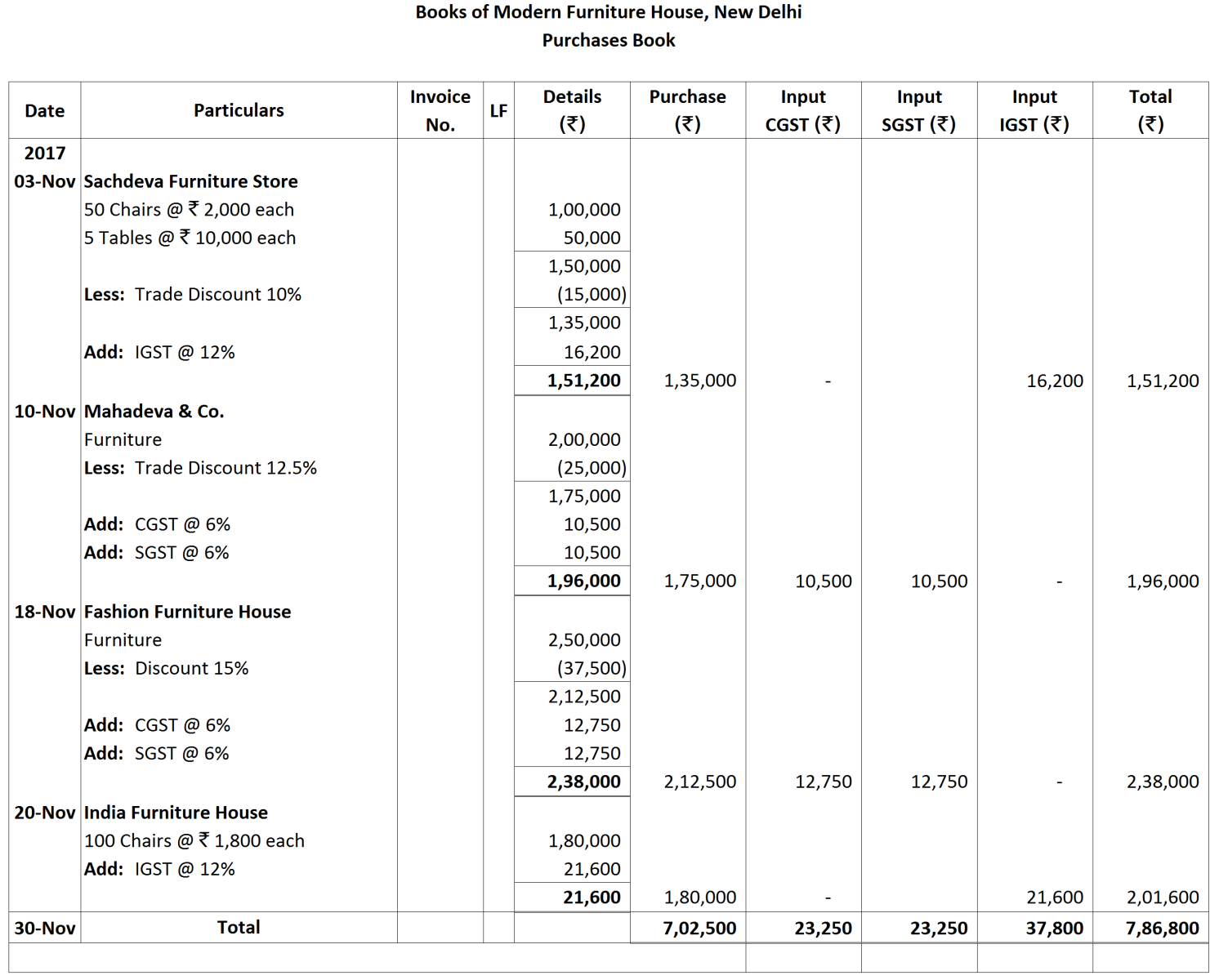
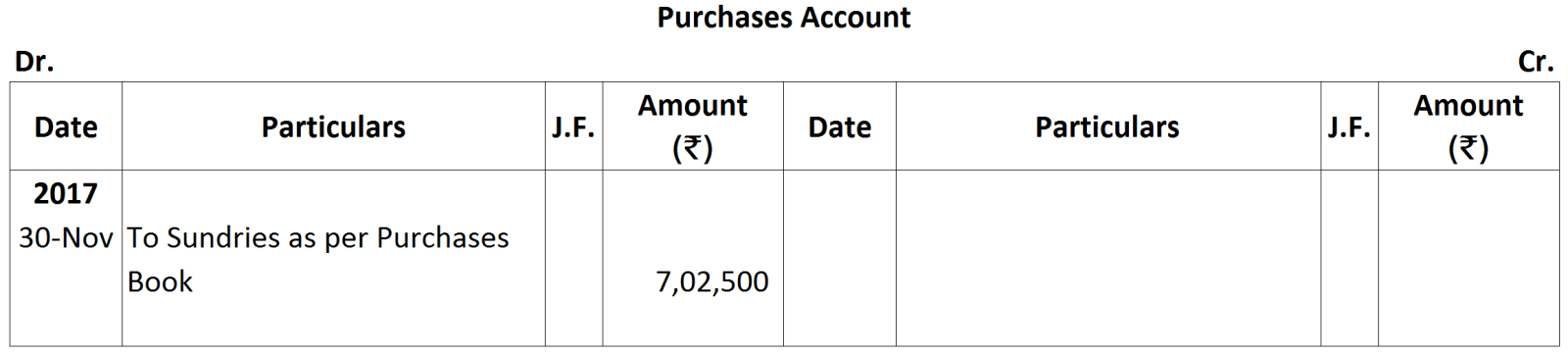
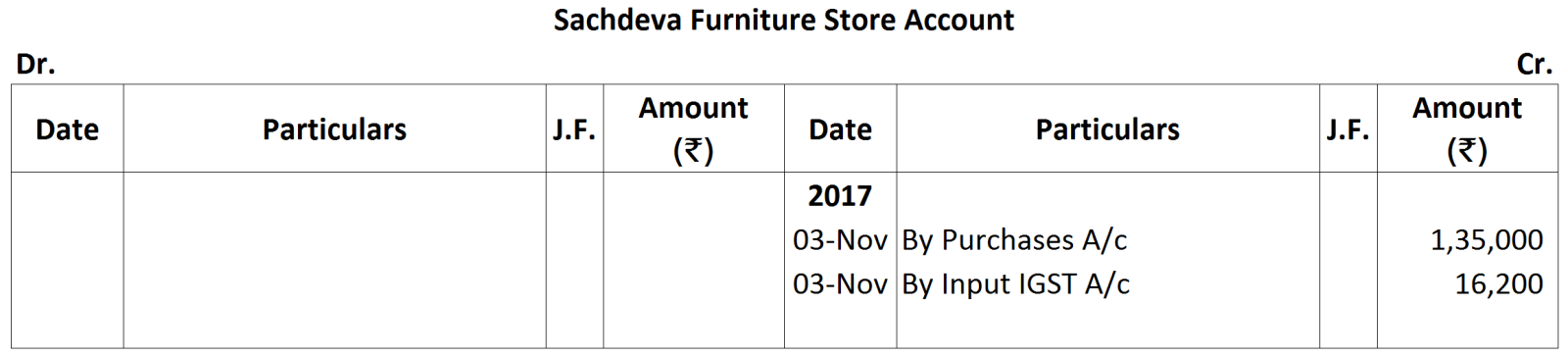
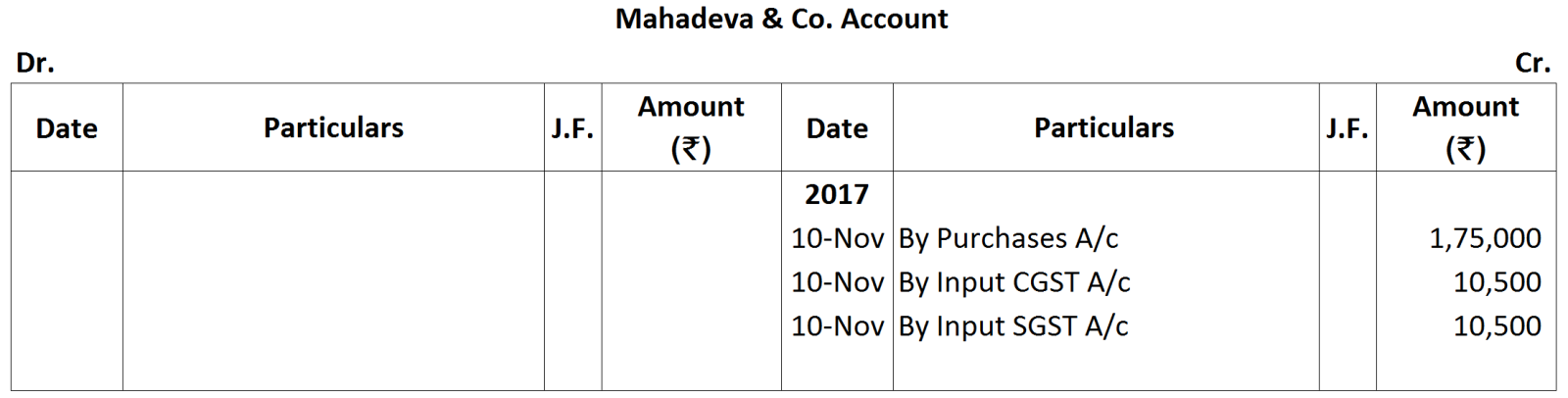
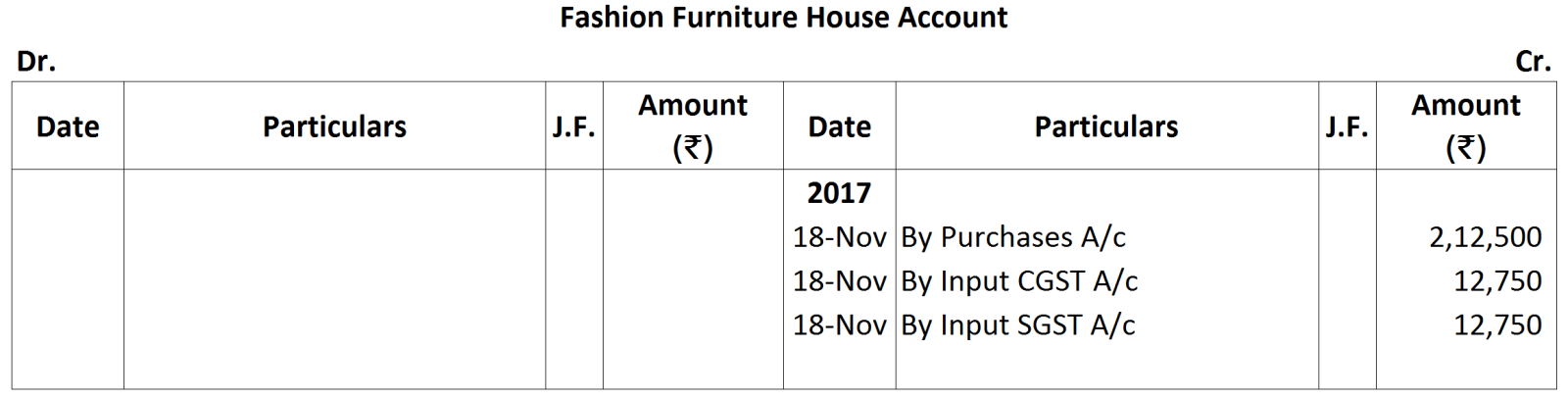
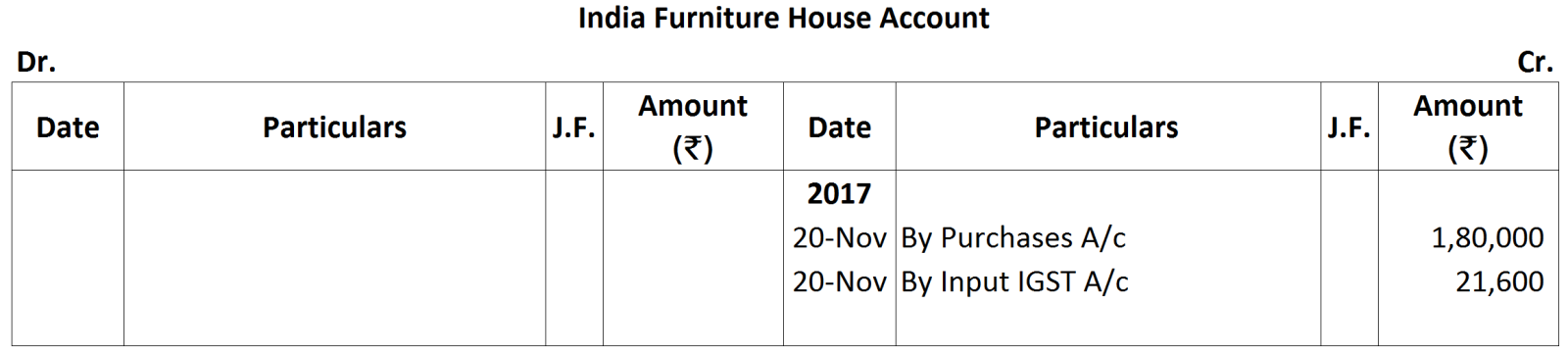
Record the following transaction in the Purchases Book of Modern Furniture House, New Delhi assuming CGST @ 6% and SGST @ 6% and post it into Ledger:
2017
 
Nov. 3
Purchased goods from Sachdeva Furniture Store, New Delhi :
50 Chairs @ ₹ 2,000 each
5 Tables @ ₹ 10,000 each
Nov. 10
Purchased furniture from Mahadeva & Co., Jaipur (Rajasthan) valued ₹ 2,00,000, less $12\frac{1}{2}\%$ Trade Discount
Nov. 18
Purchased furniture from Fashion Furniture House, Chandigarh of the list price of ₹ 2,50,000, less 15%
Nov. 20
Purchased from India Furniture House, New Delhi:
100 Chairs @ ₹ 1,800 each
Nov. 25
Purchased from Mohan Lal & Sons furniture of the value of ₹ 20,000 for cash
Answer


Note:
  1. Transaction on Nov. 25 will not be recorded in the Purchases Book as it is a cash transaction.
  2. Input CGST, Input SGST and Input IGST according to text book are ₹ 18,900, ₹ 18,900 and ₹ 46,500 respectively while as per our calculation Input CGST, Input SGST and Input IGST are ₹ 23,250, ₹ 2,250 and ₹ 37,800 respectively.
View full question & answer
Question 703 Marks
Journalise the following transactions:
2017
 
Jan. 1
Paid into bank for opening a Current Account
10,000
Jan. 3
Goods sold for ₹ 50,000 and the amount was deposited into the bank
 
Jan. 7
Amount withdrawn from bank
20,000
Jan. 10
Goods sold for Cash
15,000
Jan. 12
Amount deposited into bank
12,000
Jan. 14
Goods purchased and payment made by cheque.
25,000
View full question & answer
Question 713 Marks
Prepare the Vouchers:
2019
Particular
Jan-5
Received cash from Wahi & Co. on account vide cash receipt No. 551
10,000
Jan-10
Commission received vide cash receipt No. 520*
10,000
Jan-15
Sold leather purses for cash vide Cash Memo Nos. 307-310*
6,000
Jan-24
Sold two old machines vide Cash Memo No. 1560*
3,000
Transactions marked with * are subject to levy of CGST and SGST @ 6% each.
View full question & answer
Question 723 Marks
Prepare journal from the transactions given below:
  1. Proprietor withdrew for private use ₹ 10,000 from bank.
  2. Goods costing ₹ 50,000 were burnt by fire.
  3. Purchased machinery for cash ₹ 1,50,000 and paid ₹ 2,000 on its installation.
  4. Charge 5% depreciation on building costing ₹ 2,00,000 and 8% depreciation on furniture costing ₹ 5,000.
  5. Prepaid salary ₹ 2,000.
  6. Kapil who owed us ₹ 20,000 becomes insolvent and nothing is received from his estate.
View full question & answer
Question 733 Marks
Journalise the following transactions, post them into Ledger, balance the accounts and prepare a Trial Balance:
2017
 
March 1
Shyam Sunder & Sons commenced business with cash
80,000
March 2
Purchased goods for cash
36,000
March 3
Machinery purchased for cash
4,000
March 4
Purchased goods from: Raghu
22,000
Dilip
30,000
March 6
Returned goods to Raghu
4,000
March 8
Paid to Raghu, in full settlement of his account
17,500
March 10
Sold goods to Mahesh Chand & Co. for ₹ 32,000 at 5% trade discount
 
March 13
Received cash from Mahesh Chand & Co.
19,800
Discount allowed
200
March 15
Paid cash to Dilip
14,850
Discount received
150
March 20
Sold goods for cash
25,000
March 24
Sold goods for cash to Sudhir Ltd.
18,000
March 25
Paid for Rent
1,500
March 26
Received for Commission
2,000
March 28
Withdrew by Proprietor for his personal use
5,000
March 28
Purchased a fan for Proprietor's house
1,200
View full question & answer
Question 753 Marks
Use Accounting Equation to show the effect of the following transactions of M/s Royal Traders:
 
 
(₹)
(a)
Started Business with Cash
1,20,000
(b)
Purchased goods for cash
10,000
(c)
Rent received
5,000
(d)
Salary outstanding
2,000
(e)
Received interest
700
(f)
Sold goods for cash (costing ₹ 5,000)
7,000
(g)
Goods destroyed by fire
500
View full question & answer
Question 763 Marks
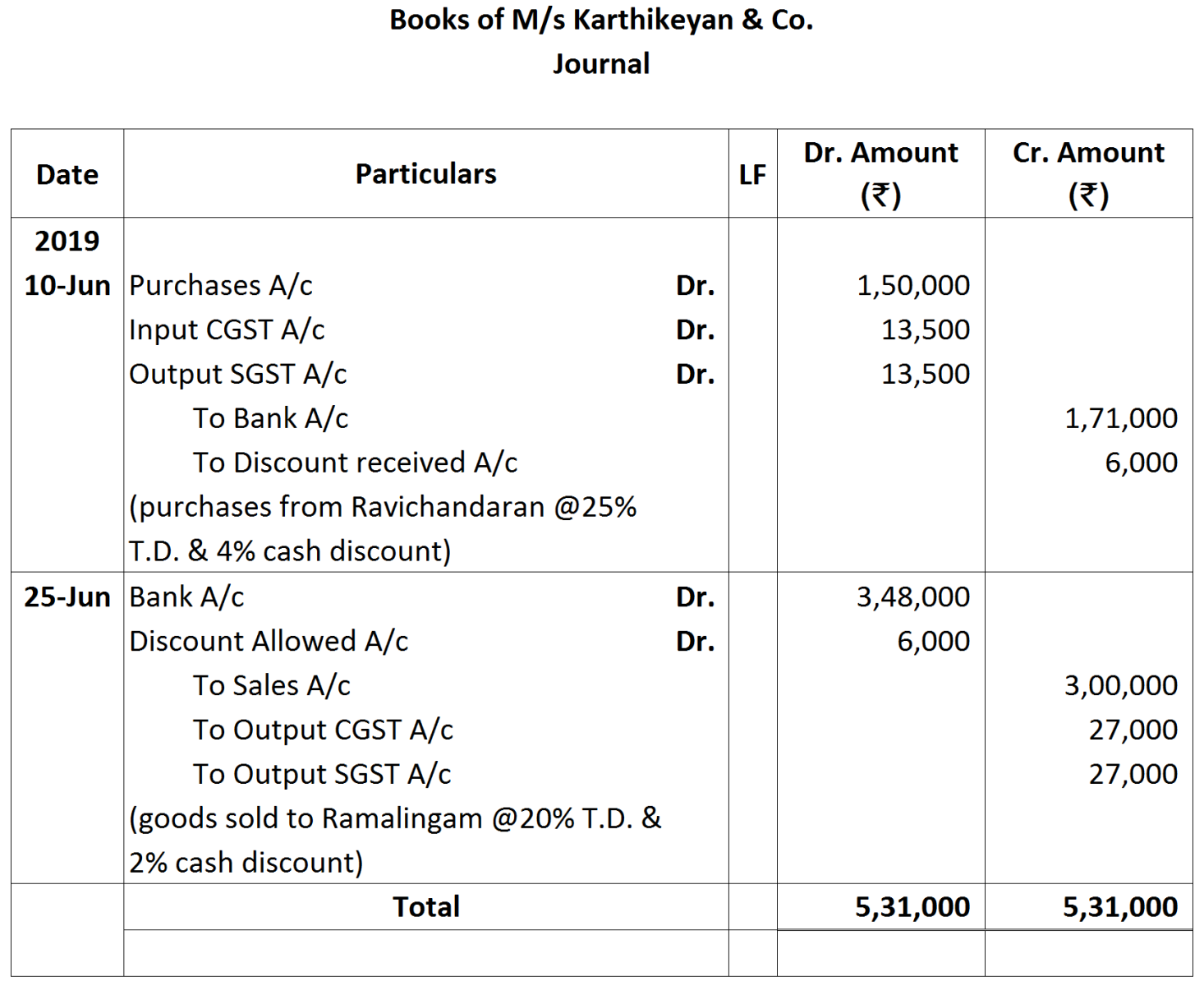
Pass entries for the following transactions in the books of M/s Karthikeyan & Co. of Chennai:
2019
 
June 10
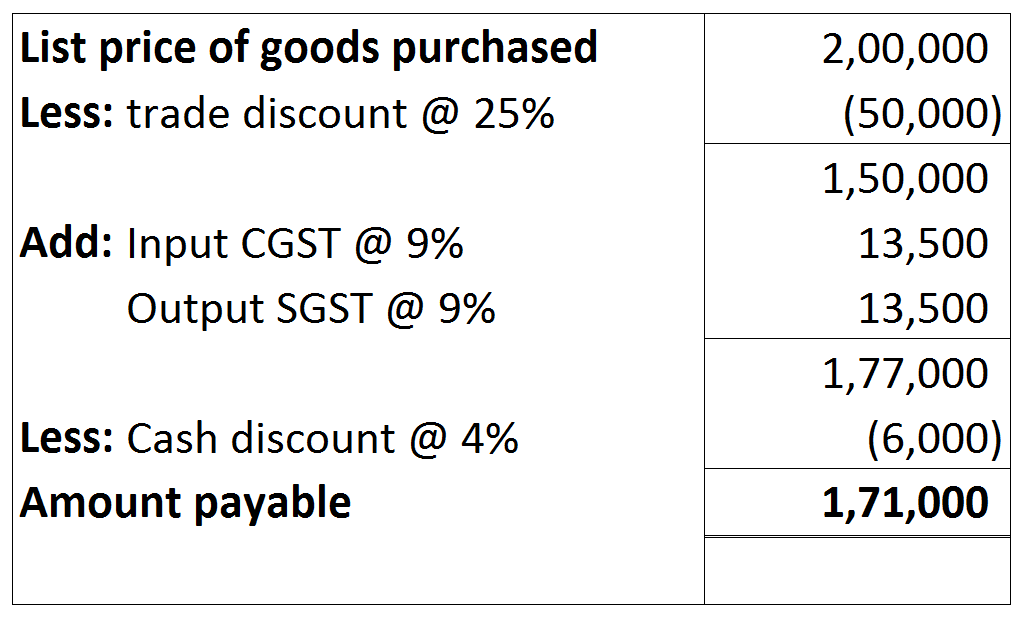
Purchased goods from Ravichandran of Madurai of the list price of ₹ 2,00,000 at 25% trade discount at 4% cash discount on purchase price of goods. Paid CGST and SGST @ 9% each. Paid the entire amount by cheque on the same date.
June 25
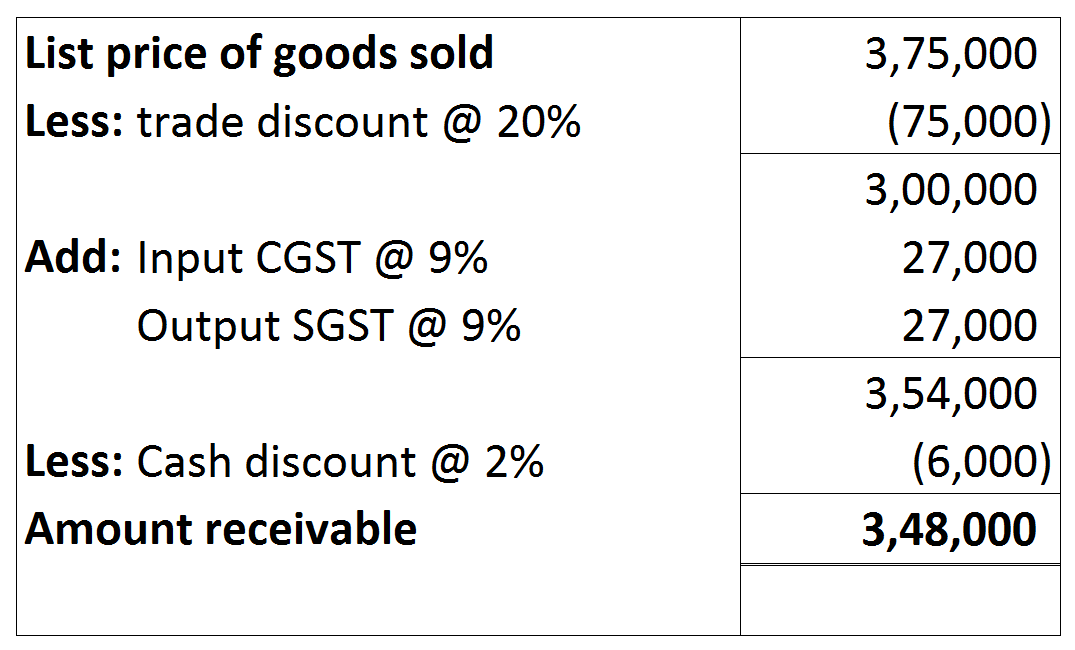
Sold goods to Ramalingam of Erode of the list price of ₹ 3,75,000 at 20% trade discount and 2% cash discount on sale price. Charged CGST and SGST @ 9% each. Full amount was received by cheque on the same date.
Ignore adjustment and payment of GST.
Answer

Working Note:
  1. Calculation of the amount paid on purchases.

  1. Calculation of the amount received on sales.

View full question & answer
Question 773 Marks
Journalise the following transactions:
  1. Sold goods to Brijesh of the list price of ₹ 10,000 at trade discount of 5%. Received full payment in cash.
  2. Goods given away as charity ₹ 1,000.
  3. Charge interest on capital of ₹ 5,00,000 @ 7% p.a.
  4. Outstanding wages ₹ 3,000.
  5. ₹ 5,000 due from Sunny are now bad debts.
  6. ₹ 50,000 cash sales (of goods costing ₹ 40,000).
View full question & answer
Question 783 Marks
Pass entries in the books of all parties in the following cases assuming CGST @ 6% and SGST @ 6%:
2018
 
March 1
Mahesh Chandra of Bihar purchased goods for ₹ 1,00,000 from Sunil Soren of Jharkhand and sold the same to Deepak Patnaik of Odisha for ₹ 1,50,000.
March 5
Deepak Patnaik sold goods to Suresh Yadav of Odisha for ₹ 1,80,000.
March 10
Suresh Yadav sold goods to Ravi Chakravarti of West Bengal for ₹ 2,50,000.
March 14
Ravi Chakravarti sold goods costing ₹ 2,50,000 to Sanjay Diwedi of West Bengal at a profit of 40% on cost.
View full question & answer
Question 793 Marks
Mohit has the following transactions, prepare Accounting Equation:
 
 
i.
Business started with cash
1,75,000
ii.
Purchased goods from Rohit
50,000
iii.
Sold goods on credit to Manish (costing ₹ 17,500)
20,000
iv.
Purchased furniture for office use
10,000
v.
Cash paid to Rohit in full settlement
48,500
vi. Cash received from Manish 20,000
vii. Rent paid 1,000
viii. Cash withdrew for personal use 3,000
View full question & answer
Question 803 Marks
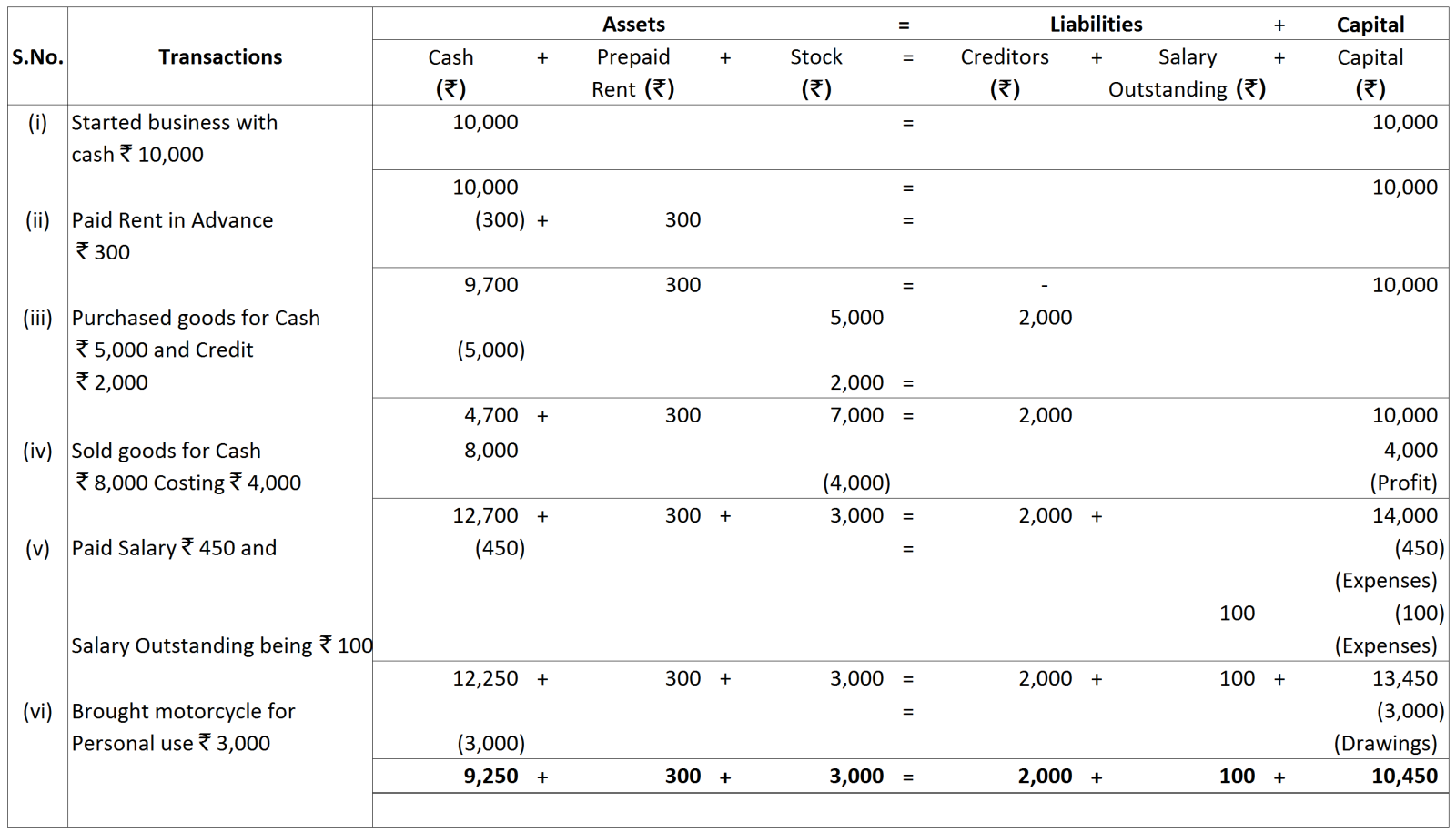
Prove that the Accounting Equation is satisfied in all the following transactions of Sameer Goel:
  1. Started business with cash ₹ 10,000.
  2. Paid rent in advance ₹ 300.
  3. Purchased goods for cash ₹ 5,000 and credit ₹ 2,000.
  4. Sold goods for cash ₹ 8,000 costing ₹ 4,000.
  5. Paid salary ₹ 450 and salary outstanding being ₹ 100.
  6. Bought motorcycle for personal use ₹ 3,000.
Answer

Assets = 9,250 + 300 + 3,000 + ₹ 12,550
Liabilities = 2,000 + 100 = ₹ 2,100
Capital = 10,450
View full question & answer
Question 813 Marks
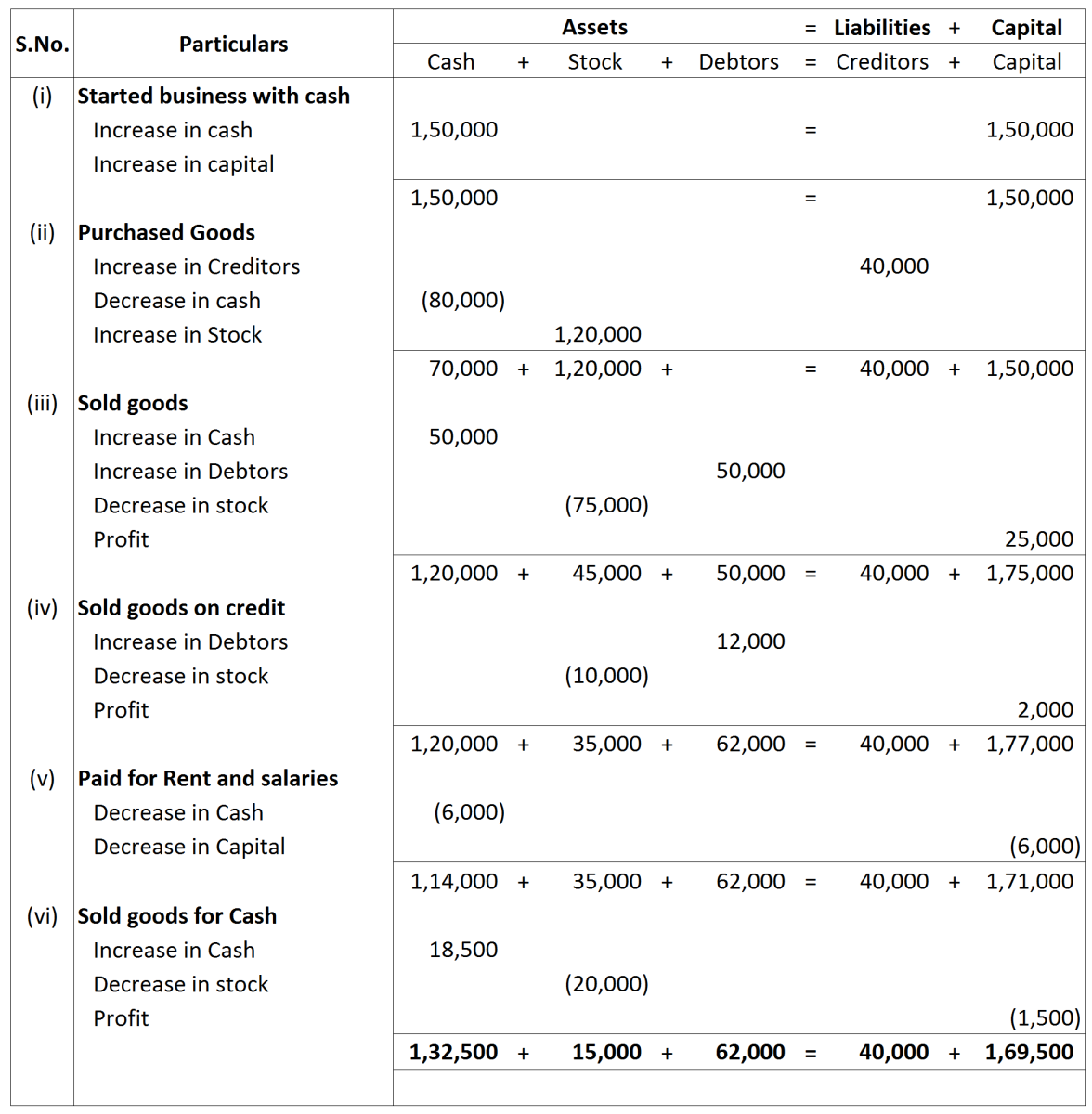
Prepare Accounting Equation from the following and also prepare a Balance Sheet:
  1. Raghu started business with Cash ₹ 1,50,000.
  2. Bought goods for cash ₹ 80,000 and on credit for ₹ 40,000.
  3. Goods costing ₹ 75,000 sold at a profit of $33\frac{1}{3}\%.$ Half the payment received in cash.
  4. Goods costing ₹ 10,000 sold for ₹ 12,000 on credit.
  5. Paid for Rent ₹ 2,000 and for salaries ₹ 4,000.
  6. Goods costing ₹ 20,000 sold for ₹ 18,500 for Cash.
Answer

Working Note:
Calculation of Selling Price
Cost of Goods Sold = 75,000
Add: Profit $33\frac{1}{3}\%$ of ₹ 75,000 = 25,000
Selling Price = $\overline{1,00,000}$
Less: Cash Received (50%) = 50,000
Credit Sales = $\overline{50,000}$

View full question & answer
Question 823 Marks
Write up Cash Book of Bhanu Partap with Cash and Bank Columns from the following transactions:
2017
 
(₹)
March 1
Cash-in-hand
2,710
Cash at Bank
27,500
March 3
Received from Subhash
3,500
March 4
Sold goods for cash
10,000
March 7
Paid Rent by Cheque
800
March 8
Paid Sohan by cheque
3,000
March 10
Bought goods for cash
15,000
March 12
Paid cash for stationery
200
Drew from Bank for office use
8,000
March 15
Received cheque from Surendra and sent it to Bank
6,600
March 16
Paid for advertisement
750
March 18
Issued cheque in favour of Nath Brothers
4,300
March 19
Cash Sales
13,000
Paid into Bank
16,000
March 20
Received cheque from Vinod and sent it to Bank
2,400
March 22
Bought Scooter and paid for the same by cheque
18,000
March 25
Bank returned Surendra's cheque dishonoured
 
March 28
Paid salary by cheque
7,200
Paid Trade expenses
2,000
March 29
Cash sales
9,500
March 30
Paid into Bank
10,000
View full question & answer
Question 833 Marks
Journalise the following transactions:
2017
 
Dec. 01
Hema started business with cash
1,00,000
Dec. 02
Open a bank account with SBI
30,000
Dec. 04
Purchased goods from Ashu
20,000
Dec.06
Sold goods to Rahul for cash
15,000
Dec.10
Bought goods from Tara for cash
40,000
Dec.13
Sold goods to Suman
20,000
Dec.16
Received cheque from Suman
19,500
 
Discount allowed
500
Dec.20
Cheque given to Ashu on account
10,000
Dec.22
Rent paid by cheque
2,000
Dec.23
Deposited into bank
16,000
Dec.25
Machine purchased from Parigya
10,000
Dec.26
Trade expenses
2,000
Dec.28
Cheque issued to Parigya
10,000
Dec.29
Paid telephone expenses by cheque
1,200
Dec.31
Paid salary
4,500
View full question & answer
Question 843 Marks
Enter the following transactions in the Journal of Arun Govil & Co.
2018
 
June 1
Arun Govil & Co. paid into bank as capital ₹ 6,00,000.
Jane 3
Purchased goods from Mukesh of the list price of ₹ 2,00,000 at 10% trade discount.
June 4
One-fourth of the above goods returned to Mukesh for not being upto specifications.
June 6
Issued a cheque to Mukesh for the amount due to him after deducting 2% as cash discount.
June 7
Withdrew from bank ₹ 2,50,000 for office use and ₹ 10,000 for personal use.
June 10
Purchased a machinery for ₹ 1,00,000 and spent ₹ 5,000 on its installation. Payment for machinery was made by cheque and installation expenses were paid in cash.
June 12
Sold goods for ₹ 1,00,000 to Amar.
June 13
Amar clears his account by giving a cheque of ₹ 98,500. Cheque is immediately sent to bank.
June 15
Purchased stationery for personal use ₹ 3,000 and for office use ₹ 5,000.
June 20
Purchased land for ₹ 2,00,000 and paid 1% as brokerage and ₹ 15,000 as registration charges on it. Entire payment is made by Cheque.
June 30
Wages due to labourers ₹ 20,000 and salary due to the clerk ₹ 30,000.
View full question & answer
Question 853 Marks
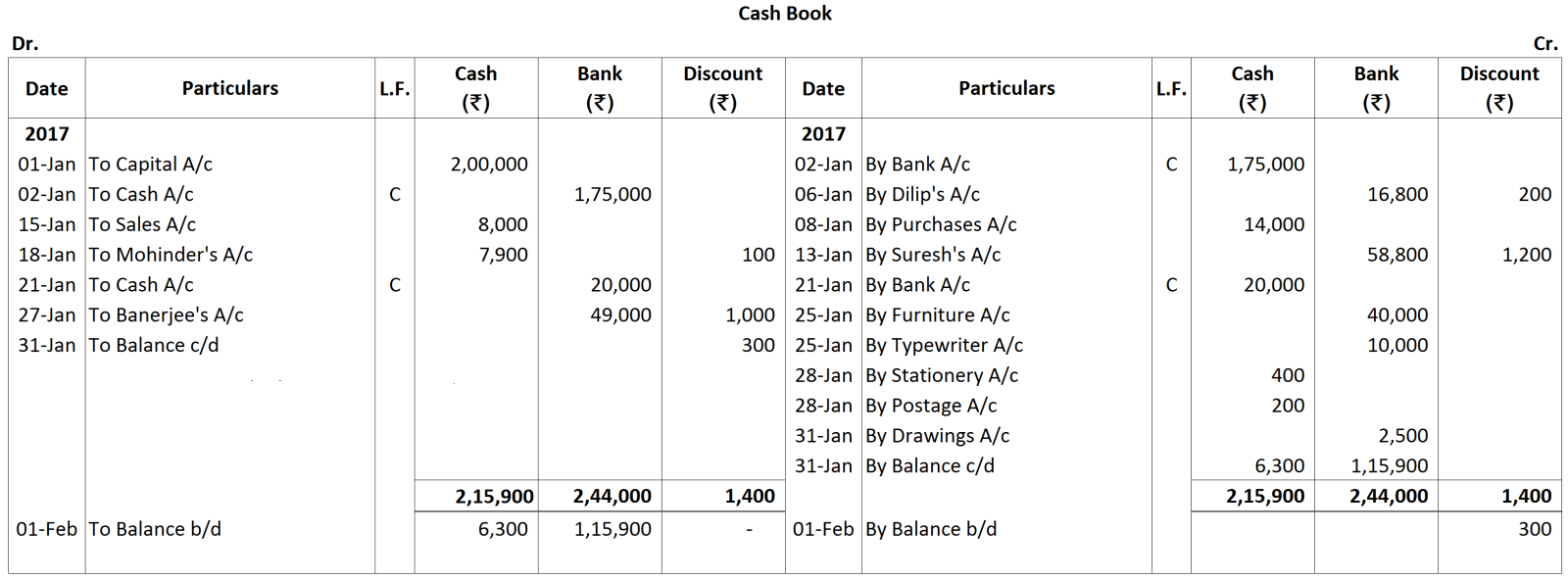
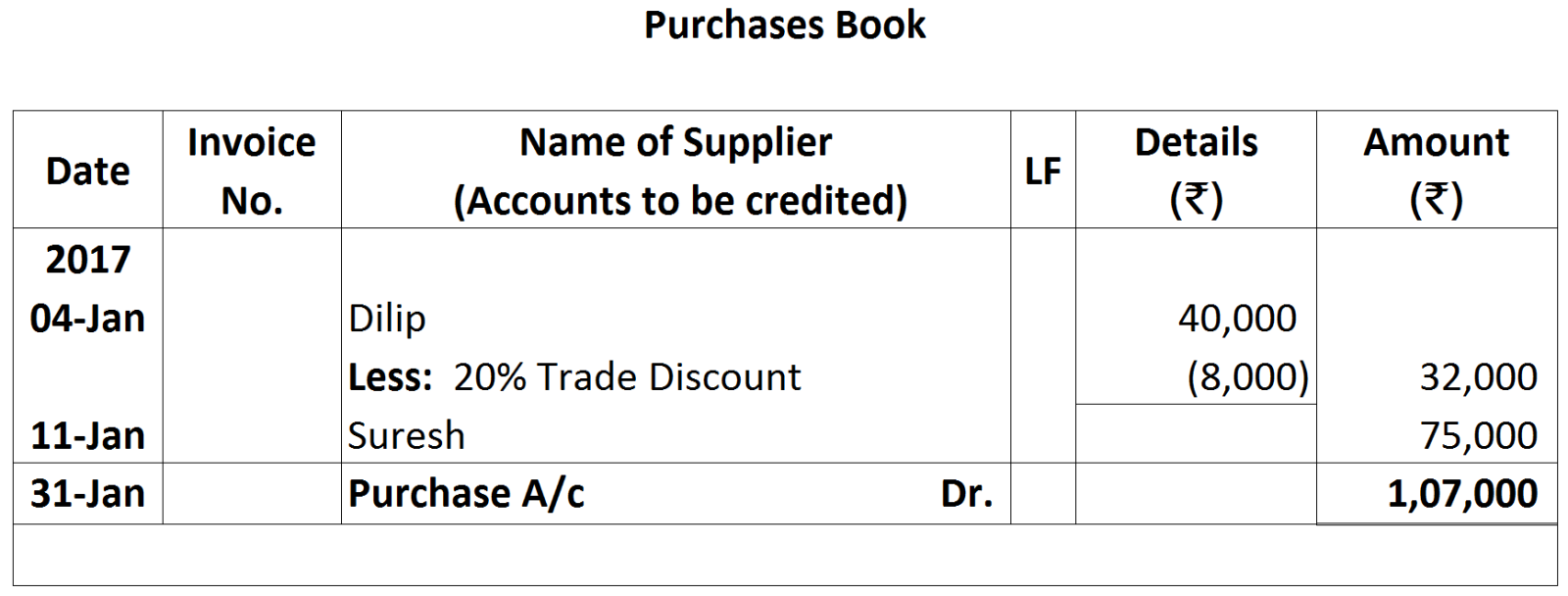
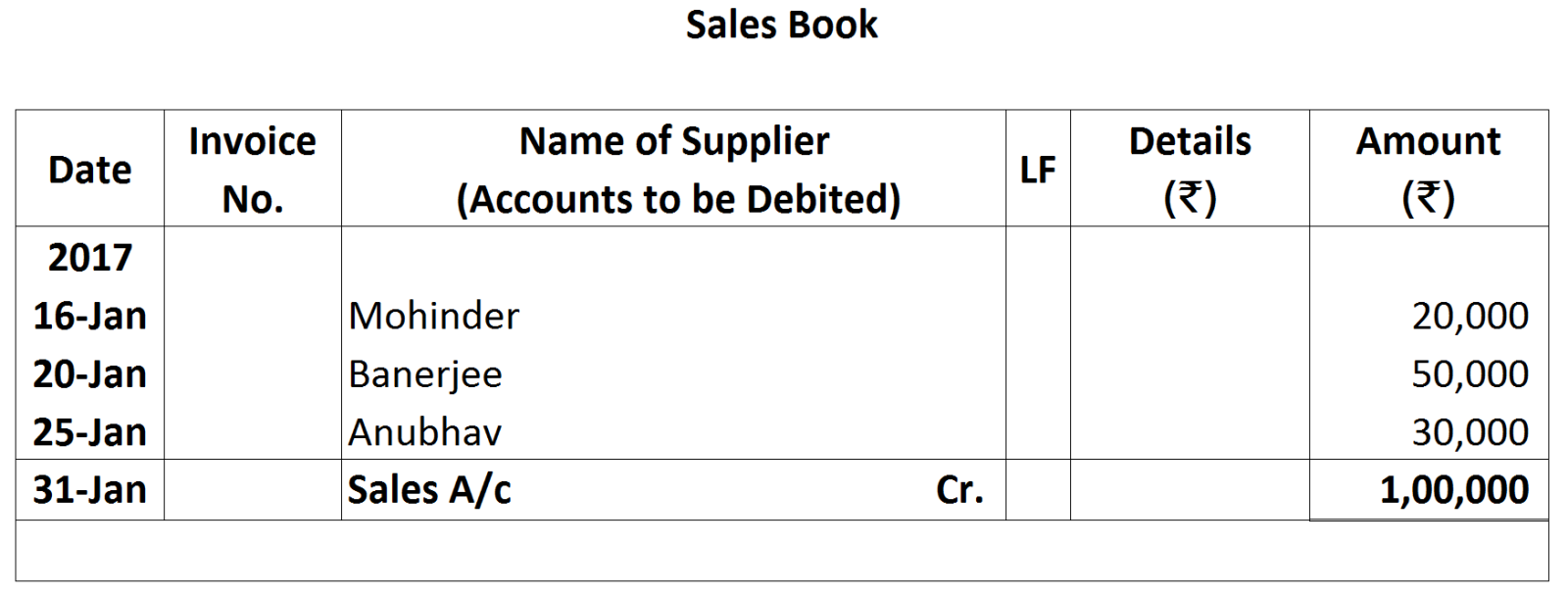
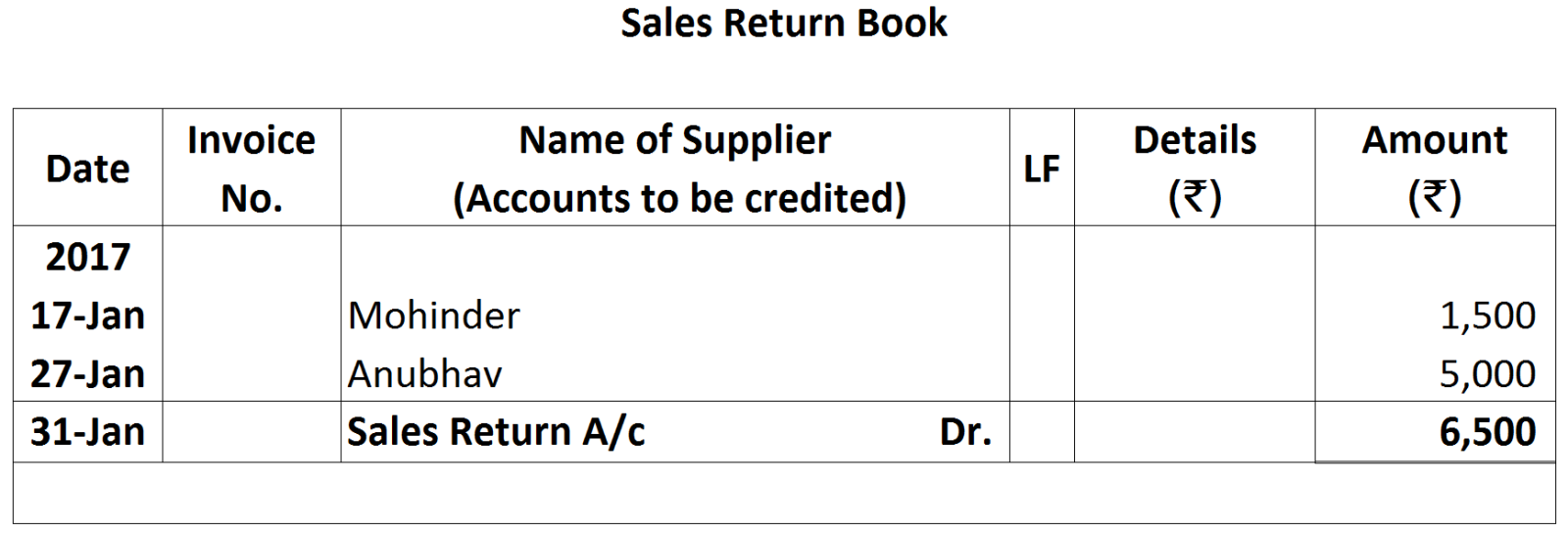
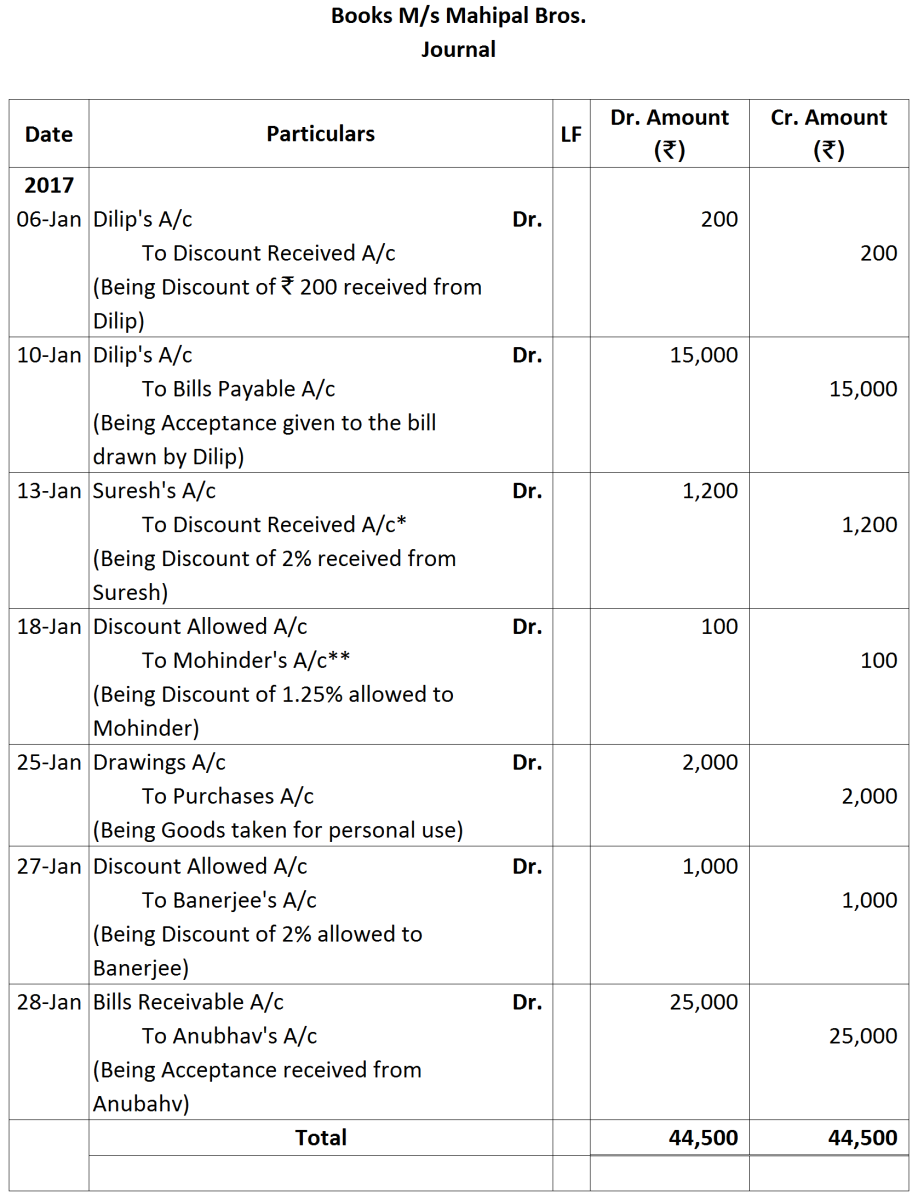
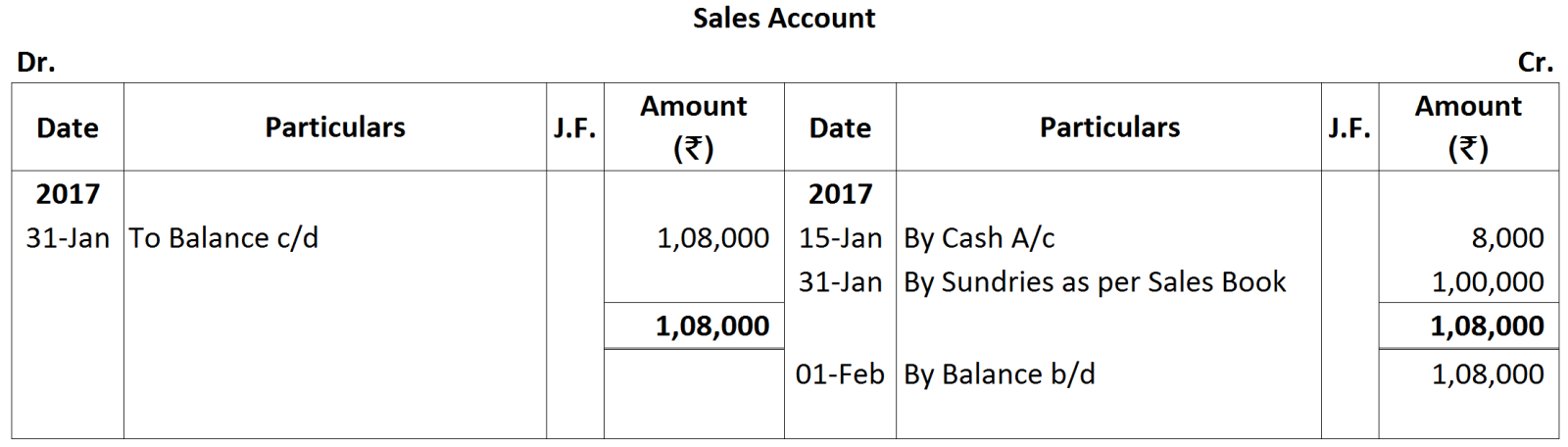
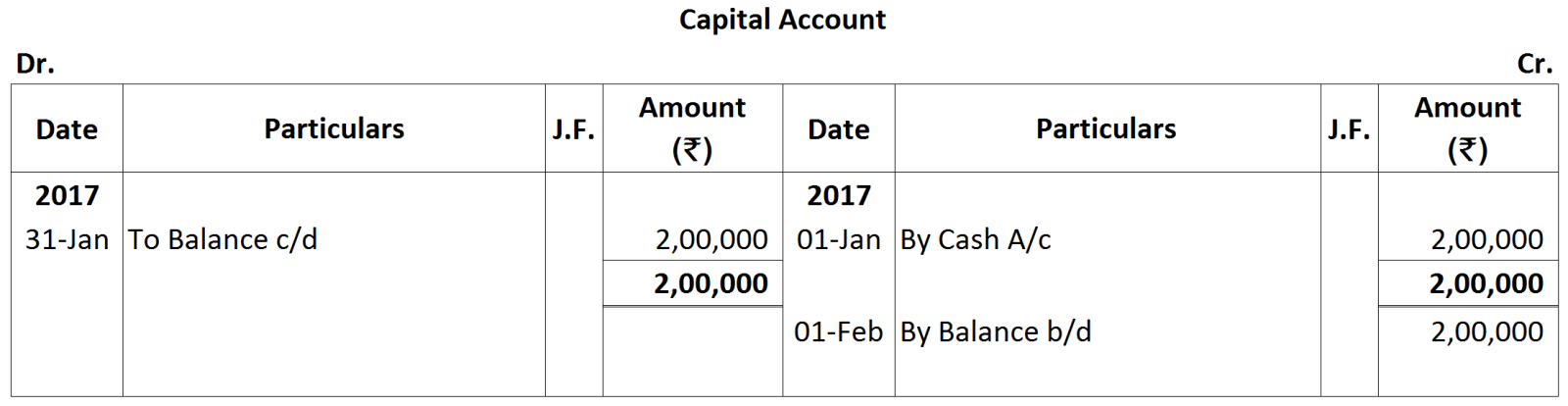
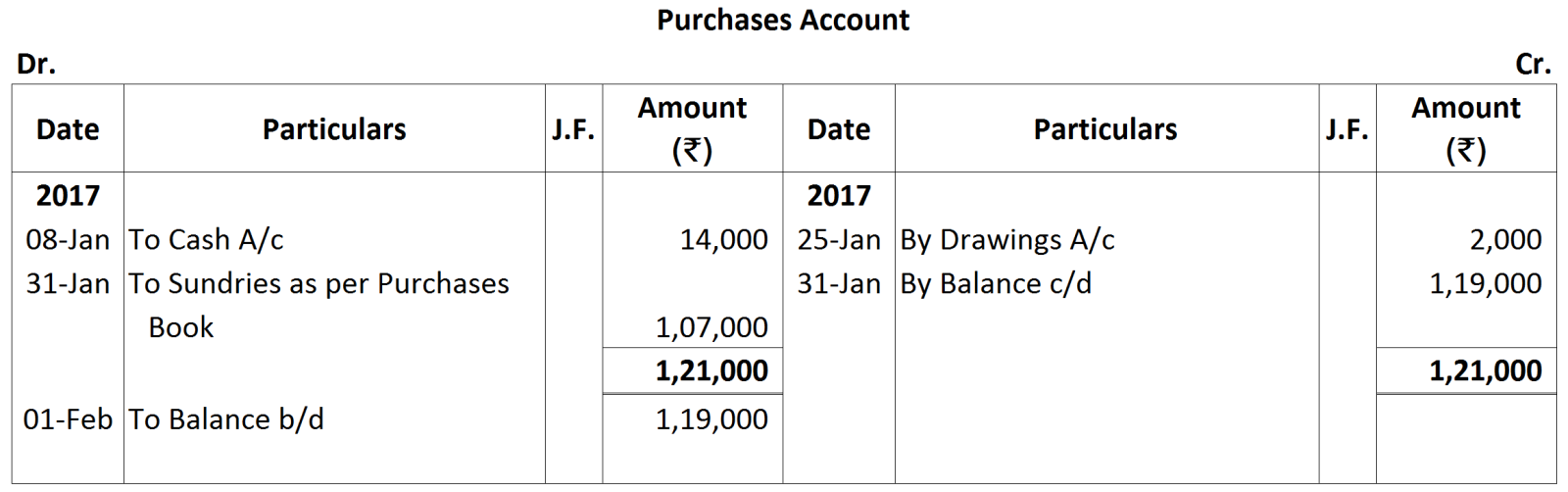
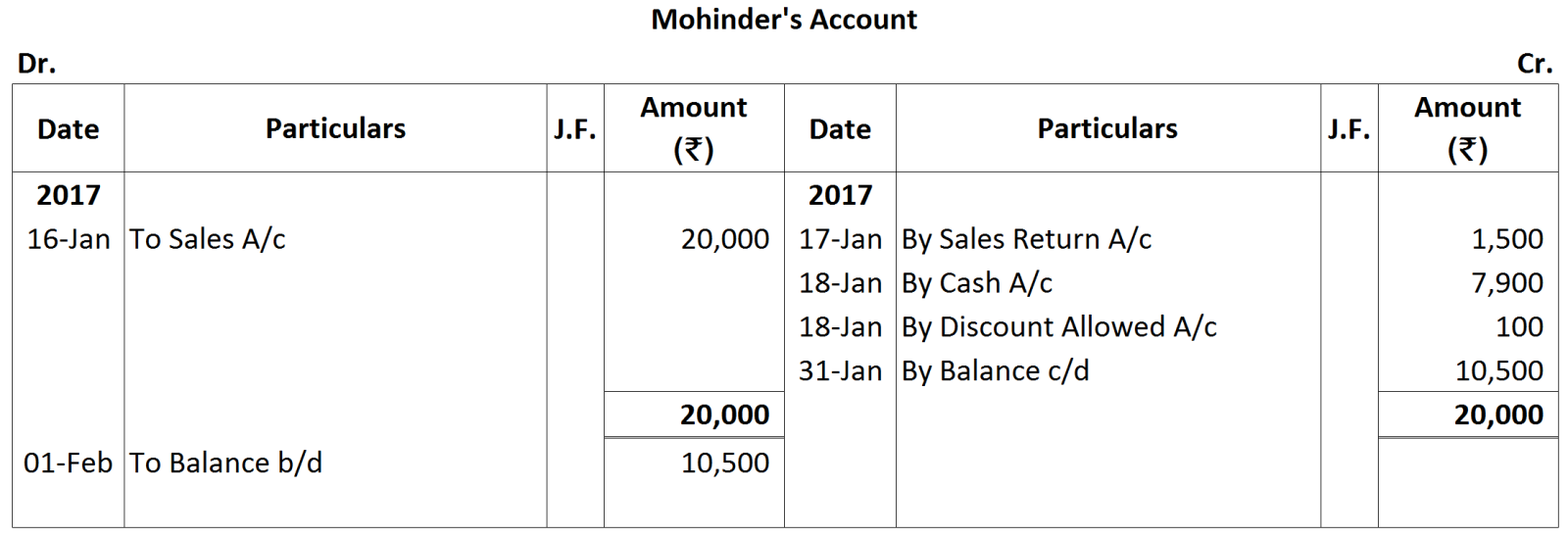
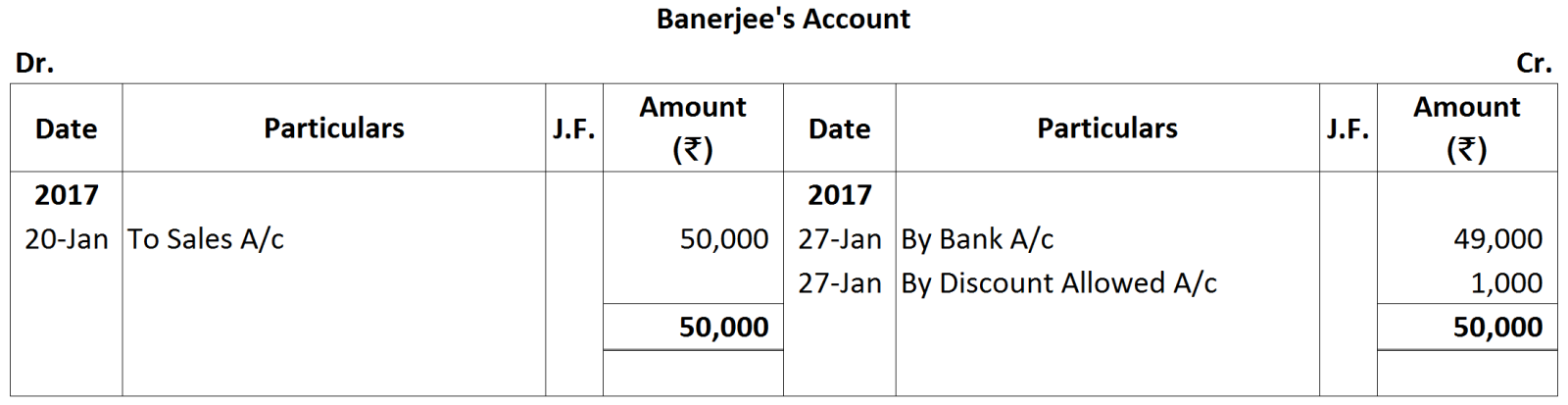
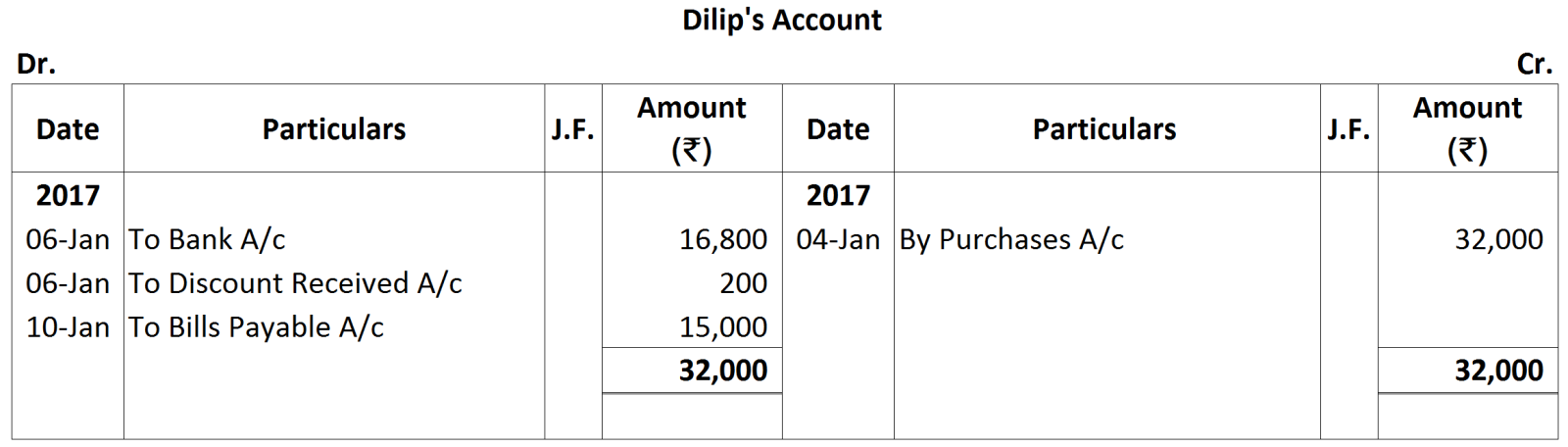
Record the following transactions of M/s Mahipal Bros. in Proper Subsidiary Books, post them into the Ledger and take out a Trial Balance:
2017
 
Jan. 1
Commenced business with Cash ₹ 2,00,000
Jan. 2 Deposited into U.T.I Bank ₹ 1,75,000
Jan. 4
Purchased goods from Dilip for ₹ 40,000. Trade Discount 20%
Jan. 6
Gave a cheque to Dilip for ₹ 16,800 and discount allowed by him ₹ 200
Jan. 8 Goods bought from Nilesh for Cash ₹ 14,000
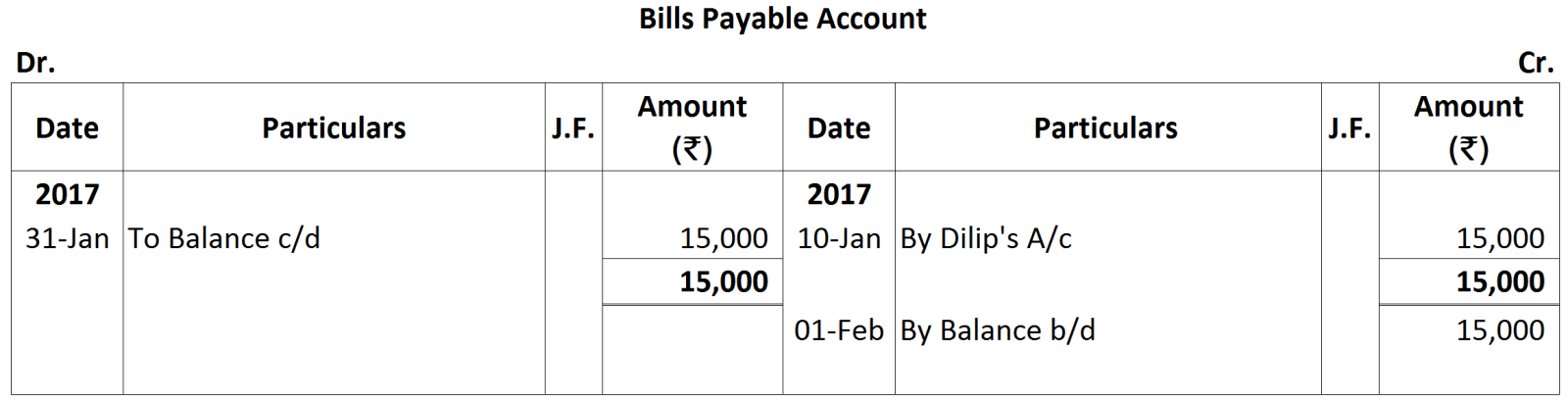
Jan. 10 Accepted a bill at 2 months for ₹ 15,000 drawn by Dilip
Jan. 11 Bought goods from Suresh ₹ 75,000
Jan. 13 Paid to Suresh a Cheque for ₹ 58,800 after receiving discount of 2%
Jan. 15 Cash sales made to Jyoti Parshad ₹ 8,000
Jan. 16 Sold goods to Mohinder for ₹ 20,000
Jan. 17 Goods returned by Mohinder for ₹ 1,500
Jan. 18 Received from Mohinder ₹ 7,900 after allowing a discount of 1.25%
Jan. 20 Goods sold to Banerjee ₹ 50,000
Jan. 21 Deposited into Bank ₹ 20,000
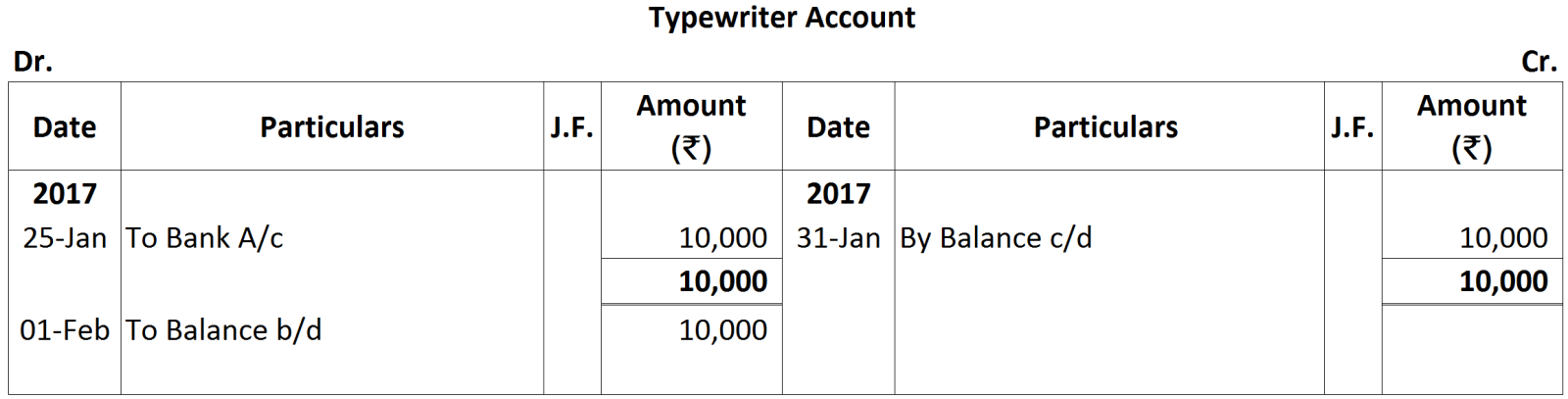
Jan. 25 Goods taken for personal use ₹ 2,000
Jan. 25 Purchased furniture ₹ 40,000 and Typewriter ₹ 10,000 for office use
Payment for both the items is made by Cheque
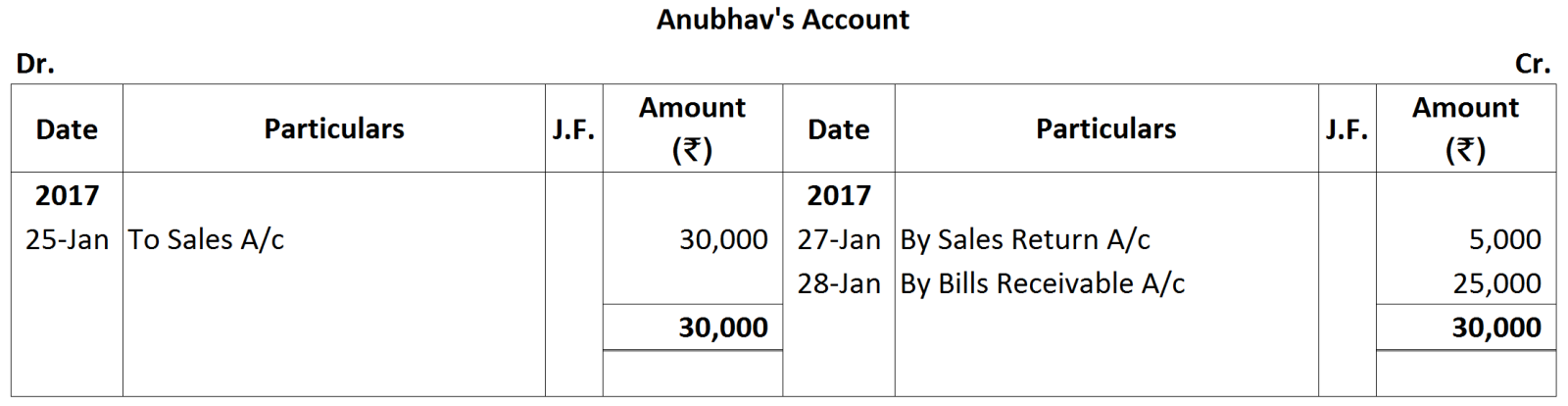
Jan. 25 Sold goods to Anubhav ₹ 30,000
Jan. 27 Goods returned by Anubhav ₹ 5,000
Jan. 27 Received full payment from Banerjee by Cheque, sent it to Bank, Discount allowed 2%
Jan. 28 Acceptance received from Anubhav at 30 days for the amount due from him
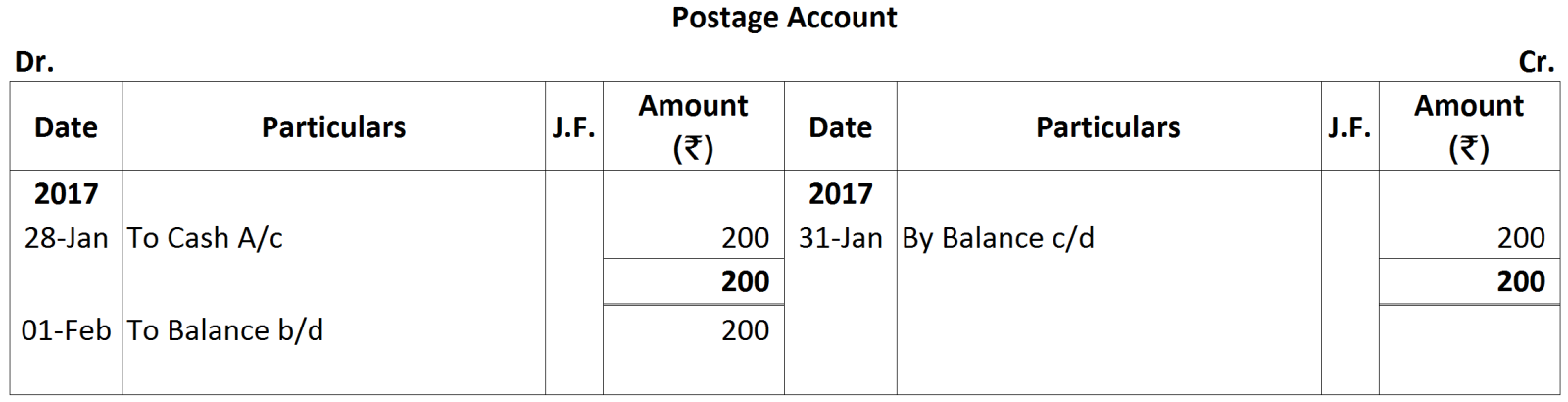
Jan. 28 Paid for stationery ₹ 400 and for Postage ₹ 200
Jan. 31 Rent of proprietor's house paid by Cheque ₹ 2,500
Answer


*Amount paid to Suresh (98% value) = ₹ 58,800
Amount of Discount Received (2% value) $=\frac{58,800}{98}\times2=₹\ 1,200$
**Amount received from Mohinder (98.75% value) = ₹ 7,900
Amount of Discount Allowed (1.25% value) $=\frac{7,900}{98.75}\times1.25=₹\ 100$


View full question & answer
Question 863 Marks
Journalise the following transactions in the books of Afzal, Kolkata and post them to the Ledger:
2019
 
Jan 1
Started business with cash
1,00,000
Jan 3
Bought goods on credit from Gupta & Co., Delhi
20,000
Jan 5
Cash sales
5,000
Jan 8
Cash purchases
8,000
Jan 10
Sold goods to Ahmed & Co., Lucknow
10,000
Jan 11
Deposited cash in bank
50,000
Jan 13
Purchased a computer for office
20,000
Jan 15
Took a loan from Mehboob
70,000
Jan 16
Goods returned by Ahmed & Co.
2,000
Jan 17
Purchased furniture from Mehfil Mart, Kolkata
10,000
Jan 18
Paid interest to Mehboob
2,000
Jan 19 Received claim from Ahmed & Co. for defects in goods supplied to them. Claim was accepted and rebate was allowed 1,000
Jan 22 Paid rent by cheque 2,000
Jan 24 Withdrew from bank 20,000
Jan 25 Sales of goods at counter after allowing trade discount of 10% 10,000
Jan 26 Goods purchased from Gupta & Co., Delhi were destroyed by accident 10,000
Jan 27 Advertisement expenses paid through bank 5,000
Jan 28 Ahmed & Co. settled their account by cheque 7,000
Jan 29 Paid the due amount to Gupta & Co. by cheque after availing discount of 800  
Jan 31 Sold old newspapers 500
View full question & answer
Question 873 Marks
Journalise the following trasactions:
 
 
1.
Charge depreciation on Machinery
20,000
2.
Salary due to Office Clerks
1,00,000
3.
Received cash for Bad-Debts written off last year
5,000
4.
Purchased goods from Ashok & Co. for 50,000 at 20% Trade Discount. Half the payment was made in cash.
 
5.
Issued cheque to Ashok & Co. in full settlement
19,500
6.
Paid Life Insurance Premium by cheque
6,000
7.
Proprietor used goods for household purposes
20,000
8.
Goods given free to a hospital out of business
10,000
View full question & answer
Question 883 Marks
Give the rules of Debit and Credit and explain them with imaginary examples.
Under Double Entry System of accounting each transaction has two aspects. One aspect is debit, i.e., receiving or incoming aspect. Another aspect is credit, i.e., giving or outgoing aspect. Debit and credit aspects of a transaction form the basis of Double Entry System.
Rules of Double Entry or Rules of Debit and Credit are formed on the basis of these two aspects in each of the business transactions. There are two approaches for deciding when to write on the debit side of account and when to write on the credit side of an account, i.e., which account is to be debited and which account is to be credited. The rules or: the basis of which such decision is taken are called Rules of Debit and Credit.
Rules of Debit and Credit (Traditional Classification) at a Glance:
S.No
Types of Account
Account to be Debited
Account to be Credited
1
Personal Account
Receiver
Giver
2
Real Account
What comes in
what goes out
3
Nominal Account
Expense and Loss
Income and Gain
From the following transactions, state the nature of accounts and state which account will be debited and which account will be credited:
S.No  
1
Mohan started business with cash
5,00,000
2
Purchased goods for cash
1,00,000
3
Sold goods for cash
1,50,000
4
Received interest from Ram in cash
500
5
Sold goods to Ashok
60,000
6
Purchased furniture for cash
50,000
7
Paid wages
20.000
Answer
S.No
Transactions
Accounts Involved
Nature of Account
Debit ₹
Credit ₹
Reason
1
Mohan started Business with ₹ 5,00,000 in cash
Cash Capital
Real Personal
5,00,000
5,00,000
Comes in Giver
2
Purchased goods for cash ₹ 1,00,000.
Purchased Cash
Nominal Real
1,00,000
1,00,000
Expenses Goes out
3
Sold goods for cash ₹ 1,50,000.
Cash Sales
Real Nominal
1,50,000
1,50,000
Comes in Income
4
Received interest from Ram in cash ₹ 500.
Cash Interest
Real Nominal
500
500
Comes in Income
5
Sold goods to Ashok for ₹ 60,000.
Ashok Sales
Personal Nominal
60,000
60,000
Receiver Income
6
Purchased furniture for cash ₹ 50,000
Furniture Cash
Real Real
50,000
50,000
Comes in Goes out
7
Paid wages ₹ 20,000
Wages Cash
Nominal Real
20,000
20,000
Expenses Goes out
View full question & answer
Question 893 Marks
Record the following transactions in the books of Sahdev & Sons assuming all transactions have been entered within the state of Bihar, Charging CGST and SGST @ 9% each.
1.
Bought goods from Nanak Bros. for ₹ 4,00,000 at 10% trade discount and 3% cash discount on purchase price. 25% of the amount paid at the time of purchase.
2.
Sold goods to Kumar & Sons. for ₹ 2,00,000 at 20% trade discount and 5% cash discount on sale price. 60% of the amount received by Cheque.
3.
Received from Gopi Chand ₹ 38,000 by Cheque after deducting 5% cash discount.
4.
Paid ₹ 20,000 for rent by Cheque.
5.
Paid ₹ 50,000 for salaries by Cheque.
6.
Goods worth ₹ 10,000 distributed as free samples.
7.
₹ 5,000 due from Chanderkant are bad-debts.
8.
Sold household furniture for ₹ 15,000 and the proceeds were invested into business.
View full question & answer
Question 903 Marks
Pass entries in the books of Sh. Jagdish Mishra of Lucknow (U.P.) assuming CGST @ 6% and SGST @ 6%.
2018
 
March 5
Purchased goods for ₹ 2,50,000 from Virender Yadav of Patna (Bihar).
March 12
Sold goods costing ₹ 60,000 at 50% profit to Partap Sinha of Ranchi (Jharkhand).
March 14
Purchased goods for ₹ 70,000 from Ram Nath of Kanpur (U.P.) against cheque.
March 18
Sold goods at Varanasi (U.P.) Costing ₹ 2,25,000 at 3313%3313%profit less trade discount 10% against cheque which was deposited into bank.
March 20
Paid rent ₹ 25,000 by cheque.
March 31 Payment made of balance amount of GST.
View full question & answer
Question 913 Marks
Pass entries in the books of Devdhar & Bros. Odisha, assuming all transactions have been entered within the state, charging CGST and SGST @ 9% each:
2018
 
March 4
Purchased goods for ₹ 5,00,000 from Sunil Bros.
March 7
Goods returned to Sunil Bros. for ₹ 20,000
March 10
Sold goods to Mehta & Co. for ₹ 8,00,000
March 12
Goods returned by Mehta & Co. for ₹ 30,000
March 20
Goods withdrawn by Proprietor for personal use ₹ 10,000
March 25
Goods distributed as free samples ₹ 5,000
March 26
Paid advertisement expenses by cheque ₹ 20,000
March 31
Payment made of balance amount of GST.
View full question & answer
Question 923 Marks
Following was the position of Harish & Co. as on 1st April, 2017:
Cash in Hand ₹ 10,000; Cash at Bank ₹ 16,800; Furniture ₹ 8,000; Stock ₹ 50,000; Debtors−Ram ₹ 8,000; Shyam ₹ 12,000; Creditors−Anil ₹ 4,000; Sunil ₹ 5,000.
Following transactions took place during April, 2017:
2017
 
April 2
Received a cheque from Ram in full settlement of his account after deducting 5% cash discount.
April 4
Deposited the above cheque into Bank.
April 5
Goods purchased for ₹ 20,000 at 10% trade discount and 5% cash discount. Payment made by cheque.
April 6
Discount allowed to him ₹ 140. Cheque deposited into the bank on the same day.
April 10
Cash paid to Anil after deducting 2% cash discount.
April 15
Old furniture sold for ₹ 800.
April 16
Sold goods to Shiv Parshad of the list price of ₹ 10,000 at a trade discount of 15%.
April 18
Shiv Parshad returned goods of the list price of ₹ 1,000.
April 20
Paid for furniture repairs to Bahadur Singh ₹ 100.
April 25
Received a cheque from Shiv Parshad after deducting 4% cash discount. Cheque was deposited into bank.
April 28
Bank charged ₹ 50 for 'Bank Charges'.
April 30
Received Commission ₹ 200.
Pass Journal entries for the above transactions.
View full question & answer
Question 933 Marks
Enter the following transactions in Return Inward Book of M/s Kanitkar & Co. of Mumbai (Maharashtra) assuming CGST @ 2.5% and SGST @ 2.5% and post it into Ledger:
2018
 
Jan. 5
Goods returned to us by Giriraj & Co., Pune (Maharashtra) worth ₹ 40,000, less 10% trade discount
Jan. 10
Shah Brothers, Jaipur (Rajasthan) returned goods, being not according to sample ₹ 30,000
Jan. 16
Allowance claimed by Jai Singh & Co., Mathura (U.P) on account of a mistake in the invoice ₹ 10,000
Jan. 20
Good returned by Gopalsons, Mumbai being defective ₹ 20,000
View full question & answer
Question 943 Marks
Journalise the following transactions in the books of Shri Manoj, Kolkata and prepare Ledger Accounts.
Opening Debit Balances:
Cash in Hand ₹ 15,000; Cash at Bank ₹ 55,000; Stock ₹ 28,000; Debtors ₹ 25,000 (Sunil ₹ 5,000; Abhay ₹ 10,000 and Alok ​₹ 10,000); Fixed Assets: Computer and Printer ₹ 50,000; Furniture ₹ 10,000; Delivery Van ₹ 25,000.
Opening Credit Balances:
Bank Loan ₹ 90,000; Salaries Outstanding ₹ 15,000; Creditors ₹ 20,000; Bills Payable ₹ 10,000; Capital ₹ 73,000.
Transactions for the month of April, 2019 were:
  1. Purchased goods from M/s Prabhat Electricals, Delhi ₹ 10,000 less 10% Trade Discount.
Cheque was issued immediately and availed 2% Cash Discount on purchase price.
  1. Cheque was received from Abhay for the balance allowing him discount of 2%*.
  2. Cheque was received from Alok for the balance due*.
  3. Sunil was unable to pay the full dues and offered to pay 75%, which was accepted. Cheque was duly received*.
  4. Gave goods costing ₹ 1,000 as charity. These goods were purchased in Kolkata.
  5. In a competition held by the RWA where the shop is located an electric iron costing ₹ 500 was given as an award. It had been purchased from Prabhat Electricals, Delhi.
  6. A debt of ₹ 10,000 that was written off as bad debt in the past was received*.
  7. Salaries amounting to ₹ 15,000 provided in the books for the month of March, 2019 were paid through cheque*.
  8. Sales for the month were: Cash Sales ₹ 15,00,000 (Intra-state) and Credit Sales ₹ 3,00,000 (Inter-state).
  9. Purchases for the month were: Cash Purchases ₹ 1,00,000 (Intra-state) and Credit
Purchases (Inter-state) ₹ 9,00,000.

Cheques Received from Debtors ₹ 2,00,000; Deposited Cash ₹ 15,00,000.
  1. Paid to creditors through cheques ₹ 8,90,000*.
  2. Bank Loan repaid during the month ₹ 20,000*.
Inter-state transactions are subject to levy of IGST @ 12% and Intra-state transactions are subject to levy of CGST and SGST @ 6% each. GST is not levied on transactions marked with (*).
View full question & answer
Question 953 Marks
What is Double-Entry System? Explain its principles and advantages.
Answer
Meaning of Double Entry System: According to this system every business transaction affects at least two accounts in opposite directions. For example, if the furniture is purchased in the business, furniture is increased whereas the cash is decreased. There can be no transaction in the business which affects only one account or which has only one aspect. As such, both the aspects of every transaction are recorded under this system. It may, however, be noted that the double entry does not mean that a transaction is recorded twice. But it means that at least two accounts are affected by a transaction - one account receiving a benefit and the other account yielding a benefit. The person or the account receiving a benefit is debited and the person or the account who gives something to the business is credited. The amount of every transaction is written twice, once as a debit and again as a credit. For example, we received ₹ 25,000 from Mohan. This transaction affects two accounts - Cash Account and the Mohan's Account. Cash account is receiving a benefit (as cash is coming in) and hence Cash account will be debited, whereas Mohan is yielding a benefit and hence his account will be credited.
Principles or Characteristics of Double Entry System: Double Entry System is based upon the principle that “Every debit has a credit and every credit has a debit”. Following are the important features or essentials of the double entry system.
  1. Every bussiness transaction affects two accounts: Every business transaction has a two-fold effect, i.e., it affects two accounts simultaneously. One of them is debited and the other is credited. Certain transactions may affect more than two accounts but the amount of the accounts to be debited and credited will always be equal.
  2. Recording of both personal and impersonal aspects: Both personal and impersonal aspects of a transaction are recorded in Double Entry. It is possible that both the aspects of a transaction may be personal or both may be impersonal or one may be personal and the other may be impersonal.
The advantages of Double Entry System are:
  1. Scientific System: Double Entry System is a scientific system of recording business transactions as compared to other systems of Book Keeping. It helps attain the objectives of accounting.
  2. Complete Record of Transactions: Under the system, both sides of a transaction are recorded. It is a complete record as it results in showing correct income or loss, assets and liabilities.
  3. Arithmetical Accuracy of Accounts is Ensured: By the use of this system, arithmetical accuracy of the accounting work can be established throagh the Trial Balance.
  4. Determining Profit or Loss: Profit earned or loss incurred during a period can be determined by preparing Profit and Loss Account.
View full question & answer
Question 963 Marks
Pass Journal entries of M/s Bhanu Traders, Delhi from the following transactions. Post them to the Ledger:
2019
 
April 1
Commenced business with cash
1,50,000
April 2
Opened a bank account with PNB
50,000
April 3
Purchased furniture
20,000
April 7
Bought goods for cash from M/s. Rupa Traders, Delhi
30,000
April 8
Purchased goods from M/s. Hema Traders, Chandigarh
42,000
April 10
Cash sales
30,000
April 14
Sold goods on credit to M/s. Gupta Traders, Kolkata
12,000
April 16
Rent paid
4,000
April 18
Paid Electricity expenses
1,000
April 20
Received cash from Gupta Traders
12,000
April 22
Goods returned to Hema Traders
2,000
April 23
Cash paid to Hema Traders
40,000
April 25
Bought postage stamps
100
April 30
Paid salary to Mohan
4,000
View full question & answer
Question 973 Marks
Show the accounting equation on the basis of the following transactions and also show the Balance Sheet:
  1. Started business with Cash ₹ 60,000 and Goods ₹ 30,000.
  2. Purchased goods for Cash ₹ 40,000 and on Credit ₹ 25,000.
  3. Goods costing ₹ 48,000 sold at a profit of $33\frac{1}{3}\%.$ Three-fourth payment received in Cash.
  4. Goods costing ₹ 20,000 sold at a loss of 5%, out of which ₹ 12,000 received in Cash.
  5. Paid Rent ₹ 4,000 and Salary ₹ 6,000.
  6. Received Cash from Debtors ₹ 15,000.
  7. Paid telephone bill amounting to ₹ 800.
Answer

Working Note:
  1. Calculation of Selling Price.
Cost of Goods Sold = 48,000
Add: Profit $33\frac{1}{3}\%$ of ₹ 48,000 = 4,000
$\therefore$ Selling Price = $\underline{{\overline{64,000}}}$
Cash Sales $=64,000\times\frac{3}{4}$ = 48,000
Credit Sales $=64,000\times\frac{1}{4}$ = 16,000
  1. Calculation of Selling Price.
Cost of Goods Sold = 20,000
Less: Loss of 5% on ₹ 20,000 = 1,000
$\therefore$ Selling Price = $\overline{19,000}$
Cash Received = 12,000
Hence, Credit Sales = $\overline{7,000}$

View full question & answer
Question 983 Marks
Pass Journal entries in the books of Raghunath Bros. from the following transactions:
2016
 
June 1
Raghunath Bros. started business with cash ₹ 80,000; Goods ₹ 40,000 and furniture ₹ 20,000
June 2
Sold goods to Nandlal of the list price of ₹ 20,000 at trade discount of 10%
June 4
Nandlal returned goods of the list price of ₹ 4,000
June 8
Received from Nandlal ₹ 14,150 in full settlement of his account
June 10
Purchased goods from Brij Mohan of the list price of ₹ 10,000 at 15% trade discount
June 13
Returned goods to Brij Mohan of the list price of ₹ 1,000
June 16
Settled the account of Brij Mohan by paying cash, under a discount of 4%
June 18
Purchased goods from Anil ₹ 5,000, Sunil ₹ 10,000
June 19
Paid cash to Anil ₹ 1,900 and discount received ₹ 100
June 20
Paid ₹ 9,800 to Sunil in full settlement of his account
June 20
Bought a 'Table Fan' for ₹ 8,000 for the domestic use of Raghunath
June 25
Sold goods for cash of the list price of ₹ 8,000 at 10% trade discount and 3% cash discount
June 30
Paid Rent ₹ 8,000; Trade Expenses ₹ 7,000 and Travelling Expenses ₹ 3,800
View full question & answer
Question 993 Marks
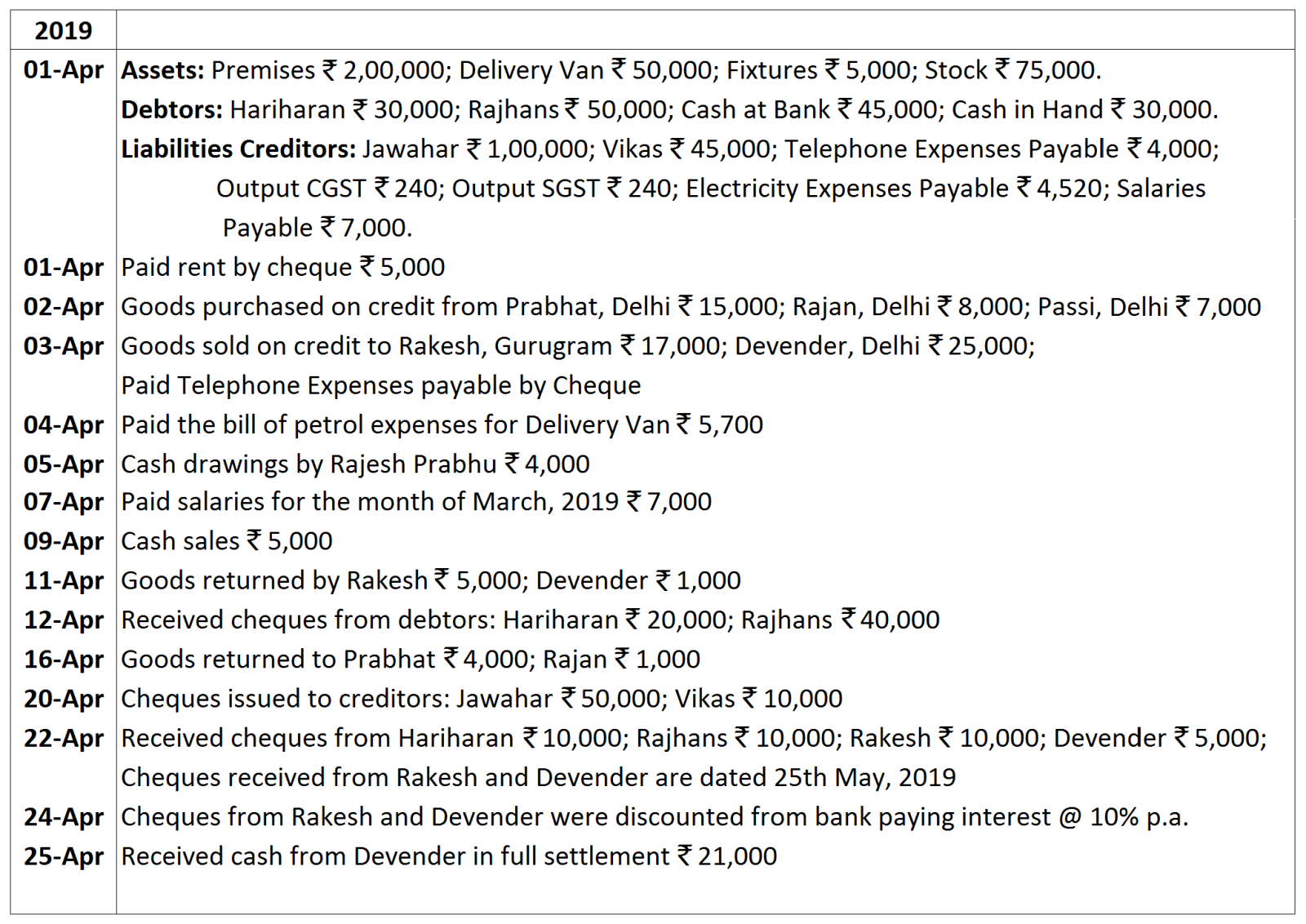
You are to open the books of Rajesh Prabhu, Gurugram (Haryana) a trader, through the Journal to record the assets and liabilities and then post the transactions to the Ledger for the month of April, 2019.
Inter-state transactions are subject to levy of IGST @ 12% and Intra-state transactions are subject to levy of CGST and SGST @ 6% each. GST is not levied on transactions marked with (*).
View full question & answer
Question 1003 Marks
Journalise the following transaction in the Book of M/s. Beauti traders Also post them in the ledger.
Dec. 2017
 
1
Started business with cash
2,00,000
2
Bought office furniture
30,000
3
Paid into bank to open an current account
1,00,000
5
Purchased a computer and paid by cheque
2,50,000
6
Bought goods on credit from Ritika
60,000
8
Cash sales
30,000
9
Sold goods to Karishna on credit
25,000
12
Cash paid to Mansi on account
30,000
14
Goods returned to Ritika
2,000
15
Stationery purchased for cash
3,000
16
Paid wages
1,000
18
Goods returned by Karishna
2,000
20
Cheque given to Ritika
28,000
22
Cash received from Karishna on account
15,000
24
Insurance premium paid by cheque
4,000
26
Cheque received from Karishna
8,000
28
Rent paid by cheque
3,000
29
Purchased goods on credit from Meena Traders
20,000
30
Cash sales
14,000
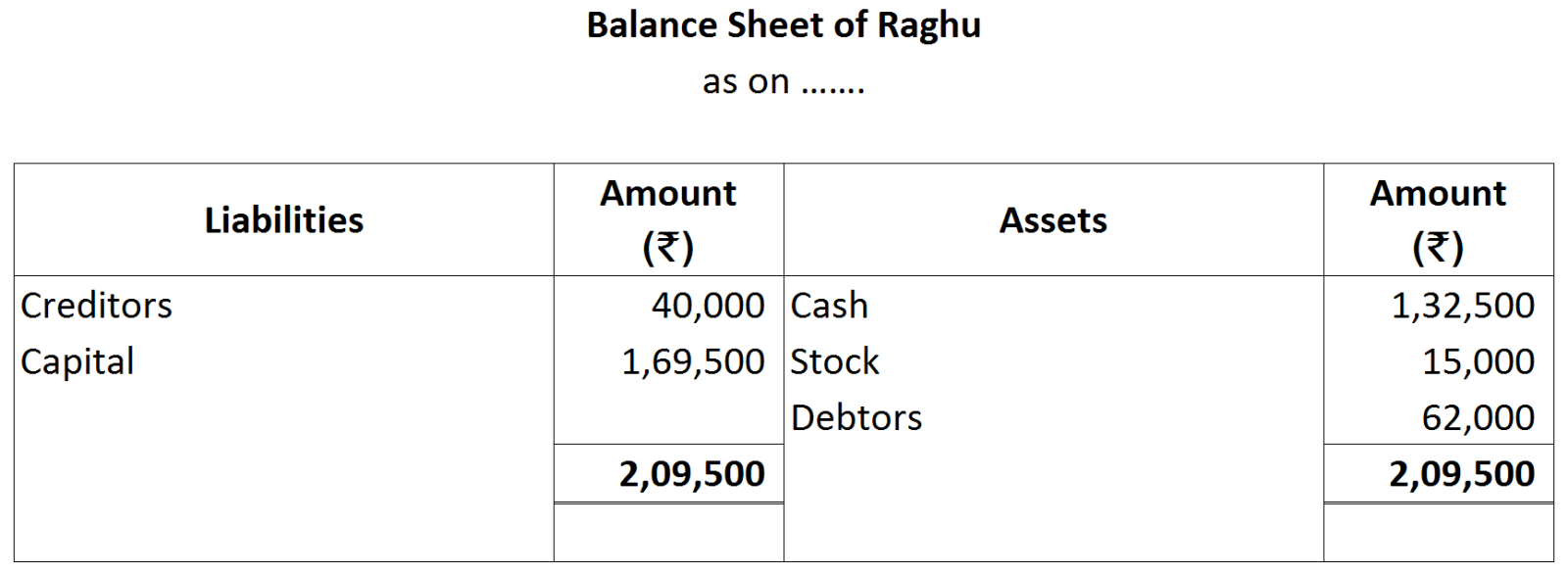
View full question & answer
3 Marks Question - Page 2 - Account STD 11 Commerce Questions - Vidyadip