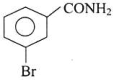
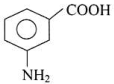
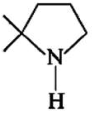
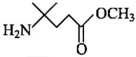
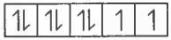
MCQ 14 Marks
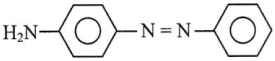
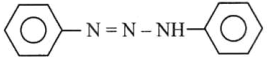
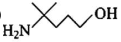
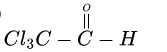
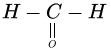
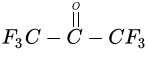
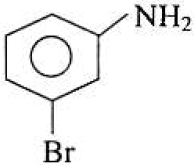
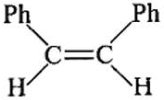
Identify the structure of aniline yellow.
MCQ 24 Marks
During the fusion of an organic compound with sodium metal, nitrogen of the organic compound is converted into
AnswerA. NaCN
Explanation:
During the fusion of an organic compound with sodium metal, nitrogen of the organic compound is converted into NaCN.
View full question & answer→MCQ 34 Marks
Consider $Cu ^{2+} \mid Cu$ electrode. What is the electrode potential if $0.01 M Cu ^{2+}$ solution is used?
$
\left(T=298 K, E_{\frac{C u^{2+}}{C u}}^o=0.34 V\right)
$
AnswerB. 0.281 V
Explanation:
$\begin{array}{l}E_{\left(\frac{C_u{ }^{2+}}{C_u}\right)}=E_{\left(\frac{C u{ }^{2+}}{C_u}\right)}^o-\frac{0.059}{n} \log \left[\frac{1}{\left[C u^{2+}\right]}\right. \\=0.34-\frac{0.059}{2} \log \frac{1}{0.01} \\=0.3400-0.059=0.281 V\end{array}$
View full question & answer→MCQ 44 Marks
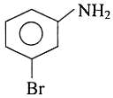
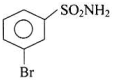
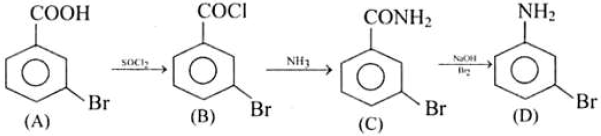
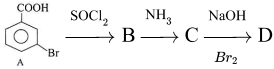
In a set of reactions, m -bromobenzoic acid gave product D. Identify product D.
MCQ 54 Marks
Which of the following statement is not true about sucrose?
AnswerC. The glycosidic linkage is present between $C _1$ of $\alpha$-glucose and $C _1$ of $\beta$-fructose
Explanation:
Statement-(b) is not true for sucrose. It is linked through a glycosidic linkage between C-1 of $\alpha$-glucose and C-2 of $\beta$-fructose. Since, the reducing groups of glucose and fructose are involved in glycosidic bond formation, sucrose is a non-reducing sugar.
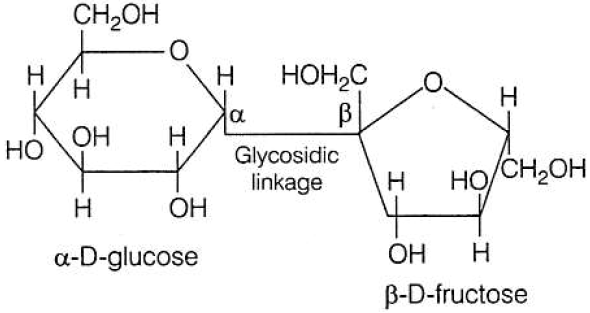
On hydrolysis with acids or enzyme, sucrose gives equimolar mixture of D-(+)-glucose and D-(-)-fructose.

View full question & answer→MCQ 64 Marks
Cobalt as a rare element is essential in the synthesis of this:
- A
- B
Vitamin $B_1$
- C
- D
Vitamin $B _{12}$
AnswerD. Vitamin $B _{12}$
Explanation:
Because cobalt is also an essential trace element for humans and found at the center of $B _{12}$ and produces red blood cells.
View full question & answer→MCQ 74 Marks
The major product $( X )$ of the reaction is:
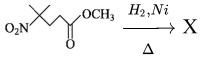
AnswerA.
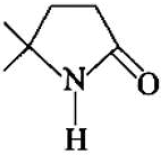 Explanation:

View full question & answer→MCQ 84 Marks
Which one of the following compounds would form most stable hydrate?
AnswerC.
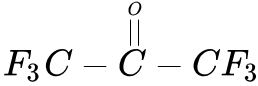 Explanation:
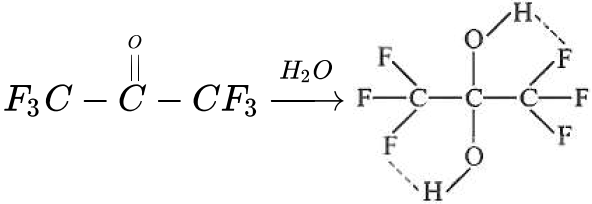
View full question & answer→MCQ 94 Marks
$
R-O^{-}+H-O-H \longrightarrow R-O-H^{}+ OH^{-}
$
With respect to above reaction, choose an incorrect statement from the following:
- A
The alkoxide ions act as a Bronsted base.
- B
Alcohol is a better proton donor than the conjugate acid of hydroxide ions.
- C
Water is a stronger acid as compared to alcohol.
- D
The conjugate base of water is weaker than alkoxide ions.
AnswerB.Alcohol is a better proton donor than the conjugate acid of hydroxide ions.
Explanation:
The conjugate acid of hydroxide ions (i.e., water) is a better proton donor than alcohol.
View full question & answer→MCQ 104 Marks
Find the product of following reaction with stereochemistry.
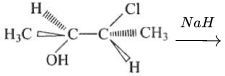
AnswerD.
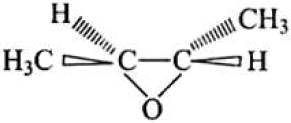 Explanation:
View full question & answer→MCQ 114 Marks
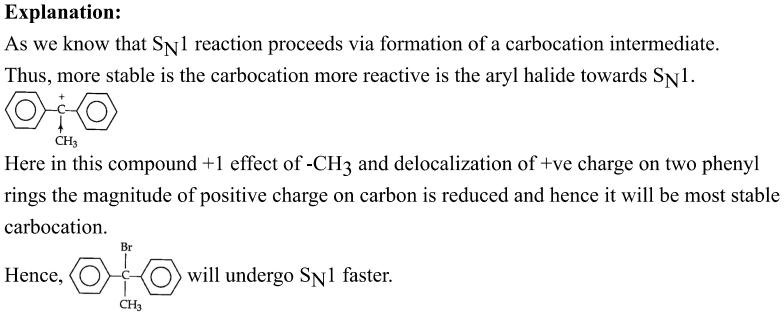
Which one is most reactive towards $S _{ N } 1$ reaction?
- A
$C _6 H _5 CH _2 Br$
- B
$C _6 H _5 CH \left( C _6 H _5\right) Br$
- C
$C _6 H _5 C \left( CH _3\right)\left( C _6 H _5\right) Br$
- D
$C _6 H _5 CH \left( CH _3\right) Br$
AnswerC. $C _6 H _5 C \left( CH _3\right)\left( C _6 H _5\right) Br$
View full question & answer→MCQ 124 Marks
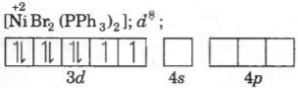
Which of the following is correct for the complex $\left[ NiBr _2\left( PPh _3\right)_2\right]$ ?
- A
It is tetrahedral with two unpaired electrons.
- B
It is tetrahedral with one unpaired electron.
- C
It is square planar and diamagnetic
- D
It is square planar with one unpaired electron.
AnswerB. It is tetrahedral with one unpaired electron.
Explanation:
View full question & answer→MCQ 134 Marks
Which of the following is a didentate ligand?
AnswerA. en
Explanation:
en (ethylenediamine) is a bidenate ligand.
View full question & answer→MCQ 144 Marks
Gadolinium belongs to 4 f series, Its atomic number is 64 . Which of the following is the correct electronic configuration of gadolinium?
AnswerB. $[ Xe ] 4 f ^7 5 d^1 6 s^2$
Explanation:
$
[Xe] 4 f^7 5 d^1 6 s^2
$
View full question & answer→MCQ 154 Marks
The correct statement among the following is
- A
$\left( SiH _3\right)_3 N$ is planar and less basic than $\left( CH _3\right)_3 N$
- B
$\left( SiH _3\right)_3 N$ is pyramidal and less basic than $\left( CH _3\right)_3 N$
- C
$\left( SiH _3\right)_3 N$ is pyramidal and more basic than $\left( CH _3\right)_3 N$
- D
$\left( SiH _3\right)_3 N$ is planar and more basic than $\left( CH _3\right)_3 N$
AnswerA. $\left( SiH _3\right)_3 N$ is planar and less basic than $\left( CH _3\right)_3 N$
Explanation:
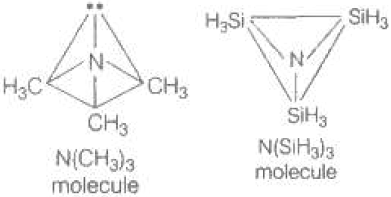
The correct statement is that $\left( SiH _3\right)_3 N$ is planar and less basic than $\left( CH _3\right)_3 N$. The compounds trimethylamine $\left( CH _3\right)_3 N$ and triethylamine $\left( SiH _3\right)_3 N$ have similar formulae but have totally different structures. In trimethylamine the arrangement of electrons is as follows:
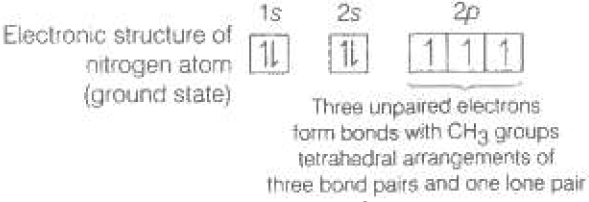
In trisilylamine, three $sp ^2$ orbitals are used for a-bonding, giving a plane triangular structure.
View full question & answer→MCQ 164 Marks
Name the gas that can readily decolourise acidified $KMnO _4$ solution:
- A
$P _2 O _5$
- B
$SO _2$
- C
$NO _2$
- D
$CO _2$
AnswerB. $SO _2$
Explanation:
When $SO _2$ gas is passed through acidified $KMnO _4$ solution, the solution turns colourless.
$
2 KMnO_4+5 SO_2+2 H_2 O \rightarrow K_2 SO_4+2 MnSO_4+2 H_2 SO_4
$
View full question & answer→MCQ 174 Marks
For the reaction, $H _2(g)+ Br _2(g)=2 HBr ( g )$, the reaction rate $= K \left[ H _2\right]\left[ Br _2\right]^{1 / 2}$. Which statement is true about this reaction?
AnswerCorrect option: B. Molecularity of the reaction is 2
View full question & answer→MCQ 184 Marks
If for a certain chemical reaction, $A + B \longrightarrow C + D$, the unit of its rate constant is $M ^{-2}$ $s ^{-1}$, which of the following could be a possible rate law for the reaction?
- A
Rate $= k [ A ][ B ]^2$
- B
Rate $=k[A][B]$
- C
Rate $= k [ A ][ B ]^3$
- D
Rate $=k[A]^2[B]^2$
AnswerA. Rate $= k [ A ][ B ]^2$
Explanation:
In general, for nth order reaction, the unit of rate constant
$=(\text { Concentration })^{1-n}(\text { time })^{-1}$
So, $1- n =-2 \Rightarrow n =3$
Thus, the unit of rate constant $M ^{-2} s^{-1}$ indicates that the given reaction must be third order.
Rate $= k [ A ][ B ]^2$ is third order overall.
View full question & answer→MCQ 194 Marks
In an electrolytic cell of $Ag \left| AgNO _3\right| Ag$, when current is passed the concentration of $AgNO _3$ :
AnswerD. remains same
Explanation:
In the case of attacked electrodes, the metal dissolves at anode and deposites at the cathode.
$
\begin{array}{l}
{\left[Ag \longrightarrow Ag^{+}+e\right. \text { (anode); }} \\
\left.Ag^{+}+e \longrightarrow Ag \text { (cathode) }\right]
\end{array}
$
Thus the concentration of salt does not change.
View full question & answer→MCQ 204 Marks
If $E_{ Fe ^{2+} / Fe }^{\circ}=-0.441 V$ and $E_{ Fe ^{3+} / Fe ^{2+}}^{\circ}=0.771 V$, the standard e.m.f. of the reaction, Fe $+2 Fe ^{3+} \rightarrow 3 Fe ^{2+}$ will be:
AnswerB.1.212 V
Explanation:
$E_{Fe^{2+} / Fe}^{\circ}=-0.441 V $
$E_{Fe^{3+} / Fe}^{\circ}=-0.771 V $
$E_{\text {cell }}^{\circ}=E_{OP_{Fe / Fe^{2+}}}^{\circ}+E_{R P_{Fe^{3+} / Fe^{2+}}}^{\circ} \text { (see redox change) }$
$=+0.441+0.771=1.212 V$
View full question & answer→MCQ 214 Marks
Kohlrausch's law states that at:
- A
infinite dilution, each ion makes definite contribution to conductance of an electrolyte whatever be the nature of the other ion of the electroly.
- B
infinite dilution, each ion makes definite contribution to equivalent conductance of an electrolyte, whatever be the nature of the other ion of the electrolyte.
- C
infinite dilution each ion makes definite contribution to equivalent conductance of an electrolyte depending on the nature of the other ion of the electrolyte.
- D
finite dilution, each ion makes definite contribution to equivalent conductance of an electrolyte, whatever be the nature of the other ion of the electrolyte.
AnswerB. infinite dilution, each ion makes definite contribution to equivalent conductance of an electrolyte, whatever be the nature of the other ion of the electrolyte.
Explanation:
Kohlrausch's law states that at infinite dilution, each ion makes definite contribution to equivalent conductance of an electrolyte, whatever be the nature of the other ion of the electrolyte.
View full question & answer→MCQ 224 Marks
Isotonic solutions are those which have the:
AnswerD. same osmotic pressure
Explanation:
A solution of $\frac{M}{2} NaCl$ is isotonic with M glucose. The required condition is $\pi_1=\pi_2$.
View full question & answer→MCQ 234 Marks
Which of the following colligative property can provide molar mass of proteins (or polymers or colloids) with greatest precision?
- A
- B
Depression in freezing point
- C
Relative lowering of vapour pressure
- D
Elevation in boiling point
AnswerA.Osmotic pressure
Explanation:
Osmotic pressure is a colligative property which is used for finding the molecular weight of polymer because other colligative properties give very low measurement values which is difficult to measure accurately.
View full question & answer→MCQ 244 Marks
The observed depression in freezing point of a solution will be __________ times if the weight of the solute dissolved is four times higher, and the weight of solvent taken is halved.
AnswerA. eight
Explanation:
Depression in freezing point will be eight times by the formula,
$
\begin{array}{l}
\Delta T_{f}=\frac{1000 K_f \times W_B}{M_B W_A} \\
\Delta T_{f} \propto \frac{W_B}{W_A}
\end{array}
$
View full question & answer→MCQ 254 Marks
A solution at $20^{\circ} C$ is composed of 1.5 mol of benzene and 3.5 mol of toluene. If the vapour pressure of pure benzene and pure toluene at this temperature are 74.7 torr and 22.3 torr, respectively, then the total vapour pressure of the solution and the benzene mole fraction in equilibrium with it will be, respectively:
AnswerB. 38.0 torr and 0.589
Explanation:
Total V.P. of solution $=P_A^{\circ} X_A+P_B^{\circ} X_B$
Given, $P_A^{\circ}=74.7$ torr, $P_B^{\circ}=22.3$ torr
$n _{\text {benzene }}=1.5 mol, n _{\text {toluene }}=3.5 mol$
$n _{\text {solution }}=1.5+3.5=5 mol$
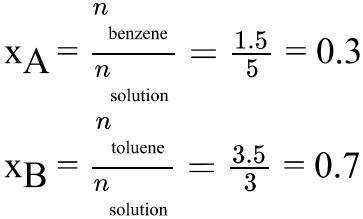
Total V.P. of solution $=(0.3 \times 74.7+0.5 \times 22.3)$ torr
$=(22.4+15.6)$ torr $=38$ torr
Mole fraction of benzene in vapour form $=\frac{22.4}{38}=0.589$ View full question & answer→MCQ 264 Marks
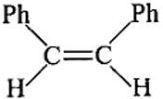
$
Ph-CH=CH-Ph \xrightarrow[CC l_4]{Cl_2} X \xrightarrow{2 NaNH_2} Y \xrightarrow{H_2, Pd-CaCO_3} Z
$
Identify product $(Z)$ of the reaction.
- A
- B
$Ph - C \equiv C - Ph$
- C
- D
View full question & answer→MCQ 274 Marks
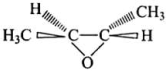
The following compounds differ in:
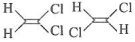
AnswerD. structure
Explanation
structure
View full question & answer→MCQ 284 Marks
Pick the CORRECT match for the molecule in column A with the number of $C - C \sigma$, $C - H \sigma$ and $C - C \pi$ bonds in column B.| Column A | Column B |
| i. $HC \equiv C - CH = CH - CH _3$ | a. 2,3 and 0 |
| ii. $CH _2= C = CH - CH _3$ | b. 4,6 and 2 |
| iii. $CH _2- CH - C \equiv N$ | c. 4,6 and 3 |
iv. 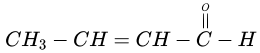 | d. 3, 6 and 2 |
| e. 3, 6 and 2 |
- A
i - b, ii - d , iii - c, iv - e
- B
i - c, ii - e , iii - a , iv - d
- C
i - b , ii - e , iii - d , iv - c
- D
i - c, ii - b , iii - e , iv - b
AnswerB. i - c, ii - e , iii - a, iv - d
View full question & answer→MCQ 294 Marks
Which of the following is incorrect statement?
- A
$PbF _4$ is covalent in nature
- B
$GeX _4( X = F , Cl , Br , I )$ is more stable than $GeX _2$
- C
$SnF _4$ is ionic nature
- D
$SiCl _4$ is easily hydrolysed
AnswerA. $PbF _4$ is covalent in nature
Explanation:
$PbF _4$ and $SnF _4$ are ionic in nature.
View full question & answer→MCQ 304 Marks
A compound $X$ upon reaction with $H _2 O$ produces a colourless gas $Y$ with rotten fish smell. Gas $Y$ is absorbed in a solution of $CuSO _4$ to give $Cu _3 P _2$ as one of the products. Predict the compound $X$.
AnswerD. $Ca _3 P _2$
Explanation:
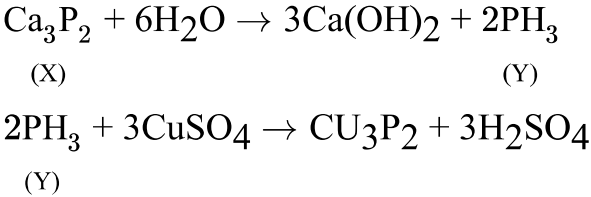
View full question & answer→MCQ 314 Marks
The reaction between cadmium oxide and carbon monoxide produces cadmium and carbon dioxide. Which element displays the highest oxidation number in this reaction?
AnswerA. C
Explanation: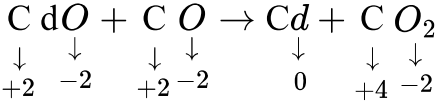
View full question & answer→MCQ 324 Marks
Identify disproportionation reaction.
i. $CH _4+2 O _2 \longrightarrow CO _2+2 H _2 O$
ii. $CH _4+4 Cl _2 \longrightarrow CCl _4+4 HCl$
iii. $2 F_2+2 OH ^{-} \longrightarrow 2 F+ OF _2+ H _2 O$
iv. $2 NO _2+2 OH ^{-} \longrightarrow NO _2^{-}+ NO _3^{-}+ H _2 O$
AnswerD. Only (iv)
Explanation:
$
2 NO_2+2 OH^{-} \longrightarrow NO_2^{-}+NO_3^{-}+H_2 O
$
View full question & answer→MCQ 334 Marks
The equivalent conductance of NaCl at concentration C and at infinite dilution are $\lambda_{ c }$ and $\lambda_{\infty}$ relationship. The correct relationship between $\lambda_{ c }$ and $\lambda_{\infty}$ is given as (where, the constant B is positive)
- A
$\lambda_{ c }=\lambda_{\infty}+( B ) C$
- B
$\lambda_{ c }=\lambda_{\infty}+( B ) \sqrt{C}$
- C
$\lambda_{ c }=\lambda_{\infty}-( B ) \sqrt{C}$
- D
$\lambda_{ c }=\lambda_{\infty}-( B ) C$
AnswerC. $\lambda_{ c }=\lambda_{\infty}-( B ) \sqrt{C}$
Explanation:
According to Debye Huckel Onsager equation,
$
\lambda_{c}=\lambda_{\infty}-(B) \sqrt{C}
$
where, $\lambda_{ c }=$ limiting equivalent conductivity at concentration C
$\lambda_{\infty}=$ limiting equivalent conductivity at infinite dilution
$C =$ concentration
View full question & answer→MCQ 344 Marks
The conjugate base of $H _2 PO _4^{-}$is:
- A
$P _2 O _5$
- B
$HPO _4^{2-}$
- C
$PO _4^{3-}$
- D
$H _3 PO _4$
AnswerB. $HPO _4^{2-}$
Explanation:
$
H P O_4^{2-}
$
View full question & answer→MCQ 354 Marks
The covalent bond energy of A - Z, B - Z, C - Z and D - Z and 240, 382, 276, 486 respectively. The shortest bond length exist for:
- A
$A-Z$
- B
$B - Z$
- C
$D-Z$
- D
$C - Z$
AnswerC. $D - Z$
Explanation:
Shorter the bond, more is bond energy.
The bond $D - Z$ has maximum covalent bond energy which is equal to 486 .
Hence, $D - Z$ bond has the shortest bond length.
View full question & answer→MCQ 364 Marks
For the chemical reaction, $X \rightleftharpoons Y$, the standard reaction Gibbs energy depends on temperature T (in K ) as
$
\Delta_r G^{o}\left(\text { in } kJ mol^{-1}\right)=120-\frac{3}{8} T
$
The major component of the reaction mixture at T is
- A
Y if $T =280 K$
- B
X if $T =315 K$
- C
Y if $T =300 K$
- D
X if $T =350 K$
AnswerB. X if $T =315 K$
Explanation:
For a given value of T,
i. If $\triangle_r G ^{\circ}$ becomes $<0$, the forward direction will be spontaneous and then the major and minor components will be Y and X respectively.
ii. If $\triangle_r G^{\circ}$ becomes $>0$, the forward direction will be non-spontaneous and then the major and minor components will be X and Y respectively.
$\triangle_{ r } G ^{\circ}=120-\frac{3}{8} \times 315=1.875$
i.e $\triangle_r G ^{\circ}>0$, major component $= X$
View full question & answer→MCQ 374 Marks
In which of the following reactions the hybridisation state of underlined atom is same in reactants and products?
- A
$\underline{ N } H _3+ H ^{+} \rightarrow NH _4^{+}$
- B
$\underline{ Al}Cl _3+ Cl ^{-} \rightarrow AlCl _4^{-}$
- C
$\underline{N}O _3^{-}+ Zn + OH ^{-} \rightarrow$ $NH_{3} + ZnO^{2-}_{2}$
- D
$\underline{ B } F_3+ F ^{-} \rightarrow BF _4^{-}$
AnswerA. $\underline{ N } H _3+ H ^{+} \rightarrow NH _4^{+}$
Explanation:
$
NH_3\left(s p^3\right) \longrightarrow NH_4^{+}\left(s p^3\right)
$
View full question & answer→MCQ 384 Marks
Find the ions which do not have X-O-X type of linkage:
AnswerD. $S _2 O _3^{2-}$
Explanation:
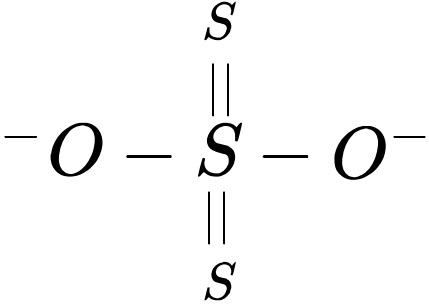
View full question & answer→MCQ 394 Marks
The geometry of $XeOF _4$ by VSEPR theory is:
AnswerA. Square pyramidal
Explanation: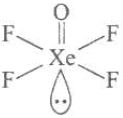
View full question & answer→MCQ 404 Marks
Lanthanide contraction means:
AnswerA. Contraction of atoms of elements after lanthanum due to poor shielding of the $f$-subshell electron.
Explanation:
Contraction of atoms of elements after lanthanum due to poor shielding of the f-subshell electron.
View full question & answer→MCQ 414 Marks
The wave number of the first emission line in the Balmer series of H-Spectrum is: ( R $=$ Rydberg constant)
- A
$\frac{9}{400} R$
- B
$\frac{7}{6} R$
- C
$\frac{3}{4} R$
- D
$\frac{5}{36} R$
AnswerD.$\frac{5}{36} R$
Explanation:
$
\begin{array}{l}
\bar{v}=R Z^2\left(\frac{1}{2^2}-\frac{1}{3^2}\right) \\
=R\left(\frac{1}{4}-\frac{1}{9}\right)=\frac{5 R}{36}
\end{array}
$
View full question & answer→MCQ 424 Marks
Number of unpaired electrons in $Ni ^{2+}$ is/are:
View full question & answer→MCQ 434 Marks
An ion which has 18 electrons in the outermost shell is:
- A
$K ^{+}$
- B
$Cs ^{+}$
- C
$Th ^{4+}$
- D
$Cu ^{+}$
AnswerD. $Cu ^{+}$
Explanation:
$Cu ^{+}$has $3 d^{10}$ configuration.
View full question & answer→MCQ 444 Marks
The normality of $10 \%$ (mass/volume) acetic acid is:
View full question & answer→MCQ 454 Marks
How many moles of electrons weigh one kilogram?
- A
$\frac{1}{2.108} \times 10^{31}$
- B
$6.023 \times 10^{23}$
- C
$\frac{6.023}{9.108} \times 10^{54}$
- D
$\frac{1}{9.108 \times 6.023} \times 10^8$
AnswerD.$\frac{1}{9.108 \times 6.023} \times 10^8$
Explanation:
$9.108 \times 10^{-31} kg=1$ electron
$\therefore 1 kg=\frac{1}{9.108 \times 10^{-31}}$ electron
$=\frac{1}{9.108 \times 10^{-31}} \times \frac{1}{6.023 \times 10^{23}}$ mole electron
View full question & answer→