Question 14 Marks
Read the passage given below and answer the following questions: An organic compound (A) having molecular formula $C_6H_6O$ gives a characteristic colour with aqueous $FeCl_3$ solution. (A) on treatment with $CO_2$ and $NaOH$ at $400K$ under pressure gives (B), which on acidification gives a compound (C). The compound (C) reacts with acetyl chloride to give (D) which is a popular pain killer. The following questions are multiple choice questions. Choose the most appropriate answer:
- Compound (A) is:
- 2-Hexanol.
- Dimethyl ether.
- Phenol.
- 2-Methyl pentanol.
- Compound (C) is:
- Salicylic acid.
- Salicyladehyde.
- Benzoic acid.
- Benzaldehyde.
- Number of carbon atoms in compound (D) is:
- 7
- 6
- 8
- 9
- The conversion of compound (A) to (C) is known as:
- Reimer-Tiemann reaction.
- Kolbe's reaction.
- Schimdt reaction.
- Swarts reaction.
- Compound (A) on heating with compound (C) in presence of $POCl_3$ gives a compound (D) which is used:
- In perfumery as a ftavouring agent
- As an antipyretic
- As an analgesic
- As an intestinal antiseptic.
Answer
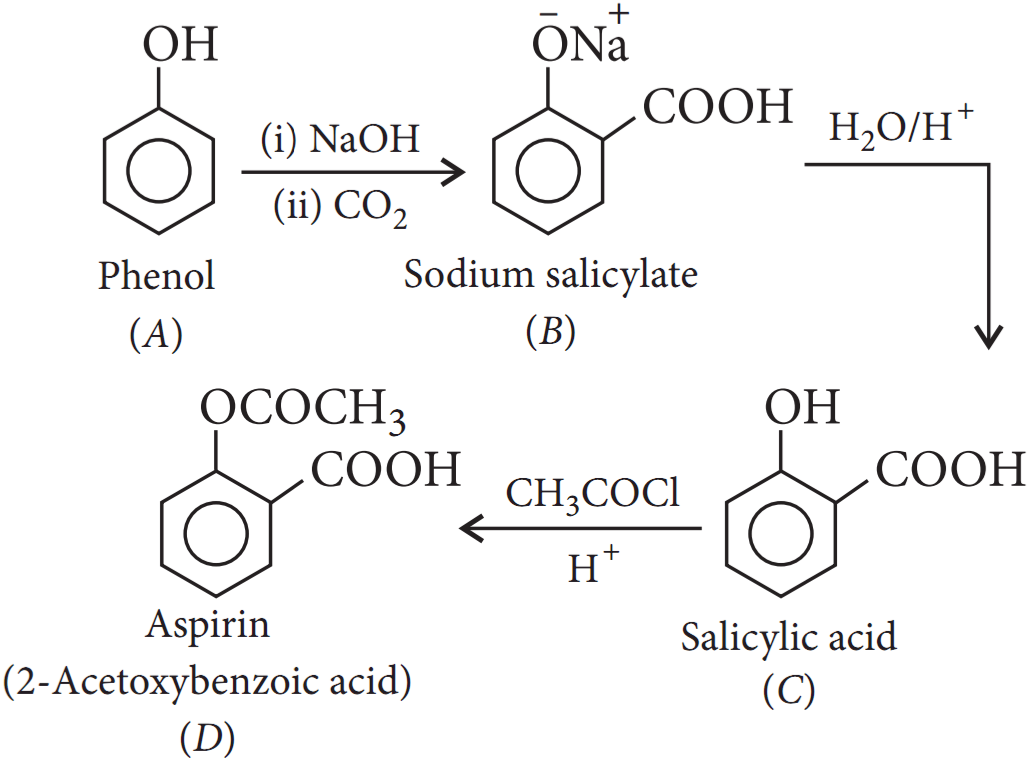
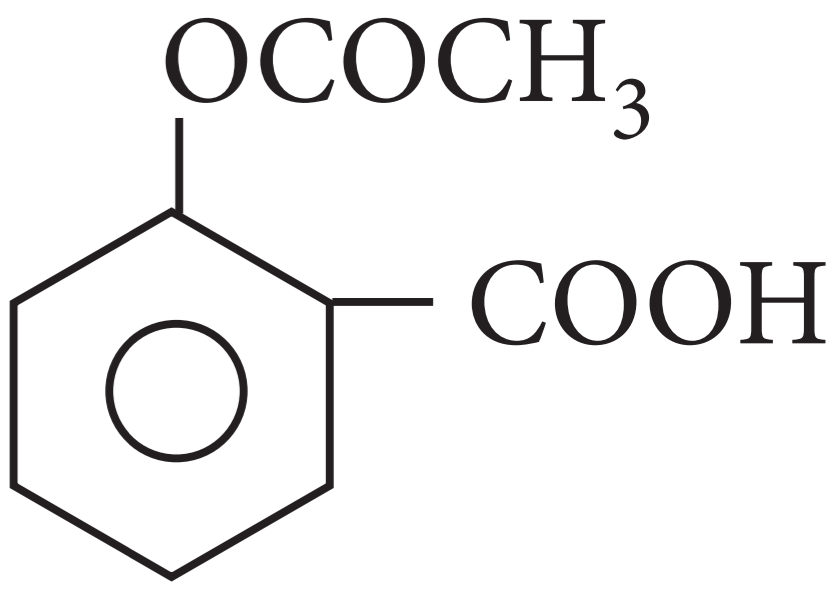
It has 9 C-atoms.
Sodium phenoxide when heated with $CO_2$ at $400K$ under a pressure of 4-7 atm followed by acidification gives 2-hydroxybenzoic acid (salicylic acid) as the main product along with a small amount of 4-hydroxybenzoic acid. This reaction is called Kolbe's reaction.
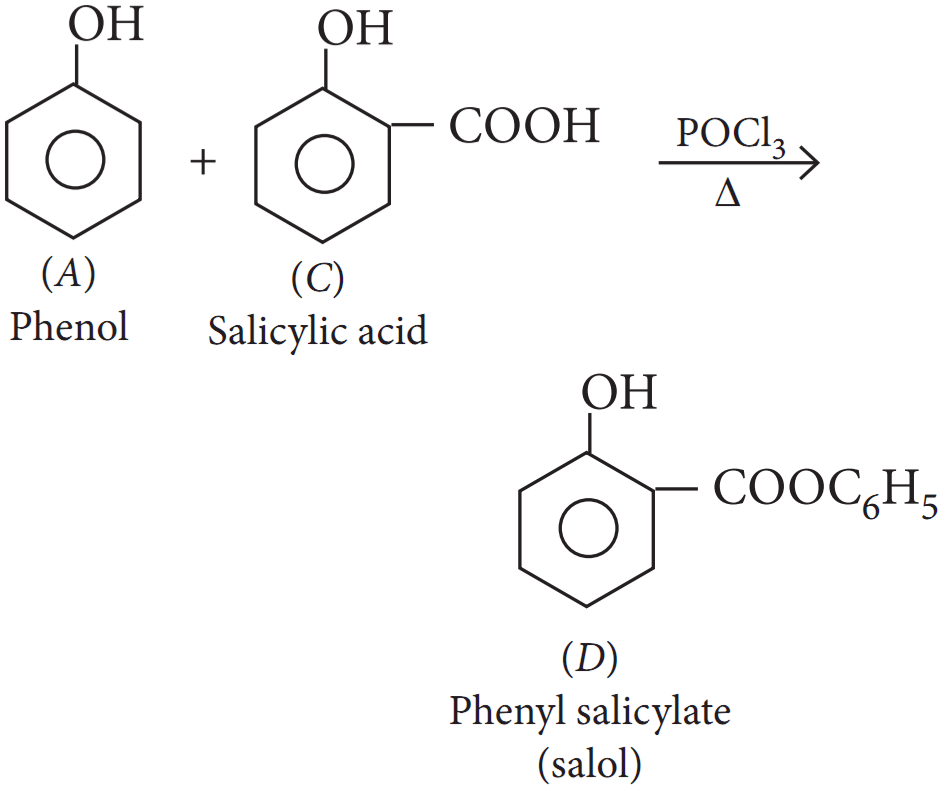
Salol is used as an intestinal antiseptic.
View full question & answer→- (c) Phenol.
- (a) Salicylic acid.
- (d) 9
It has 9 C-atoms.
- (b) Kolbe's reaction.
Sodium phenoxide when heated with $CO_2$ at $400K$ under a pressure of 4-7 atm followed by acidification gives 2-hydroxybenzoic acid (salicylic acid) as the main product along with a small amount of 4-hydroxybenzoic acid. This reaction is called Kolbe's reaction.
- (d) As an intestinal antiseptic.
Salol is used as an intestinal antiseptic.
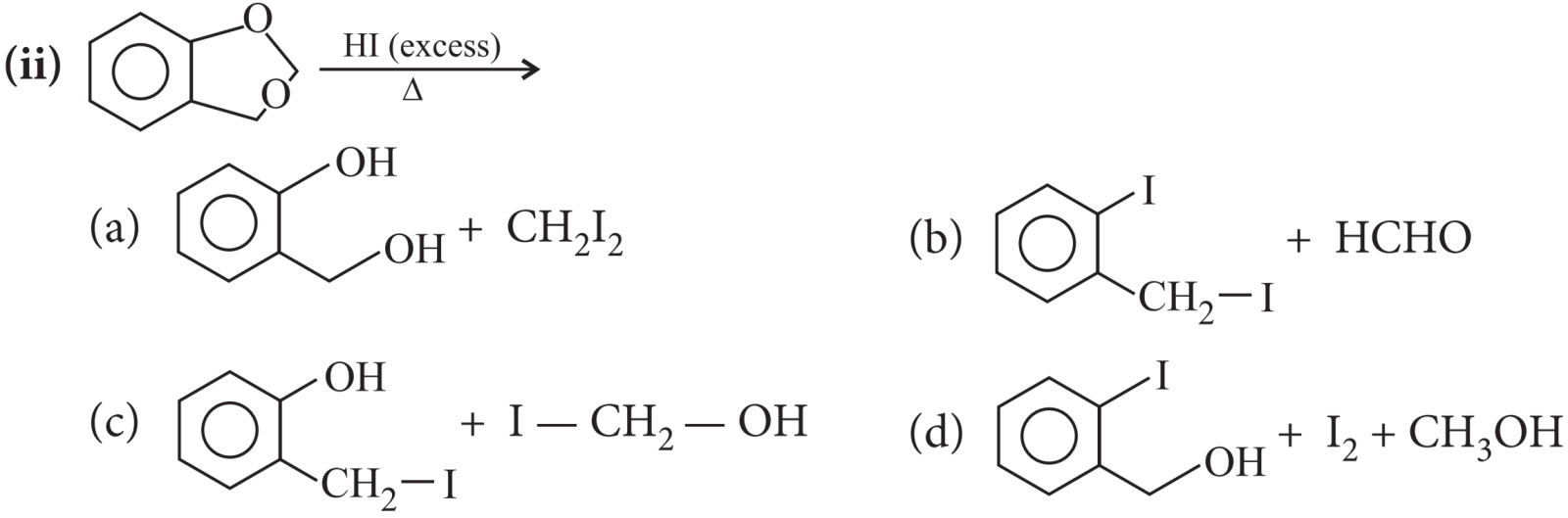
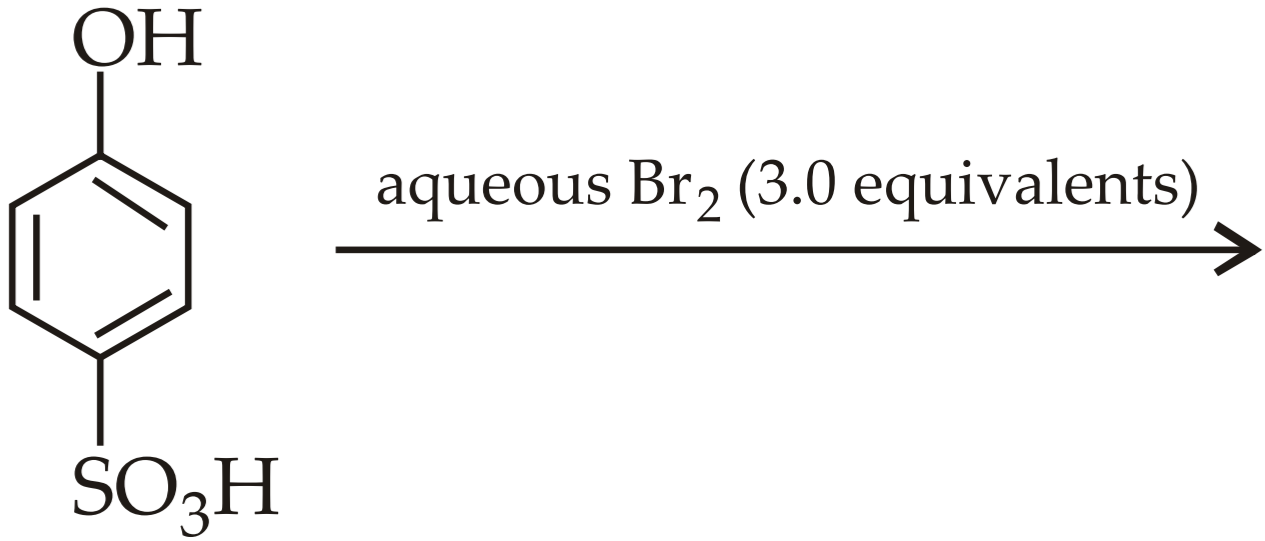
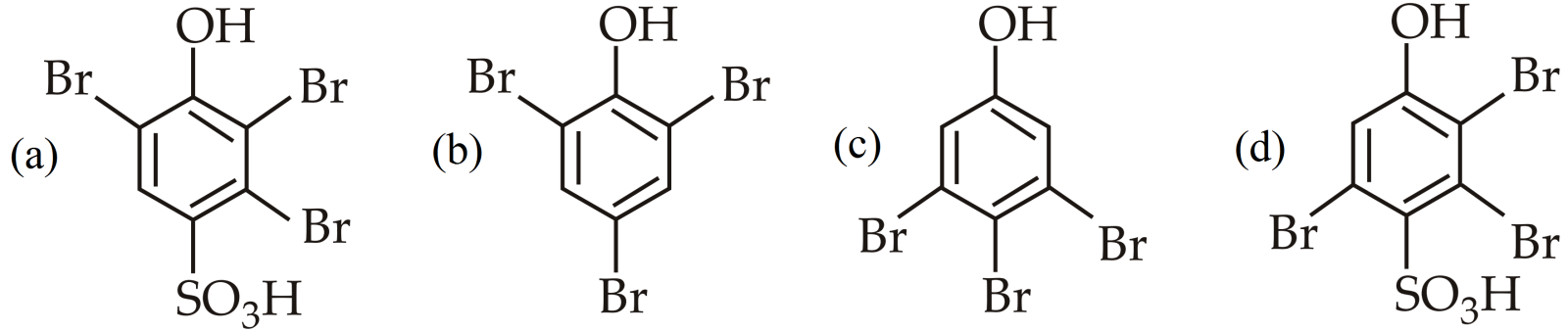
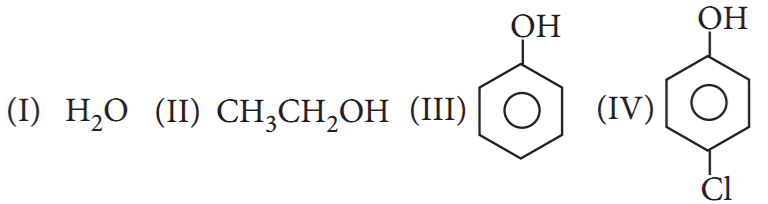
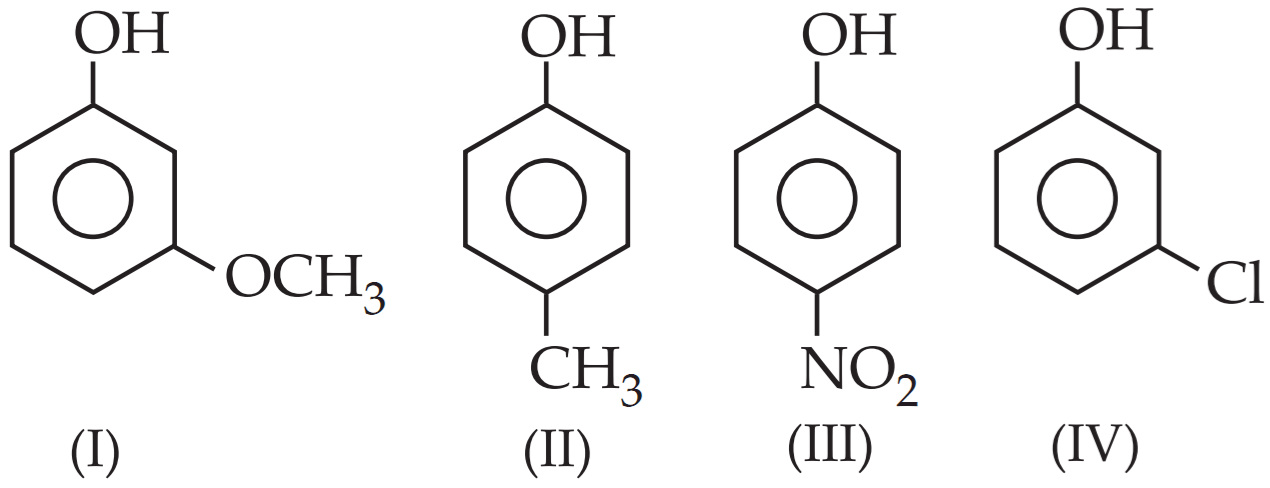
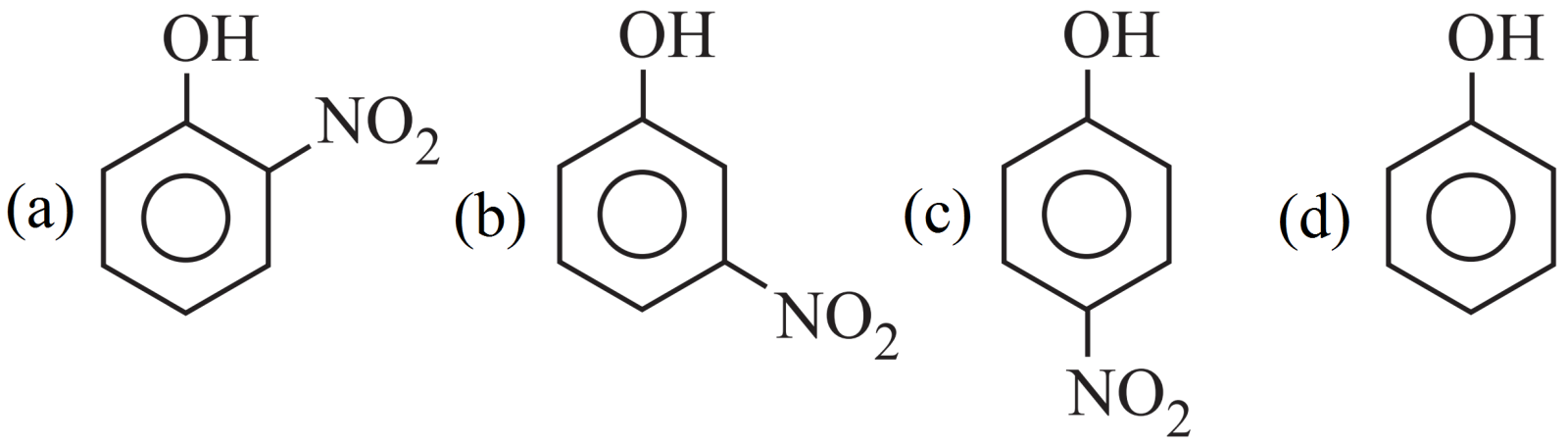
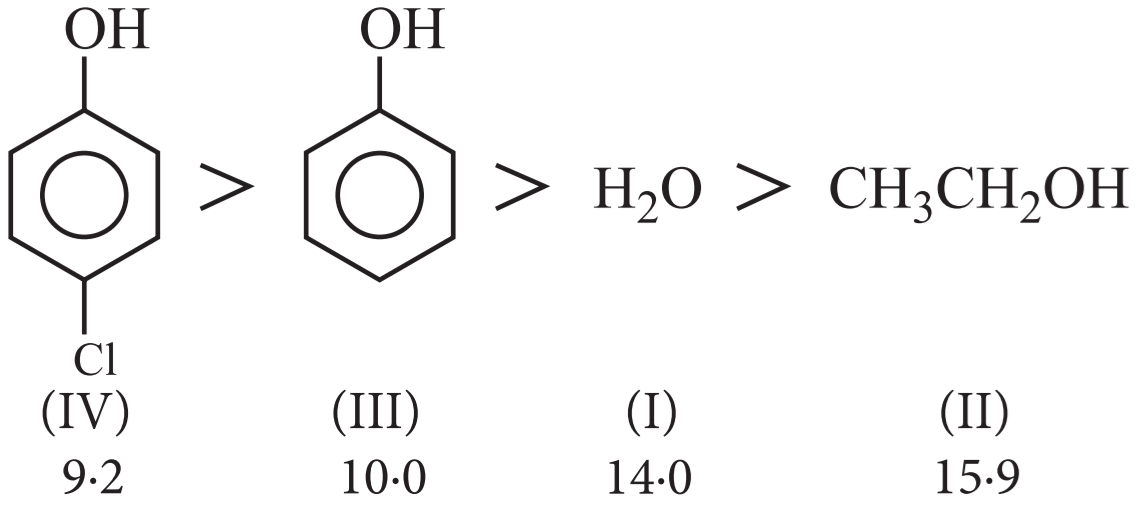
 The most stable product (s) is/ are: