Question 15 Marks
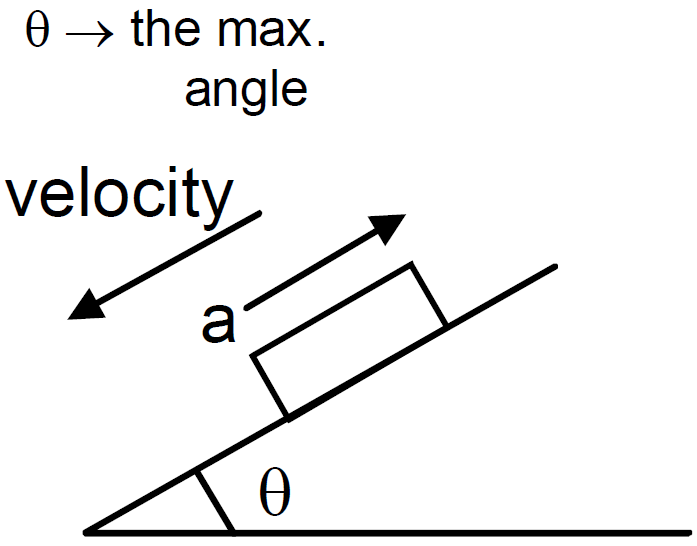
A body starts slipping down an incline and moves half meter in half second. How long will it take to move the next half meter?
Answer
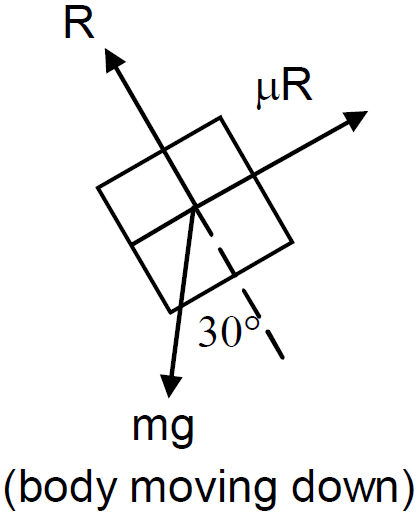
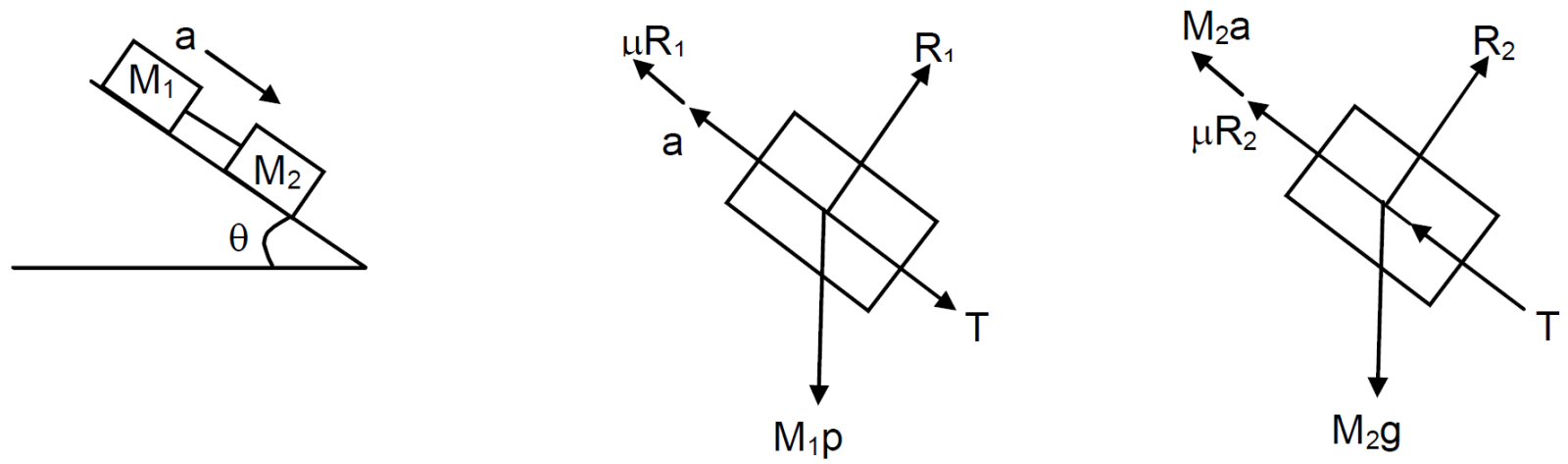
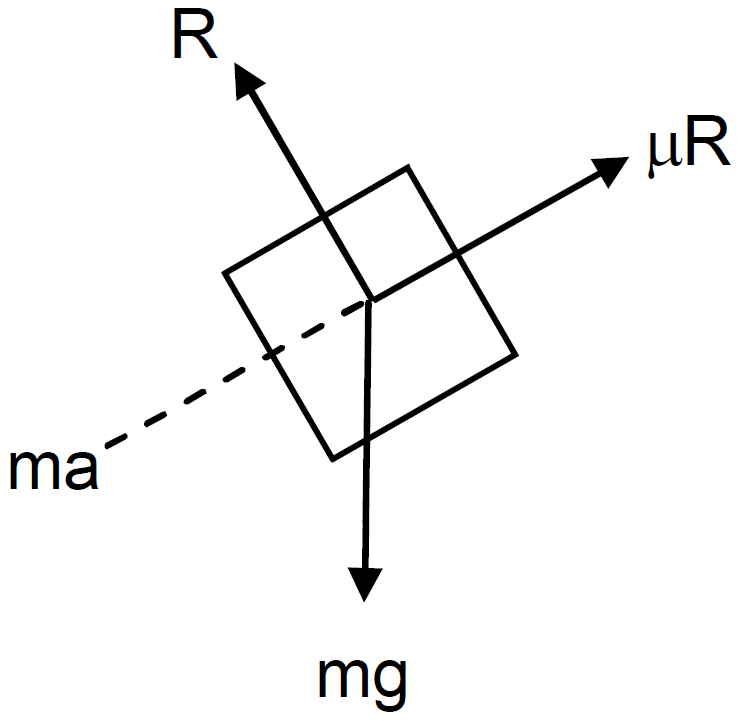 Suppose, the body is accelerating down with acceleration ‘a’.
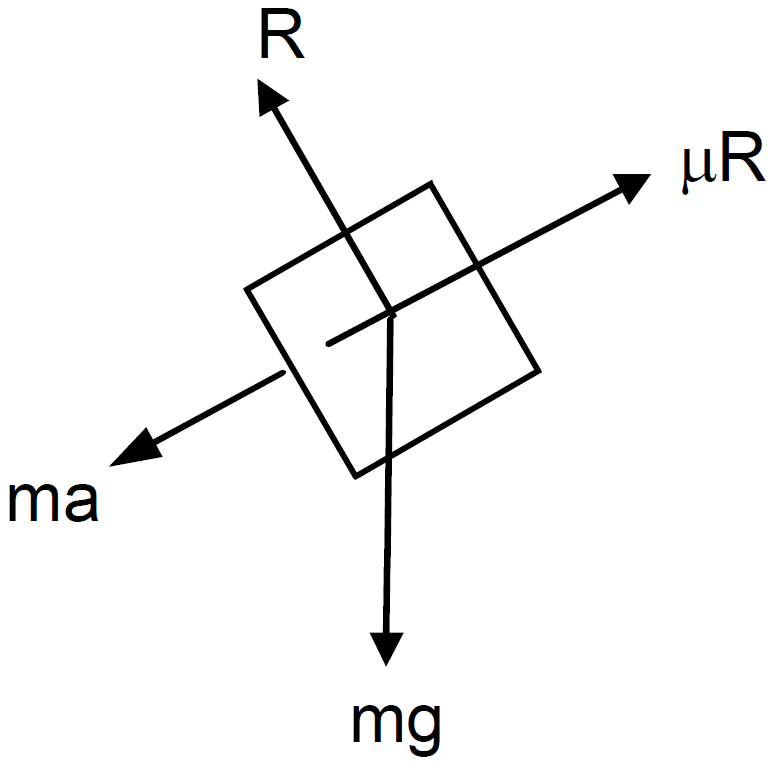
From the free body diagram
$\text{R}-\text{mg}\cos\theta=0$
$\Rightarrow\text{R}=\text{mg}\cos\theta \ ...(1)$
$\text{ma + mg}\sin\theta-\mu\text{R}=0$
$\Rightarrow\text{a}=\frac{\text{mg}(\sin\theta-\mu\cos\theta)}{\text{m}}=\text{g}(\sin\theta-\mu\cos\theta)$
For the first half mt. u = 0, s = 0.5m, t = 0.5sec.
So, v = u + at = 0 + (0.5)4 = 2m/s
$\text{S = ut}+\frac{1}{2}\text{at}^2\Rightarrow0.5=0+\frac{1}{2}\text{a}\Big(\frac{0}{5}\Big)^2$
$\Rightarrow\text{a}=4\text{m/s}^2 \ ...(2)$
For the next half metre
$\text{u}=2\text{m/s},\text{ a}=4\text{m/s}^2,\text{ s}=0.5.$
$\Rightarrow0.5=2\text{t}+\Big(\frac{1}{2}\Big)4\text{t}^2\Rightarrow2\text{t}^2+2\text{t}-0.5=0$
$\Rightarrow4\text{t}^2+4\text{t}-1=0$
$\therefore=\frac{-4\pm\sqrt{16+16}}{2\times4}=\frac{1.656}{8}=0.207\text{sec}$
Time taken to cover next half meter is 0.21sec.
View full question & answer→Suppose, the body is accelerating down with acceleration ‘a’.From the free body diagram
$\text{R}-\text{mg}\cos\theta=0$
$\Rightarrow\text{R}=\text{mg}\cos\theta \ ...(1)$
$\text{ma + mg}\sin\theta-\mu\text{R}=0$
$\Rightarrow\text{a}=\frac{\text{mg}(\sin\theta-\mu\cos\theta)}{\text{m}}=\text{g}(\sin\theta-\mu\cos\theta)$
For the first half mt. u = 0, s = 0.5m, t = 0.5sec.
So, v = u + at = 0 + (0.5)4 = 2m/s
$\text{S = ut}+\frac{1}{2}\text{at}^2\Rightarrow0.5=0+\frac{1}{2}\text{a}\Big(\frac{0}{5}\Big)^2$
$\Rightarrow\text{a}=4\text{m/s}^2 \ ...(2)$
For the next half metre
$\text{u}=2\text{m/s},\text{ a}=4\text{m/s}^2,\text{ s}=0.5.$
$\Rightarrow0.5=2\text{t}+\Big(\frac{1}{2}\Big)4\text{t}^2\Rightarrow2\text{t}^2+2\text{t}-0.5=0$
$\Rightarrow4\text{t}^2+4\text{t}-1=0$
$\therefore=\frac{-4\pm\sqrt{16+16}}{2\times4}=\frac{1.656}{8}=0.207\text{sec}$
Time taken to cover next half meter is 0.21sec.
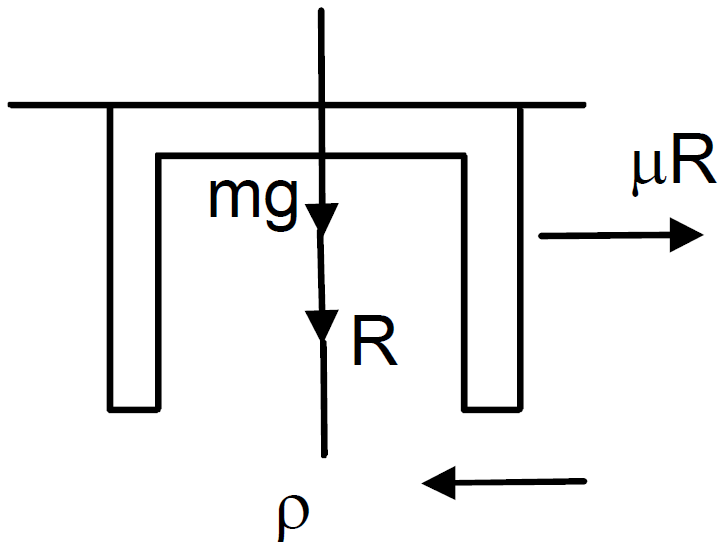
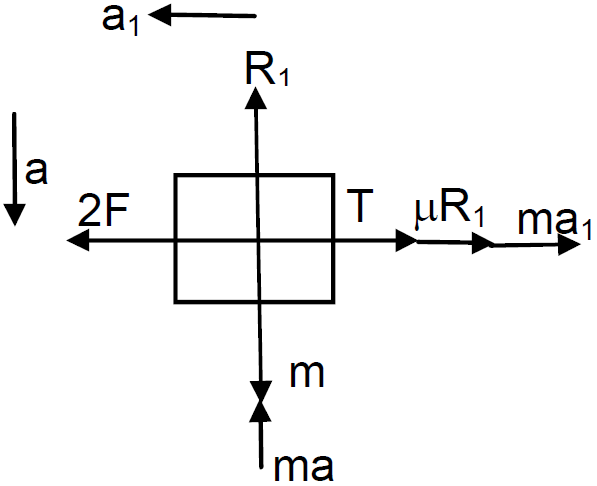
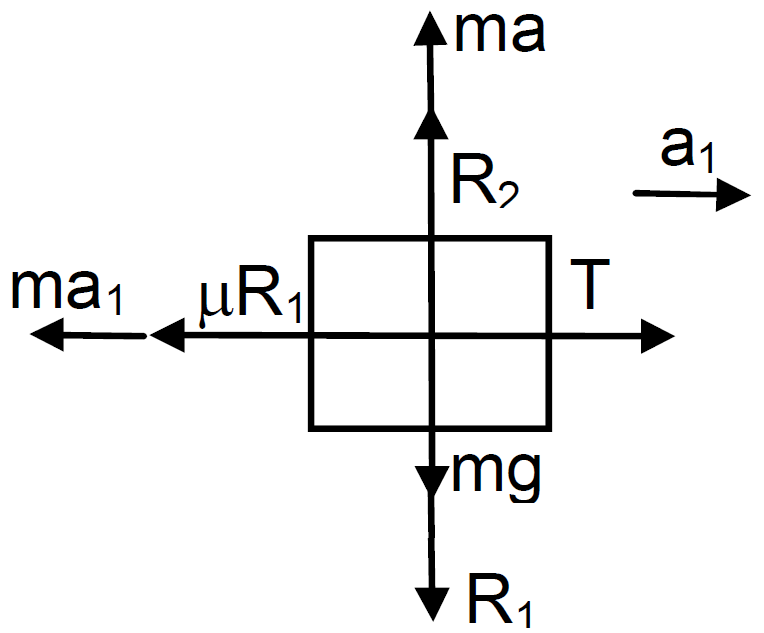
 From the free body diagram
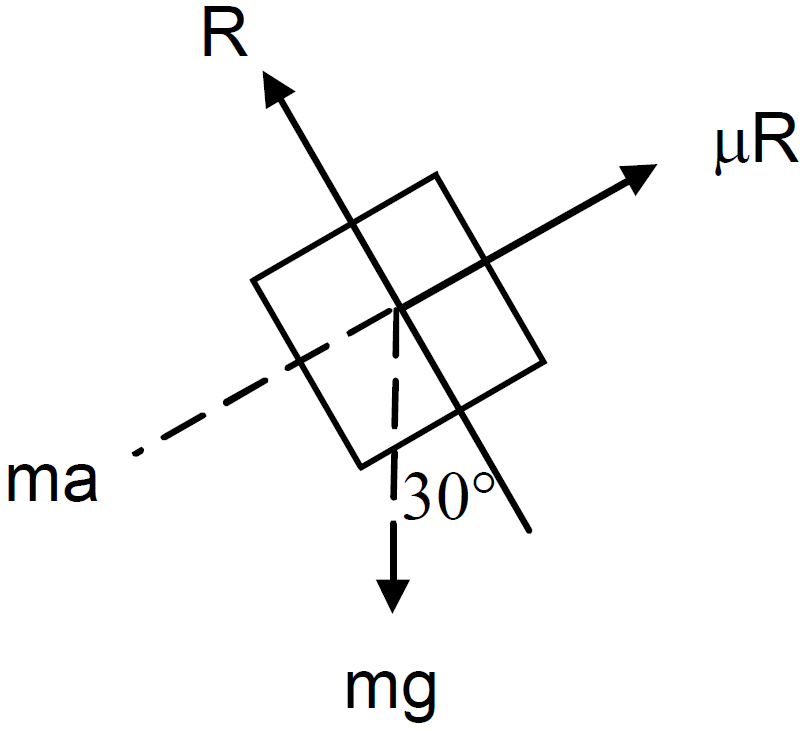 From the free body diagram,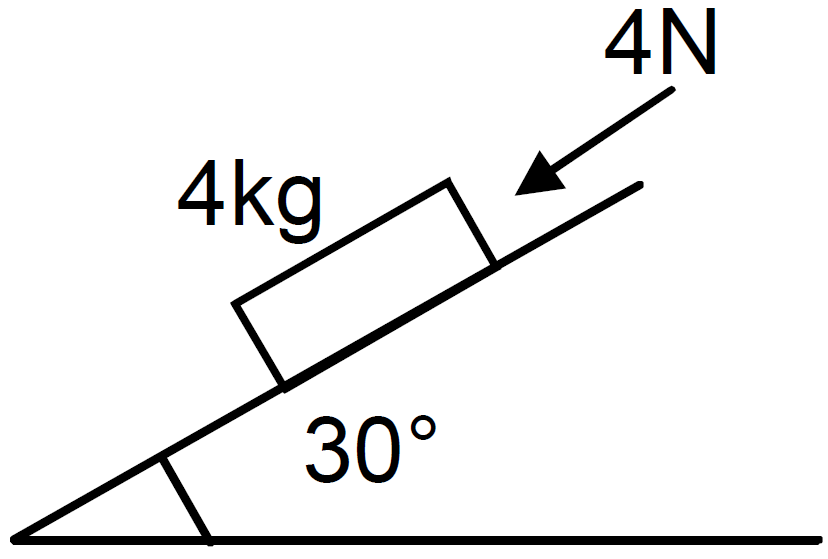
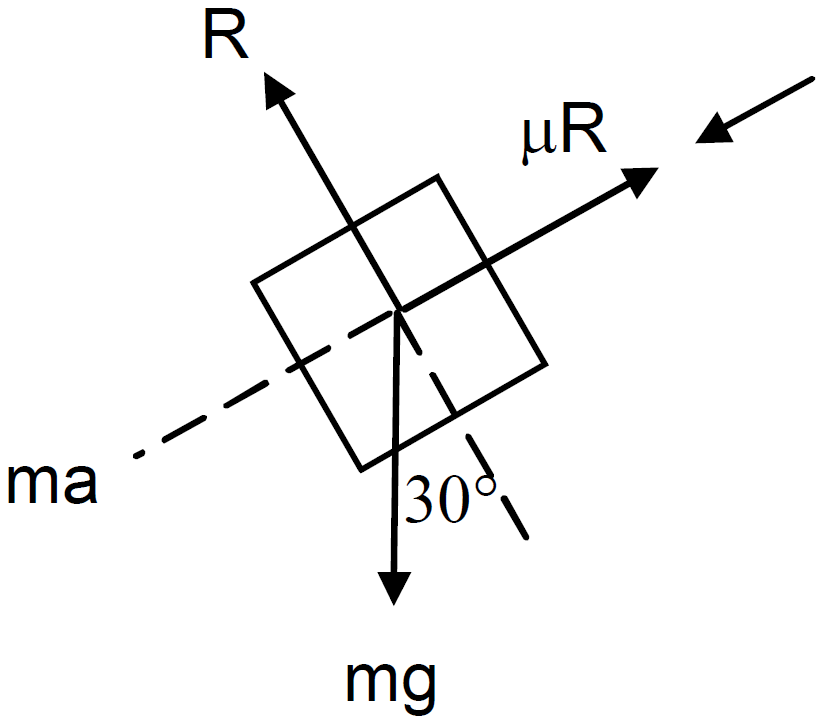 From the free body diagram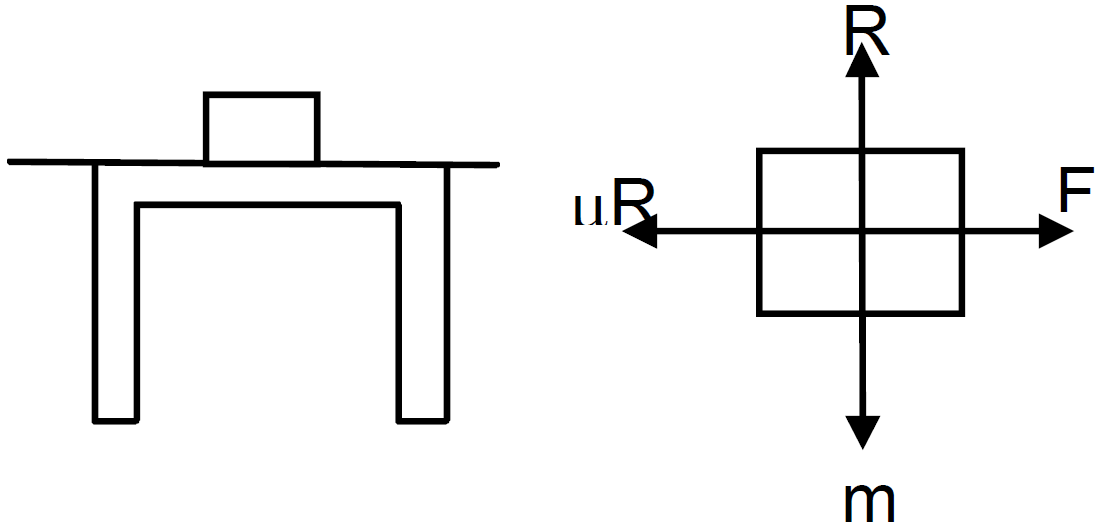
 Because the block slips on the table, maximum frictional force acts on it.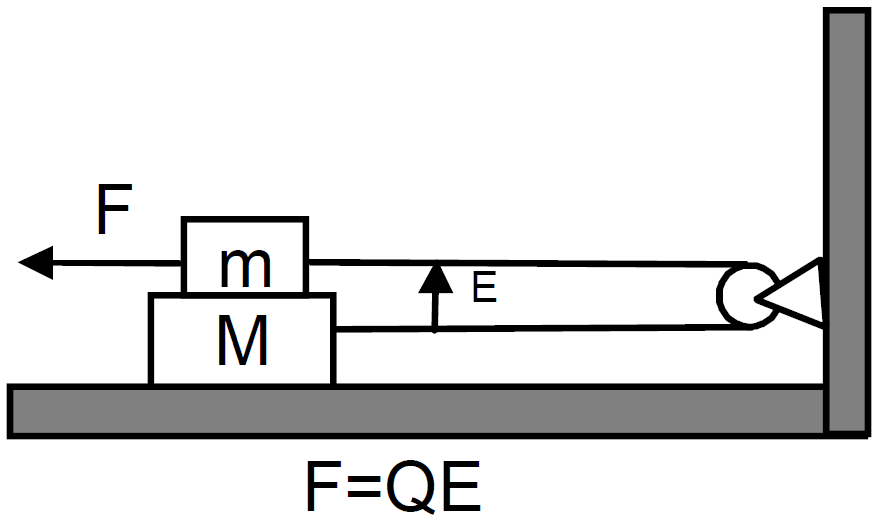
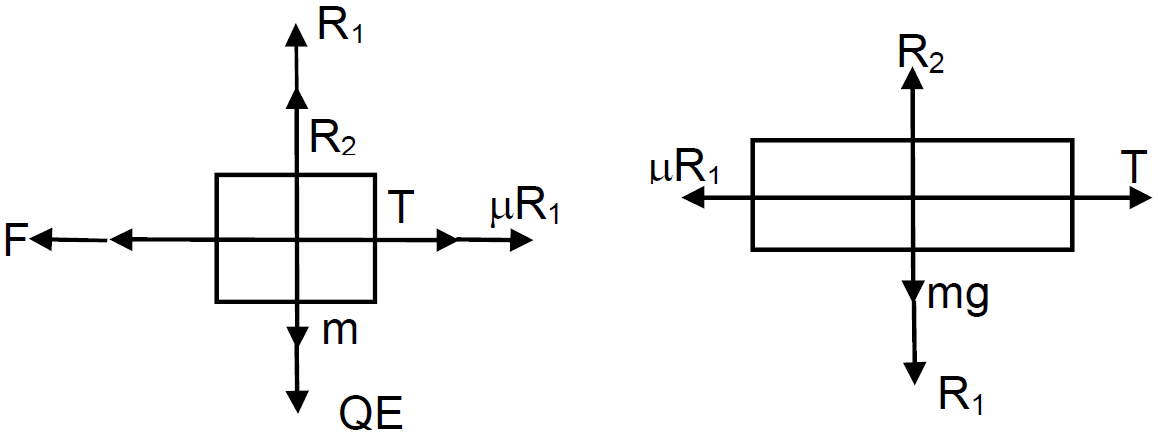 $\text{R}_1+\text{QE}-\text{mg}=0$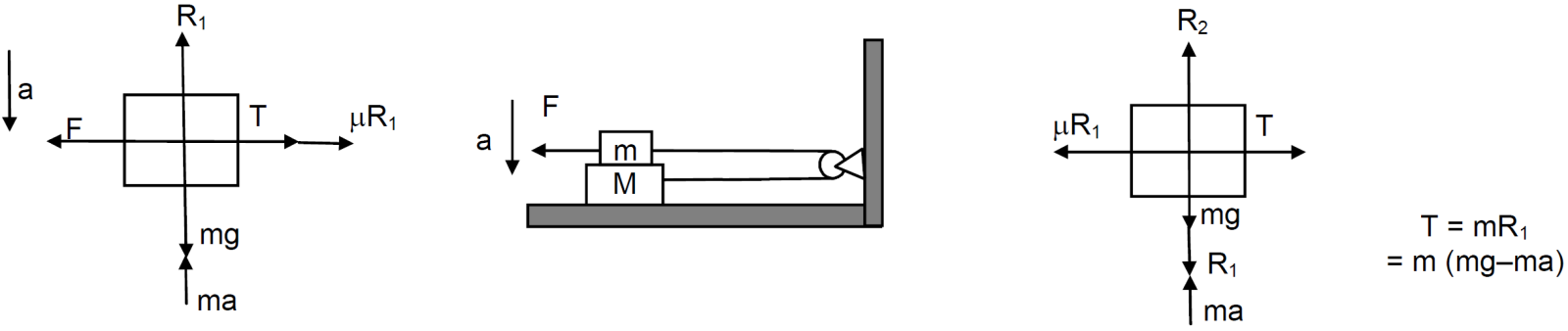
 $\text{s = 5m}, \ \mu=\frac{4}{3},\text{g}=10\text{m/s}^2$
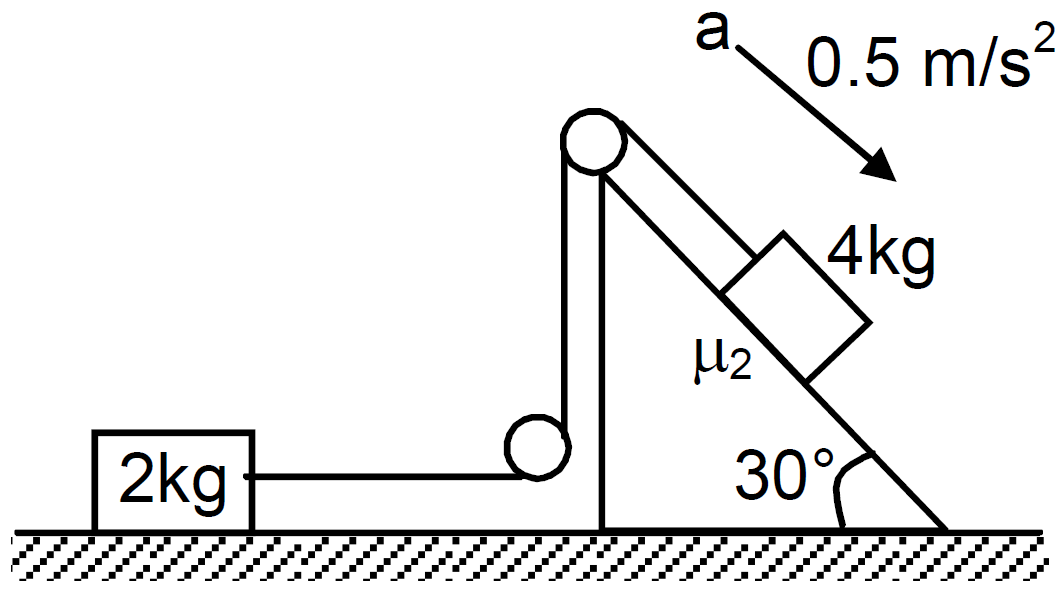
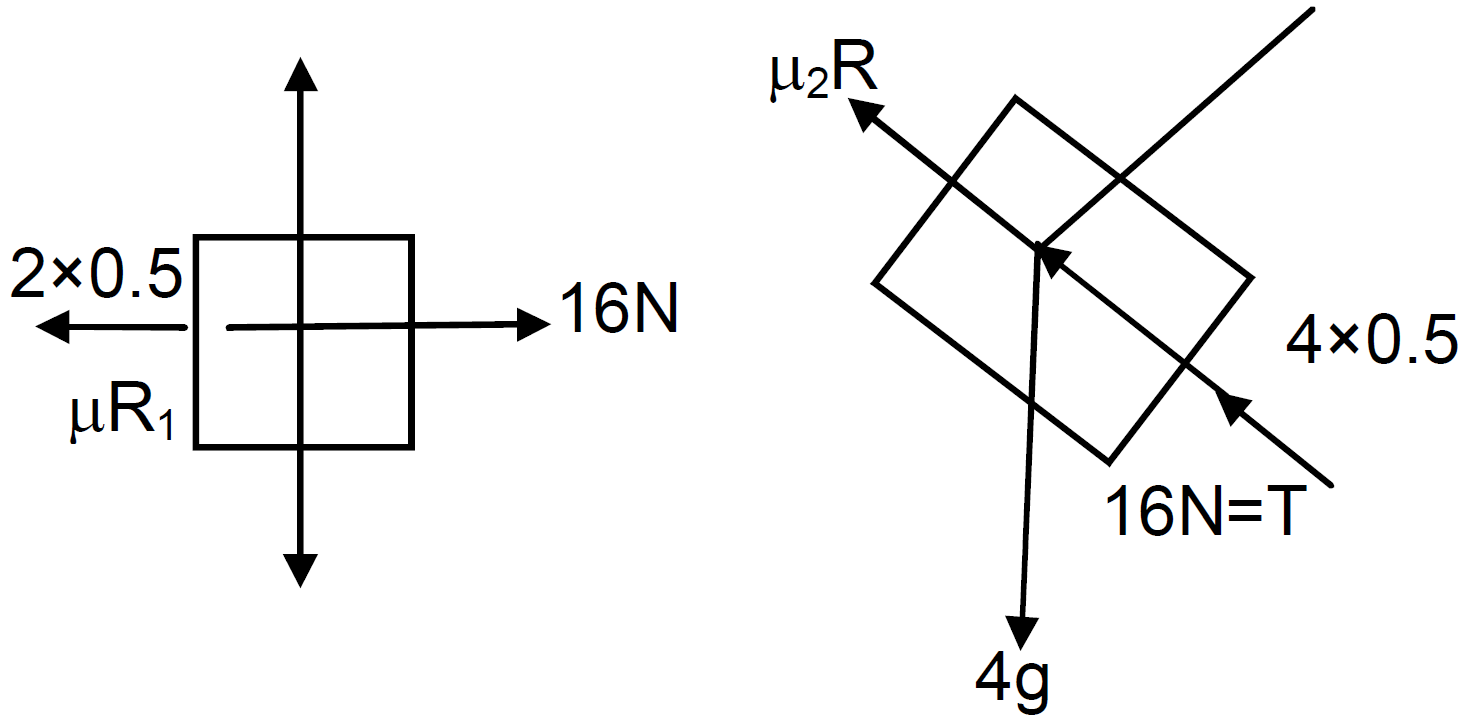
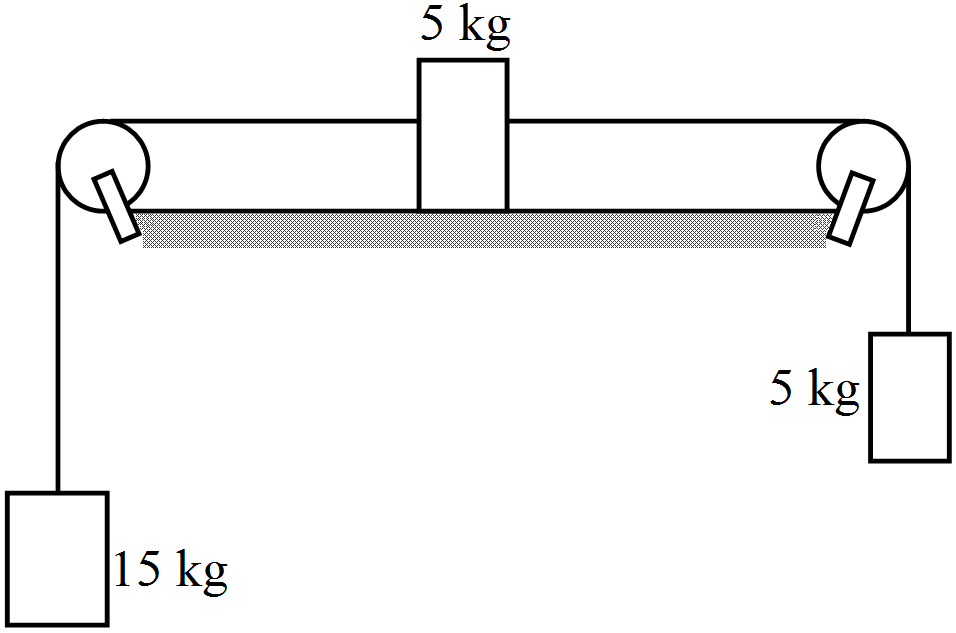
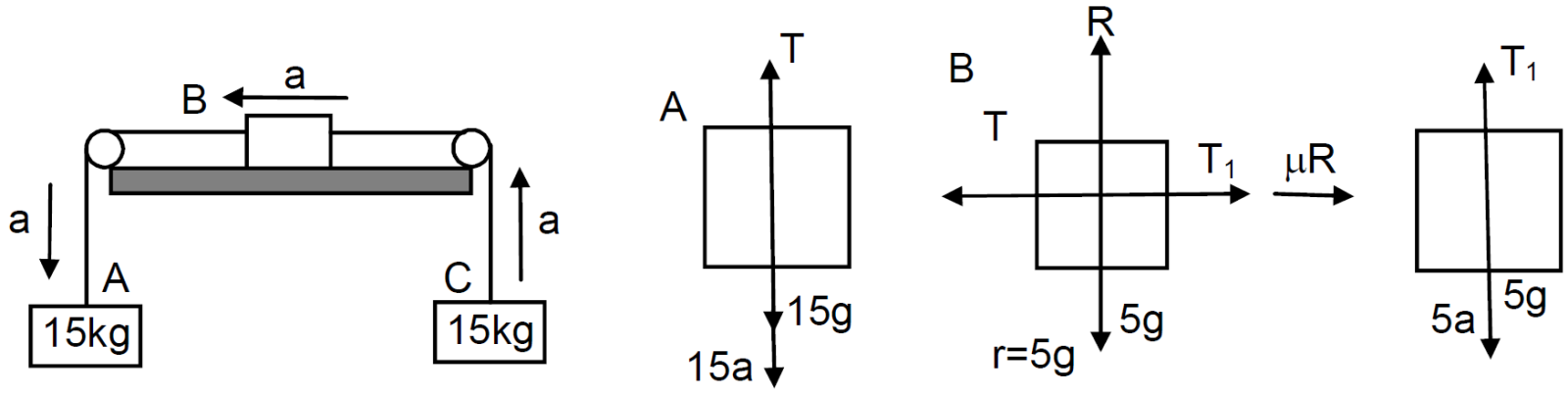 From the free body diagram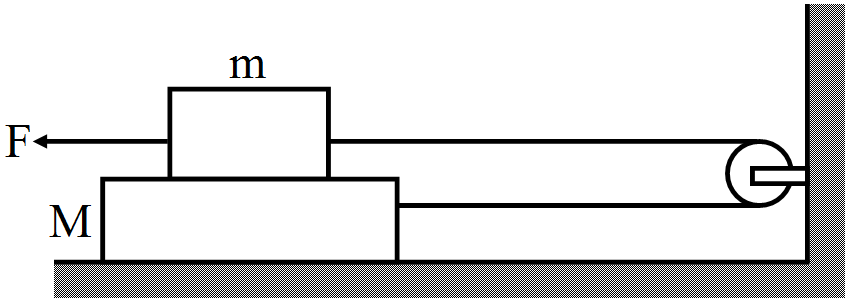
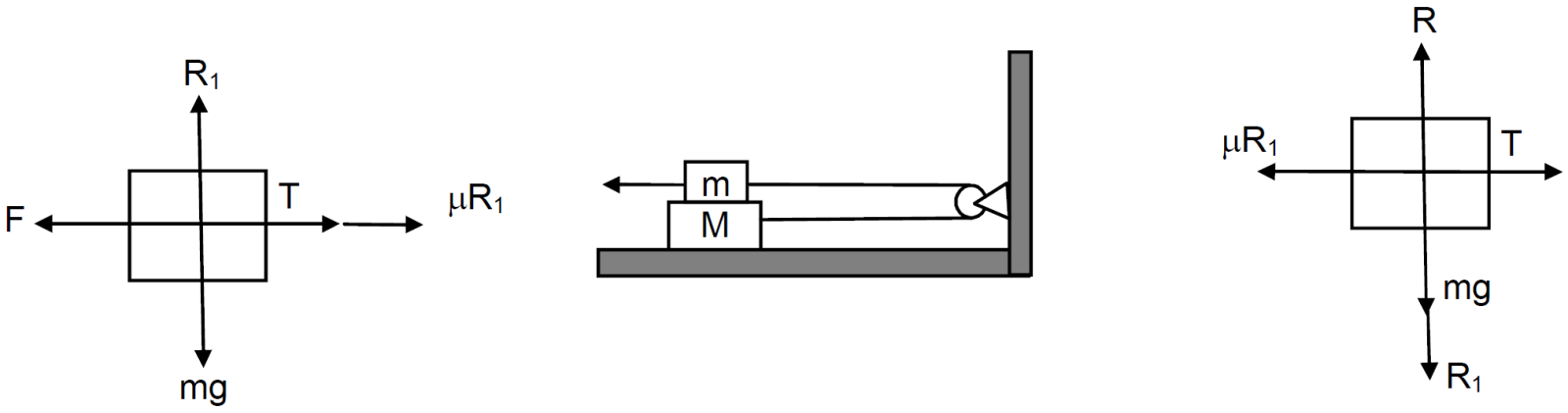
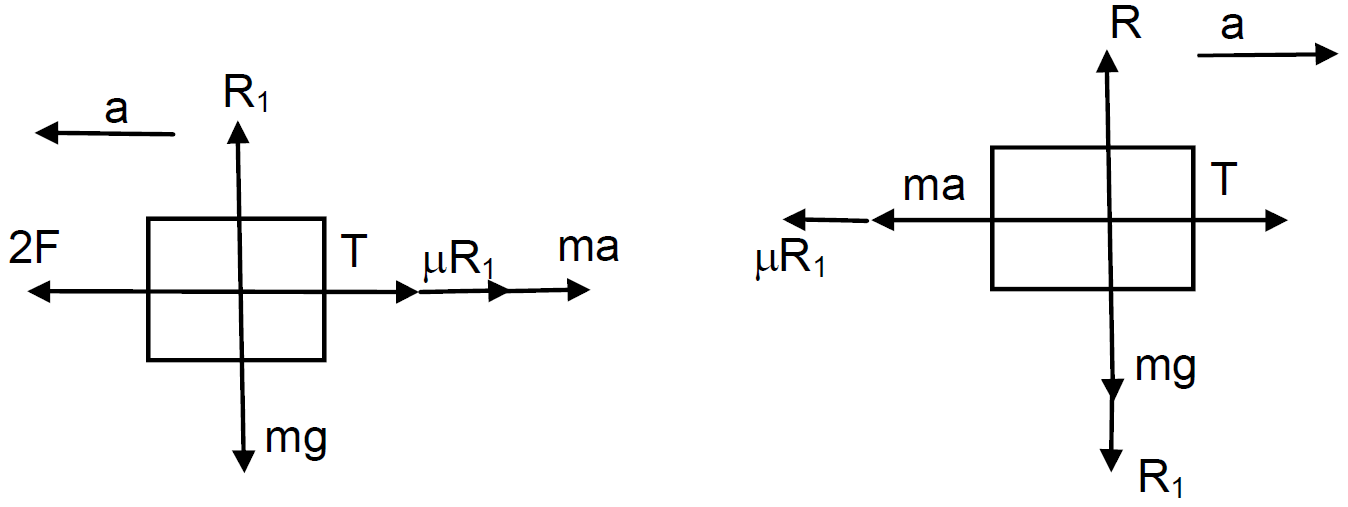
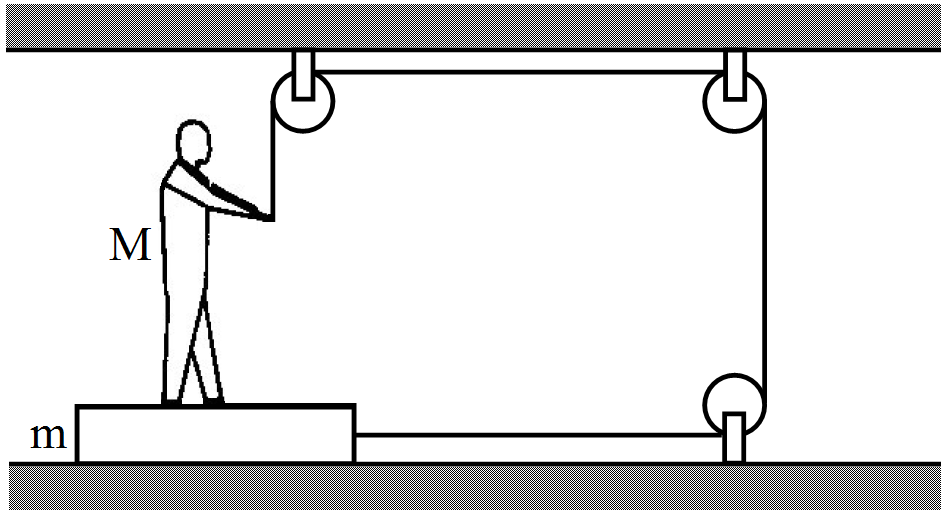
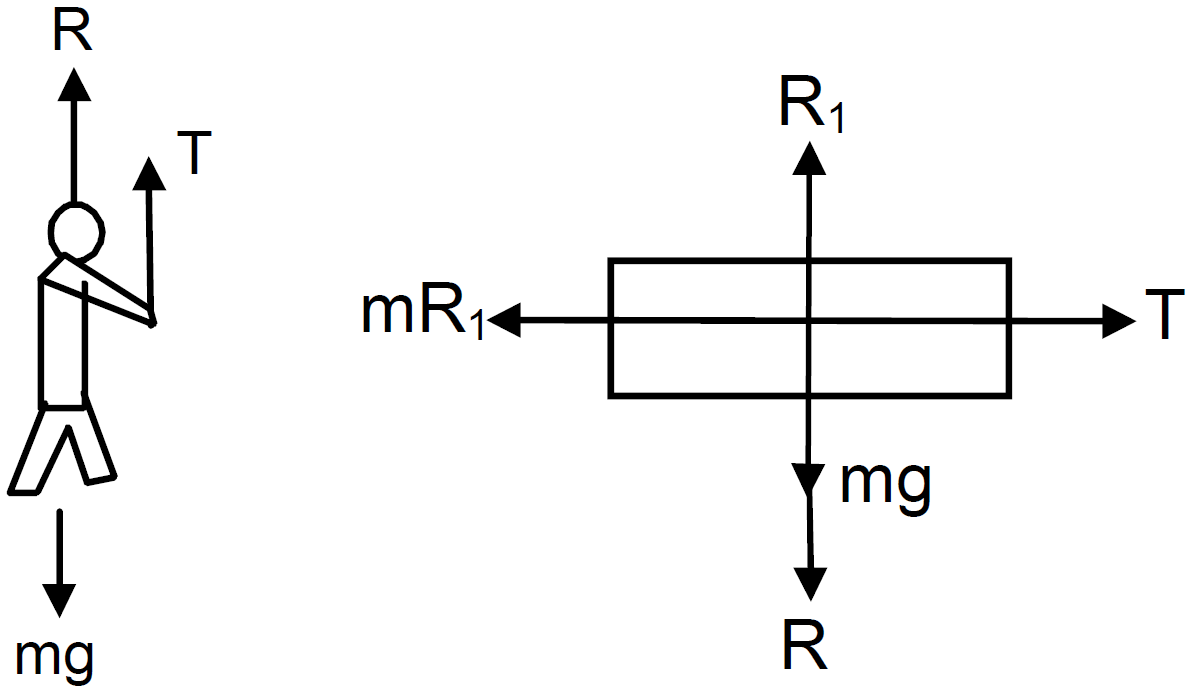 Let, the max force exerted by the man is T.
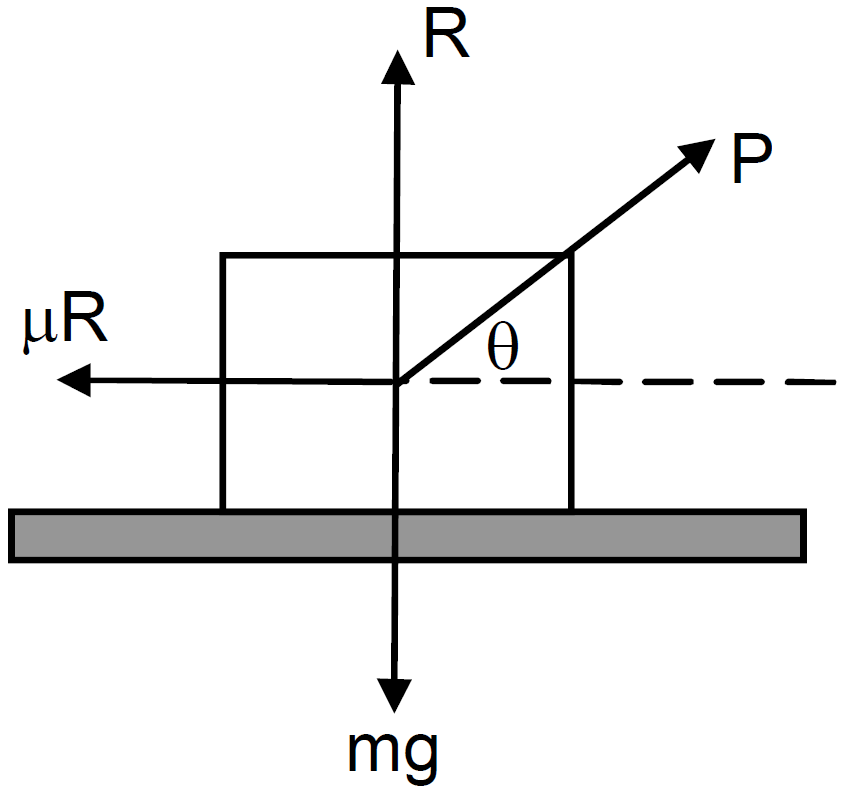 Let ‘p’ be the force applied to at an angle $\theta$