MCQ
Which of the following represents $180\, g$ of water correctly ?
  • A
    $5\, moles$ of water
  • B
    $1\, mole$ of water
  • C
    $6.023 \times 10^{23}$ molecules of water
  • $6.023 \times 10^{24}$ molecules of water

Answer

Correct option: D.
$6.023 \times 10^{24}$ molecules of water
d
$n=\frac{180}{18}=10$

no. of molecule $=10 \times 6.02 \times 10^{23}$

$=6.02 \times 10^{24} $

Need a full question paper?

Generate a complete, print-ready paper with questions like this in minutes — across 16+ boards, with answer keys.

Start Generating Free

Similar questions

The correct order of decreasing stability of the following carbocation is

$\mathop {C{H_3} - \mathop C\limits^ \oplus  H - C{H_3}}\limits_I $ 

$\mathop {C{H_3} - \mathop C\limits^ \oplus  H - OC{H_3}}\limits_{II} $

$\mathop {C{H_3} - \mathop C\limits^ \oplus  H - C{H_2} - OC{H_3}}\limits_{III} $
If the electron pair forming a bond between two atoms $A$ and $B$ is not in the centre, then the bond is
A square planar complex is formed by hybridisation of which atomic orbitals
Acid rains contain :
A mixture of gases contains $H_2$ and $O_2$ gases in the ratio of $1 : 4\ (w/w).$ What is the molar ratio of the two gases in the mixture?
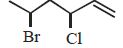
$IUPAC$ name of given compound is
Three solutions of $HCl$ having normalities $12\ N, 6\ N$ and $2\ N$ are mixed to obtain a solution of $4\ N$ normality. Which among the following volume ratio is incorrect for the above discussion
Lewis has pictured the atom in terms of kernel and the outermost shell that could accommodate a maximum of :
In which of the following molecule/ ion all the bonds are not equal?
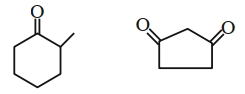
Total number of compounds with Chiral carbon atoms from following is___________.   $IMAGE$

$ \mathrm{CH}_3-\mathrm{CH}_2-\mathrm{CH}\left(\mathrm{NO}_2\right)-\mathrm{COOH} $

$ \mathrm{CH}_3-\mathrm{CH}_2-\mathrm{CHBr}-\mathrm{CH}_2-\mathrm{CH}_3 $

$ \mathrm{CH}_3-\mathrm{CH}(\mathrm{I})-\mathrm{CH}_2-\mathrm{NO}_2 $

$ \mathrm{CH}_3-\mathrm{CH}_2-\mathrm{CH}(\mathrm{OH})-\mathrm{CH}_2 \mathrm{OH} $

$ \mathrm{CH}_3-\mathrm{CH}-\mathrm{CH}(\mathrm{I})-\mathrm{C}_2 \mathrm{H}_5 $