Questions

4 Marks Question

🎯

Test yourself on this topic

28 questions · timed · auto-graded

Question 14 Marks
What are the types of motor development? Describe any six factors affecting motor development in children.
Answer
Types of Motor Development:
  1. Gross motor development- large muscles of the body- sitting, standing, walking, running, jumping.
  2. Fine motor development- associated with small muscles- catching, holding, throwing, aerobic exercises etc.
Factors affecting motor development in children:
  1. Heredity.
  2. Nutrition.
  3. Sleep.
  4. Environment.
  5. Immunization.
  6. Stimulation.
  7. Recreation.
  8. Education, Learning and Productivity.
  9. Gender.
  10. Postural deformity.
  11. Sensory impairment.
  12. Obesity.
  13. opportunity.
  14. Social skills.
  15. Training and practice.
  16. Mental health.
View full question & answer
Question 24 Marks
What do you mean by correct posture? Explain the standing and sitting postures. What are the causes of bad posture?
Answer
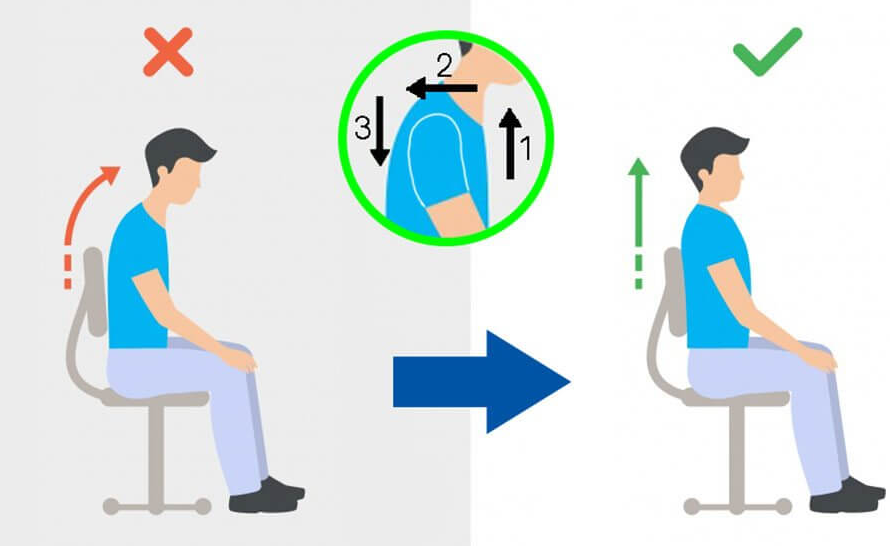
Correct posture means the balancing of body in accurate and proper manner while sitting, standing, reading, writing or during any other action of body.
Alternate Answer
Explanation of sitting and standing posture:
Standing- Heals together, toes apart, body erect. Knee straight, chin inside, chest forward, belly backward, body weight equally on both feet. Sitting-Hips as far back as possible on the chair, legs rest on the floor, thigh horizontal head, spinal column, shoulder and hips should be in straight line and erect.
Causes of bad posture:
  1. Improper diet.
  2. Heredity.
  3. Accident.
  4. Disease.
  5. Obesity.
  6. Due to improper exercise.
  7. Nature of job.
  8. Fatigue.
  9. wearing tight clothes.
  10. Unsuitable furniture.
  11. Muscle weakness.
  12. unawareness of correct footwear/Improper footwear.
View full question & answer
Question 34 Marks
Write in details about the physical and physiological advantages of physical exercise during the childhood stages. Explain any Five.
Answer
The advantages are:
  1. Prevents and reduce obesity.
  2. Develops bones.
  3. Muscle development.
  4. Prevention from diseases.
  5. Increased blood flow.
  6. Develop grace and efficiency in movement/motor development.
  7. Strengthens the heart.
  8. Strengthens the lungs.
  9. Improves energy levels.
  10. Changes in brain structure.
  11. Reduces blood sugar level.
  12. Improves digestive system.
  13. Neuromuscular co-ordination.
View full question & answer
Question 44 Marks
Exercises have numerous physiological and physical benefits on children. Explain in detail.
Answer
Physical Benefits:
  • Good Motor development.
  • Posture alignment and good body image, improves physical appearance.
  • Reduces fatigue.
  • Increases alertness.
  • Weight management, prevents obesity.
  • Increases bone density and prevent from osteoarthritis.
  • Tolerance of hot and cold climatic conditions.
  • Improves muscle Tone and minimizes the risk of injuries.
  • Improves neuromuscular co- ordination.
Physiological Benefits:
  • Stronger immunity, reduces the chances of diseases.
  • Increase lactic acid tolerance.
  • Increase in size of fibres and connective tissues.
  • More blood supply.
  • Density of blood vessels increases.
  • Myoglobin increases.
  • Oxidation of carbohydrate increases.
  • Improves muscle composition.
View full question & answer
Question 54 Marks
What are the causes of ‘Flat-Foot’ and ‘Knock-Knees? Suggest physical Activities as corrective measures for these deformities.
Answer
Cause of flat foot:
  • Genetic.
  • Weak muscles.
  • Over weight.
  • Improper foot wear.
  • Carrying heavy weight.
  • Forcing child to stand up at very early stage.
Cause of Knock knee:
  • Chronic illness.
  • Deficiency of calcium, vitamin D.
  • Mal nutrition.
  • Flat foot.
  • Carrying heavy weight at early age.
Corrective measures for flat foot:
  • Walking on heels.
  • Walking on toes.
  • Rope skipping.
  • Jumping on toes.
  • Perform vajrasan, Tada asana.
  • Picking pebbles by toes.
  • Running on inclined plane/Stairs.
  • Cycling.
Corrective measures for knock knees:
  • Horse riding.
  • Kicking football by instep kick.
  • Putting a pillow between the knees.
  • Padmasan, Gomukhasana.
  • Walking on inner side of the foot.
View full question & answer
Question 64 Marks
Elucidate the meaning of motor development in childhood. Discuss in detail about various factors affecting motor development.
Answer
Motor development refers to changes in children’s ability to control their body’s movements like walking, jogging, running, climbing, jumping, throwing etc.
Factors affecting motor development.
  1. Growth of the child.
  2. Gender.
  3. Biological factors.
  4. Environmental factors.
  5. Immunization.
  6. Nutrition.
  7. Cultural factors.
  8. Physical activities.
  9. Opportunities.
  10. Sensory impairments.
  11. Postural deformities.
  12. Obesity.
View full question & answer
Question 74 Marks
Explain in detail the development characteristics for childhood.
Answer
Different developmental characteristics for childhood: The childhood stage begins from the $6^{th}$ year and ends by the end of the $12^{th}$ year. In this stage, the children are able to have enough control on their muscles. Their development becomes very fast, approximately during the first three years and later on, i.e., till $12^{th}$ year their development becomes strong and vigorous. Play is life for them in this stage.
Their neuromuscular coordination becomes enough efficient. In this stage, the concentration power of the children increases, but they cannot concentrate for a long time. Their thinking ability increases at a fast rate. Their power of memory, logic, thinking and decision-making increases remarkably till the end of this stage. They learn to control over their emotions. Emotionally, they become stable and optimistic. They also learn to control over their self-esteem and self-respect.
View full question & answer
Question 84 Marks
Describe exercise guidelines at different stages of growth in children. Give suitable examples for every stage.
Answer
Different Stages of growth in children. Infancy - (1 to 2 years)
  1. Gross motor developmental skills.
  2. Head Control.
  3. Sitting.
  4. Crawling.
  5. Moving arms, legs.
  6. Reaching to various object.
  7. Infants should be provided with objects, toys and games.
  8. Throwing, Catching and kicking a ball.
Early Childhood - (3 to 7 years)
  1. Fine motors developmental skills i.e. coordinative activities.
  2. Movement skills(throwing, jumping, catching or kicking the ball).
  3. Emphasis on participation and not on competition.
  4. Structured as well as unstructured physical activities should be performed daily for at least sixty minutes daily.
  5. They may be allowed to watch quality programmes on T.V. for one to two hours.
Later Childhood - (8 to 12 years)
  1. Stunts, throwing, jumping,. Catching, running etc so that they can acquire body control, strength and coordination.
  2. Participation in organized or team games which aim to develop social consciousness in them.
  3. Children should be introduced to competitive sports and taught the basic rules of sports competition.
  4. Introduction of concept of endurance, strength, agility, coordination and balance.
View full question & answer
Question 94 Marks
Explain ‘Flat Foot’ and ‘Knock Knees’ and also suggest corrective measures for both postural deformities.
Answer
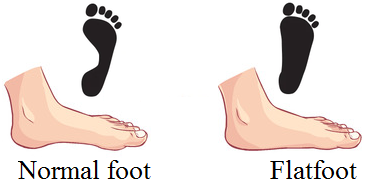
Flat foot: It is a deformity in the feet. There is no arch in the foot and the foot is completely flat which may cause pain in the foot. An individual with this deformity faces problem in standing, walking, jumping and running.
Corrective measures for Flat foot:
  1. Jumping on toes.
  2. Rope skipping.
  3. Walk on toes.
  4. Stand up and down on heels.
  5. Walk on heels.
  6. Walking on inner and outer side of foot.
  7. Perform Vajrasana and Yogic exercises.
Knock knees: It is a postural deformity in which both the knees touch or overlap each other in normal standing position. Due to this deformity an individual usually faces difficulty in walking.
Corrective measures for Knock Knees:
  1. Horse riding is one of the best exercise.
  2. Keep a pillow between the knees and stand for some time every day.
  3. Use of walking caliper may be beneficial. Perform Padmasana and Gomukhasana.
View full question & answer
Question 104 Marks
Elucidate two disadvantages of weight training.
Answer
Disadvantages of Weight Training:
  1. Bisk of Injuries: While performing weight training, there is always a risk of sustaining injuries, especially when performing exercise without any companion. In case you are alone and you are not able to do the required repetitions ofexercise, you may get injured. So, you should always have a companion or a supervisor supervising you in case any worst happens. In addition, you should perform weight training under an expert physical trainer.
  2. Less Flexibility: Weight training reduces the level of flexibility if flexibility exercises are not done along with weight training. However, this is a minor or small disadvantage in comparison to many advantages of weight training. If flexibility exercises are done continuously, then such disadvantages can be ignored.
View full question & answer
Question 114 Marks
What do you mean by 'round shoulders'? Suggest any four physical activities for correcting round shoulders.
Answer
Round Shoulders: ln this postural deformity the shoulders become round and sometimes they seem to be bent forward.
The following exercises should be performed for the remedy of round shoulders deformity:
  1. Keep your tips of fingers on your shoulders and encircle your elbows in clockwise and anticlockwise direction.
  2. Hold the horizontal bar for some time.
  3. Perform Chakrasana and Dhanurasana regularly.
View full question & answer
Question 124 Marks
Mention the corrective measures related to scoliosis.
Answer
Corrective Measures for Scoliosis:
  1. Lie down in prone position: i.e., on the chest. Right arm should be upward and left arm at side. After that, move right arm towards the Ieft over head; press down with left hand and then slide the left hip up.
  2. Stand erect with feet few inches apart: After that raise the left heel and left hip. Extend right arm in an arch overhead to the left. Press left hand against the ribs on the left side.
  3. Stand in the erect position with feet several inches apart: Keep left hand's finger tips on left shoulder and bend the upper body on the right side if there is an opposite 'C' curve in the spine. But if there is no opposite 'C' curve which means if there is just 'C' curve, bend the upper body to the left side. The tips of the fingers of the right hand should be on right shoulder. Repeat the exercise for some time as per the 'C' curve.
View full question & answer
Question 134 Marks
Briefly discuss flatfoot.
Answer
Our feet act as the base of support for the body while standing, walking, running and jumping. Flatfoot is commonly found among newborn babies but it becomes a postural deformity if it still persists during later childhood. The children with flatfoot deformity cannot become efficient sportspersons. Such children feel pain in their feet when they run.
They face problem while standing and walking. It is easy to observe whether a person has flatfoot deformity or not. Dip your feet in water and walk on the floor. If there is not a proper arch of footprints on the floor then you have the deformity of flatfoot. In fact, there should be proper arch of the feet for healthy feet.
View full question & answer
Question 144 Marks
Mention any two advantages of weight training.
Answer
  1. Helps in Getting Good Shape: Weight training is an extraordinary training because it can tone up the body by involving appropriate schedules (and sometimes appropriate diet). Fat people can become slim and trim, people can put on weight if so desired. The weak can become strong and the strong can become stronger. The slower can become faster and the ponderous can become more dynamic. In fact, weight training helps individuals in getting their entire body in good shape. It is beneficial not only for upper body but also for lower body.
  2. Best Means of Providing Fitness: Weight training has a major advantage over other means of fitness. It involves less time, exceptions being throwers and competitive weightlifters who need longer sessions. Optimum gains can be made by spending just one hour, three times a weak in weight training gymnasium. Weight training enhances all the components of health-related fitness such as muscular strength and body composition.
View full question & answer
Question 154 Marks
Explain the motor development in late childhood.
Answer
Motor development in: Late Childhood The period of late childhood begins from 11th year and continues up to 12th year or till the beginning of puberty. Strength begins to differ but the differences are small Boys and girls are able to compete evenly. Most of the children master most intricate or complex motor skills.
They are ready to learn strategies and more complex play combinations. Running and jumping movements, qualitatively as well as quantitatively, develop at a faster rate than in the middle childhood period. Coaches or teachers of physical education should continue to encourage skill development with an increasing stress on strategies and tactics.
View full question & answer
Question 164 Marks
Write about the deformities of spinal curvature.
Answer
There are three types of spinal deformities:
  1. Kyphosis: Kyphosis implies an increase or exaggeration of a backward or posterior curve or a decrease or reversal ofa forward curve. It is also called round upperback. Depression of chest is common in kyphosis.
  2. Lordosis: Lordosis is the inward curvature of spine. In fact, it is an increased forward curve in the lumber region. It creates problem in standing and walking. The body seems to be stiff. Lordosis can be corrected in the early stage.
  3. Scoliosis: Postural adaptation of the spine in lateral direction is called scoliosis. In fact, these are sideways curves and may be called scoliotic curves. Indeed these curves are identified as either convexity right or right convexity. A simple or single curve to the left or convexity Ieft is commonly called a 'C' curve. Scoliotic curves may be found in 'S' shape.
View full question & answer
Question 174 Marks
Suggest at what age children should be exposed to weight training and justify your answer.
Answer
Adulthood (Above 19 years): Adults should try to be active always. They should do brisk walking, bike riding, dancing, and swimming with moderate intensity' They should also indulge in running, aerobic exercises, weight training, push-ups, sit-ups, etc., for muscle strengthening. They should minimise the amount of time spent being sedentary.
As a matter of fact, adults require such exercises or activities that help to increase their muscular and bone strength. so, they should perform resistance exercises at least two days a week to tone their muscles and bones' These exercises increase skeletal muscles strength, power, endurance and mass. Bone strengthening exercises/ activities produce an impact or tension force on the bones that promotes bone growth and strength. For bone strengthening, they should include running, jumping rope and weight training exercises.
View full question & answer
Question 184 Marks
Discuss the causes of knock-knees and bow legs.
Answer
Causes of Knock-knees: Generally, the lack of balanced diet, especially vitamin D, calcium and phosphorus is the main cause of knock-knees. It may also be caused due to rickets. Chronic illness, obesity, flatfoot and carrying heavy weight in early age may be other possible causes of Knock-knees.
Causes of Bow legs: The main cause of bow legs is the deficiency of calcium and phosphorus in bones. Long bones of legs become soft, hence they are bent outward. The chances of bow legs also increase when children become overweight. This deformity may be due to the deficiency of vitamin D. Improper way of walking and forcing the babies to walk at a very early age may also lead to Bow legs.
View full question & answer
Question 194 Marks
Explain the correct posture of sitting.
Answer
Correct Posture of Sitting: When we sit in a chair, our hips should be as far back in the chair as possible. Head, spinal column, shoulder and hips should be in straight line and erect. Legs should touch the ground and should not be in a hanging position. Thighs should be in a horizontal position. While we read, the book should be on the table but the book should not be too far away or near the eyes. The approximate distance between the book and the eyes should be at least 30 cm. If we do not follow this rule then eyesight problems may occur. For writing, a table with slight inclination towards the outside is appropriate.
View full question & answer
Question 204 Marks
Elucidate the meaning of motor development.
Answer
Motor development refers to the development of a child's bones, muscles and his/ her ability to move around and manipulate his/ her environment. In simple words, motor development means the development of various motor abilities from birth till death. In other words, motor development is the progressive change in movement throughout one's life. As a matter of fact, the ability to move is essential for human development. Various motor movements or motor skills are essential for everyday life activities such as sitting, walking, running, climbing, catching or holding, jumping, skipping, throwing, etc. Motor development can be divided into two types, i.e., gross motor development and fine motor development.
View full question & answer
Question 214 Marks
Elucidate the motor development in middle childhood.
Answer
Motor development in Middle Childhood:
The period of middle childhood starts from 7th year and continues up to the 10th year. During this period, children become active and agile. They have strong desire to engage in various physical movements and activities. During this period, children have a desire to compete with children of their own age group. They also have an urge to improve upon their previous performance. During this period, most of the children achieve mature patterns of fundamental motor skills. Their posture and balance become better.
They try to become efficient in the variation of movements which they had already learnt. In fact, the same movements are performed differently for different aims such as jumping for distance or height, throwing for distance or height, etc. They become efficient in movement coupling, movement precision and movement flow. The speed-related abilities develop at a faster rate. Coordinative abilities also show a higher level of development in this age group, whereas flexibility develops at a very slow rate. During this period, rules should be flexible, instruction time should be short and there should be minimum competitions. Stress should be given on movement correction.
View full question & answer
Question 224 Marks
Mention the corrective measures related to kyphosis.
Answer
Corrective Measures for Kyphosis:
  1. Lie on the back, i.e., in supine position with knees drawn up and feet flat on the ground. Both hands should be at sides. Then move your arms sideways in horizontal position. Palms should face upward. Raise your arms upward over the head, palms still facing upward. Hold this position for some time. After that bring your arms back in horizontal position. Repeat the exercise at least 10 times.
  2. Lie down in the prone position, i.e., on the chest with hands on your hips. After that, raise your head and trunk several inches from the ground. Your chin should be in during this exercise. Hold this position for some time and then come back to the previous position. Repeat this exercise at least 10 times.
  3. Sit in a normal position, with a stick held in horizontal position over head, hands well-spread. After that lower the stick and then raise it behind your head and shoulders. While doing this exercise, keep your head and trunk straight. Repeat this exercise 10-72 times.
View full question & answer
Question 234 Marks
Mention exercise guidelines for early childhood and later childhood.
Answer
Exercise guidelines Early Childhood (3 to 7 years): During this stage of growth and development such exercise or physical activity should be encouraged which helps in developing competence in movement skills (throwing, jumping, catching or kicking the ball). Emphasis should be laid down on participation and not on competition. During this stage, activities related to fine motor skills, i.e., coordinative abilities should be emphasised.
Structured as well as unstructured physical activities should also be performed daily for at least sixty minutes by children during this stage of growth. Recreative as well as enjoyable methods should be used to encourage them for participation in various physical activities. Stress should also be laid on clean and safe environment during this stage of growth. They may be allowed to watch quality programmes on TV for one to two hours.
Exercise guidelines Later Childhood (8 to 12 Years): During this stage of growth and development children should indulge in activities such as, stunts, throwing, jumping, catching, running, etc., so that they can acquire body-control, strength and coordination. However, activities related to endurance should be avoided. Stress should also be laid down on organised or team games which aim to develop social-consciousness in them.
During this stage, children should be introduced to competitive sports and taught the basic rules of sports competition, i.e., enjoying the game, fair play, simple stralegies and tactics. They can also be introduced to the concept of sports training and the exercises that build endurance (aerobic exercises like running, swimming and cycling, etc.), strength (resistance exercises) and agility, coordination and balance (fast work and rapid movement exercises).
View full question & answer
Question 244 Marks
Explain any two factors affecting motor development.
Answer
There are various factors which are liable to affect motor development in children. These factors are stated below:
  1. Biological Factors: Biological factors are related to the genes. These factors are also known as heredity or genetic factors. The genes which we get from our parents are responsible for various types of development including motor development. The percentage of fast twitch fibres and slow twitch fibres depends on biological factors. In fact, these factors are likely to affect the rate and ability of motor development. These factors are related to body weight, size and strength.
  2. Environmental Factors: Environmental factors such as physical and social factors are likely to affect the motor development of children. Research studies indicate that motor development takes place at a faster rate in children who are encouraged to explore their surroundings. They are given more opportunities to take part in sports activities. Those children, who are not encouraged or motivated towards motor activities have slow rate of motor development. In fact, encouragement, love and security push a child to take risks to explore fearlessly, which leads to better motor development.
View full question & answer
Question 254 Marks
Enumerate about the motor development in early childhood.
Answer
Motor development in early childhood:
The period of early childhood starts from 3rd year and continues till 6th year. The motor development during this period takes place rapidly. This stage is also known as the preschool years. In this period, a child becomes perfect in various fundamental movements such as running, jumping and throwing and acquires the ability to unite or combine these movements. In this period, children's stride length increases and they develop a more mature running pattern. During this period, proficiency in climbing on ladders becomes efficient. They can hop and gallop skillfully.
The motor development at the end of early childhood achieves a satisfactory level. So, the systematic training of children in various sports such as gymnastics and swimming can be started because their basic movements like rolling, hanging, pushing, pulling, etc., become efficient. They can combine these movements efficiently under changing and difficult conditions. They become efficient in various movement combinations such as running and jumping, catching and throwing, running and throwing, etc. Thus, they become efficient in all such movements but still competitions at this stage should be avoided.
View full question & answer
Question 264 Marks
Explain the meaning and concept of correct posture.
Answer
Posture plays a very significant role in our daily activities. In fact, posture is the position in which we hold our body upright against gravity while standing, sitting, walking, running or Iying down. The force of gravity acts upon our body constantly. If the muscles of our body are week, we may suffer from postural deformities such as kyphosis, Iordosis, scoliosis, bow legs, knock-knee, flatfoot, etc. Owing to these postural deformities, our working efficiency usually gets reduced.
Therefore, it is essential for us to know about correct posture, bad posture and how to correct posture with the help of various exercises. Correct posture means the balancing of body in accurate and proper manner while sitting, standing, reading, writing or doing any other action.
The first impression of an individual is based on how he stands, sits and walks. In a proper posture, the whole body weight is balanced on both feet without any effort and the entire body appears to be in a vertical line. In this position, all the limbs of the body perform their function efficiently. A posture is dynamic and changes according to the activity. Views of Avery, “A good posture is one in which the body is so balanced as to produce least fatigue”.
View full question & answer
Question 274 Marks
Discuss the physical exercises as corrective measure for kyphosis, lordosis and scoliosis.
OR
Discuss the physical exercises as corrective measures for the deformities of spinal curvature.
Answer
Causes of Scoliosis: Scoliosis may be due to many reasons but the main reasons are diseases in the joints ofbones, under-developed legs, infantile paralysis, rickets, carrying heavy Ioads on one shoulder, unhealthy conditions, such as inadequate lighting arrangement, uncomfortable desks, partial deafness and wrong standing posture. It may be caused by congenital or acquired abnormalities of vertebrae, muscles or nerves.
Precautions:
  1. Balanced diet should be taken.
  2. Studying should be avoided in sideways bending position.
  3. Avoid walking for long time while carrying weight in one hand.
Remedies: Scoliosis can be remedied by doing the following exercises.
  1. Bending exercise should be done on the opposite side of the 'C' shaped curve.
  2. Hold the horizontal bar with hands and let your body hang for some time.
  3. Hold the horizontal bar with your hands and swing your body to the left and right sides.
  4. Swim by using breaststroke technique.
View full question & answer
Question 284 Marks
Elaborate the three causes of bad posture.
Answer
Following are the causes of bad or poor posture among human beings:
  1. Improper Diet: If we do not take a proper diet, the bones and muscles of our body become weak. We experience fatigue after some time. Consequently, we adopt faulty or bad posture. Due to an improper diet, a person suffers from deficiency diseases like rickets and pigeon's chest that causes bad posture.
  2. Diseases: Various diseases like rickets, polio and infantile paralysis may result in a bad or poor posture in a child. Chronic illness may also lead to a poor posture. These diseases may result in undue curvature of the vertebra.
  3. By Birth: A person may have a bad posture from birth. Kyphosis, clubfoot and dislocation of hip are such deformities which might be present from birth.
  4. Due to Accidents: Accidents may cause injuries to the body. These injuries may further lead to physical deformity or poor posture. In accidents, muscles of the body may be damaged permanently. This may also lead to poor posture. Severe burns may also cause physical deformities.
  5. Fatigue: If we work continuously for longer duration, we experience fatigue and we become lazy and lethargic. So, we adopt a bad posture, if we continue doing that work. Even after work, when we take rest, we tend to adopt a wrong posture which ultimately results in a poor or bad posture.
View full question & answer
4 Marks Question - Physical Education STD 12 Commerce Questions - Vidyadip