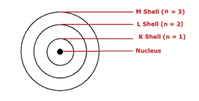
- AOne of the oxygen atoms has gained electrons.
- BOne of the oxygen atoms has gained two neutrons.
- ✓The two oxygen atoms are isotopes.
- DThe two oxygen atoms are isobars.
Answer: C.
View full solution →936 questions across 18 question groups — pick any mix to generate a Science paper with step-by-step answer keys.
M.C.Q. [1 M]
176 Q→02M.C.Q-[Che-1M]
176 Q→03Assertion (A) & Reason (B) MCQ
5 Q→04Assertion - Reasoning [Che-1 M]
5 Q→05true or false
10 Q→06Fill in the blank [Che-1M]
25 Q→07Fill in the blank
25 Q→08True-False [Che-1M]
10 Q→09Do as directed; [1 M ]
112 Q→10Do as directed; [Che-1 M]
112 Q→11Que-Ans (Each of 2 Mark )
87 Q→12Answer the questions.[Che-2M]
87 Q→13Que-Ans (Each of 3 Mark )
35 Q→14Answer the questions.[Che-3M]
35 Q→15Que-Ans (Each of 5 Mark )
13 Q→16case /data -based [Che-4M]
5 Q→17Case study ( 4 Marks )
5 Q→18Answer the questions.[Che-5M]
13 Q→One sample from each question group in this chapter. Select any group above to see the full set with answer keys.
Answer: C.
View full solution →Answer: D.
View full solution →Answer: A.
View full solution →Answer: B.
View full solution →Answer: C.
View full solution →Answer: D.
View full solution →Answer: A.
View full solution →Answer: C.
View full solution →Answer: B.
View full solution →Answer: A.
View full solution →Assertion: Bohr's orbits are called stationary orbits.
Reason: Electrons remain stationary in these orbits for some time.
Assertion: According to Bohr's model, the orbits of an atom are also called energy levels.
Reason: Orbits are the spheres containing definite value of energy.
Fill in the blanks in the following statements:
The electronic configuration of silicon is _________ and that of sulphur is _________.
Fill in the blanks in the following statements:
Rutherford’s α-particle scattering experiment led to the discovery of the ______
Fill in the blanks in the following statements:
Neon and chlorine have atomic numbers 10 and 17 respectively. Their valencies will be _________ and _________ respectively.
Fill in the blanks in the following statements:
Isotopes have same ______ but different ______.
| Atomic number | Mass number | Protons | Neutrons | Electrons | Symbol |
| $10$ | $22$ | ............ | ............ | ............ | ............ |
|
No. of Protons
|
No. of Neutrons
|
Mass number
|
Atomic number
|
No. of electrons
|
Symbol
|
|
$11$
|
$12$
|
............
|
............
|
............
|
............
|
|
|
X
|
Y
|
|
Protons
|
$8$
|
$8$
|
|
Neutrons
|
$8$
|
$9$
|
|
Electrons
|
$8$
|
$8$
|

Drawbacks of Rutherford’s model of the atom: The revolution of the electron in a circular orbit is not expected to be stable. Any particle in a circular orbit would undergo acceleration. During acceleration, charged particles would radiate energy. Thus, the revolving electron would lose energy and finally fall into the nucleus. If this were so, the atom should be highly unstable and hence matter would not exist in the form that we know. We know that atoms are quite stable.
(1) Which of the following scientist was known as the ‘Father of nuclear physics?
(a) J.J. Thomson
(b) John Dalton
(c) E. Rutherford
(d) Neilsbhore
(2) Positively charged centre in an atom is termed as
(a) Nucleus
(b) Molecule
(c) Atom
(d) Protons
(3) Identify the correct statement
Statement 1 – Positively charged centre in an atom called the nucleus.
Statement 2 – The electrons revolve around the nucleus in circular paths.
Statement 3 – Nearly all the mass of an atom resides in the nucleus.
Statement 4 – The size of the nucleus is very small as compared to the size of the atom.
(a) Only 2
(b) Both 3 & 4
(c) Both 1 & 2
(d) All of the above
(4) Write the features of Rutherford’s nuclear model of an atom?
(5) Define Nucleus.
The mass of an atom is practically due to protons and neutrons alone. These are present in the nucleus of an atom. Hence protons and neutrons are also called nucleons. Therefore, the mass of an atom resides in its nucleus. For example, mass of carbon is 12 u because it has 6 protons and 6 neutrons, 6 u + 6 u = 12 u. Similarly, the mass of aluminium is 27 u (13 protons+14 neutrons). The mass number is defined as the sum of the total number of protons and neutrons present in the nucleus of an atom. It is denoted by ‘A’.
(1) Atomic number is denoted by
(a) X
(b) Y
(c) Z
(d) z
(2) The sum of the total number of protons and neutrons present in the nucleus of an atom.
(a) Atomic number
(b) Mass number
(c) Atomic weight
(d) None of the above
(3) Mass number is denoted by
(a) A
(b) a
(c) Z
(d) z
(4) Identify the correct statement
Statement 1 – Protons are present in the nucleus of an atom.
Statement 2 – Atomic number is the number of protons of an atom.
Statement 3 – Atomic number is denoted by ‘Z’.
Statement 4 – The mass of an atom is due to protons and neutrons alone.
(a) Only 2
(b) Both 3 & 4
(c) Both 1 & 2
(d) All of the above
(5) Why mass of carbon is 12 u give the reason?
J.J. Thomson (1856- 1940) was a British physicist, He was awarded the Nobel Prize in Physics for his work on the discovery of electrons. Thomson proposed the model of an atom to be similar to that of a Christmas pudding. The electrons, in a sphere of positive charge. We can also think of a watermelon, the positive charge in the atom is spread all over like the red edible part of the watermelon, while the electrons are studded in the positively charged sphere, like the seeds in the watermelon. Thomson proposed that: An atom consists of a positively charged sphere and the electrons are embedded in it. The negative and positive charges are equal in magnitude. So, the atom as a whole is electrically neutral.
(1) Identify the correct statement
Statement 1 – Dalton’s atomic theory suggested that the atom was indivisible and indestructible.
Statement 2 – Electrons and protons are present inside the atom.
Statement 3 – J.J. Thomson was the first one to propose a model for the structure of an atom.
Statement 4 – Protons are positively charged particle.
(a) Only 2
(b) Both 3 & 4
(c) Both 1 & 2
(d) All of the above
(2) According to Dalton’s Atomic Theory, matter consists of indivisible _______
(a) Molecules
(b) Atoms
(c) Ions
(d) Mixtures
(3) Who was the first to propose atomic theory?
(a) J.J. Thomson
(b) John Dalton
(c) E. Rutherford
(d) Neilsbhore
(4) “Atom is indivisible and indestructible” why this aspect of Dalton’s atomic theory leds to the failure?
(5) Explain the J.J. Thomson’s model for the structure of an atom?

Neils Bohr got the Nobel Prize for his work on the structure of atom in 1922. Among Professor Bohr’s numerous writings, three appearing as books are: (i) The Theory of Spectra and Atomic Constitution, (ii) Atomic Theory and, (iii) The Description of Nature.
In order to overcome the objections raised against Rutherford’s model of the atom, Neil’s Bohr put forward the following postulates about the model of an atom:
(1) The orbits or shells are represented by
(a) Letters
(b) Numbers
(c) Both a & b
(d) Special symbols
(2) These orbits or shells are called
(a) Energy levels
(b) Discrete orbit
(c) Atomic levels
(d) None of the above
(3) Which of the following book is written by Professor Bohr’s
(a) The Theory of Spectra and Atomic Constitution
(b) Atomic Theory
(c) The Description of Nature
(d) All of the above
(4) Identify the correct statement
Statement 1 – The orbits or shells are represented by letters only.
Statement 2 – The orbits or shells are represented by numbers only.
Statement 3 – While revolving in discrete orbits the electrons do not radiate energy.
Statement 4 – Certain special orbits known as discrete orbits of electrons.
(a) Both 1 & 2
(b) Both 3 & 4
(c) Only 3
(d) All of the above
(5) Write the postulate of Neil’s Bohr model of an atom?
Many elements consist of a mixture of isotopes. Each isotope of an element is a pure substance. The chemical properties of isotopes are similar but their physical properties are different.
The mass of an atom of any natural element is taken as the average mass of all the naturally occurring atoms of that element. If an element has no isotopes, then the mass of its atom would be the same as the sum of protons and neutrons in it. But if an element occurs in isotopic forms, then we have to know the percentage of each isotopic form and then the average mass is calculated.
Chemical properties of all the isotopes of an element are the same. Some isotopes have special properties which find them useful in various fields. Such as, an isotope of uranium is used as a fuel in nuclear reactors, isotope of cobalt is used in the treatment of cancer, iodine is used in the treatment of goitre.
(1) The atoms of the same element, having the same atomic number but different mass numbers are termed as __________
(a) Isotopes
(b) Protium
(c) Deuterium
(d) Tritium
(2) Which of the following are the isotopes of hydrogen atom.
(a) Protium
(b) Deuterium
(c) Tritium
(d) All of the above
(3) Identify the correct statement
Statement 1 – Chemical properties of all the isotopes of an element are the same.
Statement 2 – Physical properties are different.
Statement 3 – Chemical properties of all the isotopes of an element are different.
Statement 4 – Physical properties are same.
(a) Only 2
(b)Both 3 & 4
(c) Both 1 & 2
(d) All of the above
(4) Give any two uses of isotopes.
(5) Define isotopes.
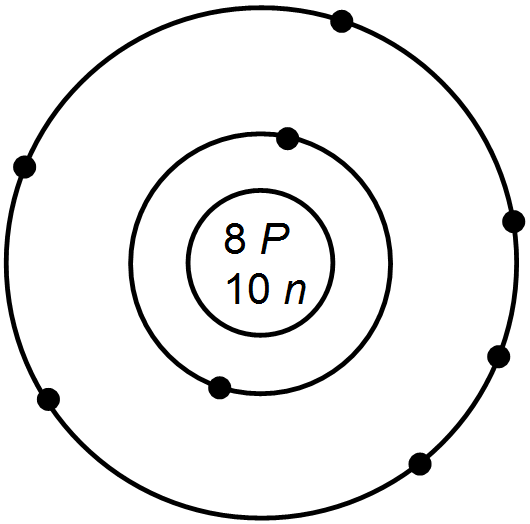
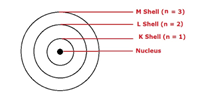
What are the postulates of Bohr’s model of an atom?
In what way is the Rutherford’s atomic model different from that of Thomson’s atomic model?
Pick question groups from the list above, set marks and difficulty, and export a branded PDF with step-by-step answer keys. First 3 chapters free — no signup.