Question types

1.5 His First Flight question types

6 questions across 1 question group — pick any mix to generate a My English Coursebook paper with step-by-step answer keys.

6
Questions
1
Question groups
5
Question types
Sample Questions

1.5 His First Flight questions

One sample from each question group in this chapter. Select any group above to see the full set with answer keys.

A1. Simple Factual Activity:
Complete the following sentences using information in the passage:
(1) He flapped his wings once and _______________.
(2) He turned his beak sideways and cawed _______________.

    Then he completely forgot that he had not always been able to fly, and commended himself to dive and soar and curve, shrieking shrilly.
    He was near the sea now, flying straight over it, facing straight out over the ocean. He saw a vast green sea beneath him, with little ridges moving over it and he turned his beak sideways and cawed amusedly.
    His parents and his brothers and sister had landed on this green flooring ahead of him. They were beckoning to him, calling shrilly. He dropped his legs to stand on the green sea. His legs sank into it. He screamed with fright and attempted to rise again flapping his wings. But he was tired and weak with hunger and he could not rise, exhausted by the strange exercise. His feet sank into the green sea, and then his belly touched it and he sank no farther. He was floating on it, and around him his family was screaming, praising him and their beaks were offering him scraps of dog-fish. He had made his first flight.

A2. Complex Factual Activity:
(1) What did the young seagull forget? What did he do then? 
A3. Activities based on Vocabulary:
Read the following words and make meaningful sentences of your own by using them:*(1) beckon
(2) curveting
A4. Activities based on Contextual Grammar:
Do as directed:
(1) He was near the sea now. (Frame a Wh-question to get the underlined as an answer.)
(2) But he was tired and weak with hunger. (Use 'not only but also'.)
A5. Personal Response:
(1) How does your family help you to achieve your goal?
View full solution
A1. Simple Factual Activity:
Complete the following sentences using information in the passage:
(1) The young seagull commended _______________.
(2) He completely forgot that _______________.

    Then he completely forgot that he had not always been able to fly, and commended himself to dive and soar and curve, shrieking shrilly.
    He was near the sea now, flying straight over it, facing straight out over the ocean. He saw a vast green sea beneath him, with little ridges moving over it and he turned his beak sideways and cawed amusedly.
    His parents and his brothers and sister had landed on this green flooring ahead of him. They were beckoning to him, calling shrilly. He dropped his legs to stand on the green sea. His legs sank into it. He screamed with fright and attempted to rise again flapping his wings. But he was tired and weak with hunger and he could not rise, exhausted by the strange exercise. His feet sank into the green sea, and then his belly touched it and he sank no farther. He was floating on it, and around him his family was screaming, praising him and their beaks were offering him scraps of dog-fish. He had made his first flight.

A2. Complex Factual Activity:
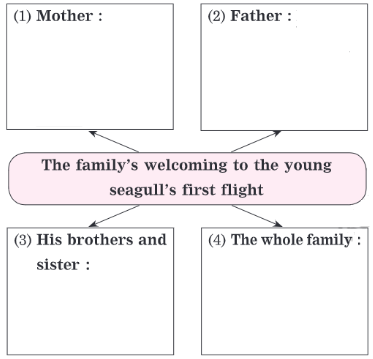
Complete the web :
Image
A3. Activities based on Vocabulary:

(commended, attempted, exhausted, soared)
(1) The rocket _______________ up into space.
(2) Our achievements in Science Exhibition was highly _______________ by our Principal.
(3) He was totally _______________ after the day's tedious work.
(4) The thief _______________ to give the slip, but was caught by the police.
A4. Activities based on Contextual Grammar:
Do as directed:
(1) He was near the sea now. (Frame a Wh-question to get the underlined as an answer.)
(2) He could not rise. (Add a question tag.)
A5. Personal Response:
(1) How does your family help you to achieve your goal?
View full solution
A1. Simple Factual Activity:
Say whether the following statements are True or False:
(1) When the young seagull. pretended to be falling asleep, his parents took notice of him.
(2) Flying across the young seagull, the mother dropped into his beak a piece of fish.
(3) The young seagull was fed a piece of fish by his mother.
(4) The young seagull's father was preening the feathers on his white back.

     The sun was now ascending the sky, blazing on his ledge that faced the south. He felt the heat because he had not eaten since the previous nightfall.
     He stepped slowly out to the brink of the ledge, and standing on one leg with the other leg hidden under his wing, he closed one eye, then the other, and pretended to be falling asleep. Still they took no notice of him. He saw his two brothers and his sister
lying on the plateau dozing with their heads sunk into their necks. His father was preening the feathers on his white back. Only his mother was looking at him. She was standing on a little high hump on the plateau, her white breast thrust forward. Now and
again, she tore at a piece of fish that lay at her feet and then scrapped each side of her beak on the rock. The sight of the food maddened him. How he loved to tear food that way, scrapping his beak now and again to whet it.
     “Ga, ga, ga”, he cried begging her to bring him some food. “Gaw-col-ah”, she screamed back derisively. But he kept calling plaintively, and after a minute or so he uttered a joyful scream. His mother had picked up a piece of the fish and was flying across to him with it. He leaned out eagerly, tapping the rock with his feet, trying to get nearer to her as she flew across. But when she was just opposite to him, she halted, her wings motionless, the piece of fish in her beak almost within reach of his beak. He waited a moment in surprise, wondering why she did not come nearer, and then, maddened by hunger, he dived at the fish. With a loud scream he fell outwards
and downwards into space. Then a monstrous terror seized him and his heart stood still. He could hear nothing. But it only lasted a minute. The next moment he felt his wings spread outwards. The wind rushed against his breast feathers, then under his stomach, and against his wings. He could feel the tips of his wings cutting through the air. He was not falling headlong now. He was soaring gradually downwards and outwards. He was no longer afraid. He just felt a bit dizzy.

A2. Complex Factual Activity:
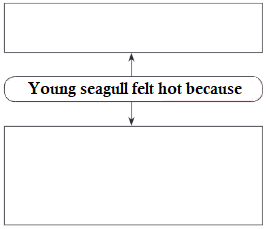
Complete the web :
Image
A3. Activities based on Vocabulary:

Pick out from the passage the Homophones for the following:
(1) won (2) I (3) peace (4) threw 
A4. Activities based on Contextual Grammar:
Read the following sentences carefully, underline the verbs and find out the tenses in the sentences: 
(1) She is standing on a little high hump on the plateau.
(2) He leaned out eagerly.
A5. Personal Response:
Complete the following statements:
(1) Human beings find it difficult to face great challenges because  _______________ .
View full solution
A1. Simple Factual Activity:
Say whether the following statements are True or False:
(1) When the young seagull. pretended to be falling asleep, his parents took notice of him.
(2) Flying across the young seagull, the mother dropped into his beak a piece of fish.
(3) The young seagull was fed a piece of fish by his mother.
(4) The young seagull's father was preening the feathers on his white back.

     The sun was now ascending the sky, blazing on his ledge that faced the south. He felt the heat because he had not eaten since the previous nightfall.
     He stepped slowly out to the brink of the ledge, and standing on one leg with the other leg hidden under his wing, he closed one eye, then the other, and pretended to be falling asleep. Still they took no notice of him. He saw his two brothers and his sister
lying on the plateau dozing with their heads sunk into their necks. His father was preening the feathers on his white back. Only his mother was looking at him. She was standing on a little high hump on the plateau, her white breast thrust forward. Now and
again, she tore at a piece of fish that lay at her feet and then scrapped each side of her beak on the rock. The sight of the food maddened him. How he loved to tear food that way, scrapping his beak now and again to whet it.
     “Ga, ga, ga”, he cried begging her to bring him some food. “Gaw-col-ah”, she screamed back derisively. But he kept calling plaintively, and after a minute or so he uttered a joyful scream. His mother had picked up a piece of the fish and was flying across to him with it. He leaned out eagerly, tapping the rock with his feet, trying to get nearer to her as she flew across. But when she was just opposite to him, she halted, her wings motionless, the piece of fish in her beak almost within reach of his beak. He waited a moment in surprise, wondering why she did not come nearer, and then, maddened by hunger, he dived at the fish. With a loud scream he fell outwards
and downwards into space. Then a monstrous terror seized him and his heart stood still. He could hear nothing. But it only lasted a minute. The next moment he felt his wings spread outwards. The wind rushed against his breast feathers, then under his stomach, and against his wings. He could feel the tips of his wings cutting through the air. He was not falling headlong now. He was soaring gradually downwards and outwards. He was no longer afraid. He just felt a bit dizzy.

A2. Complex Factual Activity:

(1) What were the young seagull's parents doing? 
A3. Activities based on Vocabulary:
Match the words in Column 'A' with their meanings in Column 'B':

'A''B'
(1) ascending  (a) grabbed
(2) maddened (b) flying upward into the air
(3) soaring (c) made one very angry
(4) seized (d) rising up

A4. Activities based on Contextual Grammar:
Read the following sentences carefully, underline the verbs and find out the tenses in the sentences: 
(1) The sun was ascending now.
(2) Still they took no notice of him.
A5. Personal Response:
Complete the following statements:
(1) The seagull is afraid to fly because _______________ .
(2) Young birds are afraid to make their first flight because_______________.

View full solution
A1. Simple Factual Activity:
State whether the following statements are True or False:
(1) The young seagull was not confident about the ability of his wings.
(2) The young seagull's parents guided and improved his siblings in the art of flying.
(3) The wings of the young seagull were not as short as his own.
(4) The whole family of seagulls commended him for his cowardice.

     The young seagull was alone on his ledge. His two brothers and his sister had already flown away the day before. He had been afraid to fly with them. Somehow when he had taken a little run forward to the brink of the ledge and attempted to flap his
wings he became afraid. The great expanse of sea stretched down beneath, and it was such a long way down - miles down. He felt certain that his wings would never support him; so he bent his head and ran away back to the little hole under the ledge where he slept at night. Even when each of his brothers and his little sister, whose wings were far
shorter than his own, ran to the brink, flapped their wings, and flew away, he failed to muster up courage to take that plunge which appeared to him so desperate. His father and mother had come around calling to him shrilly, upbraiding him, threatening to let him starve on his ledge unless he flew away. But for the life of him he could not move.
      That was twenty-four hours ago. Since then nobody had come near him. The day before, all day long, he had watched his parents flying about with his brothers and sister, perfecting them in the art of flight, teaching them how to skim the waves and how to dive for fish. He had, in fact, seen his older brother catch his first herring and devour it, standing on a rock, while his parents circled around raising a proud cackle. And all the morning the whole family had walked about on the big plateau midway down the opposite cliff taunting him for his cowardice.

A2. Complex Factual Activity:

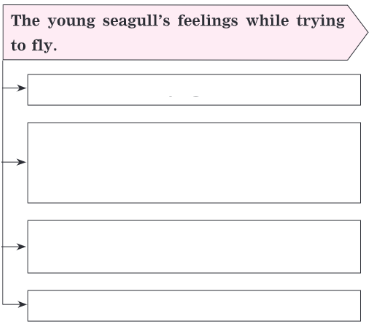
Complete the web describing the young seagull's feelings while trying to fly:
Image
A3. Activities based on Vocabulary:
Guess the meanings of :
(1) muster up courage
(2) eliff
(3) upbraiding
(4) brink
A4. Activities based on Contextual Grammar:
(1) He became afraid.
(2) Since then nobody had come near him.
A5. Personal Response:
(1) Are you afraid of playing any outdoor game? Explain why?
View full solution

Generate a 1.5 His First Flight paper free

Pick question groups from the list above, set marks and difficulty, and export a branded PDF with step-by-step answer keys. First 3 chapters free — no signup.

Download App