Questions · Page 1 of 9

M.C.Q (1 Marks)

🎯

Test yourself on this topic

50 questions · timed · auto-graded

MCQ 11 Mark
Assertion : A P-N photodiode is made from a semiconductor for which $E_g=2.8 \mathrm{~eV}$. This photo diode will not detect the wavelength of 6000 nm.
Reason : A PN photodiode detect wavelength l if $\frac{h c}{\lambda}>E_e$.
  • If both assertion and reason are true and the reason is the correct explanation of the assertion.
  • B
    If both assertion and reason are true but reason is not the correct explanation of the assertion.
  • C
    If assertion is true but reason is false.
  • D
    If the assertion and reason both are false.
Answer
Correct option: A.
If both assertion and reason are true and the reason is the correct explanation of the assertion.
(a) If both assertion and reason are true and the reason is the correct explanation of the assertion.
View full question & answer
MCQ 21 Mark
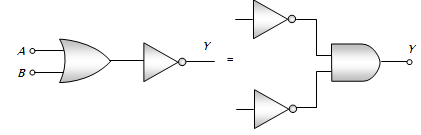
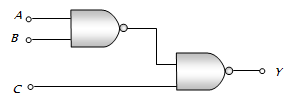
Assertion : De-morgan's theorem $\overline{A+B}=\bar{A} \cdot \bar{B}$ may be explained by the following circuit

Reason : In the following circuit, for output inputs ABC are 101
  • A
    If both assertion and reason are true and the reason is the correct explanation of the assertion.
  • B
     If both assertion and reason are true but reason is not the correct explanation of the assertion.
  •  If assertion is true but reason is false.
  • D
     If the assertion and reason both are false.
Answer
Correct option: C.
 If assertion is true but reason is false.
 If assertion is true but reason is false.
View full question & answer
MCQ 31 Mark
Assertion $: 29$ is the equivalent decimal number of binary number $11101.$
Reason $:(11101)_2=\left(1 \times 2^4+1 \times 2^3+1 \times 2^2+0 \times 2^1+1 \times 2^0\right)_{10}=(16+8+4+0+1)_{10}=(29)_{10}$
  • If both assertion and reason are true and the reason is the correct explanation of the assertion.
  • B
    If both assertion and reason are true but reason is not the correct explanation of the assertion.
  • C
    If assertion is true but reason is false.
  • D
    If the assertion and reason both are false.
Answer
Correct option: A.
If both assertion and reason are true and the reason is the correct explanation of the assertion.
View full question & answer
MCQ 41 Mark
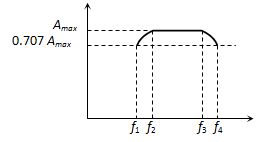
The frequency response curve of RC coupled amplifier is shown in figure. The band width of the amplifier will be
  • A
    $f_3-f_2$
  • $f_4-f_1$
  • C
    $\frac{f_4-f_2}{2}$
  • D
    $f_3-f_1$
Answer
Correct option: B.
$f_4-f_1$
(b) $f_4-f_1$
View full question & answer
MCQ 51 Mark
Assertion : NOT gate is also called inverter circuit.
Reason : NOT gate inverts the input order.
  •  If both assertion and reason are true and the reason is the correct explanation of the assertion.
  • B
     If both assertion and reason are true but reason is not the correct explanation of the assertion.
  • C
     If assertion is true but reason is false.
  • D
     If the assertion and reason both are false.
Answer
Correct option: A.
 If both assertion and reason are true and the reason is the correct explanation of the assertion.
 If both assertion and reason are true and the reason is the correct explanation of the assertion.
View full question & answer
MCQ 61 Mark
Assertion : Zener diode works on a principle of breakdown voltage.
Reason : Current increases suddenly after breakdown voltage.
  •  If both assertion and reason are true and the reason is the correct explanation of the assertion.
  • B
     If both assertion and reason are true but reason is not the correct explanation of the assertion.
  • C
     If assertion is true but reason is false.
  • D
     If the assertion and reason both are false.
Answer
Correct option: A.
 If both assertion and reason are true and the reason is the correct explanation of the assertion.
 If both assertion and reason are true and the reason is the correct explanation of the assertion.
View full question & answer
MCQ 71 Mark
Assertion : V-i characteristic of P-N junction diode is same as that of any other conductor.
Reason : P-N junction diode behave as conductor at room temperature.
  • A
     If both assertion and reason are true and the reason is the correct explanation of the assertion.
  • B
     If both assertion and reason are true but reason is not the correct explanation of the assertion.
  • C
     If assertion is true but reason is false.
  •  If the assertion and reason both are false.
Answer
Correct option: D.
 If the assertion and reason both are false.
 If the assertion and reason both are false.
View full question & answer
MCQ 81 Mark
Assertion : Base in a transistor is made very thin as compared to collector and emitter regions.
Reason : Due to thin base power gain and voltage gain is obtained by a transistor.
  •  If both assertion and reason are true and the reason is the correct explanation of the assertion.
  • B
     If both assertion and reason are true but reason is not the correct explanation of the assertion.
  • C
    If assertion is true but reason is false.
  • D
     If the assertion and reason both are false.
Answer
Correct option: A.
 If both assertion and reason are true and the reason is the correct explanation of the assertion.
If both assertion and reason are true and the reason is the correct explanation of the assertion.
View full question & answer
MCQ 91 Mark
Assertion : At 0 K Germanium is a superconductor.
Reason : At 0 K Germanium offers zero resistance.
  • A
     If both assertion and reason are true and the reason is the correct explanation of the assertion.
  • B
     If both assertion and reason are true but reason is not the correct explanation of the assertion.
  • C
    If assertion is true but reason is false.
  • If the assertion and reason both are false.
Answer
Correct option: D.
If the assertion and reason both are false.
View full question & answer
MCQ 101 Mark
Assertion : NAND or NOR gates are called digital building blocks.
Reason : The repeated use of NAND (or NOR) gates can produce all the basic or complicated gates.
  •  If both assertion and reason are true and the reason is the correct explanation of the assertion.
  • B
     If both assertion and reason are true but reason is not the correct explanation of the assertion.
  • C
    If assertion is true but reason is false.
  • D
     If the assertion and reason both are false.
Answer
Correct option: A.
 If both assertion and reason are true and the reason is the correct explanation of the assertion.
If both assertion and reason are true and the reason is the correct explanation of the assertion.
View full question & answer
MCQ 111 Mark
Assertion : A transistor is a voltage-operating device.
Reason : Base current is greater than the collector current.
  • A
    If both assertion and reason are true and the reason is the correct explanation of the assertion.
  • B
    If both assertion and reason are true but reason is not the correct explanation of the assertion.
  • C
     If assertion is true but reason is false.
  •  If the assertion and reason both are false.
Answer
Correct option: D.
 If the assertion and reason both are false.
If the assertion and reason both are false.
View full question & answer
MCQ 121 Mark
Assertion : In transistor common emitter mode as an amplifier is preferred over common base mode.
Reason : In common emitter mode the input signal is connected in series with the voltage applied to the base emitter function.
  • A
    If both assertion and reason are true and the reason is the correct explanation of the assertion.
  • If both assertion and reason are true but reason is not the correct explanation of the assertion.
  • C
    If assertion is true but reason is false.
  • D
    If the assertion and reason both are false.
Answer
Correct option: B.
If both assertion and reason are true but reason is not the correct explanation of the assertion.
View full question & answer
MCQ 131 Mark
Assertion : Two P-N junction diodes placed back to back, will work as a NPN transistor.
Reason : The P-region of two PN junction diodes back to back will form the base of NPN transistor.
  • A
    If both assertion and reason are true and the reason is the correct explanation of the assertion.
  • B
    If both assertion and reason are true but reason is not the correct explanation of the assertion.
  • C
     If assertion is true but reason is false.
  • If the assertion and reason both are false.
Answer
Correct option: D.
If the assertion and reason both are false.
 If the assertion and reason both are false.
View full question & answer
MCQ 141 Mark
Assertion : Semiconductors do not Obey's Ohm's law.
Reason : Current is determined by the rate of flow of charge carriers.
  • A
     If both assertion and reason are true and the reason is the correct explanation of the assertion.
  • B
     If both assertion and reason are true but reason is not the correct explanation of the assertion.
  • C
     If assertion is true but reason is false.
  • If assertion is false but reason is true.
Answer
Correct option: D.
If assertion is false but reason is true.
 If assertion is false but reason is true.
View full question & answer
MCQ 151 Mark
Assertion : We can measure the potential barrier of a PN junction by putting a sensitive voltmeter across its terminals.
Reason : The current through the PN junction is not same in forward and reversed bias.
  • A
     If both assertion and reason are true and the reason is the correct explanation of the assertion.
  • B
     If both assertion and reason are true but reason is not the correct explanation of the assertion.
  • C
     If assertion is true but reason is false.
  •  If assertion is false but reason is true.
Answer
Correct option: D.
 If assertion is false but reason is true.
 If assertion is false but reason is true.
View full question & answer
MCQ 161 Mark
Assertion : Silicon is preferred over germanium for making semiconductor devices.
Reason : The energy gap for germanium is more than the energy gap of silicon.
  • A
    If both assertion and reason are true and the reason is the correct explanation of the assertion.
  • B
    If both assertion and reason are true but reason is not the correct explanation of the assertion.
  • If assertion is true but reason is false.
  • D
    If the assertion and reason both are false.
Answer
Correct option: C.
If assertion is true but reason is false.
 If assertion is true but reason is false.
View full question & answer
MCQ 171 Mark
Assertion : An N-type semiconductor has a large number of electrons but still it is electrically neutral.
Reason : An N-type semiconductor is obtained by doping an intrinsic semiconductor with a pentavalent impurity.
  • A
    If both assertion and reason are true and the reason is the correct explanation of the assertion.
  • If both assertion and reason are true but reason is not the correct explanation of the assertion.
  • C
    If assertion is true but reason is false.
  • D
    If the assertion and reason both are false.
Answer
Correct option: B.
If both assertion and reason are true but reason is not the correct explanation of the assertion.
 If both assertion and reason are true but reason is not the correct explanation of the assertion.
View full question & answer
MCQ 181 Mark
Assertion : Electron has higher mobility than hole in a semiconductor.
Reason : Mass of electron is less than the mass of hole.
  • If both assertion and reason are true and the reason is the correct explanation of the assertion.
  • B
    If both assertion and reason are true but reason is not the correct explanation of the assertion.
  • C
    If assertion is true but reason is false.
  • D
    If the assertion and reason both are false.
Answer
Correct option: A.
If both assertion and reason are true and the reason is the correct explanation of the assertion.
 If both assertion and reason are true and the reason is the correct explanation of the assertion.
View full question & answer
MCQ 191 Mark
Assertion : The temperature coefficient of resistance is positive for metals and negative for P-type semiconductor.
Reason : The effective charge carriers in metals are negatively charged whereas in P-type semiconductor they are positively charged.
  • A
    If both assertion and reason are true and the reason is the correct explanation of the assertion.
  • If both assertion and reason are true but reason is not the correct explanation of the assertion.
  • C
    If assertion is true but reason is false.
  • D
    If the assertion and reason both are false.
Answer
Correct option: B.
If both assertion and reason are true but reason is not the correct explanation of the assertion.
 If both assertion and reason are true but reason is not the correct explanation of the assertion.
View full question & answer
MCQ 201 Mark
Assertion : If the temperature of a semiconductor is increased then it's resistance decreases.
Reason : The energy gap between conduction band and valence band is very small
  • If both assertion and reason are true and the reason is the correct explanation of the assertion
  • B
    If both assertion and reason are true but reason is not the correct explanation of the assertion.
  • C
    If assertion is true but reason is false
  • D
    If the assertion and reason both are false.
Answer
Correct option: A.
If both assertion and reason are true and the reason is the correct explanation of the assertion
If both assertion and reason are true and the reason is the correct explanation of the assertion.
View full question & answer
MCQ 211 Mark
Assertion : The resistivity of a semiconductor increases with temperature.
Reason : The atoms of a semiconductor vibrate with larger amplitude at higher temperature there by increasing it's resistivity.
  • A
    If both assertion and reason are true and the reason is the correct explanation of the assertion.
  • If both assertion and reason are true but reason is not the correct explanation of the assertion.
  • C
    If assertion is true but reason is false.
  • D
    If the assertion and reason both are false.
Answer
Correct option: B.
If both assertion and reason are true but reason is not the correct explanation of the assertion.
 If the assertion and reason both are false.
View full question & answer
MCQ 221 Mark
Assertion : A transistor amplifier in common emitter configuration has a low input impedence.
Reason : The base to emitter region is forward biased.
  • If both assertion and reason are true and the reason is the correct explanation of the assertion.
  • B
    If both assertion and reason are true but reason is not the correct explanation of the assertion.
  • C
    If assertion is true but reason is false
  • D
    If the assertion and reason both are false.
Answer
Correct option: A.
If both assertion and reason are true and the reason is the correct explanation of the assertion.
 If both assertion and reason are true and the reason is the correct explanation of the assertion.
View full question & answer
MCQ 231 Mark
Assertion : In a common emitter transistor amplifier the input current is much less than the output current.
Reason : The common emitter transistor amplifier has very high input impedance.
  • A
    If both assertion and reason are true and the reason is the correct explanation of the assertion.
  • B
    If both assertion and reason are true but reason is not the correct explanation of the assertion.
  • If assertion is true but reason is false.
  • D
    If the assertion and reason both are false.
Answer
Correct option: C.
If assertion is true but reason is false.
(c) If assertion is true but reason is false.
View full question & answer
MCQ 241 Mark
Assertion : The number of electrons in a P-type silicon semiconductor is less than the number of electrons in a pure silicon semiconductor at room temperature.
Reason : It is due to law of mass action.
  • If both assertion and reason are true and the reason is the correct explanation of the assertion.
  • B
    If both assertion and reason are true but reason is not the correct explanation of the assertion.
  • C
    If assertion is true but reason is false.
  • D
    If the assertion and reason both are false.
Answer
Correct option: A.
If both assertion and reason are true and the reason is the correct explanation of the assertion.
(a) If both assertion and reason are true and the reason is the correct explanation of the assertion.
View full question & answer
MCQ 251 Mark
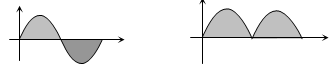
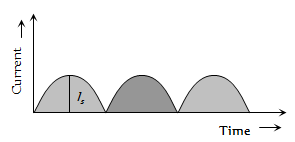
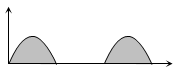
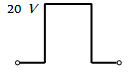
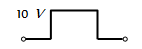
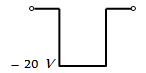
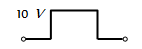
The output current versus time curve of a rectifier is shown in the figure. The average value of the output current in this case is

  • A
    0
  • B
    $\mathrm{i}_0 / \mathrm{p}$
  • $2 \mathrm{i}_0 / \mathrm{p}$
  • D
    $i_0$
Answer
Correct option: C.
$2 \mathrm{i}_0 / \mathrm{p}$
(c) $2 \mathrm{i}_0 / \mathrm{p}$
View full question & answer
MCQ 261 Mark
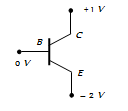
Assertion : When PN-junction is forward biased then motion of charge carriers at junction is due to diffusion. In reverse biasing. The cause of motion of charge is drifting.
Reason : In the following circuit emitter is reverse biased and collector is forward biased.

  • A
    If both assertion and reason are true and the reason is the correct explanation of the assertion.
  • If both assertion and reason are true but reason is not the correct explanation of the assertion.
  • C
    If assertion is true but reason is false.
  • D
    If the assertion and reason both are false.
Answer
Correct option: B.
If both assertion and reason are true but reason is not the correct explanation of the assertion.
(b) If both assertion and reason are true but reason is not the correct explanation of the assertion.
View full question & answer
MCQ 271 Mark
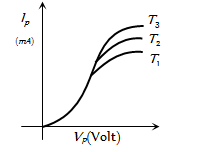
For the diode, the characteristic curves are given at different temperature. The relation between the temperatures is
  • A
    $\mathrm{T}_1=\mathrm{T}_2=\mathrm{T}_3$
  • $\mathrm{T}_1<\mathrm{T}_2<\mathrm{T}_3$
  • C
    $\mathrm{T}_1>\mathrm{T}_2>\mathrm{T}_3$
  • D
    None of the above
Answer
Correct option: B.
$\mathrm{T}_1<\mathrm{T}_2<\mathrm{T}_3$
(b) $\mathrm{T}_1<\mathrm{T}_2<\mathrm{T}_3$
View full question & answer
MCQ 281 Mark
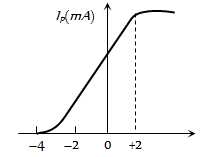
The mutual characteristic curves of a triode are as shown in figure. The cut off voltage for the triode is

  • A
    0 V
  • B
    2 V
  • – 4 V
  • D
    6 V
Answer
Correct option: C.
– 4 V
(c) – 4 V
View full question & answer
MCQ 291 Mark
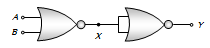
Assertion : The following circuit represents 'OR' gate

Reason : For the above circuit $Y=\bar{X}=\overline{\overline{A+B}}=A+B$
  • If both assertion and reason are true and the reason is the correct explanation of the assertion.
  • B
    If both assertion and reason are true but reason is not the correct explanation of the assertion.
  • C
    If assertion is true but reason is false.
  • D
    If the assertion and reason both are false.
Answer
Correct option: A.
If both assertion and reason are true and the reason is the correct explanation of the assertion.
(a) If both assertion and reason are true and the reason is the correct explanation of the assertion.
View full question & answer
MCQ 301 Mark
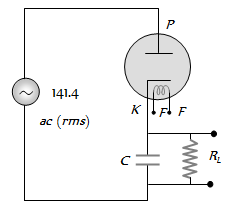
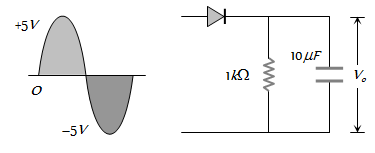
An alternating voltage of 141.4V (rms) is applied to a vacuum diode as shown in the figure. The maximum potential difference across the condenser will be.
  • A
    100 V
  • 200 V
  • C
    100$\sqrt {2}V$
  • D
    200$\sqrt {2}V$
Answer
Correct option: B.
200 V
(b) 200 V
View full question & answer
MCQ 311 Mark
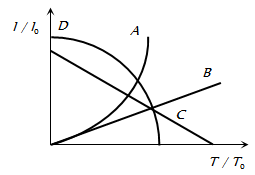
The ratio of thermionic currents ($l / l_0$) for a metal when the temperature is slowly increased $T_0$ to T as shown in figure. (l and $\mathrm{l}_0$ are currents at T and respectively). Then which one is correct?

  • A
  • B
    B
  • C
    C
  • D
    D
Answer
Correct option: A.
A
(a) A
View full question & answer
MCQ 321 Mark
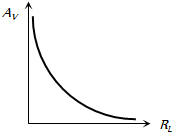
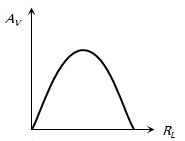
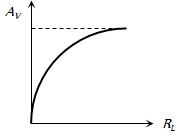
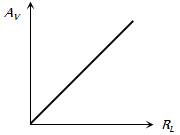
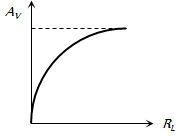
The correct curve between voltage gain $(A_L)$and load resistance $(R_L) $ is
  • A
  • B
  • D
Answer
Correct option: C.
(c)
View full question & answer
MCQ 331 Mark
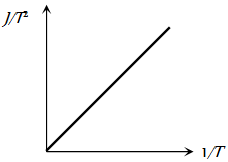
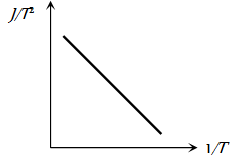
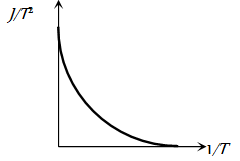
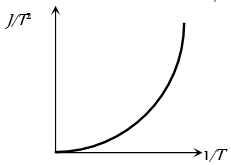
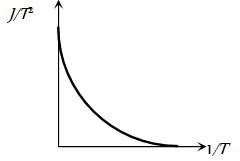
If the thermionic current density is J and emitter temperature is T then the curve between $\frac{J}{T_2}$ and $\frac{1}{T}$ will be
  • A
  • B
  • D
Answer
Correct option: C.
(c)
View full question & answer
MCQ 341 Mark
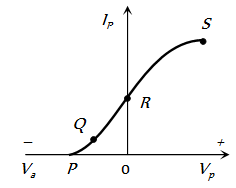
The point representing the cut off grid voltage on the mutual characteristic of triode is
 
  • A
    S
  • B
    R
  • C
    O
  • P
Answer
Correct option: D.
P
(d) P
View full question & answer
MCQ 351 Mark
The relation between $I_p$ and $V_p$ for a triode is $\mathrm{I}_{\mathrm{p}}=\left(0.125 \mathrm{V}_{\mathrm{p}}-7.5\right) \mathrm{mA}$ , Keeping the grid potential constant at 1V, the value of $r_p$ will be
  • A
    $8 \mathrm{k} \Omega$
  • B
    $4 \mathrm{k} \Omega$
  • C
    $2 \mathrm{k} \Omega$
  • $8 \mathrm{k} \Omega$
Answer
Correct option: D.
$8 \mathrm{k} \Omega$
(d) $8 \mathrm{k} \Omega$
View full question & answer
MCQ 361 Mark
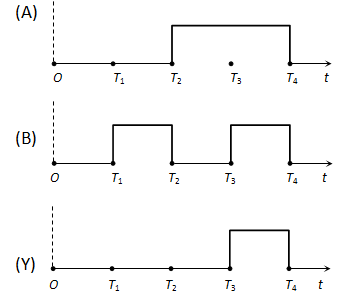
The given figure shows the wave forms for two inputs A and B and that for the output Y of a logic circuit. The logic circuit is
  • An AND gate
  • B
    An OR gate
  • C
    A NAND gate
  • D
    An NOT gate
Answer
Correct option: A.
An AND gate
(a) An AND gate
View full question & answer
MCQ 371 Mark
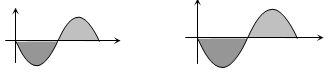
The output in the circuit of figure is taken across a capacitor. It is as shown in figure
  • A
  • B
  • D
Answer
Correct option: C.
(c)
View full question & answer
MCQ 381 Mark
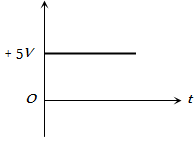
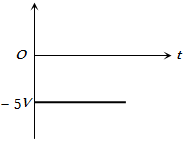
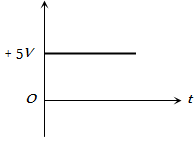
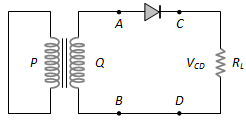
In the half-wave rectifier circuit shown. Which one of the following wave forms is true for $\mathrm{V}_\mathrm{CD}$, the output across C and D ?
  • A
  • C
  • D
Answer
Correct option: B.
(b)
View full question & answer
MCQ 391 Mark
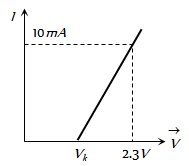
The resistance of a germanium junction diode whose $V - I$ is shown in figure is $\left( v _{ k }=0.3 v \right)$
  • A
    $5 \ kW$
  • $0.2 \ kW$
  • C
    $2.3 \ kW$
  • D
    $\left(\frac{10}{2.3}\right) k \Omega$
Answer
Correct option: B.
$0.2 \ kW$
(b) $0.2 \ kW$
View full question & answer
MCQ 401 Mark
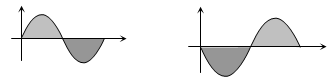
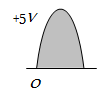
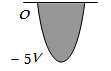
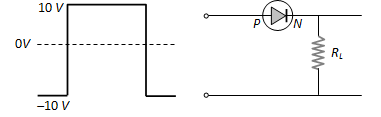
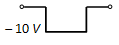
If the following input signal is sent through a PN-junction diode, then the output signal across $R_L$ will be
  • A
  • B
  • D
Answer
Correct option: C.
(c)
View full question & answer
MCQ 411 Mark
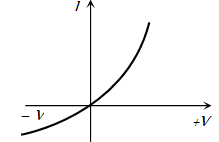
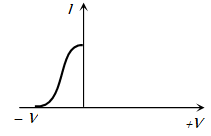
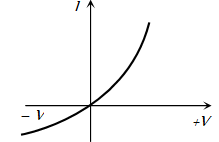
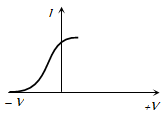
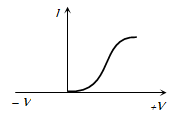
Different voltages are applied across a P-N junction and the currents are measured for each value. Which of the following graphs is obtained between voltage and current 
  • A
  • B
  • D
Answer
Correct option: C.
(c)
View full question & answer
MCQ 421 Mark
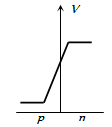
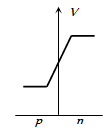
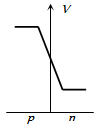
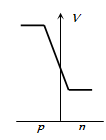
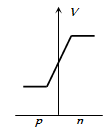
In a forward biased PN-junction diode, the potential barrier in the depletion region is of the form … 
  • A
  • C
  • D
Answer
Correct option: B.
(b)
View full question & answer
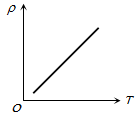
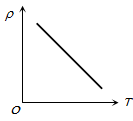
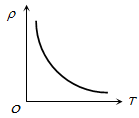
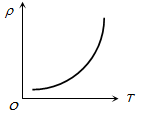
MCQ 431 Mark
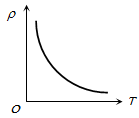
The temperature (T) dependence of resistivity (r) of a semiconductor is represented by
  • A
  • B
  • D
Answer
Correct option: C.
(c)
View full question & answer
MCQ 451 Mark
The slopes of anode and mutual characteristics of a triode are $0.02 \ mA\ V^{-1}$ and 1 mA $V^{-1}$ respectively. What is the amplification factor of the valve
  • A
    $5$
  • $50$
  • C
    $500$
  • D
    $0.5$
Answer
Correct option: B.
$50$
$50$
View full question & answer
MCQ 461 Mark
Amplification factor of a triode is 10. When the plate potential is 200 volt and grid potential is – 4 volt, then the plate current of 4mA is observed. If plate potential is changed to 160 volt and grid potential is kept at – 7 volt, then the plate current will be
  • 1.69 mA
  • B
    3.95 mA
  • C
    2.87 mA
  • D
    7.02 mA
Answer
Correct option: A.
1.69 mA
(a) 1.69 mA
View full question & answer
MCQ 471 Mark
For a triode $m = 64$ and $g_m=1600$ m mho. It is used as an amplifier and an input signal of $1V ($rms$)$ is applied. The signal power in the load of $40 kW$ will be
  • A
    $23.5 \ mW$
  • B
    $48.7 \ mW$
  • $25.6 \ mW$
  • D
    None of these
Answer
Correct option: C.
$25.6 \ mW$
$25.6 \ mW$
View full question & answer
MCQ 481 Mark
In the grid circuit of a triode a signal $E=2 \sqrt{2} \cos \omega t$ is applied. If $m=14$ and $r_p=10 kW$ then root mean square current flowing through $R _{ L }=12 k \Omega$ will be
  • $1.27 \ mA$
  • B
    $10 \ mA$
  • C
    $1.5 \ mA$
  • D
    $12.4 \ mA$
Answer
Correct option: A.
$1.27 \ mA$
(a) $1.27 \ mA$
View full question & answer
MCQ 491 Mark
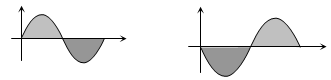
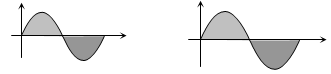
Which of the following figures correctly shows the phase relation between the input signal and the output signal of triode amplifier
  • B
  • C
  • D
Answer
Correct option: A.
(a)
View full question & answer
MCQ 501 Mark
A triode whose mutual conductance is 2.5 m A/volt and anode resistance is 20 kilo ohm, is used as an amplifier whose amplification is 10. The resistance connected in plate circuit will be
  • A
    1 kW
  • 5 kW
  • C
    10 kW
  • D
    20 kW
Answer
Correct option: B.
5 kW
 5 kW
View full question & answer
M.C.Q (1 Marks) - Physics STD 12 Science Questions - Vidyadip