Question 13 Marks
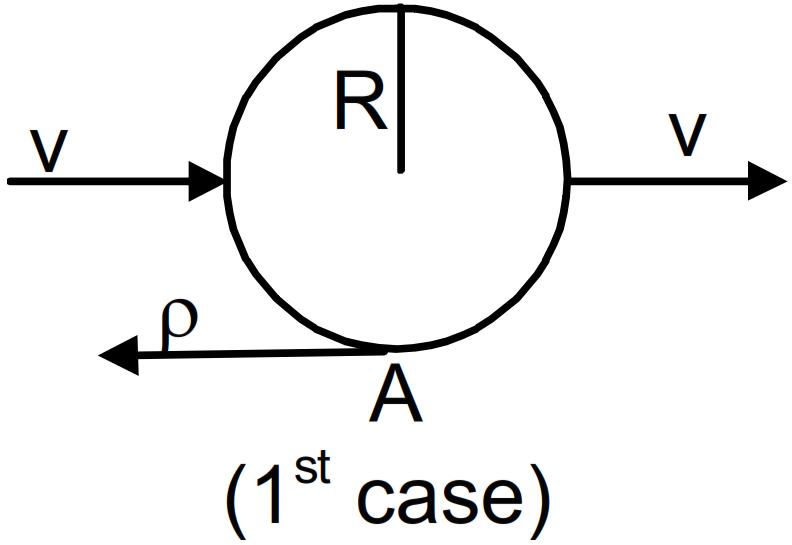
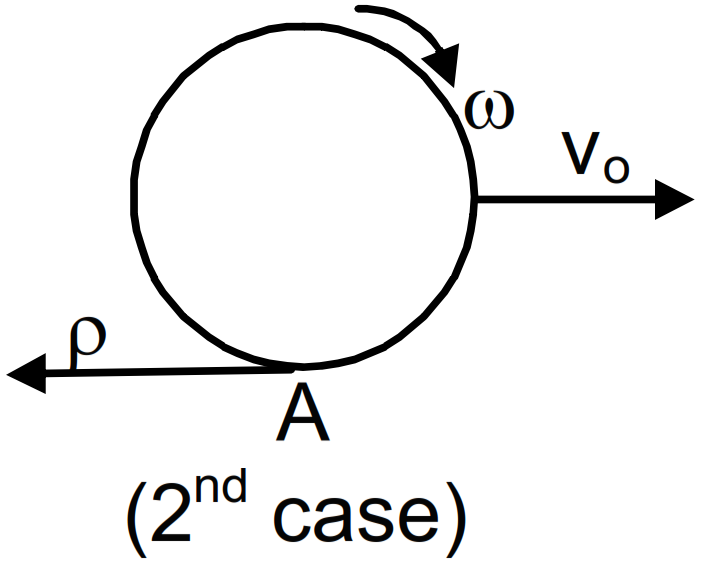
A solid sphere is set into motion on a rough horizontal surface with a linear speed v in the forward direction and an angular speed $\frac{\text{v}}{\text{R}}$ in the anticlockwise direction as shown in figure. Find the linear speed of the sphere:
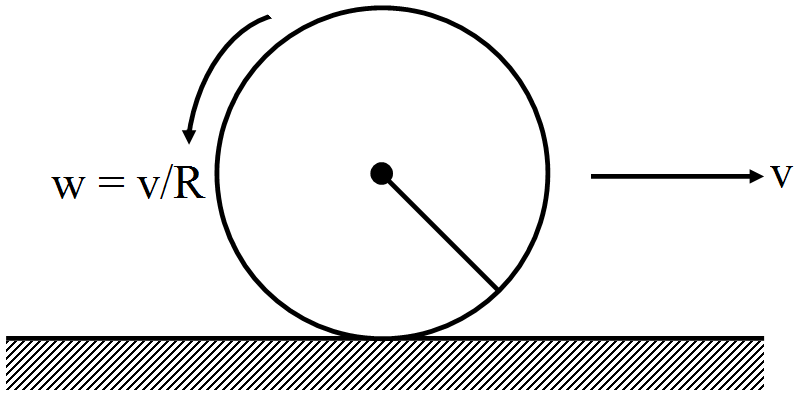
- When it stops rotating.
- When slipping finally ceases and pure rolling starts.
Answer
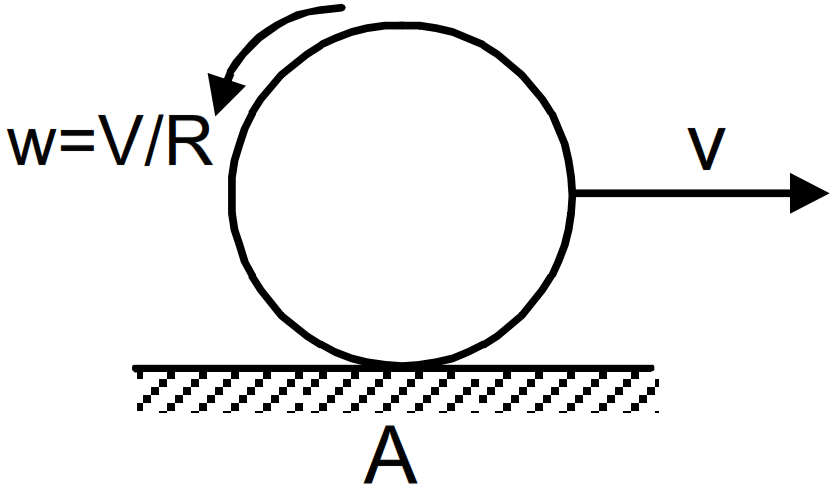
View full question & answer→ - If we take moment at A then external torque will be zero.
Therefore, the initial angular momentum = the angular momentum after rotation stops (i.e. only leniar velocity exits)
$\text{Mv}\times\text{R}-\ell\omega=\text{Mv}_0\times\text{R}$
$\Rightarrow\text{MvR}-\frac{2}{5}\times\frac{\text{MR}^2\text{V}}{\text{R}}=\text{Mv}_0\text{R}$
$\Rightarrow\text{v}_0=\frac{\text{3V}}{5}$
- Again, after some time pure rolling starts
Therefore,
$\Rightarrow\text{M}\times\text{v}_0\times\text{R}=\Big(\frac{2}{5}\Big) \text{MR}^2\times\Big(\frac{\text{V}'}{\text{R}}\Big)+\text{Mv}'\text{R}$
$\Rightarrow\text{m}\times\Big(\frac{\text{3V}}{5}\Big)\times\text{R}=\Big(\frac{2}{5}\Big)\text{Mv}'\text{R}+\text{Mv}'\text{R}$
$\Rightarrow\text{V}'=\frac{3\text{V}}{7}$
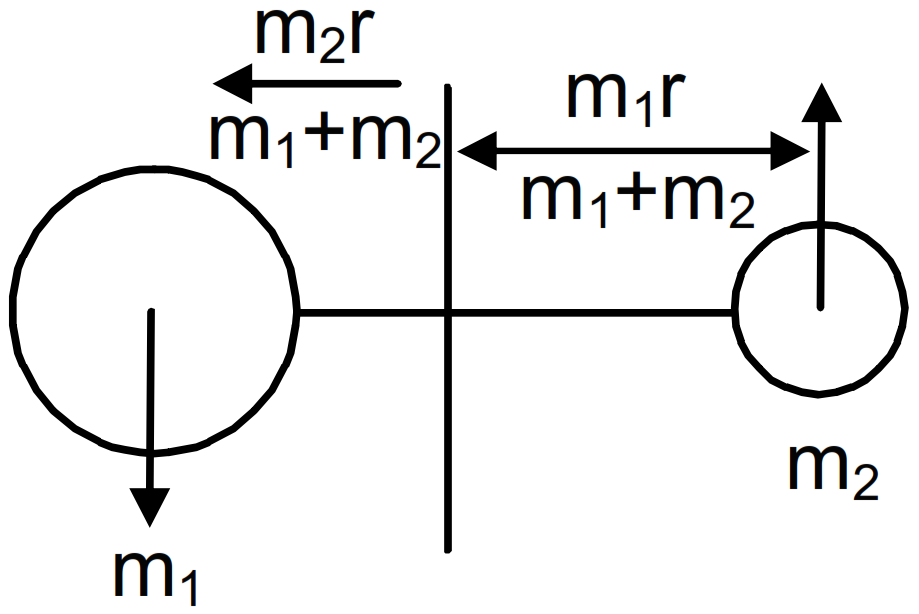
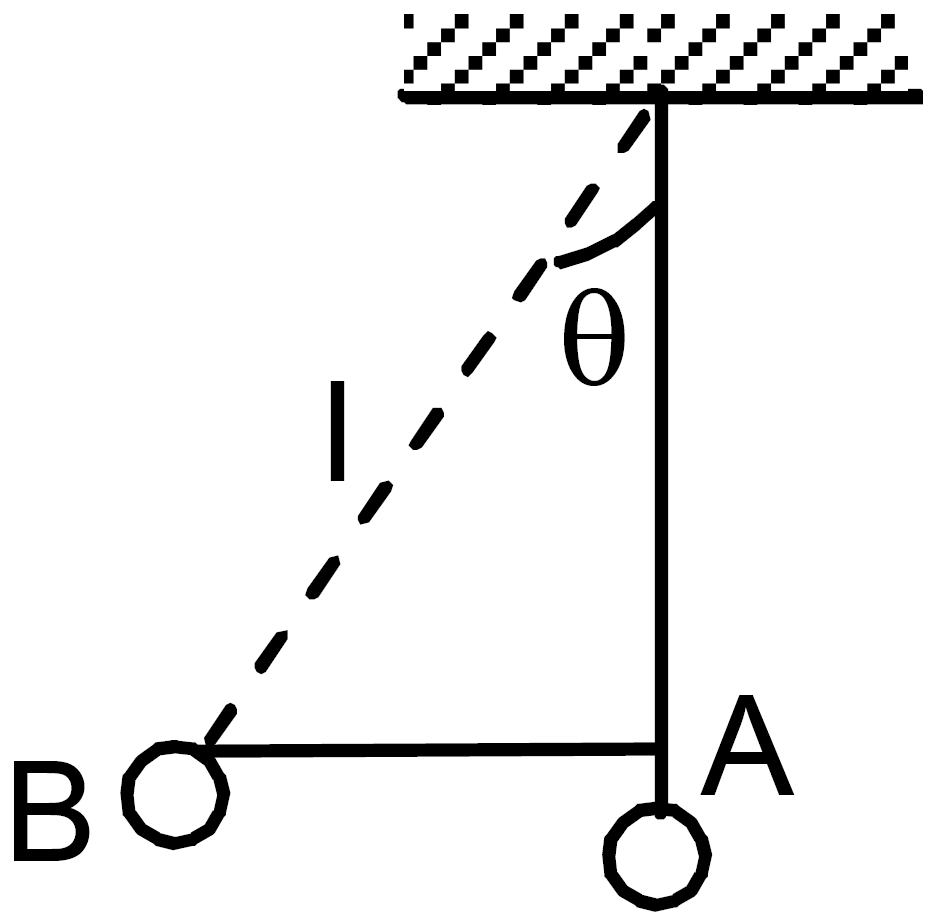
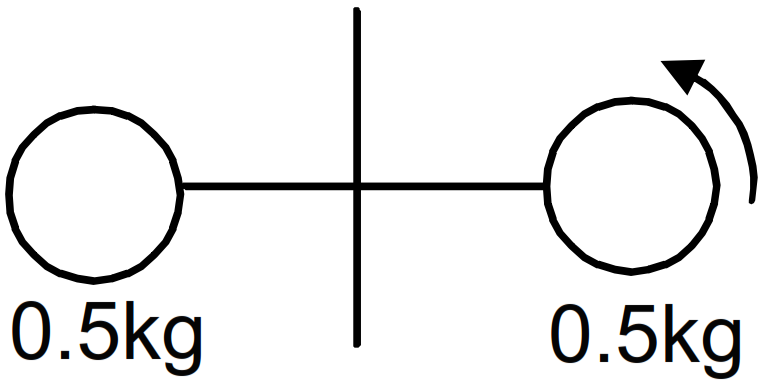
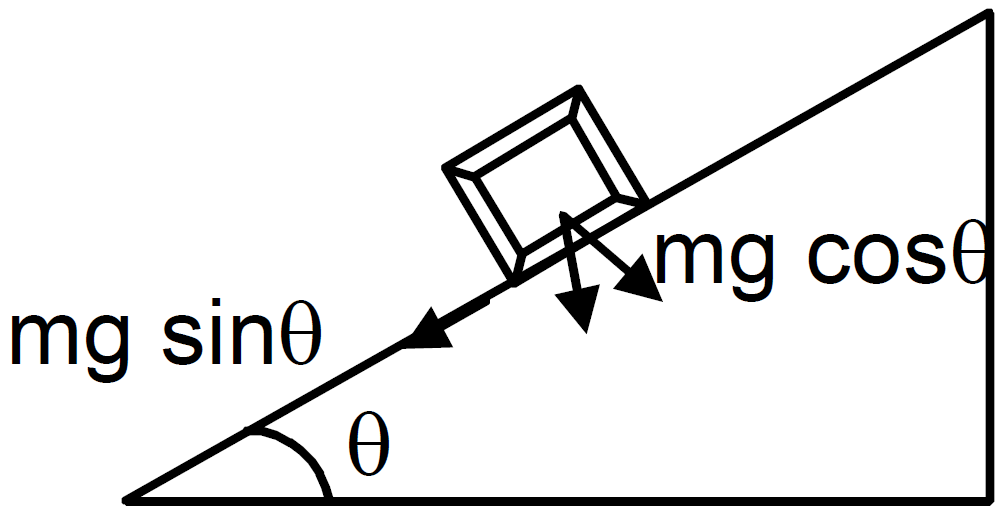
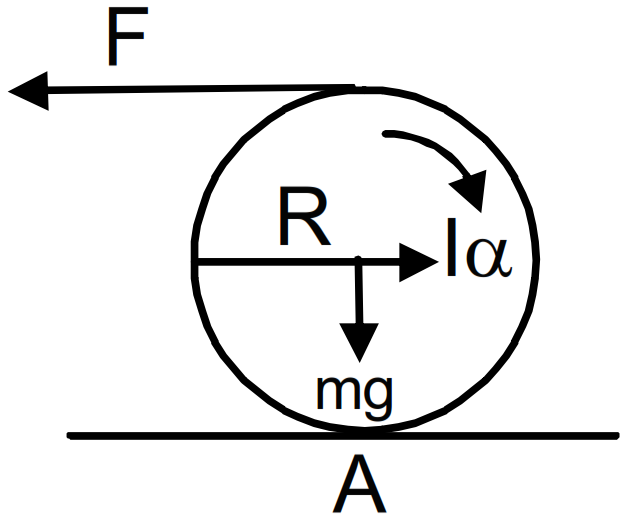
 Therefore torque about the centre due to this force
  Range of the particle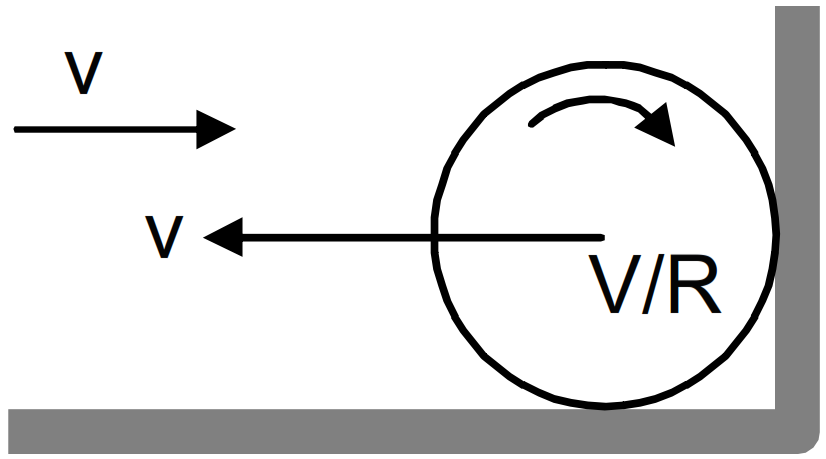
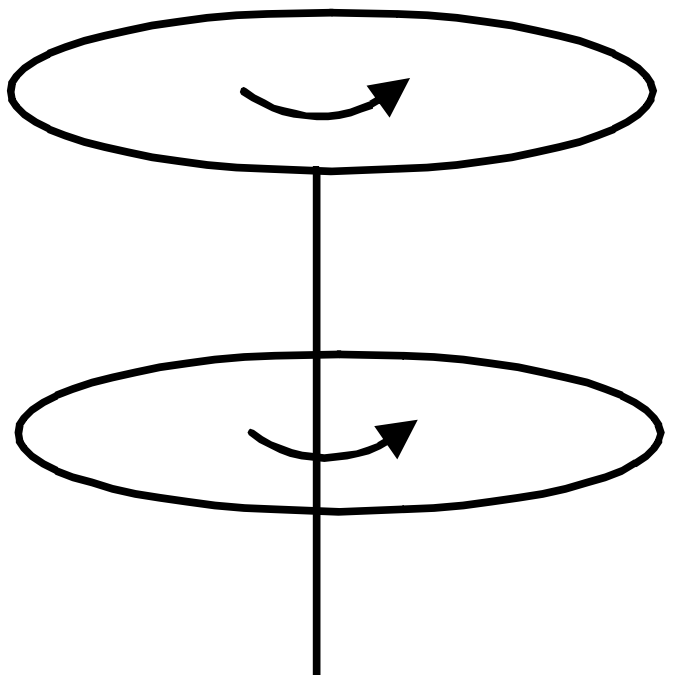
 Let after t sec their angular velocity will be same
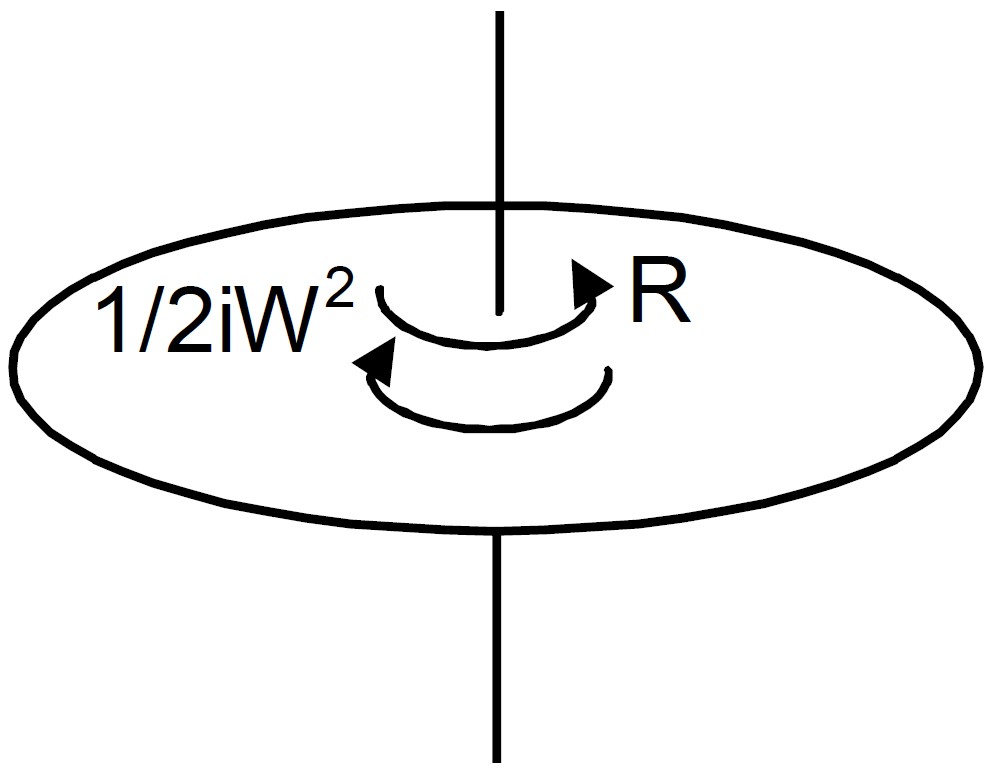 Therefore, the angular deceleration produced due to frictional force
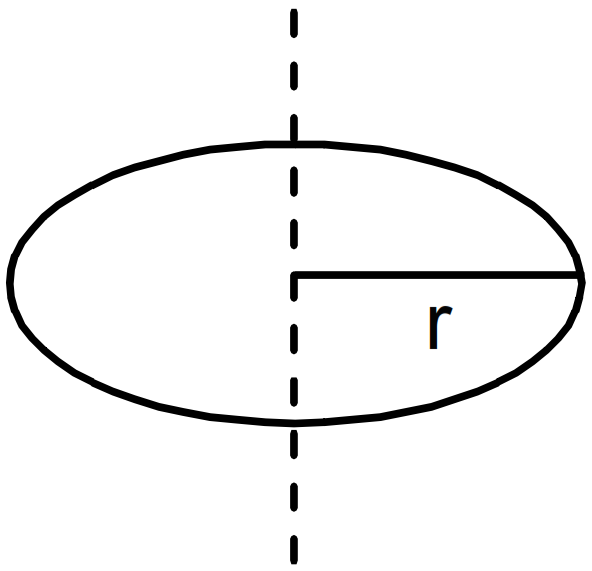
 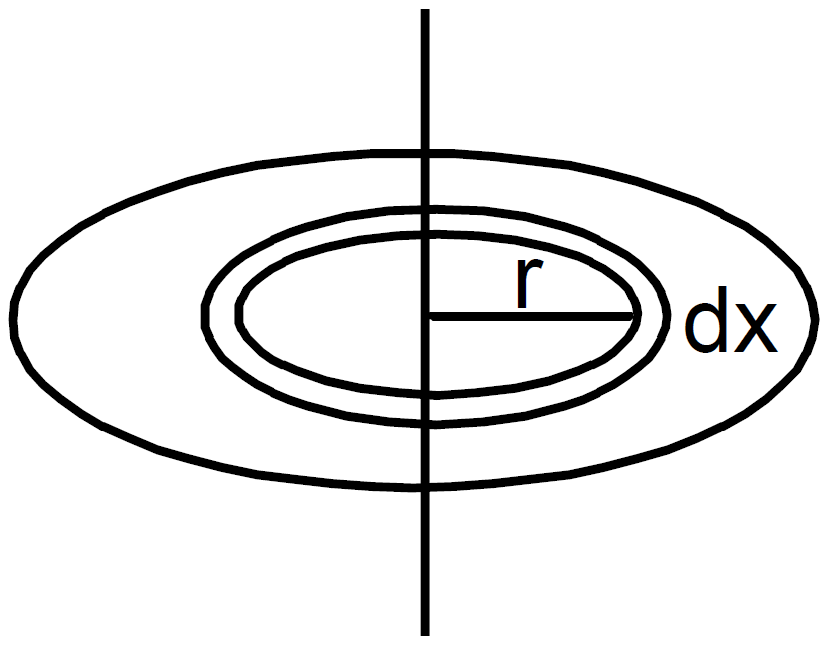 P(r) = A + Br Therefore the mass of the ring of radius r will be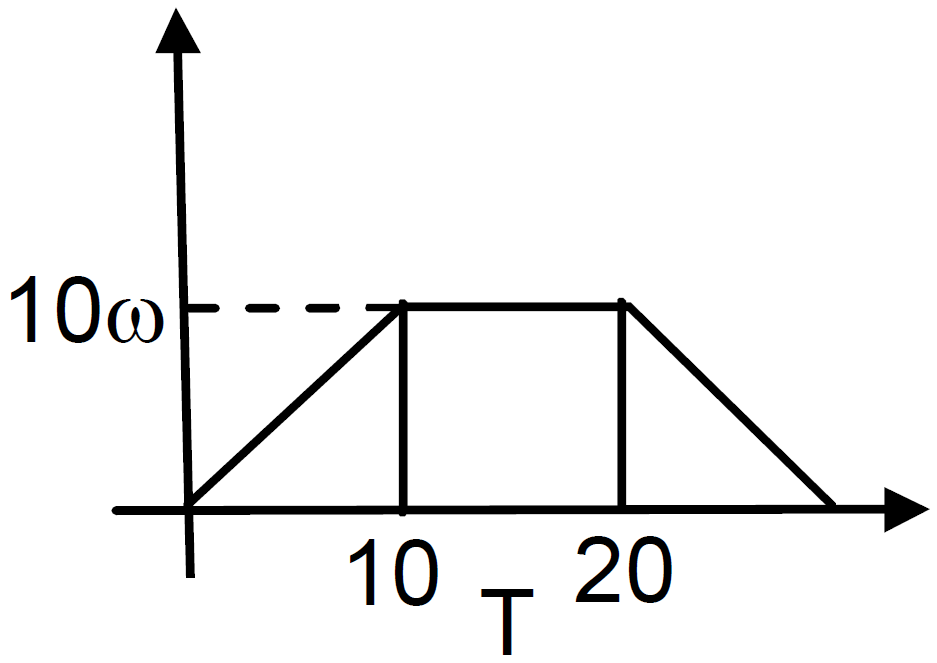
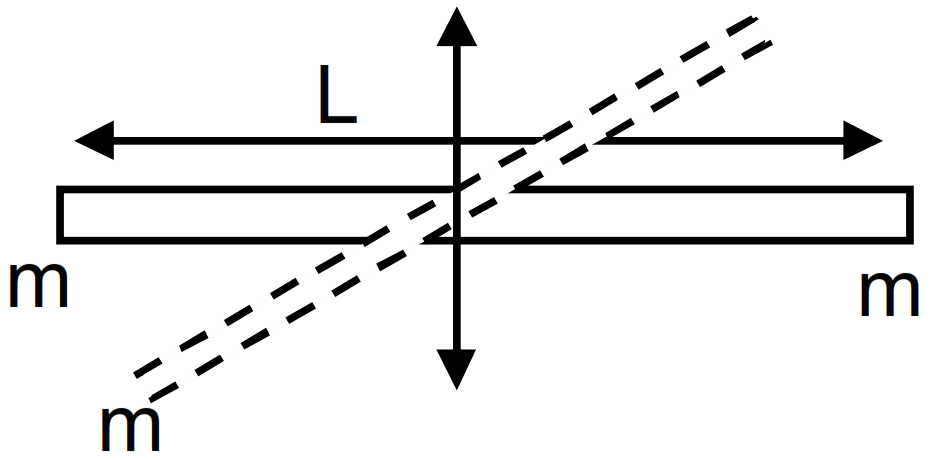
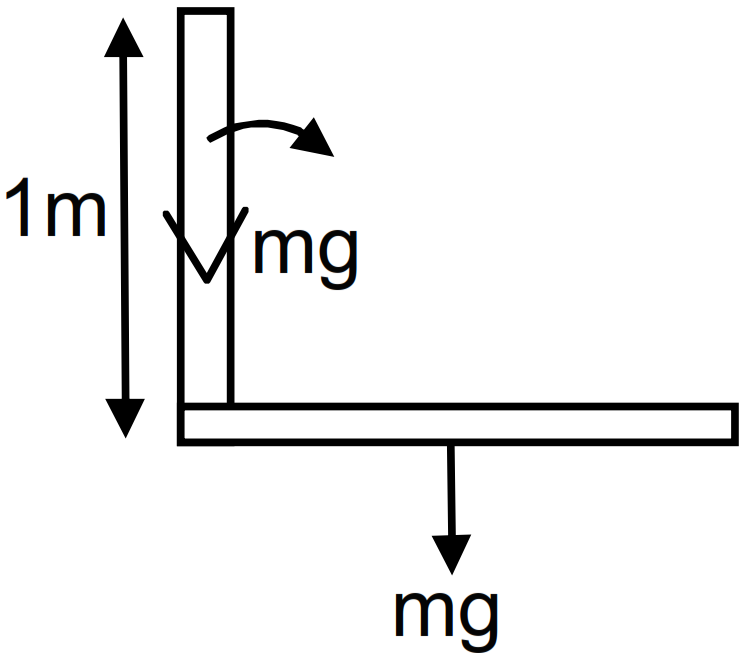 Let the mass of the rod = m Therefore applying laws of conservation of energy
 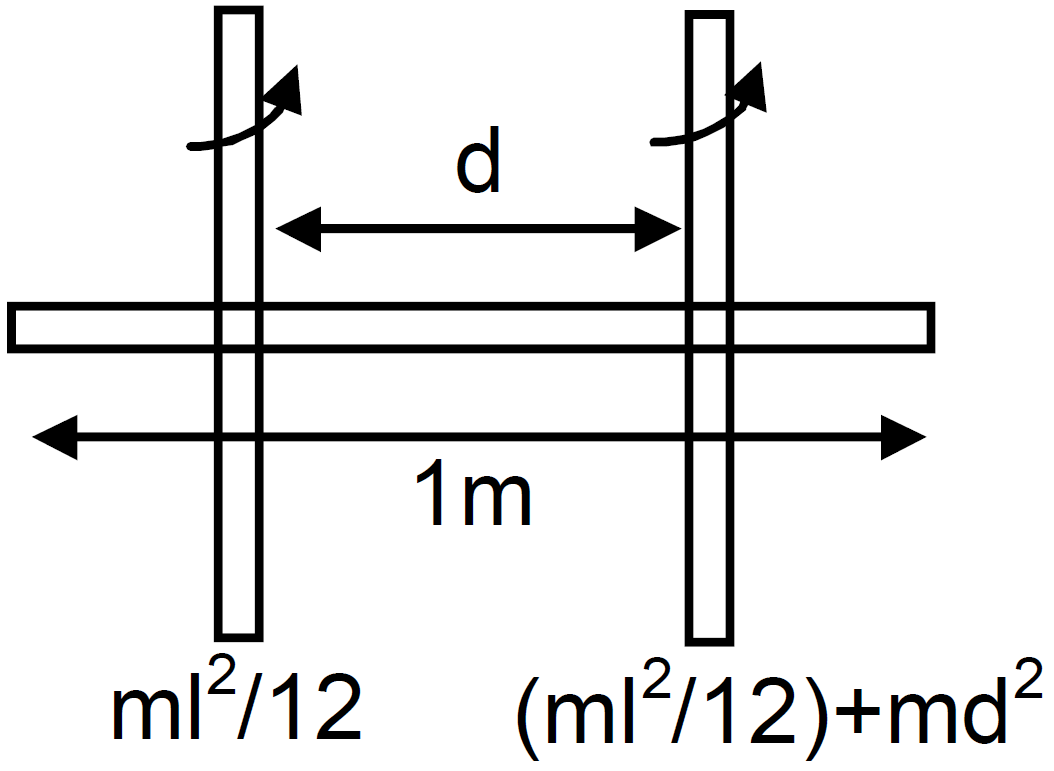 Let at a distance d from the center the rod is moving Applying parallel axis theorem: The moment of inertial about that point
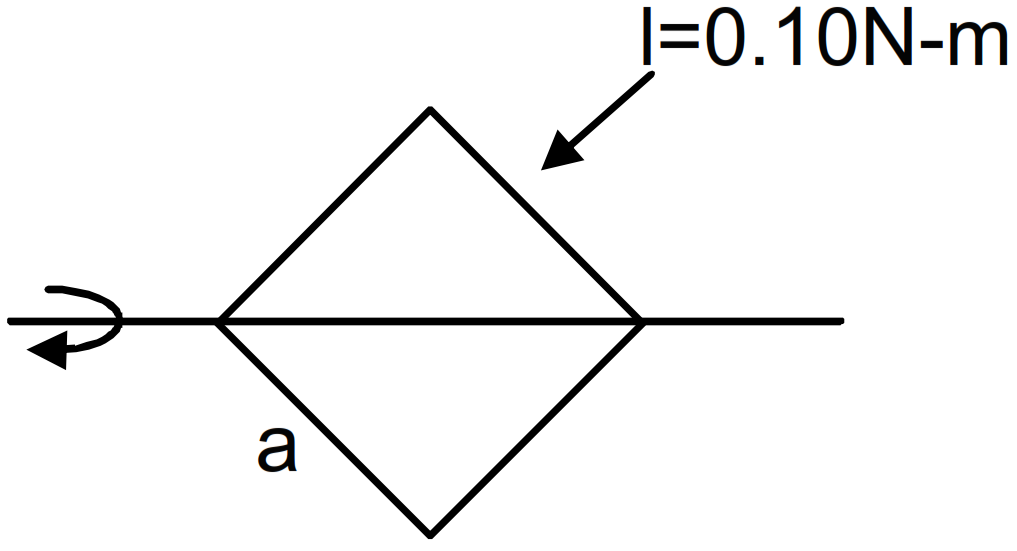
 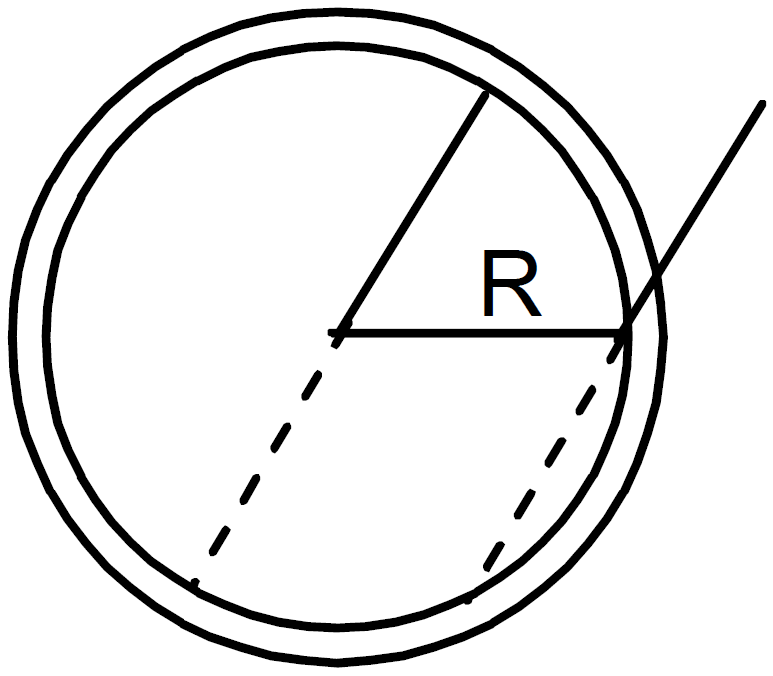 So, about a point on the rim of the ring and the axis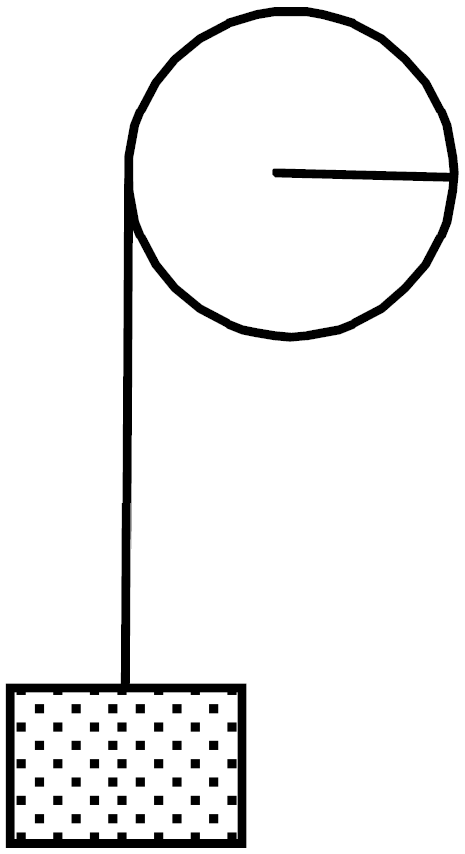
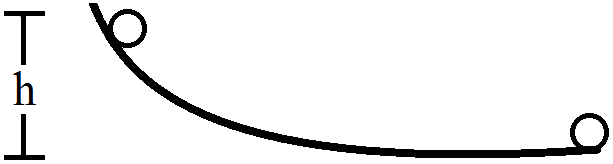
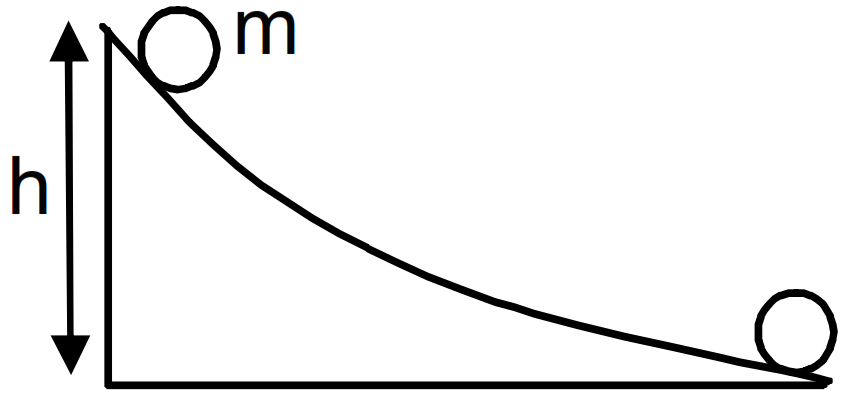 Therefore potential energy it has gained w.r.t the surface will be converted to angular kinetic energy about the centre & linear kinetic energy. Therefore
 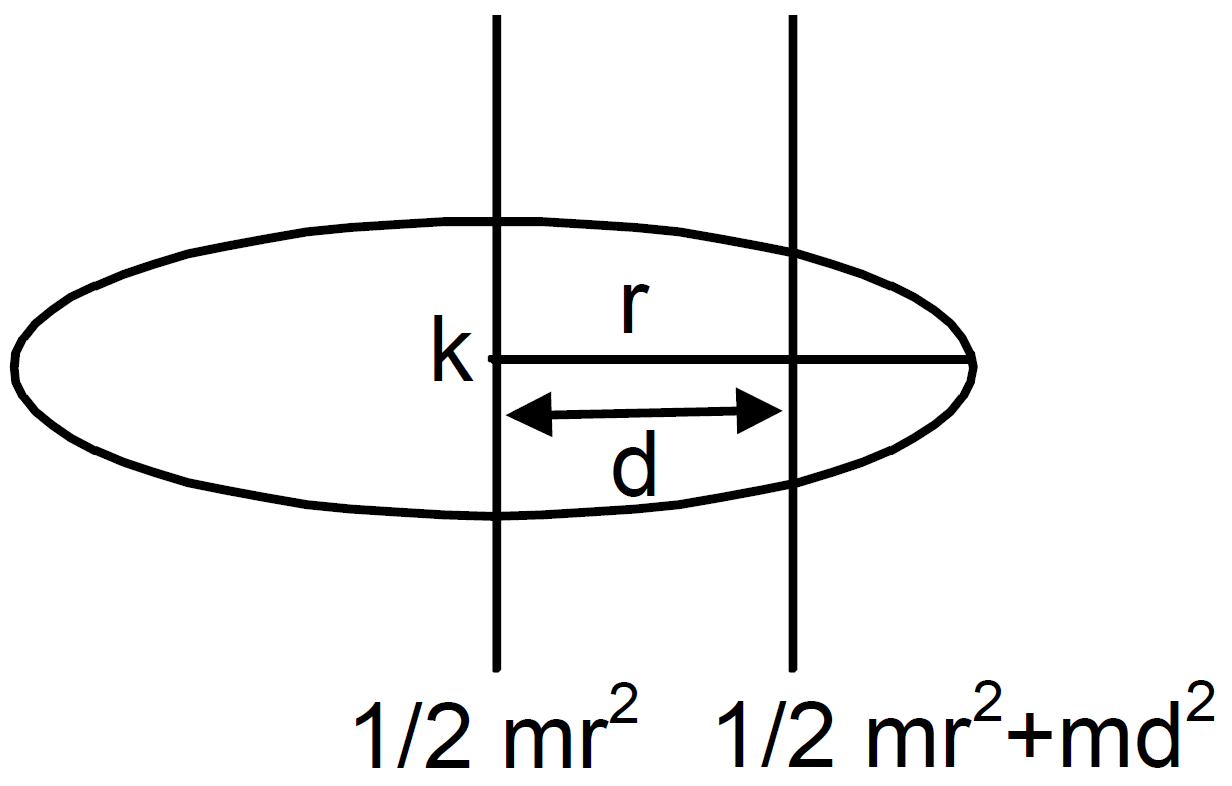 According to the question the radius of gyration of the disc about a point = radius of the disc. Therefore
 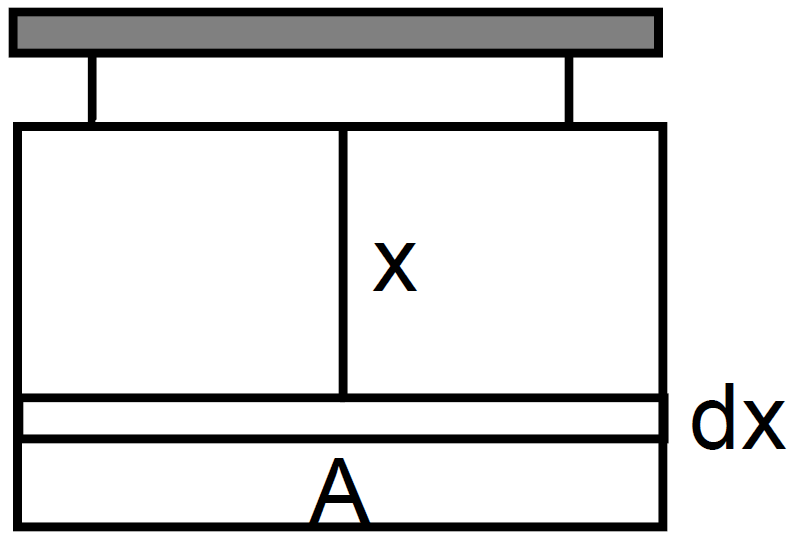 Therefore mass of that small area
 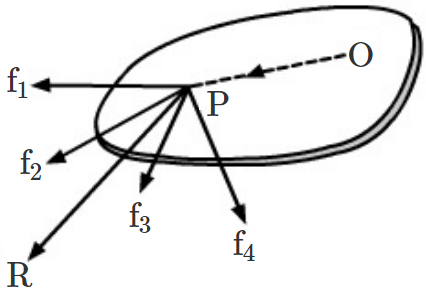 Let
Let