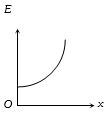
A cylindrical conductor has uniform cross-section. Resistivity of its material increase linearly from left end to right end. If a constant current is flowing through it and at a section distance $x$ from left end, magnitude of electric field intensity is $E$, which of the following graphs is correct
- A
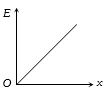
- B
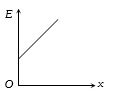
- C
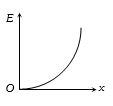
- D
Easy


Download our appand get started for free
Experience the future of education. Simply download our apps or reach out to us for more information. Let's shape the future of learning together!No signup needed.*
Similar Questions
- 1Two wires of same length and thickness having specific resistances $6\, \Omega \,cm$ and $3 \,\Omega\, cm$ respectively are connected in parallel. The effective resistivity is $\rho\, \Omega \,cm$. The value of $\rho$ to the nearest integer, is ..... .View Solution
- 2$12$ cells each having same $emf$ are connected in series with some cells wrongly connected. The arrangement is connected in series with an ammeter and two cells which are in series. Current is $3 \,A$ when cells and battery aid each other and is $2\, A$ when cells and battery oppose each other. The number of cells wrongly connected isView Solution
- 3The potential difference between $A$ and $B$ in the Figure is ................. $V$View Solution

- 4A piece of fuse wire melts when a current of $15\, ampere$ flows through it. With this current, if it dissipates $22.5\, W$, the resistance of fuse wire will be .............. $\Omega$View Solution
- 5Heat produced in a wire of resistance $R$ due to current flowing at constant potential difference is proportional toView Solution
- 6A platinum resistance thermometer has a resistance of $50\,\Omega $ at $20\,^o C$. When dipped in a liquid the resistance becomes $76.8\,\Omega $. The temperature coefficient of resistance for platinum is $\alpha = 3.92 \times {10^{ - 3}}\,^o C$. The temperature of the liquid is .............. $^o C$View Solution
- 7Heat produced in a wire of resistance $R$ due to current flowing at constant potential difference is proportional toView Solution
- 8A cable of resistance $10\,\Omega $ carries electric power from a generator producing $250\, kW$ at $10000\, volt$. The current in the cable is ............. $A$View Solution
- 9In the following diagram, the lengths of wires $A B$ and $B C$ are equal, but the radius of wire $A B$ is double that of $B C$. The ratio of potential gradient on wires $A B$ and on $B C$ will be (wires are made of same material)View Solution
- 10For the network shown in the figure the value of the current $i$ isView Solution