MCQ
Choose the correct option regarding the given figure.
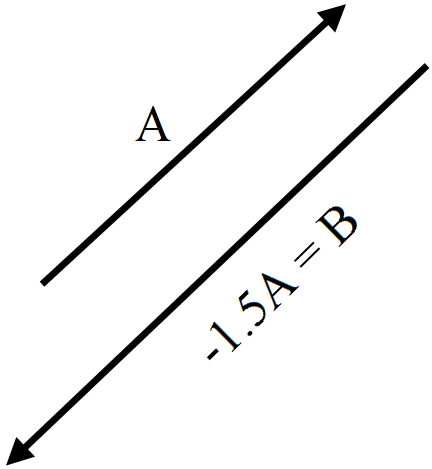
  • A
    $\text{B}=\text{A}$
  • B
    $\text{B}=-\text{A}$
  • C
    $|\text{B}|=|\text{A}|$
  • D
    $|\text{B}|\neq|\text{A}|$

Answer

  1. $|\text{B}|\neq|\text{A}|$

Need a full question paper?

Generate a complete, print-ready paper with questions like this in minutes — across 16+ boards, with answer keys.
Start Generating Free

Similar questions

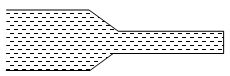
Water flows through a frictionless duct with a cross-section varying as shown in fig. Pressure $p$  at points along the axis is represented by
The function ${\sin ^2}(\omega t)$ represents
The centripetal acceleration is given by
A balloon is going upwards with velocity 12m/sec. It releases a packet when it is at a height 65m from the ground. How much time the packet will take to reach the ground? (g = 10m/s2):
The ratio of angular speeds of minute hand and hour hand of a watch is
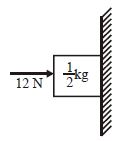
A horizontal force $12 \,N$ pushes a block weighing $1/2\, kg$ against a vertical wall.  The  coefficient of static friction between the wall and the block is $0.5$ and the coefficient of  kinetic friction is $0.35.$ Assuming that the block is not moving  initially. Which one of the following choices is correct (Take $g = 10 \,m/s^2$)
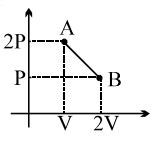
One mole of a gas expands obeying the relation as shown in the $P/V$ diagram. The maximum temperature in this process is equal to
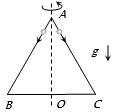
An equilateral triangle $ABC$ formed from a uniform wire has two small identical beads initially located at $A$.  The triangle is set rotating about the vertical axis $AO$.  Then the beads are released from rest simultaneously and allowed to slide down, one along $AB$ and the other along $AC$ as shown.  Neglecting frictional effects, the quantities that are conserved as the beads slide down, are
Consider two rods of same length and different specific heats $\left( c _1, c _2\right)$, thermal conductivities $\left( K _1, K_2\right)$ and area of cross-sections $\left(A_1, A_2\right)$ and both having temperatures $\left(T_1, T_2\right)$ at their ends. If their rate of loss of heat due to conduction is equal, then:
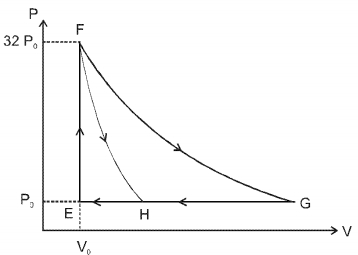
One mole of a monatomic ideal gas is taken along two cyclic processes $E \rightarrow F \rightarrow G \rightarrow E$ and $E \rightarrow F \rightarrow H \rightarrow$ E as shown in the $PV$ diagram. The processes involved are purely isochoric, isobaric, isothermal or adiabatic. $Image$

Match the paths in List $I$ with the magnitudes of the work done in List $II$ and select the correct answer using the codes given below the lists.

List $I$ List $I$
$P.$ $\quad G \rightarrow E$ $1.$ $\quad 160 P_0 V_0 \ln 2$
$Q.$ $\quad G \rightarrow H$ $2.$ $\quad 36 P _0 V _0$
$R.$ $\quad F \rightarrow H$ $3.$ $\quad 24 P _0 V _0$
$S.$ $\quad F \rightarrow G$ $4.$ $\quad 31 P_0 V_0$

Codes: $ \quad  \quad P \quad Q \quad R \quad S $