Question types

Model Paper 1 question types

38 questions across 6 question groups — pick any mix to generate a Physics paper with step-by-step answer keys.

38
Questions
6
Question groups
5
Question types
Sample Questions

Model Paper 1 questions

One sample from each question group in this chapter. Select any group above to see the full set with answer keys.
Ratio of the amount of heat radiation, transmitted through the body to the amount of heat radiation incident on it, is known as
  • A
    absortance
  • B
    inductance
  • C
    transmittance
  • D
    conductance
View full solution
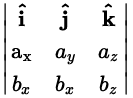
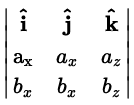
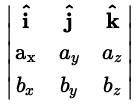
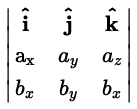
If $\overrightarrow{ a }= a _{ x } \hat{ i }+ a _{ y } \hat{ j }+ a _{ z } \hat{ k }$ and $\overrightarrow{ b }= b _{ x } \hat{ i }+ b _{ y } \hat{ j }+ b _{ z } \hat{ k }$ then the cross product $\overrightarrow{ a } \times \overrightarrow{ b }$ is given by:
  • A

    Image
  • B

    Image
  • C

    Image
  • D

    Image
View full solution
A ring of radius r and mass m rotates about its central axis. The kinetic energy is :
  • A
    $\frac{m r \omega^2}{2}$
  • B
    $\frac{\operatorname{mr}^2 \omega^2}{2}$
  • C
    $mr \omega^2$
  • D
    $mr ^2 \omega^2$
View full solution
In SI system the fundamental units are
  • A
    meter, kilogram, second, ampere, Kelvin, mole and watt
  • B
    meter, Newton, second, ampere, Kelvin, mole and candela
  • C
    meter, kilogram, second, coulomb, Kelvin, mole, candela and horse power
  • D
    meter, kilogram, second, ampere, Kelvin, mole and candela
View full solution
A wave of frequency 100 Hz travels along a string towards its fixed end. When this wave travels back, after reflection, a node is formed at a distance of 10 cm from the fixed end. The speed of the wave (incident and reflected) is
  • A
    $40 m / s$
  • B
    $10 m / s$
  • C
    $5 m / s$
  • D
    $20 m / s$
View full solution
The mass of planet Jupiter is $1.9 \times 10^{27} kg$ and that of the sun is $1.99 \times 10^{30} kg$. The mean distance of Jupiter from the Sun is $7.8 \times 10^{11} m$. Calculate gravitational force which sun exerts on Jupiter, and the speed of Jupiter.
View full solution
How much below the surface of the earth does the acceleration due to gravity become $70 \%$ of its value at the surface of the earth? Radius of the earth is 6400 km .
View full solution
The displacement of a progressive wave is represented by $y = A \sin (\omega t - kx )$, where x is distance and t is time. Write the dimensional formula of
i. $\omega$ and
ii. k .
View full solution
Q 123 Marks Question3 Marks
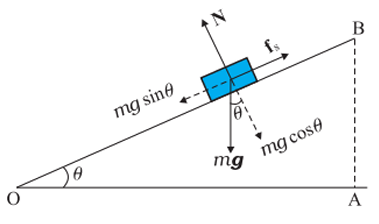
A mass of 4 kg rests on a horizontal plane. The plane is gradually inclined until at an angle $\theta=15^{\circ}$ with the horizontal, the mass just begins to slide. What is the coefficient of static friction between the block and the surface?
Image
View full solution
Q 133 Marks Question3 Marks
A particle is moving along a straight line and its position is given by the relation $x=\left(t^3-6 t^2-15 t+40\right) m$ Find:
a. The time at which velocity is zero.
b. Position and displacement of the particle at that point.
c. Acceleration of the particle at that point.
View full solution
Q 143 Marks Question3 Marks
A mercury drop of radius 1.0 cm is sprayed into $10^6$ droplets of equal size. Calculate the energy expended. The surface tension of mercury $=32 \times 10^{-2} Nm ^{-1}$.
View full solution
Q 164 Marks Question4 Marks
View full solution
Q 174 Marks Question4 Marks
View full solution
a. Find the moment of inertia of a sphere about a tangent to the sphere, given the moment of inertia of the sphere about any of its diameters to be $\frac{2 M R^2}{5}$, where $M$ is the mass of the sphere and $R$ is the radius of the sphere.
b. Given the moment of inertia of a disc of mass M and radius R about any of its diameters to be $\frac{M R^2}{4}$, find its moment of inertia about an axis normal to the disc and passing through a point on its edge.
View full solution
A fighter plane is flying horizontally at an altitude of 1.5 km with a speed of $720 km / h$. At what angle of sight (w.r.t horizontal) when the target is seen, should the pilot drop the bomb in order to attack the target?
Main concept used: $u =720 km / h =720 \times \frac{5}{18} m / s =200 m / s$
View full solution
Given $\vec{a}+\vec{b}+\vec{c}+\vec{d}=0$, which of the following statements are correct:
i. $\vec{a}, \vec{b}, \vec{c}$, and $\vec{d}$ must each be a null vector.
ii. The magnitude of $(\vec{a}+\vec{c})$ equals the magnitude of $(\vec{b}+\vec{d})$.
iii. The magnitude of ' $\vec{a}$ ' can never be greater than the sum of the magnitudes of $\vec{b}, \vec{c}$, and $\vec{d}$.
iv. $\vec{b}+\vec{c}$ must lie in the plane of $\vec{a}$ and $\vec{d}$ if $\vec{a}$ and $\vec{d}$ are not collinear, and in the line of $\vec{a}$ and $\vec{d}$, if they are collinear?
View full solution
A particle executes simple harmonic motion of amplitude A.
i. At what distance from the mean position is its kinetic energy equal to its potential energy?
ii. At what points is its speed half the maximum speed?
View full solution
Assertion (A): Power developed in circular motion is always zero.
Reason (R): Work done in case of circular motion is zero.
  • A
    Both A and R are true and R is the correct explanation of A.
  • B
    Both A and R are true but R is not the correct explanation of A.
  • C
    A is true but R is false.
  • D
    A is false but R is true.
View full solution
Assertion (A): The force of attraction due to a hollow spherical shell of uniform density, on a point mass situated inside it is zero.
Reason (R): Various region of the spherical shell attract the point mass inside it in various directions. These forces cancel each other completely.
  • A
    Both A and R are true and R is the correct explanation of A.
  • B
    Both A and R are true but R is not the correct explanation of A.
  • C
    A is true but R is false.
  • D
    A is false but R is true.
View full solution
Assertion: If two bodies are in thermal equilibrium in one frame, they will be in thermal equilibrium in all frames.
Reason: The transfer of energy from a hot body to a cold body is a non mechanical process, i.e., the energy is transferred from one body to the other, without any mechanical work.
  • A
    Assertion and reason both are correct statements and reason is correct explanation for assertion.
  • B
    Assertion and reason both are correct statements but reason is not correct explanation for assertion.
  • C
    Assertion is correct statement but reason is wrong statement.
  • D
    Assertion is wrong statement but reason is correct statement.
View full solution
Assertion (A): Speed is constant in uniform circular motion.
Reason (R): Acceleration is constant in uniform circular motion.
  • A
    Both A and R are true and R is the correct explanation of A.
  • B
    Both A and R are true but R is not the correct explanation of A.
  • C
    A is true but R is false.
  • D
    A is false but R is true.
View full solution

Generate a Model Paper 1 paper free

Pick question groups from the list above, set marks and difficulty, and export a branded PDF with step-by-step answer keys. First 3 chapters free — no signup.
Download App