Questions

3 Marks Question

Take a timed test

109 questions · self-marked practice — reveal the answer and mark yourself.

Question 13 Marks
Can you think and answer how a reporter enzyme can be used to monitor transformation of host cells by foreign DNA in addition to a selectable marker?
Answer
A reporter gene can be used to monitor the transformation of host cells by foreign DNA.They act as a selectable marker to determine whether the host cell has taken up the foreign DNA or the foreign gene gets expressed in the cell. The researchers place the reporter gene and the foreign gene in the same DNA construct. Then, this combined DNA construct is inserted in the cell. Then, the reporter gene is used as a selectable marker to find out the successful uptake of genes of interest. Example of reporter genes- lac Z gene, which encodes a green fluorescent protein in a jelly fish.
View full question & answer
Question 23 Marks
Besides better aeration and mixing properties, what other advantages do stirred tank bioreactors have over shake flasks?
Answer
The shake flask method is used for a small-scale production of biotechnological products in a laboratory. whereas stirred tank bioreactors are used for a large-scale production of biotechnology products.
Stirred tank bioreactors have several advantages over shake flasks:
  1. Small volumes of culture can be taken out from the reactor for testing.
  2. It has a foam breaker for regulating the foam.
  3. It has a control system that regulates the temperature and pH.
View full question & answer
Question 33 Marks
  1. Explain the significance of 'palindromic nucleotide sequence' in the formation of recombinant DNA.
  2. Write the use of restriction endonuclease in the above process.
Answer
  1. Palindromic nucleotide sequence is the recognition (specific) sequence present both on the vector and on a desired/alien DNA for the action of the same(specific) restriction endonuclease to act upon.
  2. Same restriction endonuclease binds to both the vector and the foreign DNA, cut each of the two strands of the double helix at specific points in their sugar phosphate backbone of recognition sequence for restriction endonucleases/palindromic sequence of vector and foreign DNA, to cut strand a little away from the centre of the palindrome sites, creates overhanging stretches/sticky ends.
View full question & answer
Question 43 Marks
Describe the roles of heat, primers and the bacterium Thermus aquaticus in the process of PCR.
Answer
Heat- Denaturation/separation of DNA into two strands.
Primer- Enzyme DNA Polymerase extend the primers using the nucleotides provided in the reaction and the genomic DNA as template.
Thermus aquaticus- source of thermostable DNA polymerase/Taq polymerase.
View full question & answer
Question 53 Marks
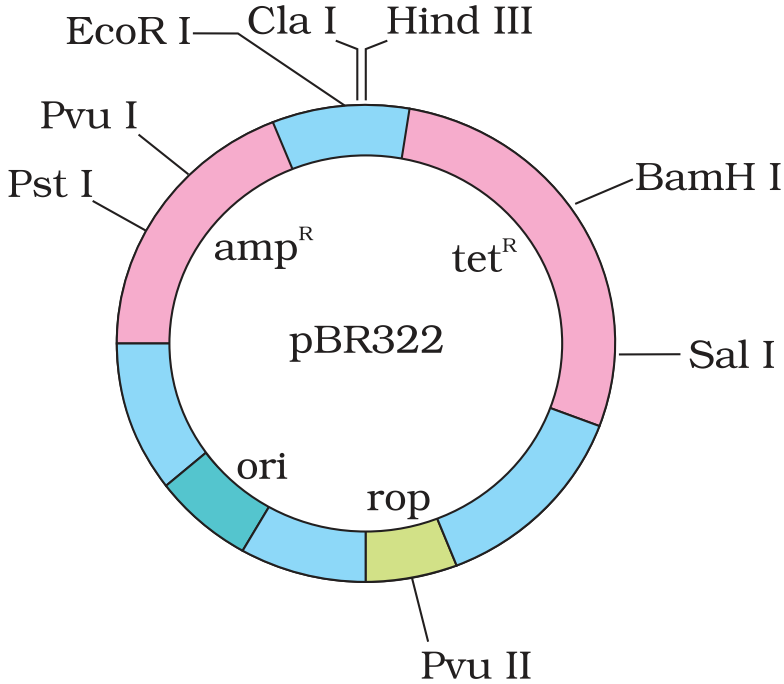
  1. Name the selectable markers in the cloning vector pBR322? Mention the role they play.
  2. Why is the coding sequence of an enzyme (â-galactosidase) a preferred selectable marker in comparison to the ones named above?
Answer
  1. ampR/ampicillin resistance genes, tetR/tetracycline resistance gene.
They help in identifying and eliminating non-transformants/non-recombinants and selectively permitting the growth of the transformants/recombinants.
  1. Simpler process/less cumbersome, in the presence of chromogenic substrate recombinants are colourless, and non-recombinants are blue in colour.
View full question & answer
Question 63 Marks
Rearrange the following in the correct sequence to accomplish an important biotechnological reaction:
  1. In vitro synthesis of copies of DNA of interest.
  2. Chemically synthesised oligonucleotides.
  3. Enzyme DNA-polymerase.
  4. Complementary region of DNA.
  5. Genomic DNA template.
  6. Nucleotides provided.
  7. Primers.
  8. Thermostable DNA-polymerase (from Thermus aquatics).
  9. Denaturation of ds-DNA.
Answer
Correct sequence is-
View full question & answer
Question 73 Marks
Name and describe the technique that helps in separating the DNA fragments formed by the use of restriction endonuclease.
Answer
Gel electrophoresis. DNA are negatively charged, forced to move towards the anode, An electric field in agarose gel matrix, separate according to their size/sieving effect, smaller fragments move faster and further than the larger.
View full question & answer
Question 83 Marks
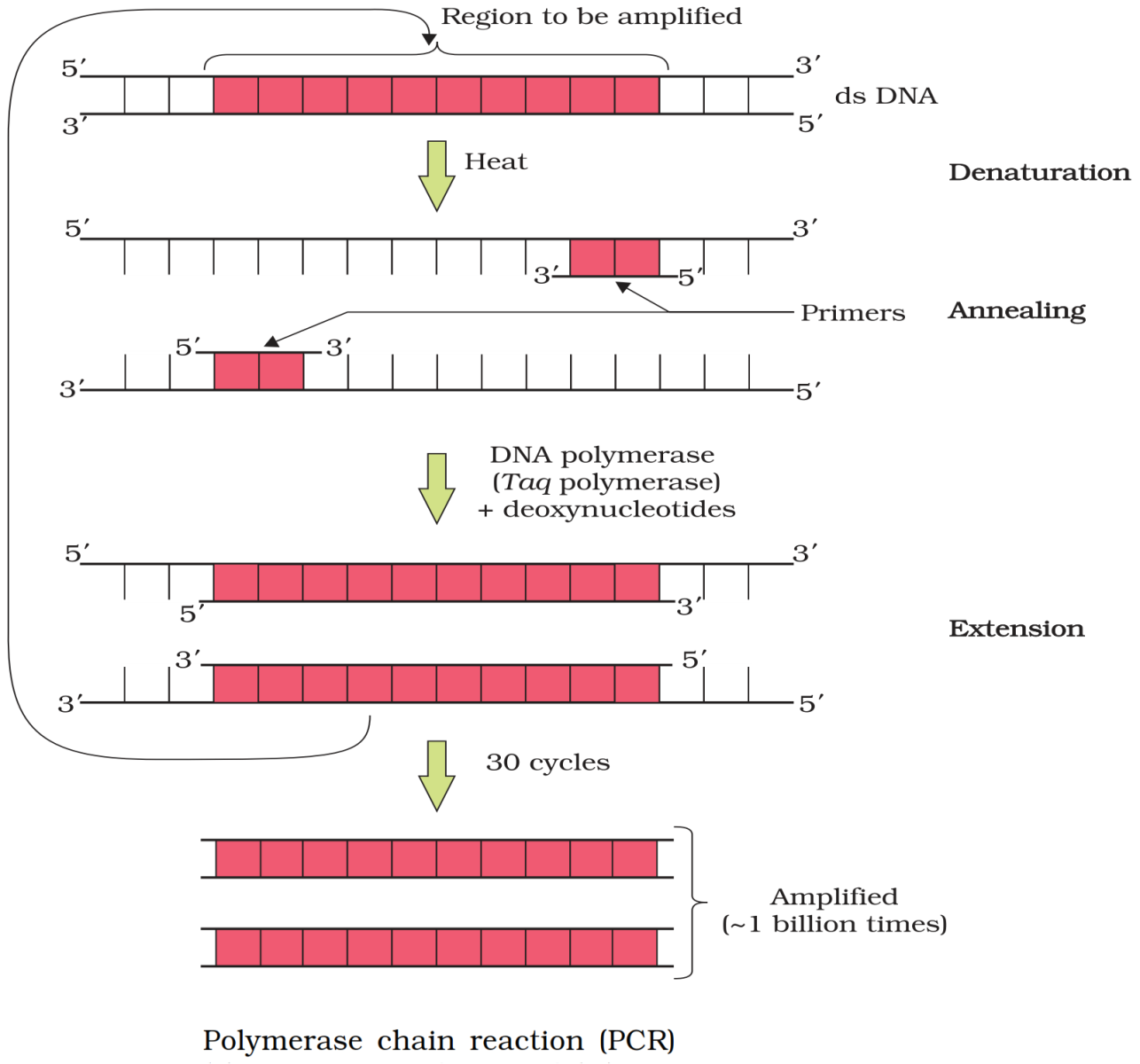
How is the amplification of a gene sample of interest carried out using Polymerase Chain Reaction (PCR)?
Answer
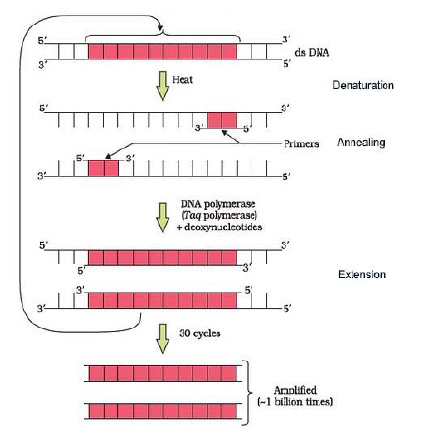
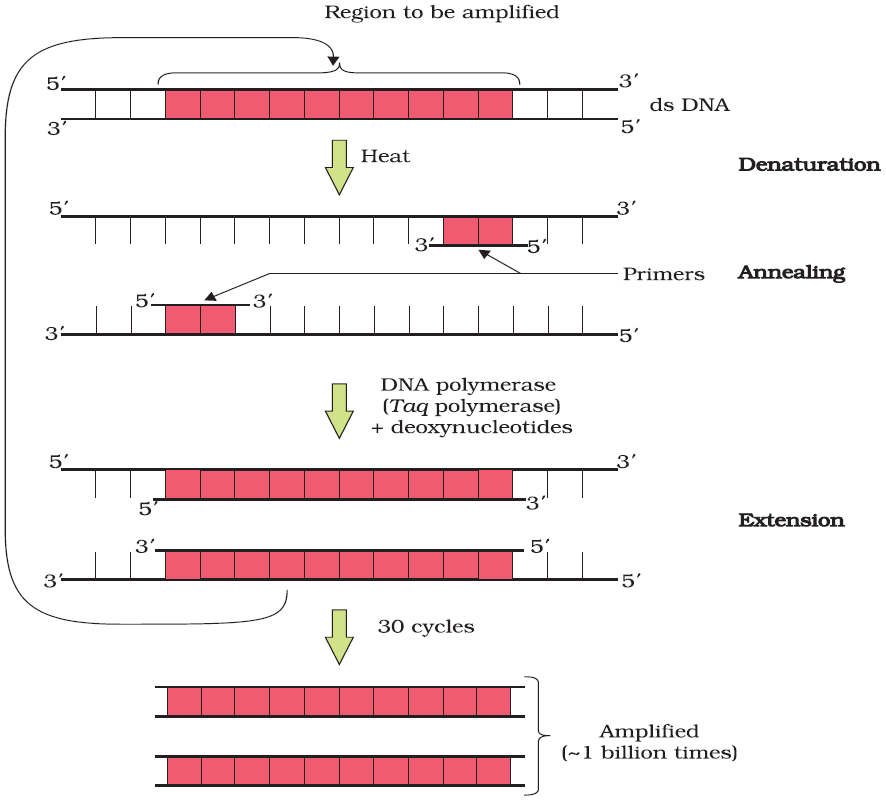
dsDNA is denatured at high temperature to unzip them, Annealing, using two sets of primers, amplification in the direction of 5' $\rightarrow$ 3' using Taq polymerase, this enzyme is thermostable, (source is Thermus aquaticus) 1 billion times amplified in 30 cycles.
Labelled illustration to be evaluated in lieu of the explanation.
View full question & answer
Question 93 Marks
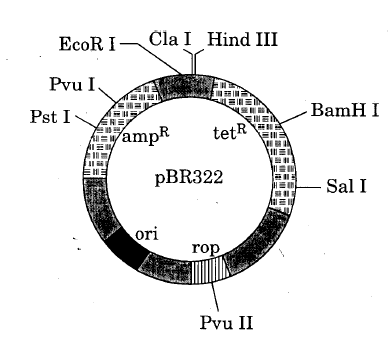
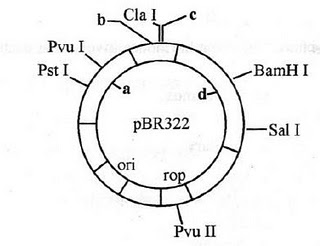
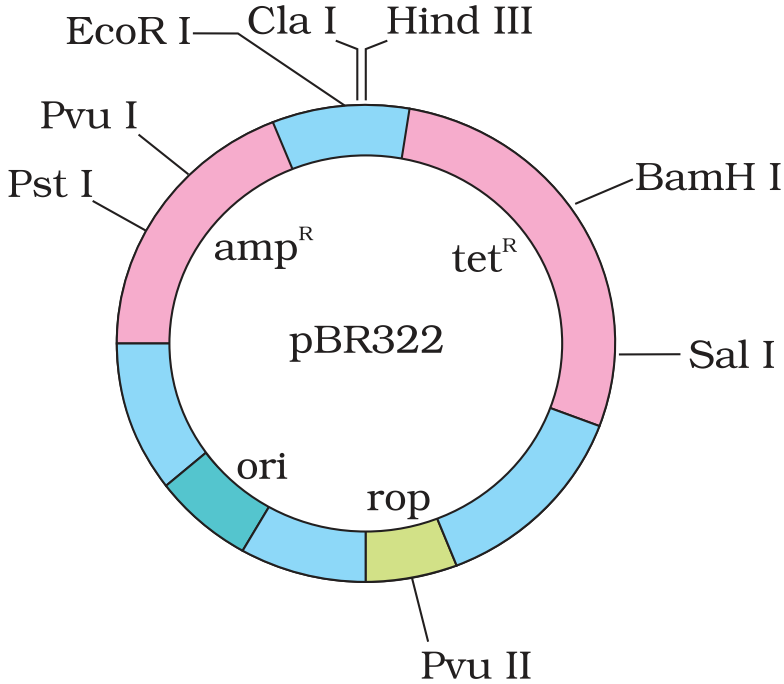
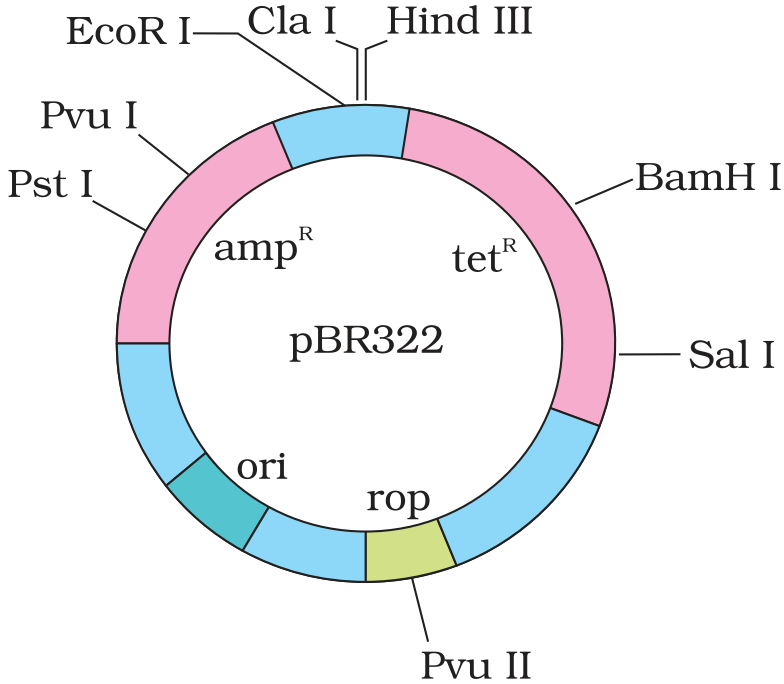
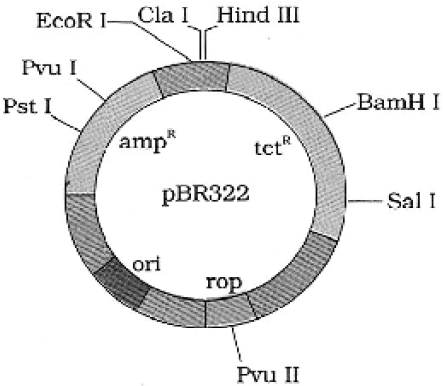
  1. Name the organism in which the vector shown is inserted to get the copies of the desired gene.
  2. Mention the area labelled in the vector responsible for controlling the copy number of the inserted gene.
  3. Name and explain the role of a selectable marker in the vector shown.
​​​​​​​
Answer
  1. Escherichia coli/E.coli.
  2. ori.
  3. $amp^R$ is the marker gene that helps in identification and elimination of the non transformant growing in ampicillin medium/selectively permitting the growth of the transformant resistant to ampicillin // $tet^R$ is the marker gene that helps in identification and elimination of the non transformant growing in tetracycline medium/selectively permitting the growth of the transformant resistant to tetracyline.
View full question & answer
Question 103 Marks
Name and explain the techniques used in the separation and isolation of DNA fragments to be used in recombinant DNA technology.
Answer
Gel Electrophoresis.DNA fragments on the agarose gel are negatively charged molecules, and they move towards the anode (The fragments separate according to their size) The separated DNA fragments can be visualised after staining with ethidium bromide.
Followed by exposure to UV radiation Separated fragments are extracted from the gel by elution.
View full question & answer
Question 113 Marks
What are satellite DNA in a genome? Explain their role in DNA fingerprinting.
Answer
DNA sequences which are repeated many a times, show a high degree of polymorphism, and form a bulk of DNA in a genome, called as satellite DNA.DNA from every tissue from an individual, shows the same degree of polymorphism and is heritable, hence very useful in DNA finger printing.
View full question & answer
Question 123 Marks
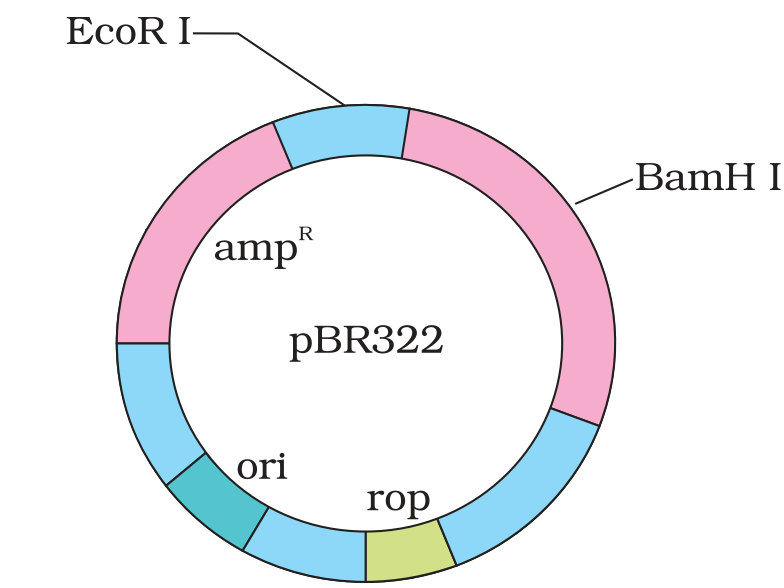
Explain the importance of (a) ori, (b) $amp^R$ and (c) rop In the E.coli vector shown below:
Answer
  1. ori - origin of replication.
  2. $amp^R$ - ampicillin antibiotic resistant gene.
  3. rop - gene to produce the proteins involved in the replication of the plasmid.
View full question & answer
Question 133 Marks
Why is Agrobacterium tumefaciens a good cloning vector? Explain.
Answer
If any desired/foreign gene is linked with, Ti plasmid of Agrobacterium tumefaciens, The bacterium is modified into non-pathogenic, Plasmid is cloned into multiple copies, Can delivered into a variety of plants, Desired chemical will be produced.
View full question & answer
Question 143 Marks
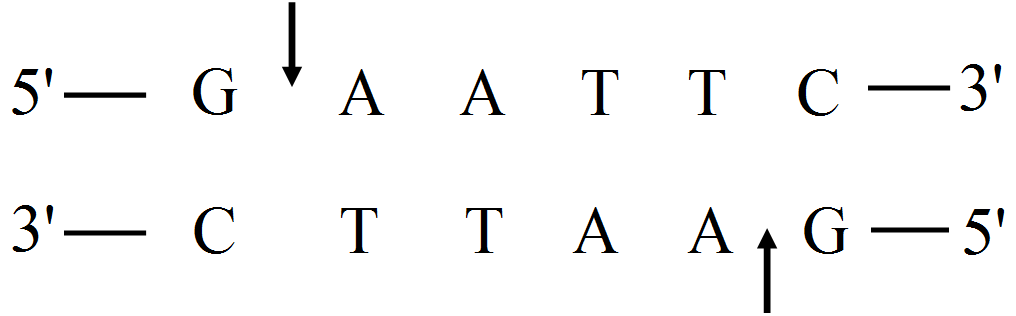
Explain with the help of an example the relationship between restriction endonuclease and a palindromic nucleotide sequence.
Answer
Restriction endonuclease recognises a specific palindromic nucleotide sequence, in the DNA, Restriction endonuclease cuts the strand of DNA a little away from the centre of palindromic nucleotide sequence but between the same two bases on the opposite strands, leaving single stranded portions at the end/sticky ends.
View full question & answer
Question 153 Marks
How can a bioreactor be made to function at optimal state in order to obtain a desired foreign gene product? Explain.
Answer
By providing optimum growth conditions: Temperature, pH, substrate, salts, vitamins, oxygen etc.
View full question & answer
Question 163 Marks
Explain the role of the enzyme EcoRI in recombinant DNA technology.
Answer
EcoRI inspects length of DNA and recognises specific palindromic nucleotide sequence, binds with DNA, cuts each of the two strands of double helix at specific points.
View full question & answer
Question 173 Marks
Why does the 'insertional inactivation' method to detect recombinant DNA is preferred to 'antibiotic resistance' procedure?
Answer
The presence of a chromogenic substrate gives blue coloured colonies, in absence of an insert/in non-transformants, presence of an insert (in the enzyme site), results into (insertional inactivation of the β-galactosidase) colonies which do not produce colour.
Antibiotic resistance method requires duplicate plating/cumbersome procedure.
View full question & answer
Question 183 Marks
Write the steps you would suggest to be undertaken to obtain a foreign-gene-product.
Answer
Insert a piece of alien or desired or foreign DNA into a cloning vector, transfer it into a bacterial/plant/animal cell, the alien DNA gets multiplied, optimised condition (temperature pH, substrate, salts, vitamins, $O_2$) provided to the culture/culture in bioreactor/in continuous culture system to induce the expression of the target product, extracting the desired product, purifying it by using different separation techniques.
View full question & answer
Question 193 Marks
Suggest and describe a technique to obtain multiple copies of a gene of interest in vitro.
Answer
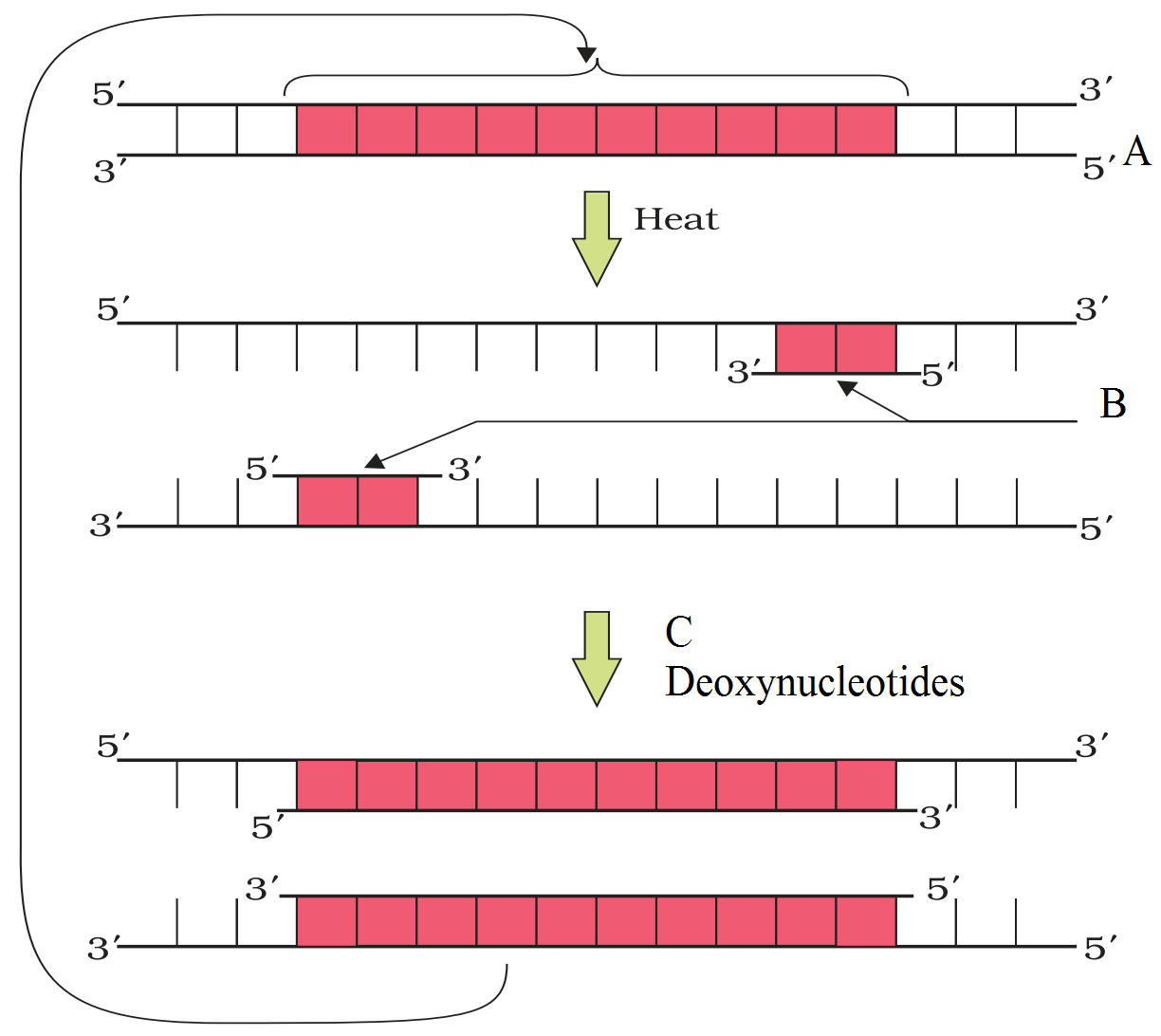
PCR/polymerase chain reaction.Separation/denaturation of two strands of two dsDNA, using two sets of primers/small chemically synthesised oligonucleotides complementary to regions of DNA and (thermostable) DNA polymerase/Taq polymerase, extension of the primers, by enzyme using nucleotides replicates the DNA and if the process of replication is repeated many times multiple copies of DNA are produced.
The following diagram can be considered in lieu of the explanation.
View full question & answer
Question 203 Marks
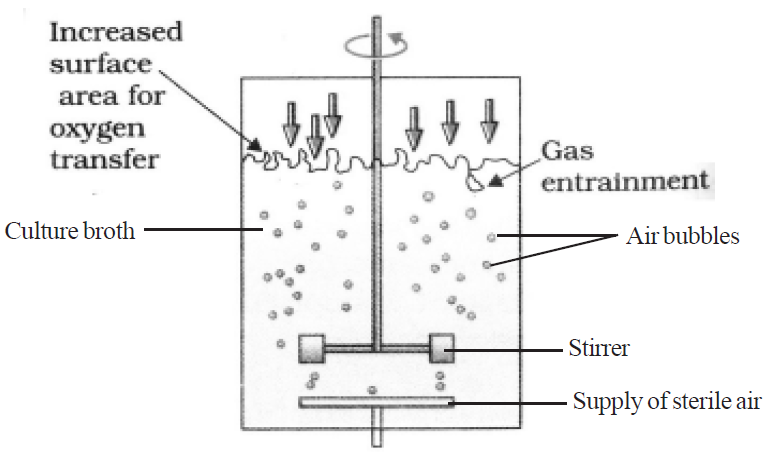
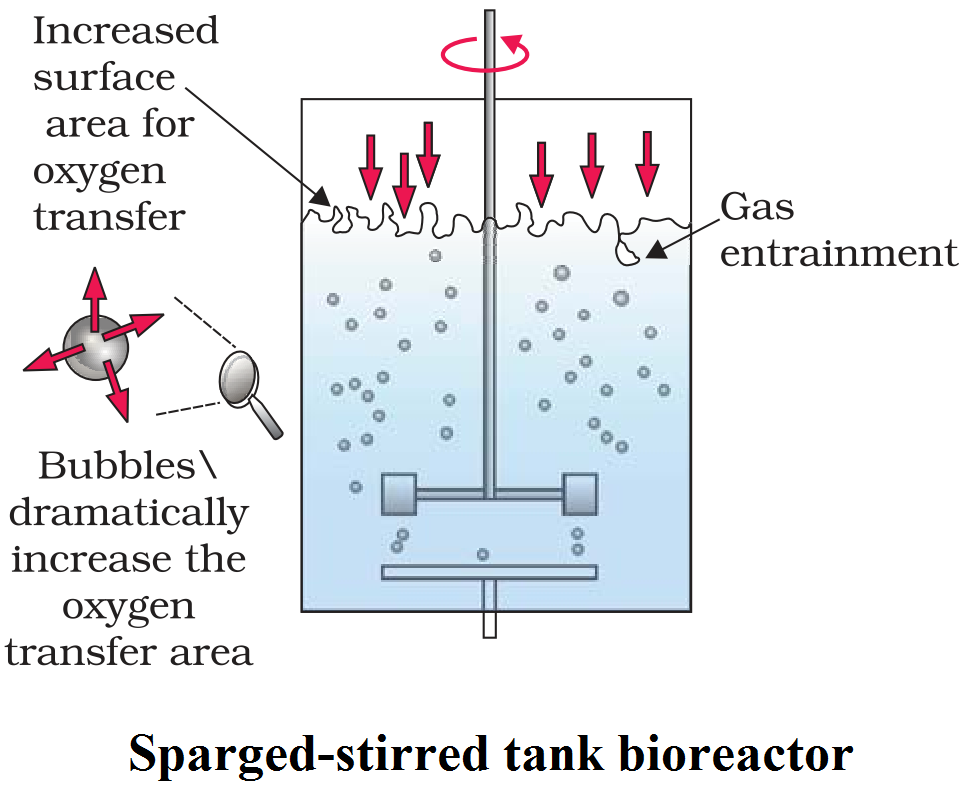
Draw a labelled sketch of sparged-stirred-tank bioreactor. Write its application.
Answer

Application = Produces larger biomass leading to higher yields of desired protein/recombinant protein/processing large volume of culture/conversion of raw materials into specific product biologically.
View full question & answer
Question 213 Marks
Following the collision of two trains, a large number of passengers are killed. A majority of them are beyond recognition. Authorities want to hand over the dead to their relatives. Name a modem scientific method and write the procedure that would help in the identification of kinship.
Answer
DNA fingerprinting (analysis).
Isolation and digestion of DNA by restriction endonuclease.
Separation of DNA fragments by electrophoresis and transferring them to synthetic membranes/nitrocellulose/nylon.
Hybridisation using labelled VNTR probe.
Detection of hybridised DNA fragments by autoradiography.
Matching banding pattern of DNA/DNA fingerprints/autoradiograms of the passengers killed and that of relatives.
View full question & answer
Question 223 Marks
How has RNAi technique helped to prevent the infestation of roots in tobacco plants by a nematode Meloidegyne incognitia?
Answer
Using Agrobacterium vectors, nematode specific genes introduced into host plant, produced sense - antisense RNA in host cells, ds RNA - initiated RNAi, silenced specific mRNA of nematode, parasite could not survive in transgenic host.
View full question & answer
Question 233 Marks
Explain the role(s) of the following in Biotechnology:
  1. Restriction endonuclease.
  2. Gel – electrophoresis.
  3. Selectable markers in pBR322.
Answer
  1. Cuts at specific position within the DNA/cuts DNA at specific nucleotide/cuts at palindromic nucleotide sequence.
  2. Separation of DNA fragments. (under the influence of electric field)
  3. Helps in Identifying and eliminating non-transformants from transformants/selection of transformants.
View full question & answer
Question 243 Marks
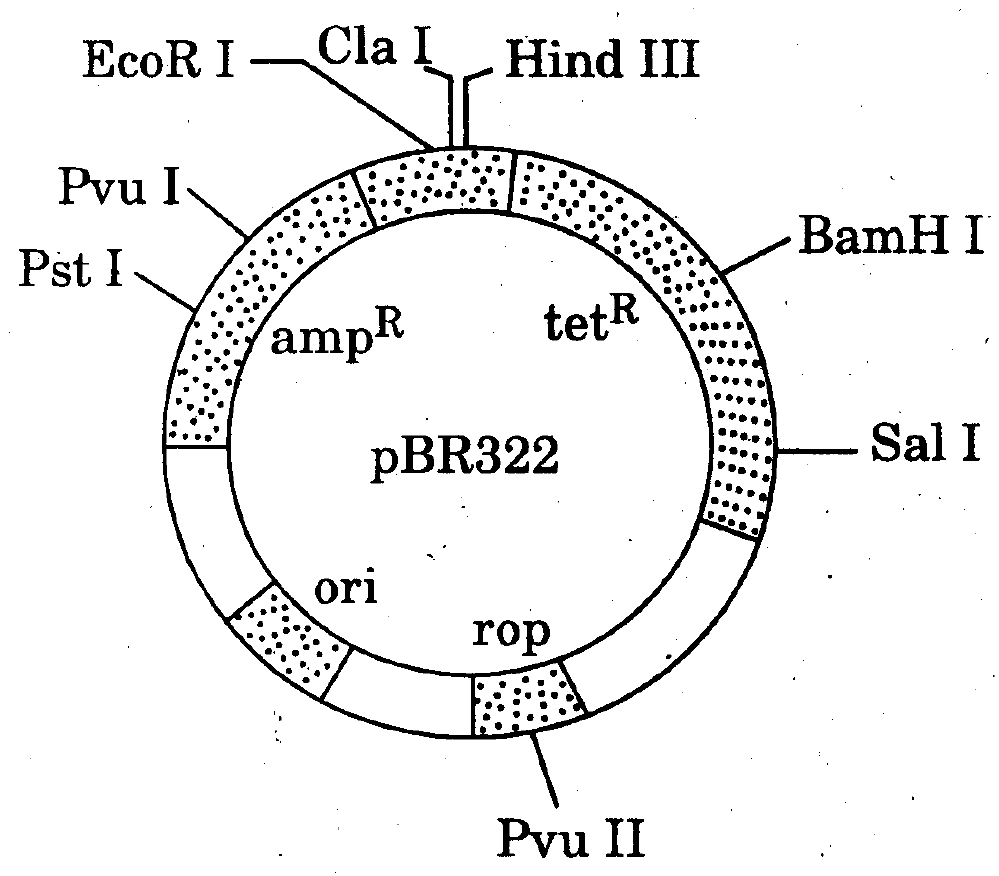
Draw a schematic sketch of pBR 322 plasmid and label the following in it:
  1. Any two restriction sites.
  2. Ori and rop genes.
  3. An antibiotic resistant gene.
Answer
  1. Pst I/Pvu I/EcoR I/Cla I/Hind III/BamH I/Sal I/ Pvu II.
  2. ori, rop.
  3. $a m p^R / tet ^R$.
View full question & answer
Question 253 Marks
  1. Identify (A) and (B) illustrations in the following:
  1.  
  1.  
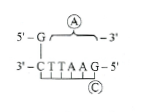
  1. Write the term given to (A) and (C) and why?
  2. Expand PCR. Mention its importance in biotechnology.
Answer
  1.  
  1. -AATTC / Sticky end.
  2. -Ori / Origin of Replication.
  1. Pallindromic sequence, because the sequence of base pairs reads same on the two strands when orientation of readigreadingpt the same.
  2. PCR - Polymerase Chain Reaction, Importance - amplification of gene of interest (in vitro).
View full question & answer
Question 263 Marks
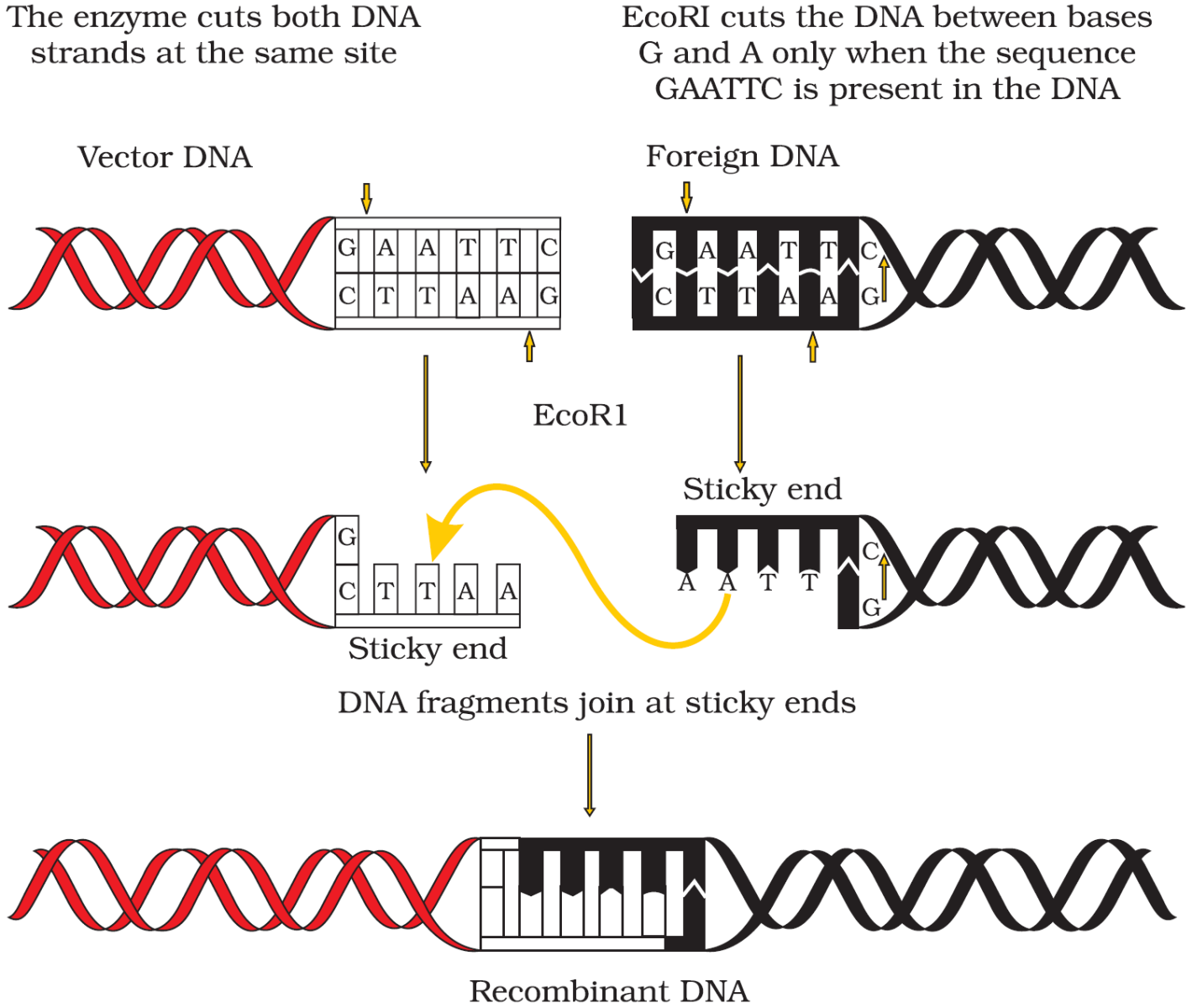
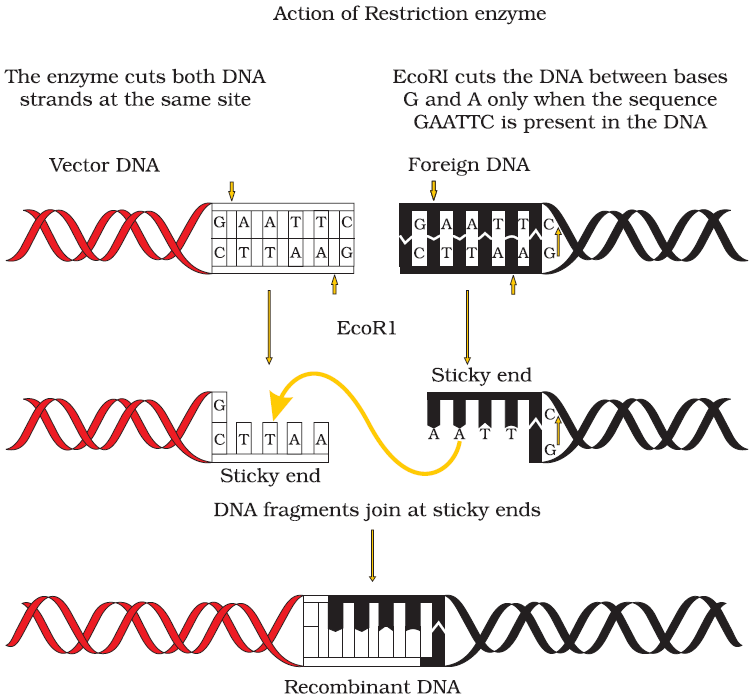
Eco RI is used to cut a segment of foreign DNA and that of a vector DNA to form a recombinant DNA. Show with the help of schematic diagrams.
  1. The set of palindronic nucleotide sequence of base pairs the Eco RI will recognise in both the DNA segments. Mark the site at which Eco RI will act and cut both the segments.
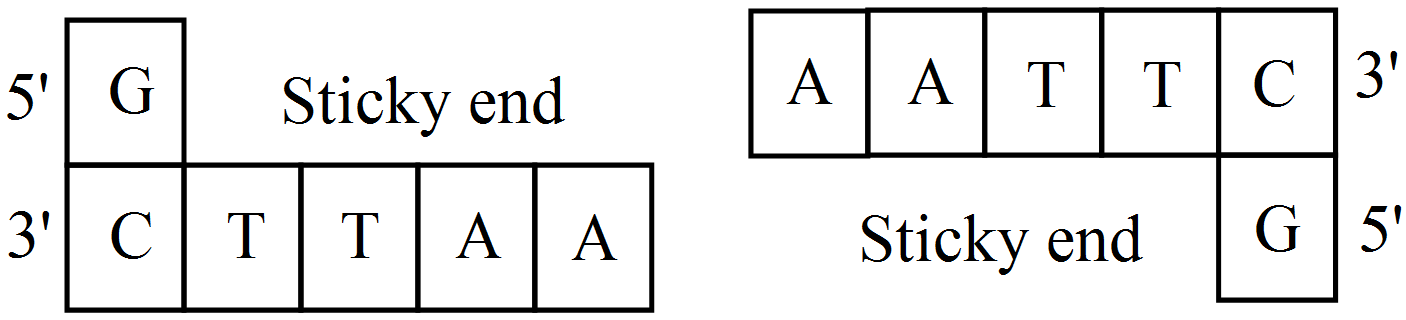
  2. Sticky ends formed on both the segments where the two DNA segments will join later to form a recombinant DNA.
Answer
Palindronic sequence GAATTC,
View full question & answer
Question 273 Marks

  1. Identify the selectable markers in the diagram of E. coli vector shown above.
  2. How is the coding sequence of a-galactosidase considered a better marker than the ones identified by you in the diagram? Explain.
Answer
  1. a = ampicillin, b = EcoR-I, c = Hind-III, d = tetracycline.
  2. Insertion of alien gene into coding sequence of a-galactosidase, results into inactivation of the enzyme// (insertion inactivation), these colonies do not produce any colour (in the presence of chromogenic substrate) hence are identified as recombinant colonies.
View full question & answer
Question 283 Marks
How and why is the bacterium Thermus aquaticus employed in recombinant DNA technology? Explain.
Answer
Bacterium is a source of enzyme Taq polymerase,Which is isolated from bacterium Thermus aquaticus, and is used to amplify DNA in vitro (by PCR),
It remains active even under high temperature at which DNA denatures.
View full question & answer
Question 293 Marks
  1. What are “molecular scissors”? Give one example.
  2. Explain their role in recombinant DNA technology.
Answer
  1. Restriction enzymes EcoRI/Hind II,
  2. They recognise and cut at a specific sit on DNA.
View full question & answer
Question 303 Marks
Explain the roles of the following with the help of an example each in recombinant DNA technology:
  1. Restriction Enzymes.
  2. Plasmids.
Answer
  1. Restriction enzymes:
  1. Restriction enzymes belongs to class of enzymes nucleases which breaks nucleic acids by cleaving their phosphodiester bonds.
  2. Since Restriction endonucleases cuts DNA at specific recognition site, they are used to cut the donor DNA to isolate the desired gene.
  3. The desired gene has sticky ends which can be easily ligated to cloning vector cut by same restriction enzymes having complementary sticky ends to form recombinant DNA.
  4. An example is EcoR1 which is obtained from E.coli bacteria “R” strain which cuts DNA at specific palindromic Recognition site.
5‘ GAATTC 3‘

3‘ CTTAAG 5‘
  1. Plasmids:
  1. Plasmids are autonomous, extra chromosomal circular double stranded DNA of bacteria.
  2. Since they are small and self replicating, they are used as cloning vectors in genetic engineering.
  3. Some plasmids have antibiotic resistance genes which can be used as marker genes to identify recombinant plasmids from non recombinant ones.
  4. The plasmids are cut and ligated with desired genes and transformed into host cell for amplification to obtain the desired products.
  5. An example of artificial modified plasmids are pBR322 ( constructed by bolivar and rodriguez) or pUC (constructed at university at california).
View full question & answer
Question 313 Marks
  1. How has the development of bioreactor helped in biotechnology?
  2. Name the most commonly used bioreactor and describe its working.
Answer
  1. Small volume cultures cannot yield appreciable quantities of products. To produce in large quantities, the development of bioreactors, where large volumes (100 - 1000 litres) of culture can be processed, was required. Thus, bioreactors can be thought of as vessels in which raw materials are biologically converted into specific products, individual enzymes, etc., using microbial plant, animal or human cells.
  2. The most commonly used bioreactors are of stirring type. A stirred - tank reactors is usually cylindrical or with a curved base to facilitate the mixing of the reactor contents. The stirrer facilitates even mixing and oxygen availability throughout the bioreactor. The bioreactor has an agitator system, an oxygen delivery system and a foam control system, a temperature control system. pH control system and sampling ports so that small volumes of the culture can be withdrawn periodically.
View full question & answer
Question 323 Marks
  1. Explain the principle on the basis of which DNA is separated by the technique of Gel electrophoresis.
  2. How is the separated DNA visualised?
Answer
  1. DNA fragments are negatively charged molecules. Using this property of DNA it is forced to move towards an anode under an electric field through an agarose medium. The DNA fragment separates according to their size through sieving effect provided by agarose gel. Hence the smaller the fragment in size, farther it moves.
  2. The DNA fragments after separation are treated with ethidium bromide followed by UV radiation exposure. This enables us to visualize the DNA fragments.
View full question & answer
Question 333 Marks
In an E. coli cloning vector pBR 322, state the role of the following genes:
  1. Ori gene.
  2. Antibiotic resistance gene.
  3. Rop gene.
Answer
  1. Ori-gene: The sequence from where replication start/ any piece of DNA when linked to this sequence can be made to replicate within the host cell, this sequence control the copy number of linked DNA.
  2. Antibiotic resistance genes: Help in identifying and eliminating non transformant from transformant/ acts as selectable marker/ helps in ligation of alien DNA at recognition site (present in one of the two antibiotic resistance gene).
  3. Rop: Codes for proteins, involved in the replication of plasmids.
View full question & answer
Question 343 Marks
Explain the three steps carried out in the formation of recombinant DNA using the enzyme EcoRI.
Answer

Eco $R_1$ cuts vector DNA, foreign DNA/ gene of interest, at pallindromic site,
3'CTTAAG 5'
5'GAATTC 3'
(between bases G & A only), sticky end (over hanging stretch of bases) formed at each strand, Joining of sticky ends from DNA fragments by enzyme DNA Ligase, Recombinant DNA(rDNA) is formed.
View full question & answer
Question 353 Marks
Name any two natural cloning vectors. Give reasons that make them act as cloning vectors. Write the two characteristics the engineered vectors are made to possess.
Answer
Plasmids and Bacteriophages are two natural closing vector. Plasmids have the ability to replicate within bacterial cells independent of the control of chromosomal DNA. Bacteriophages because of their high number per cell, have very high copy numbers of their genome within the bacterial cells.Two features that the engineered vectors made to posses are:
  1. ORI.
  2. Selectable marker.
View full question & answer
Question 363 Marks
Describe the process of amplification of "gene of interest" using PCR technique.
Answer
To amplify the gene segment of the interest we should know the sequence of the gene of interest. Primers are designed for amplifying the gene of interest. Two sets of primers (chemically synthesized oligonucleotide stretches) that are complementary to the gene of interest, DNA polymerase enzyme, and deoxynucleotides are added. PCR can then be carried out for its amplification.
PCR consists of 3 steps:
  1. Denaturation: Double-helical DNA is denatured by providing high temperature (95-degree Celsius). DNA polymerase does not get degraded in such high temperatures. The DNA polymerase used in this reaction is thermostable and is isolated from the thermophilic bacteria, Thermus aquaticus (Taq).
  2. Annealing: It is the step in which primers are annealed to single-stranded DNA templates. Two sets of primers are used. The temperature of the reaction mixture is lowered to 50-65°C for some seconds to allow annealing of primers. DNA polymerase extends the primer in 5' to 3' direction.
  3. Extension: Replication of DNA occurs in vitro.
  1. This cycle is repeated several times to generate up to 1 billion identical copies of the DNA.
View full question & answer
Question 373 Marks
Describe the formation of recombinant DNA by the action of EcoRI.
Answer
Restriction endonuclease enzyme EcoRI is used in the molecular biology to cut the foreign DNA and vector DNA to form overhangs (called sticky ends). These sticky ends then form hydrogen bonds with their complementary counterparts. The segments with the help of DNA ligases are joined to produce recombinant DNA.
View full question & answer
Question 383 Marks
Write any four ways used to introduce a desired DNA segment into a bacterial cell in recombinant DNA technology experiments.
Answer
  1. Microinjection.
  2. Biolistics/ gene gun.
  3. Heat-shock method.
  4. Using disarmed pathogen vectors.
View full question & answer
Question 393 Marks
DNA being hydrophilic, cannot pass through the cell membrane of a host cell. Explain how the recombinant DNA gets introduced into the host cellto transform the latter.
Answer
Introduction of rDNA into host cell:
  1. Microinjection: In this method, the recombinant DNA is directly injected into the nucleus of an animal cell.
  2. Gene gun/ Biolistics: In this method, used for plant cells, the cells are bombarded with high velocity microparticles of gold or tungsten coated with DNA.
  3. Heat shock method: In this method, the rDNA is forced into the competent cell by incubating the cell with rDNA on ice followed by placing them briefly at 42°C (heat shock) and then putting them back on Ice.
View full question & answer
Question 403 Marks
Both a wine maker and a molecular biologist who had developed a recombinant vaccine claim to be biotechnologists. Who in your opinion is correct?
Answer
Both. As biotechnology is a very wide area which deals with techniques of using a ‘natural’ organism (or its parts) as well as genetically modified organism to produce products and processes useful for mankind. A wine maker employs a strain-of yeast to produce wine by fermentation (a natural phenomenon), while the molecular biologist has cloned gene for the antigen (that is used as vaccine) in an organism which allows the production of the antigen in large amount.
View full question & answer
Question 413 Marks
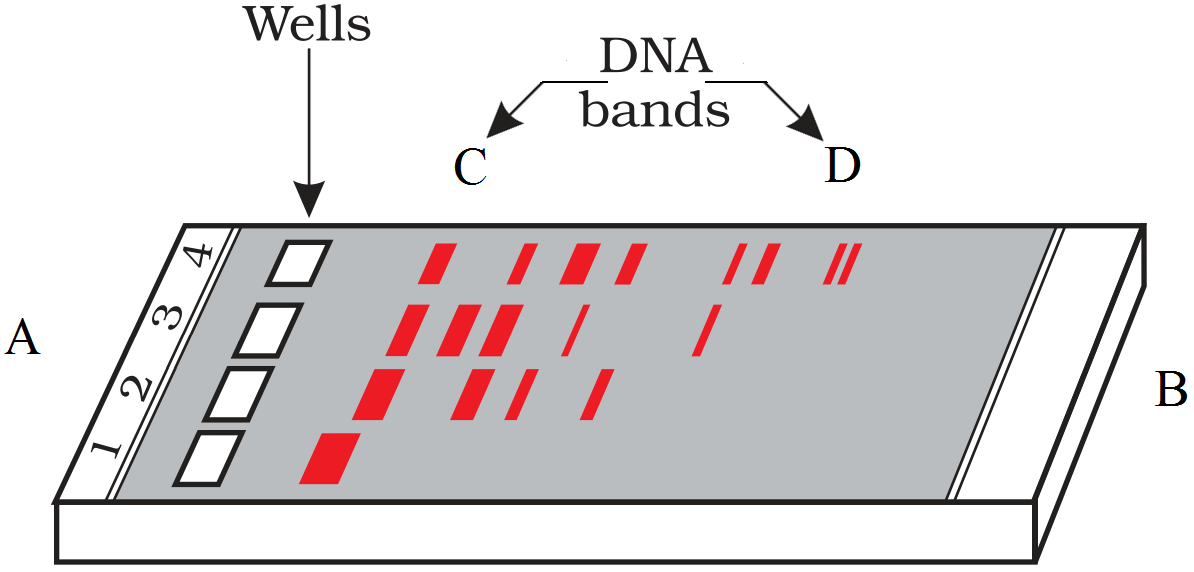
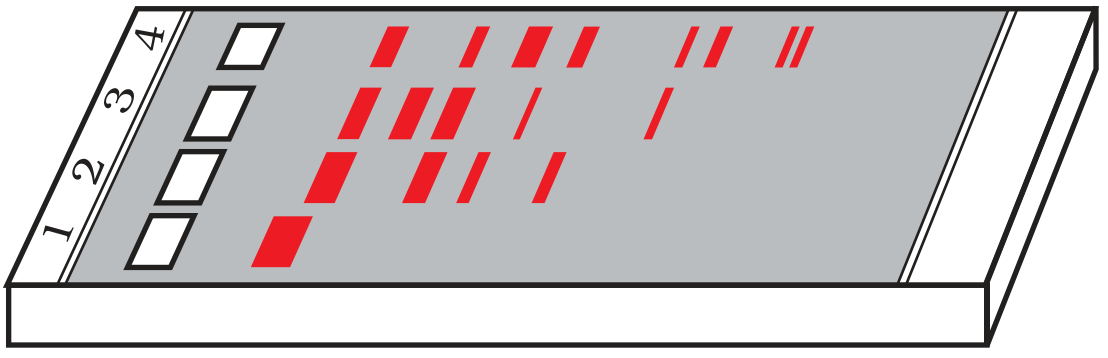
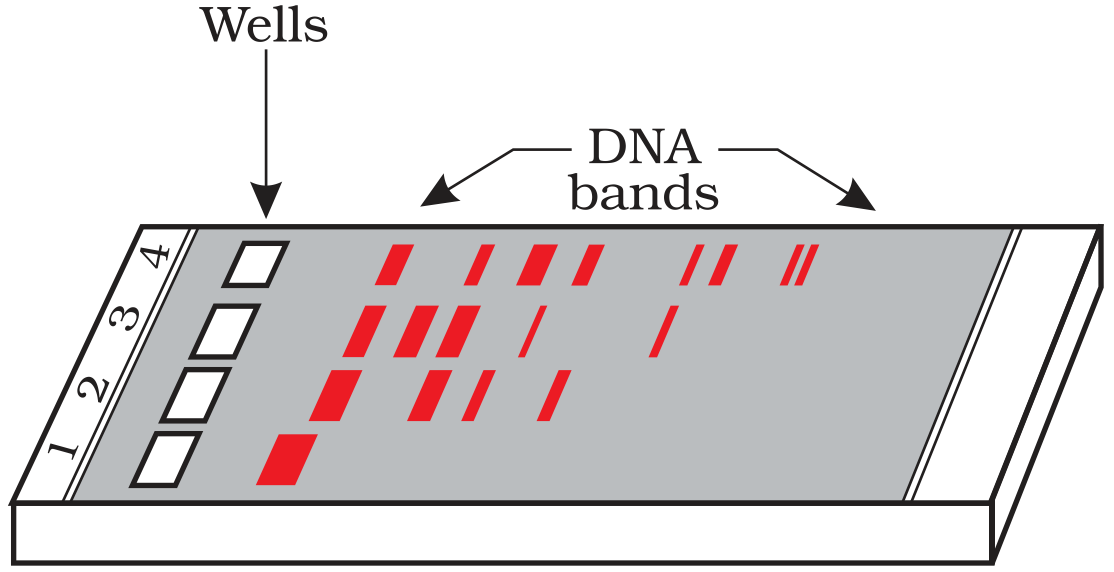
Rajesh was doing gel electrophoresis to purify DNA fragments. Given below is the sketch of the observations of the experiment performed by him.
  1. At which end he would have loaded the samples and where?
  2. Analyse the reason for different positions taken up by the DNA bands.
  3. Elaborate the step he would have followed to visualize DNA bands.
Answer
  1. He would have loaded the samples at the end A. In the wells near the end A.
  2.  
  • The DNA fragments resolve or separate according to their size, through the sieving effect, provided by the agarose gel matrix.
  • The smaller the DNA fragment, the farther it moves and vice-versa.
  1.  
  • He must have stained the DNA with ethidium bromide followed by exposure to UV-radiation.
  • he DNA is visible as orange coloured bands.
View full question & answer
Question 423 Marks
  1. Draw the figure of vector pBR322 and label the following:
  1. Origin of replication.
  2. Ampicillin resistance site.
  3. Tetracycline resistance site.
  4. BamH1 restriction site.
  1. Identify the significance of origin of replication.
Answer
  1.  


E. coli cloning vector pBR322 showing restriction sites (HindIII, EcoRI, BamHI, SalI, PvuII, PstI, ClaI), ori and antibiotic resistance genes (ampR and tetR). rop codes for the proteins involved in the replication of the plasmid.
  1. Origin of replication is responsible for controlling the copy number of the DNA sequence inserted.
View full question & answer
Question 433 Marks
What is the principle of Gel electrophoresis? Name the compound used for staining DNA to be used in recombinant technology. What is the colour of such stained DNA?
Answer
Since DNA fragments are negatively charged molecules, they can be separated by forcing them to move towards the anode under an electric field through a medium or matrix (usually agarose). This matrix gel acts as sieve and DNA fragments resolve according to their size.
  • Ethidium bromide used for staining DNA.
  • Stained DNA becomes orange.
View full question & answer
Question 443 Marks
Describe a palindrome with the help of an example.
Answer
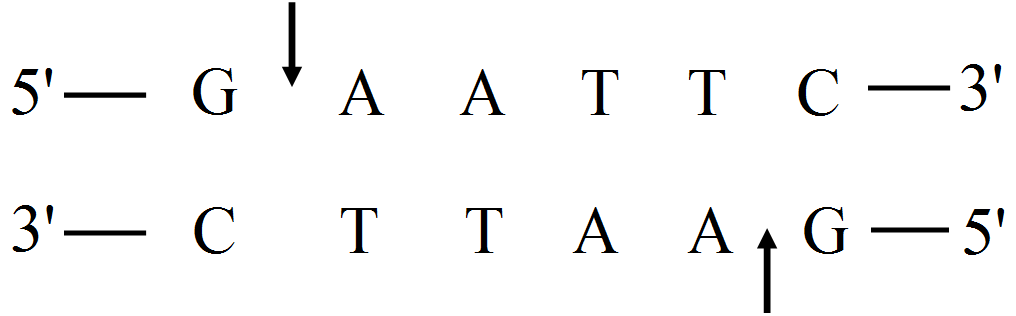
  • A palindrome in DNA is a sequence of base pairs that reads the same on the two strands, when orientation of reading is kept the same.
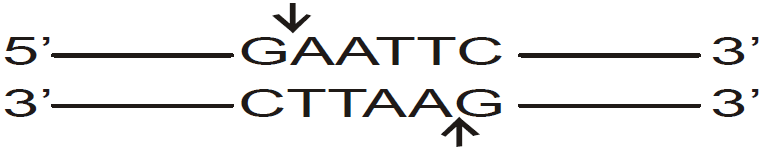
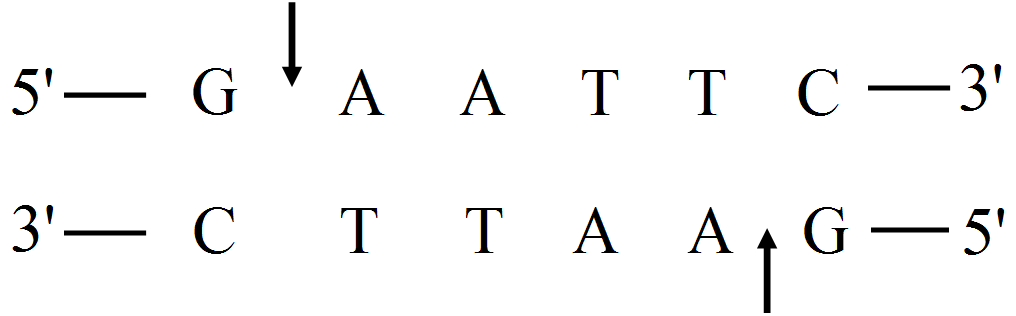
  • The palindromic sequence, which is recognised by the restriction enzyme, EcoRI is given below, along with the sites where it cuts the DNA strands.
  • It is seen that the restriction enzyme cuts the two strands between the same two bases, a little away from the centre of the palindrome sequence.
View full question & answer
Question 453 Marks
A and B are two different cloning vectors in two different bacterial colonies cultured in chromogenic substrate. Bacterial colonies with cloning vector A were colourless, whereas those with B were blue coloured. Explain by giving reasons the cause of difference in colour that appeared.
Answer
On the basis of colour production in the presence of chromogenic substrate, the recombinants and non-recombinants cal be differentiated. In this, a recombinant DNA is inserted within coding sequence of an enzyme $\beta-$galactosidase, which results in inactivation of enzyme.
In plate A, the bacterial colonies having inserted plasmid, shows no colouration. While in plate B, insertion of plasmid does not occur, therefore it shows blue colour.
View full question & answer
Question 463 Marks
What is vector? Which cloning vector was discovered first?
Answer
  • Vector is a DNA molecule that can carry a foreign/ desired DNA segment and replicates inside the host cell.
  • pBR 322 vector.
View full question & answer
Question 473 Marks
Rearrange the following in the correct sequence to accomplish an important biotechnological reaction:
  1. In vitro synthesis of copies of DNA of interest,
  2. Chemically synthesised oligonucleotides,
  3. Enzyme DNA-polymerase,
  4. Complementry region of DNA,
  5. Genomic DNA template,
  6. Nucleotides provided,
  7. Primers,
  8. Thermostable DNA-polymers (From Thermus aquaticus),
  9. Denaturation of dsDNA.
Answer
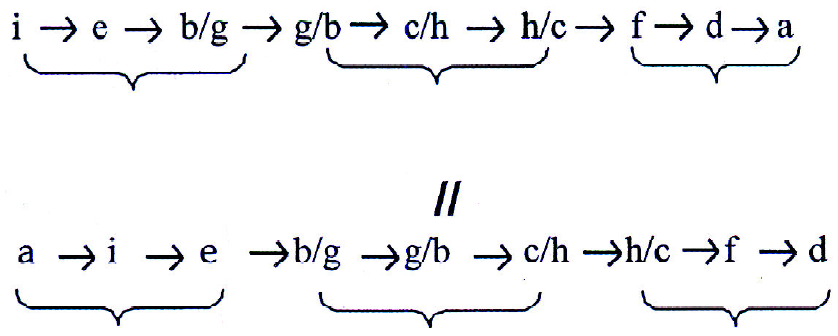
(i)
Denaturation of dsDNA
 
$\downarrow$
(e)
Genomic DNA template
 
$\downarrow$
(g)
Primers
 
$\downarrow$
(b)
Chemically synthesised oligonucleotides
 
$\downarrow$
(d)
Complementry region of DNA
 
$\downarrow$
(f)
Nacleotides provided
 
$\downarrow$
(c)
Enzyme DNA-polymerase
 
$\downarrow$
(h)
Thermostable DNA polymerase (from Thermus aquaticus)
 
$\downarrow$
(a)
In vitro synthesis of copies of DNA of interest
View full question & answer
Question 483 Marks
  1. In pBR322, foreign DNA has to be introduced in tetR region. From the restriction enzymes given below, which one should be used and why?
PvuI, EcoRI, BamHI
  1. Give reasons, why the other two enzymes cannot be used.
Answer
  1. BamHI should be used, as restriction site for this enzyme is present in $tet^{R}$ region.
  2. PvuI will not be used, as restriction site for this enzyme is present in $amp^{R}$ region (not in $tet^R$). EcoRI will not be used, as restriction site for this enzyme is not present in selectable marker $tet^R$.
View full question & answer
Question 493 Marks
Why are genes encoding resistance to antibiotics considered useful selectable markers for E.coli. cloning vector? Explain with the help of one example.
Answer
  • Genes encoding antibiotic resistance are useful as selectable markers because the normal E.coli cells do not carry resistance against any of these antibiotics.
  • The ligation of alien DNA is carried out at a restriction site present in one of the antibioticresistance genes, say a foreign DNA is ligated at the BamHI site of tetracycline resistance gene in the vector pBR 322.
  • The recombinant plasmids will lose tetracycline resistance due to insertional inactivation.
  • The recombinants could be selected out from the non-recombinants by plating the transformants on ampicillin-containing medium.
  • The transformants growing on ampicillin-containing medium are transferred to tetracycline-containing medium.
  • The recombinants cannot grow on this medium, but non-recombinants will grow on this medium too.
View full question & answer
Question 503 Marks
What is recombinant DNA? For creating recombinant vector molecule, can two different restriction enzymes be used for cutting vector and source DNA?
Answer
When a specific gene sequence is linked with plasmid vector with the help of DNA ligase, a new combination of circular autonomously replicating DNA is formed and it is called recombinant DNA.
No, recombinant vector can be created only if the same restriction enzyme cuts both the vector DNA and the source DNA, as their palindromic sequences should be same.
View full question & answer
Question 513 Marks
How do antibiotic-resistance genes function as selectable markers? Explain with the help of E.coli cloning vector pBR 322.
Answer
  • If a foreign DNA is ligated at the BamH I site of tetracyclin-resistance gene in the pBR 322, the recombinant plasmid will lose the tetracycline-resistance.
  • The transformant can be selected out from the nontransformants by culturing on a medium containing ampicillin.
  • The transformants are transferred to a culture medium containing tetracyclin; there they fail to grow but non-transformants grow in tetracyclincontaining medium as well as ampicillin-containing medium.
  • Here, one antibiotic gene facilitates selection of transformants, while the other antibiotic gene gets inactivated by the insertion of alien DNA and facilitates selecting the recombinants.
View full question & answer
Question 523 Marks
Explain the importance of (a) Restriction endonucleases (b) 'Ori' and (c) Gel electrophoresis in recombinant DNA technology.
Answer
  1.  
  • Restriction endonucleases are used to cut the DNA strands of vector and the source/ foreign DNA at specific locations, containing the genes of our interest).
  • When cut by the same restriction enzyme, the resultant DNA fragments have the same kind of sticky ends, which are easily joined by a DNA ligase.
  1.  
  • 'Ori' is the sequence of nucleotides in a DNA, where replication starts.
  • When a piece of alien DNA is ligated to it, it replicates and forms multiple copies (cloning) within the host.
  1.  
  • Gel electrophoresis is used to separate the DNA fragments formed by the restriction digestion.
  • The separated DNA fragments are isolated and used in biotechnological experiments.
View full question & answer
Question 533 Marks
What is a recombinant DNA? List its features. How do enzymes restriction endonuclease and DNA Ligase help its formation?
Answer
  • The DNA formed by combining DNA molecules from different sources/ genomes, is called a recombinant DNA.
  • It shows features of those organisms from where the DNAs are isolated.
  • The same restriction endonuclease is used to cut both vector DNA and the source DNA at specific locations: hence, the same kind of sticky ends are formed.
  • DNA ligase joins together (end-to-end) the complementary cut counterparts by forming hydrogen bonds.
View full question & answer
Question 543 Marks
Give an example of micro organisms that have transforming ability.
Answer
A bacterium Agrobacterium tumefaciens has T-DNA in its Ti-plasmid which is able to transform normal plant cells to tumour cell and cause crown gall tumours in plants.
In animals retroviruses have this ability.
View full question & answer
Question 553 Marks
What essential features must be present in a cloning vehicle/ cloning vector?
Answer
Features of Cloning Vector There are certain features that are required to facilitate cloning into a vector. These are:
  1. Origin of replication (ori): This is a sequence from where replication starts and any piece of DNA, when linked to this sequence can be made to replicate within the host cells. This sequence is also responsible for controlling the copy number of the linked DNA.
  2. Selectable marker: It helps in identifying or selecting transformants and eliminating non-transformants by selectively permitting the growth of the transformants. 'Transformation is a procedure, through which a piece of DNA is introduced into the host bacterium. Normally, the genes encoding resistance to antibiotics such as ampicillin, chloramphenicol, tetracycline, kanamycin, etc., are considered as useful selectable markers for E. coli. The normal E. coli cells do not carry resistance against any of these antibiotics.
  3. Cloning (recognition) sites: These are generally required to link the foreign or alien DNA with the vector. For this, the vector requires very few or single recognition sites for commonly used restriction enzymes. If more than one recognition sites is present within the vector, it will generate several fragments that will lead to more complication in gene cloning.

Vectors for cloning genes in plants and animals: In plants, Agrobacterium tumefaciens (a pathogen of several dicot plants) is able to deliver a piece of DNA known as 'T-DNA' (transfer-DNA) to transform normal plant cells into tumour cells to produce chemicals required by pathogen. This is done as the tumour inducing (Ti) plasmid of Agrobacterium tumefaciens has been modified as a cloning vector which is no longer pathogenic to plant but is still able to deliver genes of interest. Similarly, retrovirus, adenovirus, papilloma virus are also used as a cloning vectors in animals because of their ability to transform normal cells into cancerous cells.
View full question & answer
Question 563 Marks
What are bioreactors? List five growth conditions that a bioreactor provides for obtaining the desired product.
Answer
  • Bioreactors are the large vessels in which the raw materials are biologically converted into specific products in large quantities, i.e. on commercial scale.
  • The bioreactors provide optimum conditions of (i) pH, (ii) substrate concentration, (ii) mineral salts, (iv) vitamins, (v) temperature and (vi) oxygen.
View full question & answer
Question 573 Marks
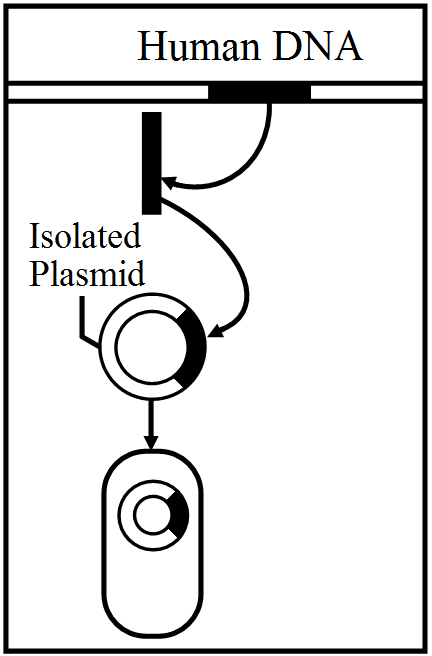
Name the particular technique whose steps are shown in the following figure. Use the figure to summarise the technique in three steps:
Answer
  1. Recombinant DNA Technology/ Genetic Engineering.
  2. Three steps are:
  • Isolation of human DNA with desirable gene.
  • DNA segment is incorporated into bacterial plasmid to form recombinant DNA.
  • Recombinant DNA is introduced in bacterial cell, which makes pistein directed by human DNA.
View full question & answer
Question 583 Marks
What are the areas which have been responsible for the recent advances in biotechnology?
Answer
Agriculture, Medicine, Food industry and genetic engineering are the some areas.
View full question & answer
Question 593 Marks
Shubham was taught in the biotechnology class about the production of recombinant protein with the help of bioreactor. He was surprised by this new information. In the evening he discussed it with his elder brother, who is a biotechnologist. He smiled and explained him in detail.
  1. What is recombinant protein?
  2. Why is bioreactors useful in industries?
  3. What are the values shown by Shubham?
Answer
  1. Any protein encoded gene when expressed in a heterologous host, it is called as recombinant protein.
  2. For the large scale production of industrial products.
  3. He is curious, inquisitive and having interest in science.
View full question & answer
Question 603 Marks
Agrobacterium tumefaciens is considered as a good cloning vector. Explain why?
Answer
Vectors for cloning genes in plants and animals In plants, Agrobacterium tumefaciens (a pathogen of several dicot plants) is able to deliver a piece of DNA known as T-DNA' (transfer-DNA) to transform normal plant cells into tumour cells to produce chemicals required by pathogen. This is done as the tumour inducing (Ti) plasmid of Agrobacterium tumefaciens has been modified as a cloning vector which is no longer pathogenic to plant but is still able to deliver genes of interest. Similarly, retrovirus, adenovirus, papilloma virus are also used as a cloning vectors in animals because of their ability to transform normal cells into cancerous cells.
View full question & answer
Question 613 Marks
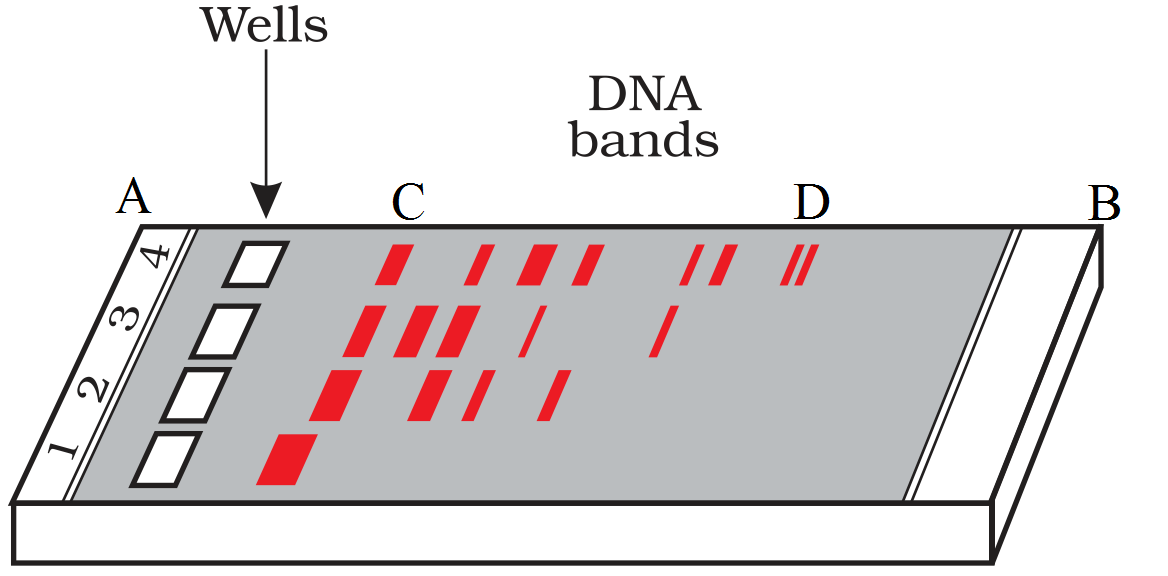
Study the diagram given below and answer the following questions:
  1. Why have DNA fragments in band 'D' moved farther away in comparison to those in band 'C'?
  2. Which is the anode end, A or B?
  3. What is the role of the matrix in this experiment?
  4. How are the separated DNA fragments visualised?
Answer
  1. The DNA fragments resolve according to their size through the sieving effect of the agarose gel; hence the smaller fragments (in D) have moved farther than those (in C) which are comparatively larger.
  2. B is the anode.
  3. The matrix provides the sieving effect for the separation of DNA fragments according to their sizes.
  4. The separated DNA fragments are stained by ethidium bromide followed by exposure to ultra violet radiation.
View full question & answer
Question 623 Marks
How are the following used in biotechnology?
  1. Plasmid DNA
  2. Recognition sequence
  3. Gel electrophoresis
Answer
  1. Plasmid DNA: It is often used for constructing recombinant DNA, by ligating the gene of interest with it; it is used as the cloning vector.
  1. Recognition sequences: These are the sequences of base pairs in DNA, which a restriction enzyme recognises and cuts the DNA
  2. Gel electrophoresis: It is used to separate the DNA fragments, which separate/ resolve according to their size through the sieving effect of the gel; the DNA is isolated from the gel by the process of elution.
View full question & answer
Question 633 Marks
β−galactosidase enzymes site is a preferred selectable marker in comparison to antibiotic-resistant selectable marker in biotechnology experiments. Justify.
Answer
  • When an alien DNA or recombinant DNA is ligated within the coding sequence of an enzyme, the enzyme becomes inactivated; this phenomenon is called insertional inactivation.
  • A recombinant loses the ability to produce a (blue) colour with a chromogenic substrate; hence, it can be distinguished from the non-recombinants, which produce blue-coloured colonies with the chromogenic substrate.
  • This method is preferred to the antibiotic-resistance method as the latter is a cumbersome procedure that requires simultaneous plating on two plates having two different antibiotics.
View full question & answer
Question 643 Marks
How does Agrobacterium tumefaciens act as a suitable vector in biotechnology experiments? Cite an example, where it has been successfully used as a vector.
Answer
  • Agrobacterium tumefaciens is a pathogen of several dicot plants.
  • It is able to deliver a piece of DNA, called T-DNA into the plant cells and transform them into tumour cells; it dictates the host cells to synthesise its nutrients.
  • The Tumour inducing (Ti) plasmid of this bacterium is modified and made non-pathogenic.
  • Though it is non-pathogenic, it still has the capacity to deliver its Ti plasmid to the plants and hence, the genes of interest ligated to it; thus it acts as a suitable vector in biotechnology experiments.
  • It has been used to transfer nematode-specific genes into tobacco plants, to make them resistant to the nematode, Meloidegyne incognitia, that attacks the roots of tobacco plant.
View full question & answer
Question 653 Marks
  1. How are recombinant vectors created?
  2. For creating one recombinant vector only one type of restriction endonuclease is required. Give reason.
Answer
  1. The vector DNA is cut at a particular restriction site using a restriction enzyme (to cut the desired DNA segment). The alien DNA is then linked with the plasmid DNA using an enzyme called ligase to form the recombinant vector.
  2. A restriction enzyme recognizes and cuts the DNA at a particular sequence, called recognition site. If more than one restriction enzymes are present, they will generate several segments and will complicate gene cloning.
View full question & answer
Question 663 Marks
Describe the role of Agrobacterium tumefaciens in transforming a plant cell.
Answer
Agrobacterium tumafaciens harbours a mega plasmid called Ti-plasmid.
This has a T-DNA region flanked by left border and right border sequence. The T-DNA gets transferred and integrates with the host plant DNA. This property of Ti-plasmid has been exploited for cloning of gene of interest and stably integrating them in the plant genese. Therefore, by using Ti-plasmid or its derivatives, recombinant plant cells with desired genes of interest stably integrated in the plant genome has been successfully produced.
View full question & answer
Question 673 Marks
A vector is engineered with three features, which facilitates its cloning within host cell. List three features and explain each one of them.
Answer
Features of Cloning Vector There are certain features that are required to facilitate cloning into a vector. These are:
  1. Origin of replication (ori): This is a sequence from where replication starts and any piece of DNA, when linked to this sequence can be made to replicate within the host cells. This sequence is also responsible for controlling the copy number of the linked DNA.
  2. Selectable marker: It helps in identifying or selecting transformants and eliminating non-transformants by selectively permitting the growth of the transformants. 'Transformation is a procedure, through which a piece of DNA is introduced into the host bacterium. Normally, the genes encoding resistance to antibiotics such as ampicillin, chloramphenicol, tetracycline, kanamycin, etc., are considered as useful selectable markers for E. coli. The normal E. coli cells do not carry resistance against any of these antibiotics.
  3. Cloning (recognition) sites: These are generally required to link the foreign or alien DNA with the vector. For this, the vector requires very few or single recognition sites for commonly used restriction enzymes. If more than one recognition sites is present within the vector, it will generate several fragments that will lead to more complication in gene cloning:
View full question & answer
Question 683 Marks
List in proper sequence the processes involved in recombinant DNA (rDNA) technology.
Answer
The steps are:
  1. Isolation of DNA.
  2. Fragmentation of DNA by restriction endonucleases.
  3. Isolation of a desired DNA fragment.
  4. Amplification of the desired DNA fragment.
  5. Ligation of the DNA fragment into a vector.
  6. Transferring the recombinant DNA into the host.
  7. Culturing the host cells and extraction of the desired gene product on a large scale.
  8. Downstream processing, i.e. separation and purification.
View full question & answer
Question 693 Marks
What are 'cloning sites' in a cloning vector? Explain their role. Name any two sites in pBR 322.
Answer
  1. Cloning sites are the recognition sites in the vector DNA, for the restriction enzymes; these are the sites where specific restriction enzymes cut the DNA strands.
  2. When an alien DNA is ligated at a particular cloning/ recognition site, the recombinant plasmid loses its function of the gene, where the recognition sequence is present; for example if an alien DNA is ligated at a recognition site of an antibiotic resistance gene in E.coli, the recombinant will lose the resistance to the particular antibiotic.
  3. The restriction sites in pBR 322 are:
  • BamH I site of tetracyclin-resistance gene.
  • Sal I site of tetracyclin-resistance gene
  • Pst I site of ampicillin-resistance gene.
View full question & answer
Question 703 Marks
In a Polymerase Chain Reaction (PCR), give the temperature required for the steps:
  1. Denaturation.
  2. Annealing.
  3. Extension, respectively.
Answer
Three main steps involved in the PCR technique are:
Step I Denaturation: The double-stranded DNA is denatured by using high temperature of 95°C for 15 seconds. Now each separated single strand acts as a template for DNA synthesis.
Step II Annealing: Two sets of oligonucleotide primers are annealed (hybridised) to the separated single-strands. This step is carried out at a slightly lower temperature (40-60°C).
Step III Extension: The thermostable enzyme Taq DNA polymerase is used in this reaction, extends the primers by adding dNTPs (deoxynucleoside triphosphates) complementary to those of the template DNA. $Mg^{2+}$ is required as a cofactor for thermostable DNA polymerase.
These steps are repeated many times in order to obtain several copies of desired DNA.

Application of PCR are in rDNA technology, DNA sequencing, DNA fingerprinting, early diagnosis of infections, disease, etc.
View full question & answer
Question 713 Marks
Enumerate the steps which are involved in recombinant DNA technology.
Answer
  1. Isolation of DNA.
  2. Fragmentation of DNA by restriction endonucleases.
  3. Isolation of desired DNA fragment.
  4. Ligation of DNA fragment into vector.
  5. Transferring recombinant DNA into host.
  6. Culturing host cells at large scale.
  7. Extraction of the desired product.
View full question & answer
Question 723 Marks
What are bacteriophage vectors? Name the two phage vectors that are commonly used.
Answer
Bacteriophages are viruses that infect bacterial cells by injecting their DNA into these cells. The injected DNA is selectively replicated and expressed in the host bacterial cell resulting in a number of phages which burst out of the cell and reinfect neighbouring cells. Their ability to transfer DNA from the phage genome to specific bacterial hosts during the process of bacterial infection give it to the property be used as vectors.
Examples are: Phage lambda and M13 phages.
View full question & answer
Question 733 Marks
How many types of restriction endonucleases are found. Why they are called as molecular scissors?
Answer
  • Three types- Type I, II and III.
  • Because they cut the DNA molecules at a specific site and generate fragments.
View full question & answer
Question 743 Marks
A mixture of fragmented DNA was electrophoresed in agarose gel. After staining the gel with ethidium bromide, no DNA bands were observed. What could be the reason?
Answer
The reasons that could be possible are as follows:
  1. DNA sample that was loaded on the gel may have got contaminated with nuclease (exo- or endo- or both) and completely degraded.
  2. Electrodes were put in opposite orientation in the gel assembly, i.e., anode towards the wells (where DNA sample is loaded).
Since DNA molecules are negatively charged, they move towards anode and hence move out of the gel instead of moving into the matrix of gel.
  1. Ethidium bromide was not added at all or was not added in sufficient concentration and so DNA was not visible.
  2. After staining with Ethidium bromide it was not observed under UV.
View full question & answer
Question 753 Marks
Write the full form of PCR. What are the three basic steps involved in a single PCR amplification cycle?
Answer
  • Polymerase Chain Reaction.
  • Denaturation, Annealing and Extension.
View full question & answer
Question 763 Marks
  1. Write the palindromic nucleotide sequence for the following DNA segment:
5' - GAATTC - 3'
  1. Name the restriction endonuclease that recognises this sequence.
  2. How are 'sticky ends' produced? Mention their role.
Answer
  1. 5' - GAATTC - 3'
3' - CTTAAG - 5'
  1. EcoRI is the restriction endonuclease that recognizes this palindrome.
  2. When the restriction enzyme cuts the DNA strands a little away from the centre of the palindromic sequence, between the same two bases on both the strands, sticky ends are produced.
  • The stickiness of the ends facilitates the action of the enzyme DNA-ligase.
View full question & answer
Question 773 Marks
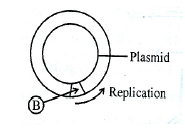
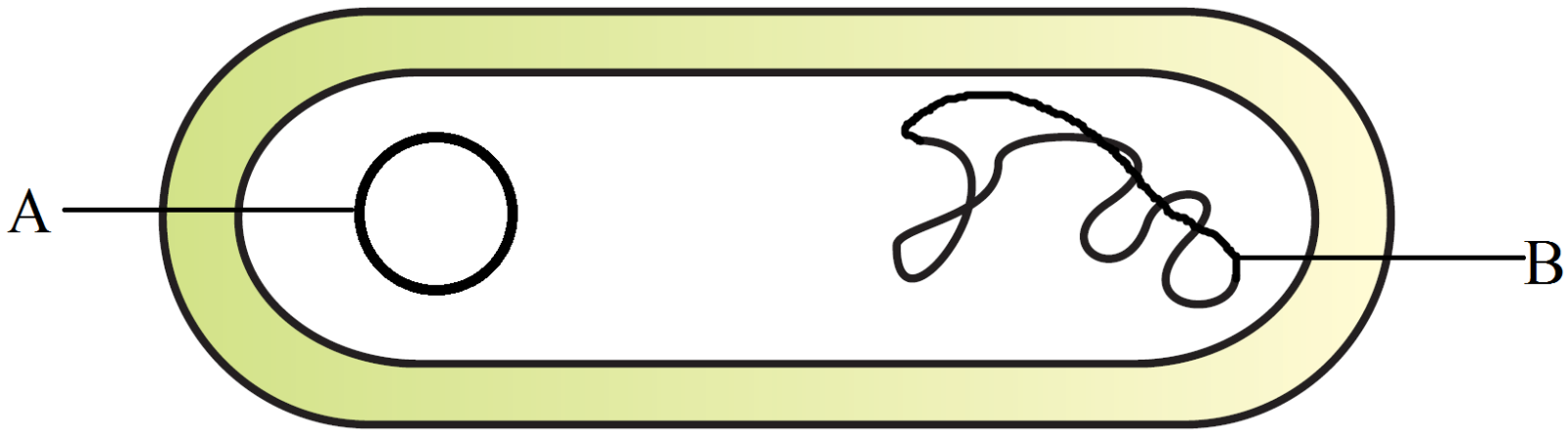
  1. A bacterial cell is shown in the figure given below. Label the part 'A' and 'B'. Also mention the use of part 'A' in rDNA technology.
  1. Suppose a linear DNA fragment and a plasmid has three restriction sites for EcoRI. How many fragments will be produced from linear DNA and plasmid, respectively.
Answer
  1. In the above bacterial cell, i.e. A is plasmid B is chromosomal DNA. Plasmid is used as a vector in rDNA technology.
  2. If the enzyme EcoRI acts on both linear DNA and plasmid DNA, each having three recognition sites, the restriction enzyme will generate 3 fragments from plasmid DNA (as it is circular) and 4 fragments from linear DNA.
View full question & answer
Question 783 Marks
  1. Mark the positive and negative terminals.
  2. What is the charge carried by DNA molecule and how does it help in its separation?
  3. How the separated DNA fragments are finally isolated?
Answer
  1. Positive terminal- ‘B’
Negative terminal- ‘A’
  1. DNA is negatively charged. Because of its negative charge, DNA moves towards the positive electrode (anode).
  2. The separated DNA fragments are separated by elution. The separated bands of DNA are cut out from the agarose gel and extracted from the gel piece.
View full question & answer
Question 793 Marks
Name the polymerase which is generally used in PCR? What is the source of this enzyme?
Answer
  • Taq polymerase.
  • It is isolated from Thermus aquaticus bacterium.
View full question & answer
Question 803 Marks
Why is it difficult for DNA to pass through cell membranes? How can E.coli cells be made competent and who developed this method?
Answer
DNA is a hydrophillic molecule so it is difficult to cross lipid molecules of membrane.
  • To make E. coli cells competent to take up DNA, they should be treated with divalent cations or calcium.
  • In 1970, Mandel and Higa found that E.coli cells become competent to take up DNA when they are suspended in cold calcium chloride.
View full question & answer
Question 813 Marks
How are bacteria made capable to take up recombinant DNA? Name the bacteria used for this process.
Answer
  • By treating bacteria with cold calcium chloride or lysozyme.
  • Escherichia coli, Bacillus subtilis.
View full question & answer
Question 823 Marks
Describe the naming of the restriction enzymes with an example.
Answer
Naming of restriction enzymes:
  • The first letter of the name comes from the genus of the bacterium.
  • The second and third letters come from the name of the species of the prokaryote cell from where it is isolated.
  • The next letter comes from the strain of the prokaryote.
  • The Roman Numbers following these four letters indicate the order in which the enzymes were isolated from that strain of the bacterium, e.g. EcoRI is isolated from E.coli, RY 13.
View full question & answer
Question 833 Marks
  1. Why was a bacterium used in the first instance of the construction of an artificial recombinant DNA molecule?
  2. Name the scientists who accomplished this and how?
View full question & answer
Question 843 Marks
  1. Why is Taq polymerase used instead of ordinary DNA polymerase in polymerase chain reaction (PCR)? Name the source organism of Taq polymerase.
  2. What is PCR used for?
Answer
  1.  
  • Taq polymerase is a thermostable enzyme that can withstand the high temperature used in the denaturation step, whereas ordinary DNA polymerase cannot withstand high temperature.
  • It is obtained from the bacterium, Thermus aquaticus.
  1. PCR is used for gene amplification, i.e., to make multiple copies of a gene or a DNA segment.
View full question & answer
Question 853 Marks
Explain the role of alkaline phosphatase in recombinant DNA technology. What is the source of this enzyme?
Answer
  • This enzyme is used to prevent unwanted self-ligation of vector DNA molecule.
  • Sources: from bacteria (BAP), from calf intestine (CAP)
View full question & answer
Question 863 Marks
  1. Explain how to find whether an E. coli bacterium has transformed or not, when a recombinant DNA bearing ampicillin-resistance gene is transferred into it.
  2. What does the ampicillin-resistant gene act as, in the above case?
Answer
  1. The recombinant/ transformaot can be selected out from the non-recombinants/ non-transformants by Plating the transformants on ampicilin-containing medium. The transformants will grow in it, while the non-transformants will not grow.
  2. It acts as a selectable marker.
View full question & answer
Question 873 Marks
  1. Why must bacterial cells be first made 'competent' in rDNA technology? How is the process carried out?
  2. Name the methods by which an alien DNA can be made to enter:
  1. A plant cell.
  2. An animal cell.
Answer
  1.  
  1. DNA is a hydrophilic molecule that cannot pass through cell membrane; so the bacterial cells must be made competent to take up the DNA.
  2. The bacterial cells are made competent by treating them with a specific concentration of a divalent cation, such as calcium; this increases the efficiency with which DNA enters the bacterium.
  1.  
  1. Biolistics/ Gene gun.
  2. Micro-injection.
View full question & answer
Question 883 Marks
Draw a schematic diagram of the E.coli vector PBR 322 and mark the following in it:
  1. Ori
  2. Rop
  3. Ampicillin-resistant gene
  4. Tetracycline-resistant gene
  5. Restriction site BamHI
  6. Restriction site EcoRI
View full question & answer
Question 893 Marks
Outline how restriction enzymes are used for removing sections of DNA from a chromosome.
Answer
Restriction Enzymes (Molecular scissors): These are enzymes which are used for cutting of DNA at specific locations during DNA technology. These enzymes belong to a larger class of nucleases, which are of two types
  1. Exonucleases: remove nucleotides from the ends of the DNA (either 5' or 3’) in one strand of duplex.
  2. Endonucleases: make cuts at specific position within DNA. The first restriction endonuclease named Hind II was isolated by Smith Wilcox and Kelley in 1968.
It was found that it always cuts DNA molecule at a particular point recognising a specific sequence of the six base pairs known as the recognition sequence for Hind II.
More than 900 restriction enzymes are known today that have been isolated from over 230 bacterial strains and each of which recognises different recognition sequences. Restriction endonucleases are not present in eukaryotic cells.
View full question & answer
Question 903 Marks
What is a bioreactor used for? Name a commonly used bioreactor and any two of its components.
Answer
  1. A bioreactor is used for obtaining a desired gene product in large quantities by processing large volumes of cultures of microbial, plant or animal cells.
  2. The stirring type of bioreactors (Simple stirred-tank bioreactor or sparged stirred-tank bioreactor) are commonly used.
  3. The components of simple stirred-tank bioreactor include:
  • A stirrer.
  • Flat-bladed impeller.
  • An oxygen delivery system.
  • A foam control system.
  • pH control system.
  • Sampling port.
View full question & answer
Question 913 Marks
  1. Draw schematic diagrams of segments of a vector and a foreign DNA with the sequence of nucleotides recognised by EcoRI.
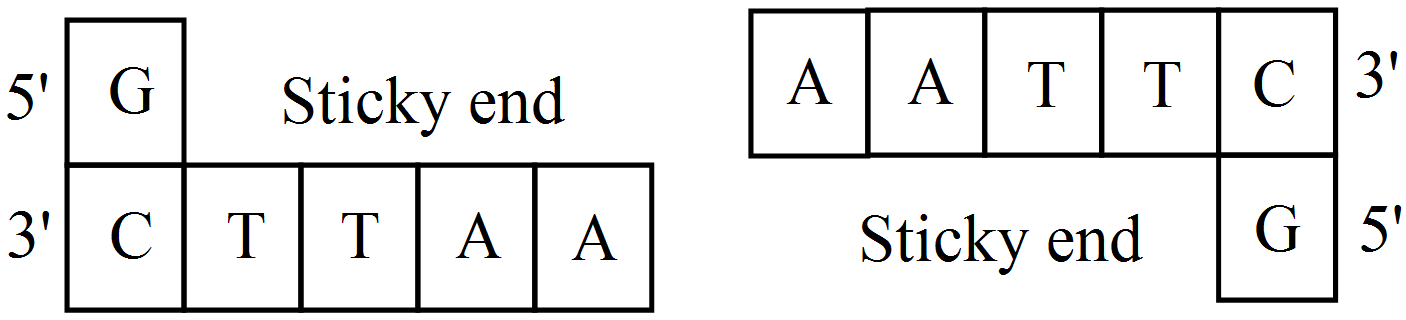
  2. Draw the vector DNA segment and foreign DNA segment after the action of EcoRI and label the sticky ends produced.
Answer
  1. Palindromic sequence and the site where EcoRI cuts it (indicated by the arrows).
  1. Sticky ends
View full question & answer
Question 923 Marks
Rajesh was doing gel electrophoresis to purify DNA fragments. Given below is the sketch of the observations of the experiment performed by him.
  1. At which end he would have loaded the samples and where?
  2. Analyse the reason for different positions taken up by the DNA bands.
  3. Elaborate the step he would have followed to visualise DNA bands.
Answer
  1. He would have loaded the samples near end A; in the wells.
  2. The DNA fragments separate (resolve) according to their size through sieving effect provided by the agarose gel. Hence, the smaller the fragment size, the farther it moves.
  3. After staining the DNA with ethidium bromide followed by exposure to UV radiations the DNA bands appear coloured.
View full question & answer
Question 933 Marks
Rahul introduced Ronit to his uncle and told him that Ronit is pursuing a course in biotechnology in America.
His uncle had never heard of this term earlier and was curious to know about this term. Ronit pointed towards a big tree at the base of which were present numerous tumour-like structures and said that this is the example of natural biotechnology:
  1. What is biotechnology?
  2. How these crown gall tumours are formed?
  3. What are the values shown by Rahul's uncle?
Answer
  1. Biotechnology deals with the techniques of using live organisms or enzymes from organisms to produce products and processes useful to human.
  2. These are formed by integration of a segment of DNA of the bacterium Agrobacterium tumifaciens into the host DNA.
  3. Rahul's uncle has a positive desire to know about latest discoveries and developments in the field of science.
View full question & answer
Question 943 Marks
A schematic representation of Polymerase Chain Reaction (PCR) up to the extension stage is given below. Give answers of the following questions.
  1. Name the process A.
  2. Identify B.
  3. Identify C and mention its importance in PCR.
Answer
  1. A - Denaturation process
  2. B - Primers
  3. C - Taq DNA polymerase. Tag polymerase is a thermostable enzyme, which remains active during the high temperature and induces denaturation of DNA,
View full question & answer
Question 953 Marks
Draw a schematic sketch of pBR322 plasmid and label the following in it:
  1. Any two restriction sites.
  2. ori and rop genes.
  3. An antibiotic resistant gene.
Answer
The labelled diagram of pBR322 Plasmid is shown in the figure with:
  1. EcoRl and BamHI as restriction enzymes.
  2. ori and rop genes.
  3. $amp^R$ (an antibiotic resistant gene).
View full question & answer
Question 963 Marks
Mention the role of (i) selectable marker, (ii) Ori and (iii) rop in E.coli cloning vector, pBR 322.
Answer
  1. Selectable marker in the cloning vector helps to identify and eliminate the non-recombinants and to selectively permit the growth of recombinants.
  2. Ori (origin of replication) is a sequence of DNA from where replication starts; any piece of alien DNA ligated to this can be made to replicate within the host cut and it determines the copy number too.
  3. Rop codes for the proteins involved in the replication of the plasmid.
View full question & answer
Question 973 Marks
What does 'Hind' and 'III' refer to in the enzyme Hind III?
Answer
The first letter ‘H’ indicates the genus of the organism, from which the enzyme was isolated, i.e. H-genus, Haemophilus. The roman number (III) denotes the sequence in which the restriction endonuclease from that particular genus, species and strain of bacteria have been isolated, i.e. third restriction endonuclease to be isolated from this species.
View full question & answer
Question 983 Marks
Name and explain the technique that helps in separation of DNA fragments for recombinant DNA technology experiments. How can these separated DNA fragments be visualised?
OR
  1. Name the technique used for the separation of DNA fragments.
  2. Write the type of matrix used in this technique.
  3. How is the separated DNA visualised and extracted for use in recombinant DNA technology?
Answer
  • The DNA fragments are separated by electrophoresis using agarose as the matrix.
  • Since, DNA fragments are negatively charged, they move towards the anode under the electric field through the medium and separate/ resolve according to their size due to the sieving effect of agarose gel.
  • The separated fragments can be viewed by staining the DNA with ethidium bromide followed by exposure to UV radiation.
  • Elution is the process in which the separated bands of DNA are cut out from the gel and extracted.
View full question & answer
Question 993 Marks
Mention three uses of PCR.
Answer
Three uses of PCR are:
  1. It is used to during IDNA for production of newer and desired DNA.
  2. It is used for DNA sequencing.
  3. It is used in DNA fingerprinting.
View full question & answer
Question 1003 Marks
A recombinant DNA molecule was created by ligating a gene to a plasmid vector. By mistake, an exonuclease was added to the tube containing the recombinant DNA. How does this affect the next step in the experiment i.e. bacterial transformation?
Answer
When a DNA molecule is created by ligated a gene to a plasmid vector; it becomes a circular DNA which is ready to replicate in host organism. After this stage, addition of exonuclease is not going to affect the process because the DNA does not have a free end and hence enzyme exonuclease will not get a substrate to show its action. So, in this experiment; bacterial transformation is not going to be disturbed.
View full question & answer
Question 1013 Marks
Mention the role of the following in E.coli cloning vector pBR 322.
  1. Selectable marker.
  2. ori.
  3. rop.
Answer
  1. It helps in identifying or selecting transformants and eliminating non-transformants by Selectively permitting the growth of the trarsformants.
  2. This is a sequence from where replication starts and any piece of DNA, when linked to this sequence can be made to replicate within the host cells. This sequence is also responsible for controlling the copy number of the linked DNA.
  3. Rop codes for the protein involved in the replication of the plasmid.
View full question & answer
Question 1023 Marks
Why is a recombinant protein so called? How can it be harvested on a large scale? Write two precautions to maintain a higher yield.
Answer
  1. The protein coded by a recombinant gene in the transgenic or genetically modified organism, is called a recombinant protein.
  2. This can be harvested on a large scale by culturing the transgenic cells in large volumes in bioreactors.
  3. The precautions include:
  • The optimum temperature must be maintained.
  • There should be foam control.
  • Suitable pH must be provided.
View full question & answer
Question 1033 Marks
The following illustrates the linking of DNA fragments A DNA fragments:
  1. Write the name of A and B.
  2. Complete the palindrome, which is recognized by EcoRI.
  3. Write the name of the enzyme that can link the two DNA fragments.
Answer
  1. A- Vector DNA,/ Plasmid DNA; B- Foreign DNA.
  2. 5'- GAATTC - 3'; 3'-CTTAAG - 5'
  3. DNA ligase.
View full question & answer
Question 1043 Marks
Draw a labelled sketch of sparged-stirred tank bioreactor. Write its application.
Answer

Application: These bioreactors are used to produce large quantities of products enzymes, etc., using microbial, plant, animal or human cells.
View full question & answer
Question 1053 Marks
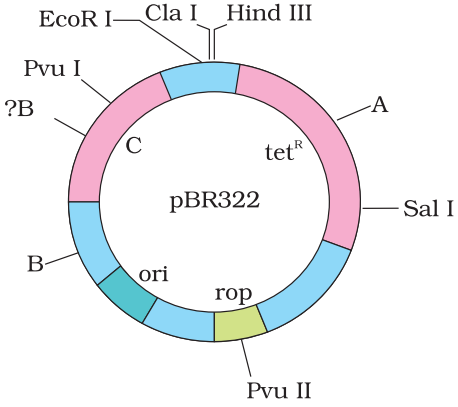
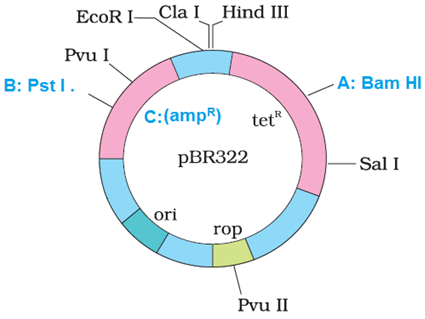
Name the regions marked A, B and C.
Answer
(A) Bam HI, (B) Pst I, (C) Ampicillin resistance gene $(amp^R).$
View full question & answer
Question 1063 Marks
What are selectable markers? Give examples.
Answer
Selectable markers are the genes which help in identifying and eliminating non transformants and will permit the growth of transformants only. Examples: Gene coding for resistance to ampicillin $(amp^R),$ gene coding for resistance to tetracycline $\left(tet^R\right)$ antibiotic.
View full question & answer
Question 1073 Marks
Draw a diagram of a typical agarose gel electrophoresis, showing migration of undigested and digested sets of DNA fragments. Label:
  1. The digested and undigested DNA fragments.
  2. Anode and cathode ends of the plate Mention the role of electrophoresis in biotechnology.
View full question & answer
Question 1083 Marks
Explain the basis on which the gel electrophoresis technique works. Write any two ways the products obtained through this technique can be utilised.
Answer
  • In gel electrophoresis, the molecules resolve according to their molecular size by the sieving effect provided by the gel.
  • DNA being negatively charged, moves towards the anode in the electric field.
  • Use of DNA isolated:
  1. The DNA fragments may be used to construct recombinant DNA by joining them with cloning vectors.
  2. The desired DNA fragments may be amplified, i.e. making multiple copies, by polymerase chain reaction (PCR).
View full question & answer
Question 1093 Marks
Explain the mode of action of ECORI.
Answer
  • The restriction enzyme, ECORI recognises the palindromic sequence, shown below:
  • It cuts the DNA strands a little away from the centre of the palindrome site, but between the same two bases on both the strands (indicated by the arrows)
  • This leaves single-stranded stretches, called sticky ends, overhanging at the end of the strands.
  • DNA ligase can catalyse hydrogen bond formation between the cut complementary parts of the vector DNA and foreign DNA.
View full question & answer