Question 15 Marks
Explain the Law of Dominance using a monohybrid cross.
Answer
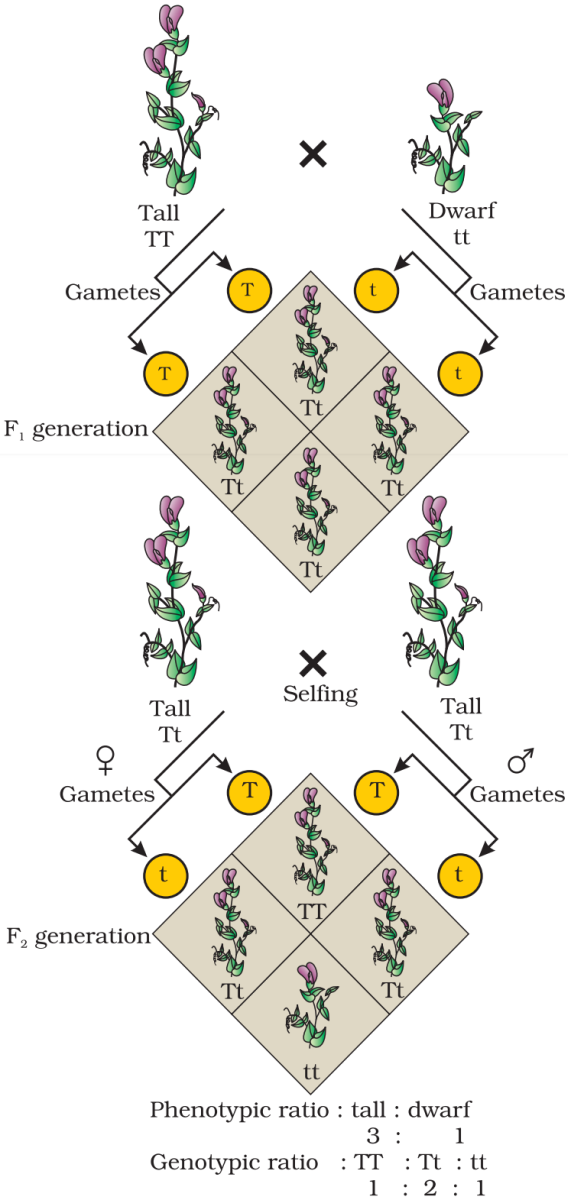
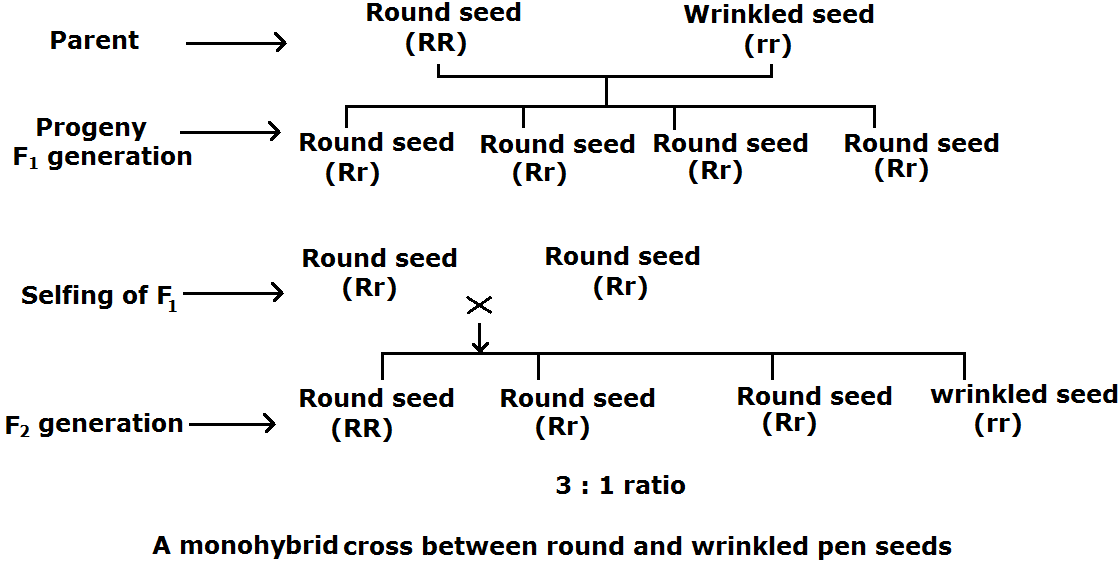
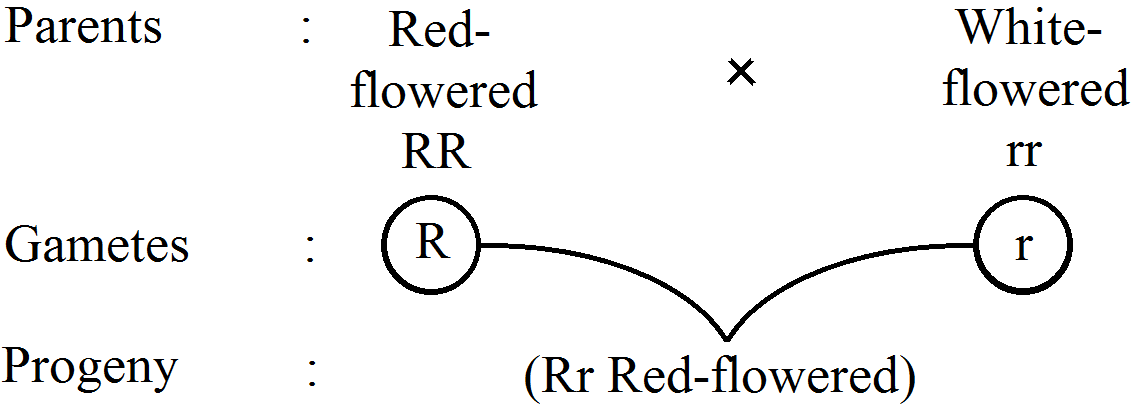
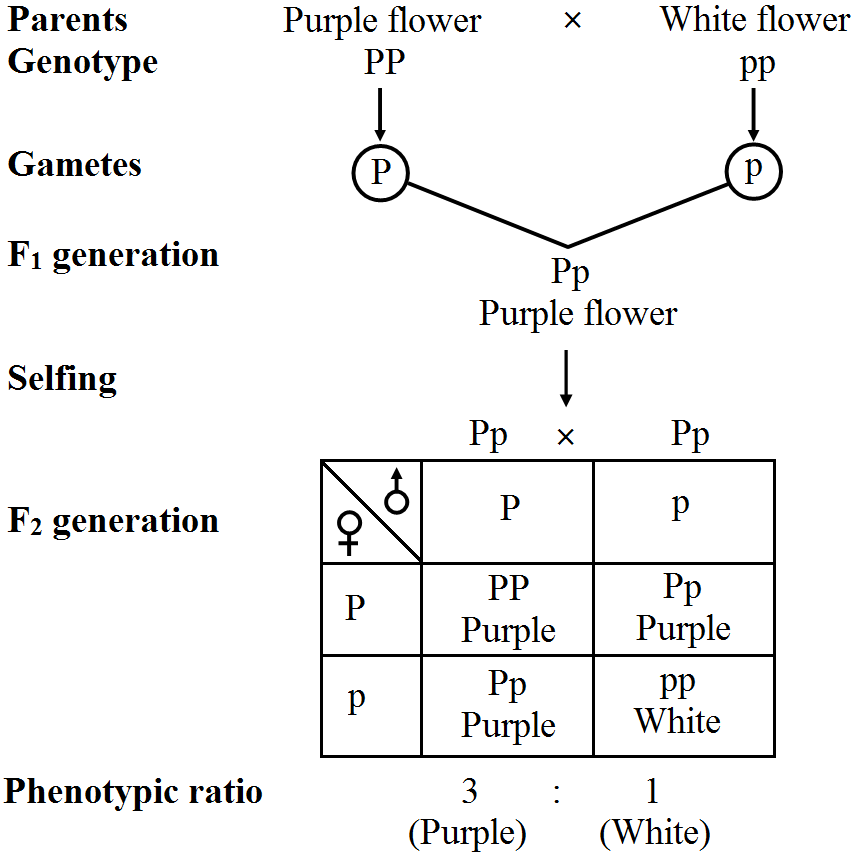
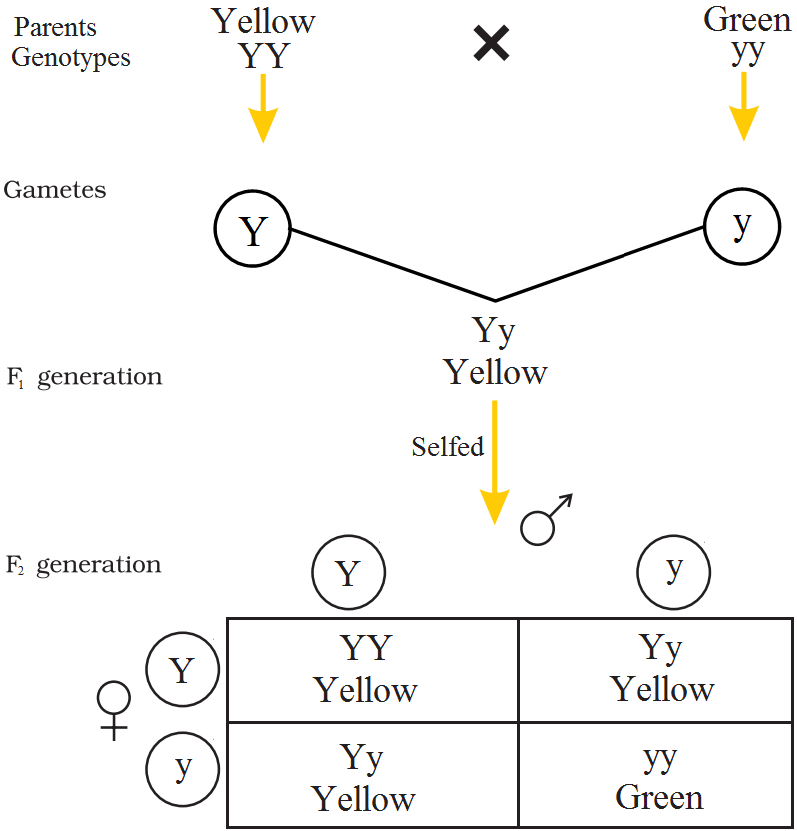
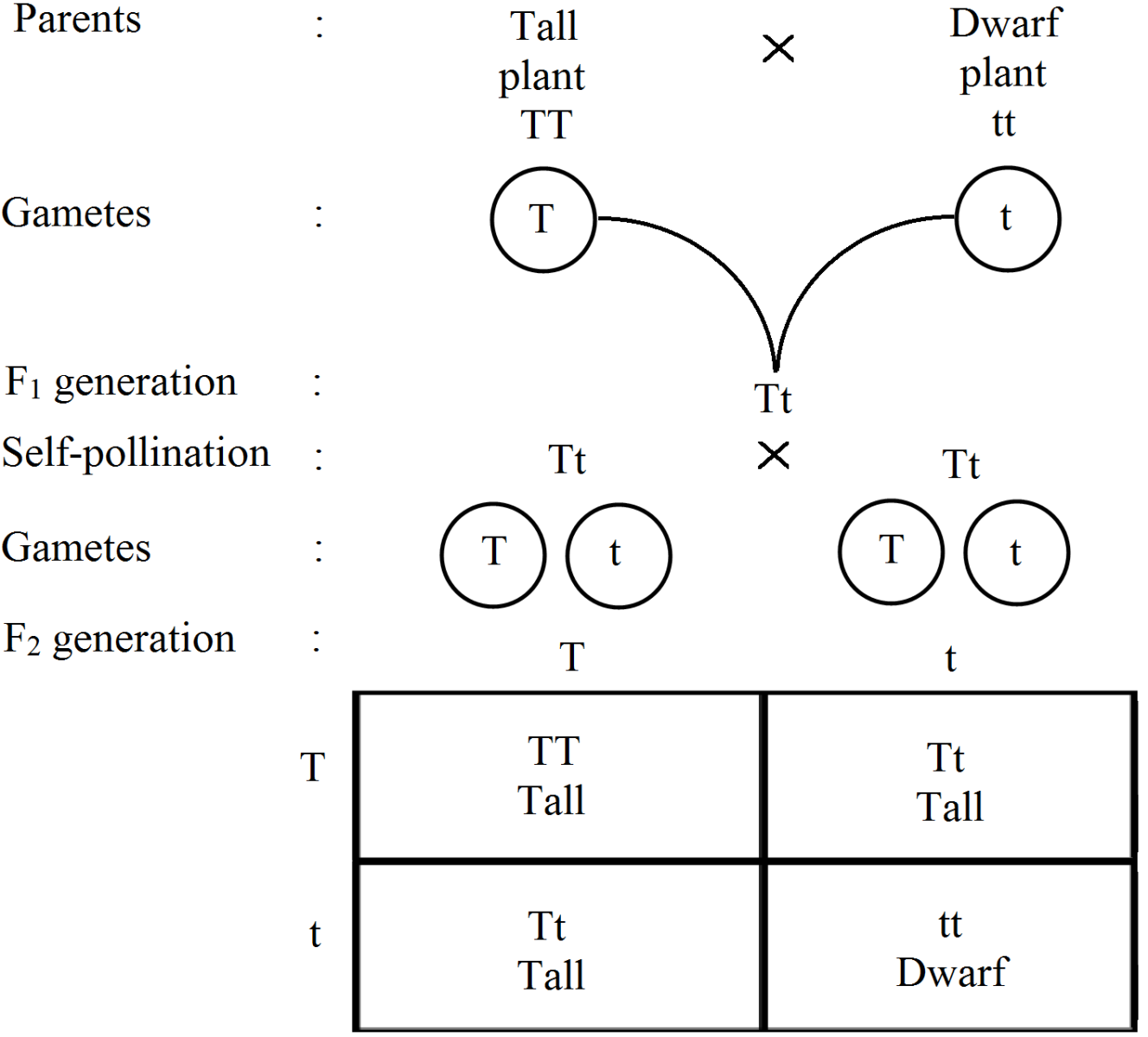
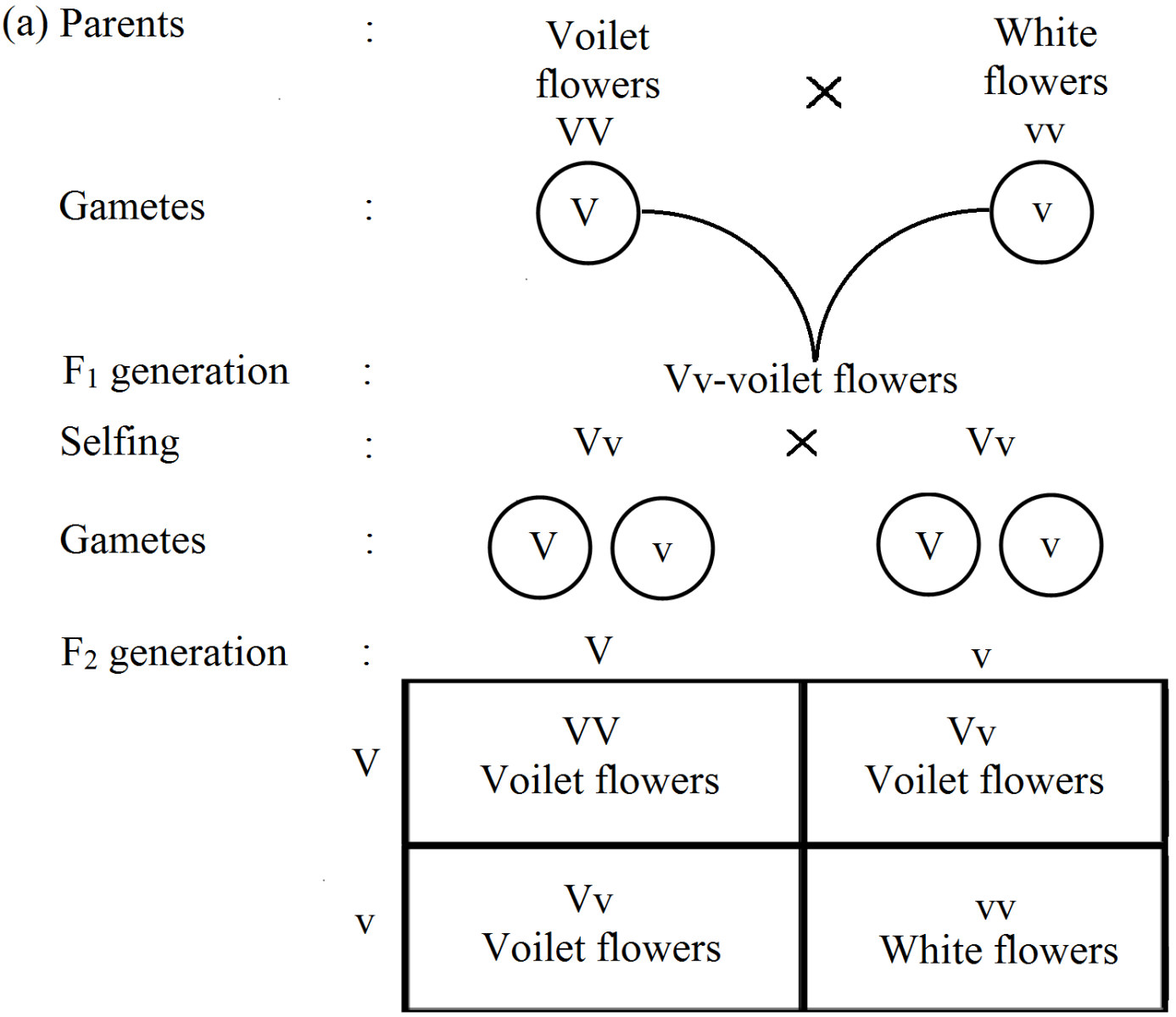
View full question & answer→Mendel's law of dominance states that a dominant allele expresses itself in a monohybrid cross and suppresses the expression of recessive allele. However, this recessive allele for a character is not lost and remains hidden or masked in the progenies of $F_1$ generation and reappears in the next generation. For example, when pea plants with round seeds (RR) are crossed with plants with wrinkled seeds ( rr ), all seeds in $\mathrm{F}_1$ generation were found to be round (Rr). When these round seeds were self-fertilized, both the round and wrinkled seeds appeared in $F_2$ generation in $3: 1$ ratio. Hence, in $\mathrm{F}_1$ generation, the dominant character (round seeds) appeared and the recessive character (wrinkled seeds) got suppressed, which reappeared in $F_2$ generation.
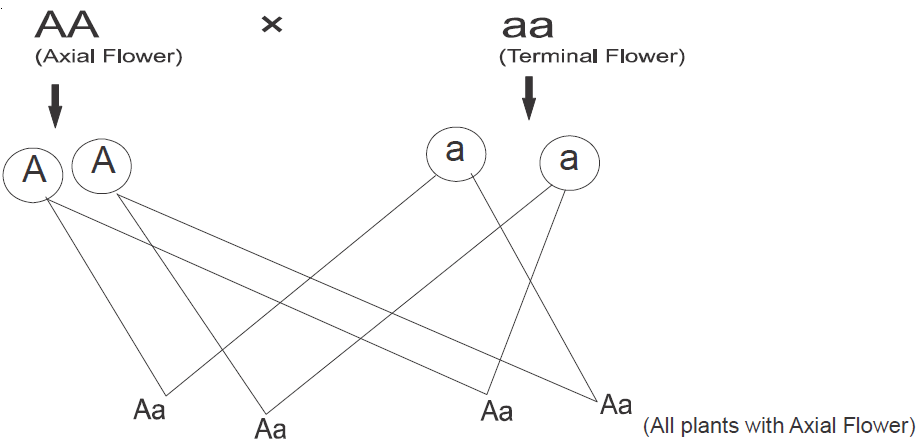
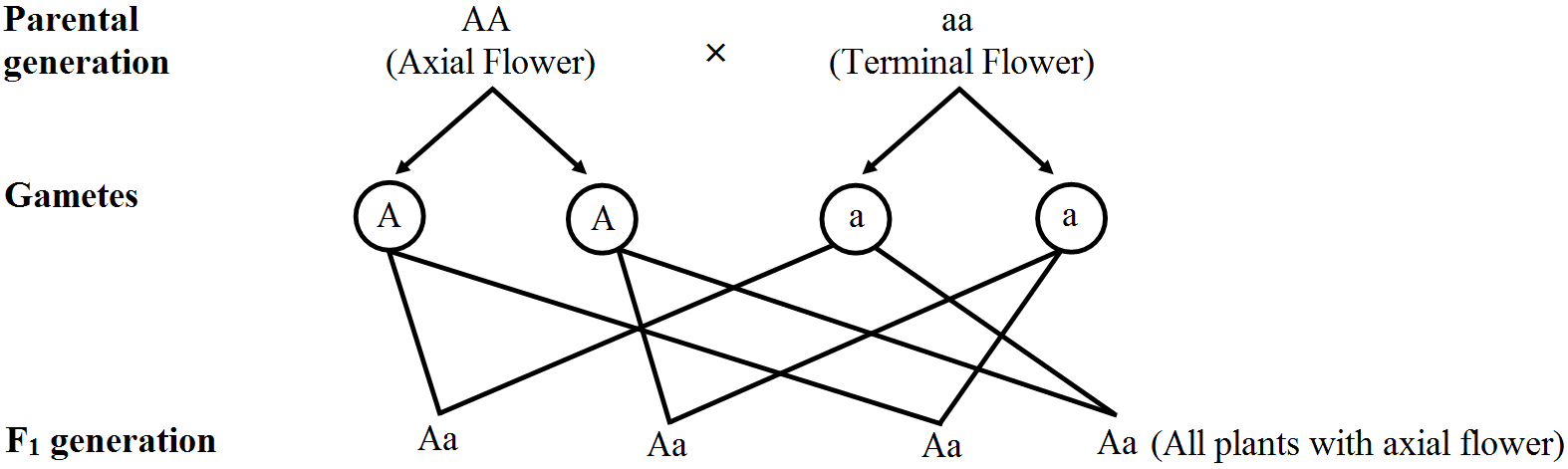
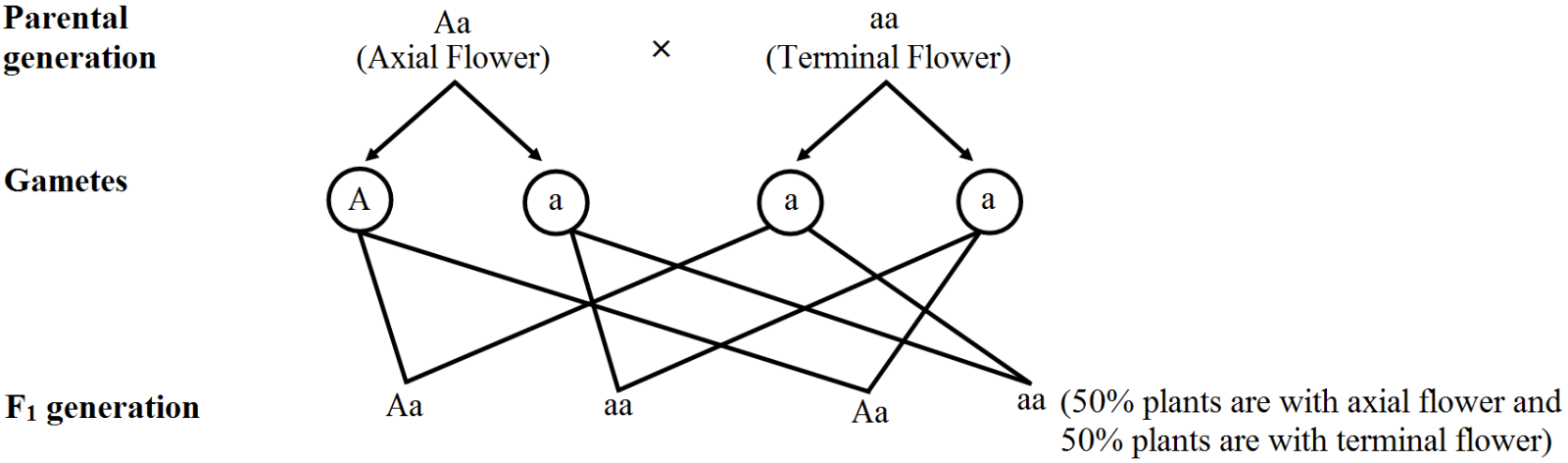
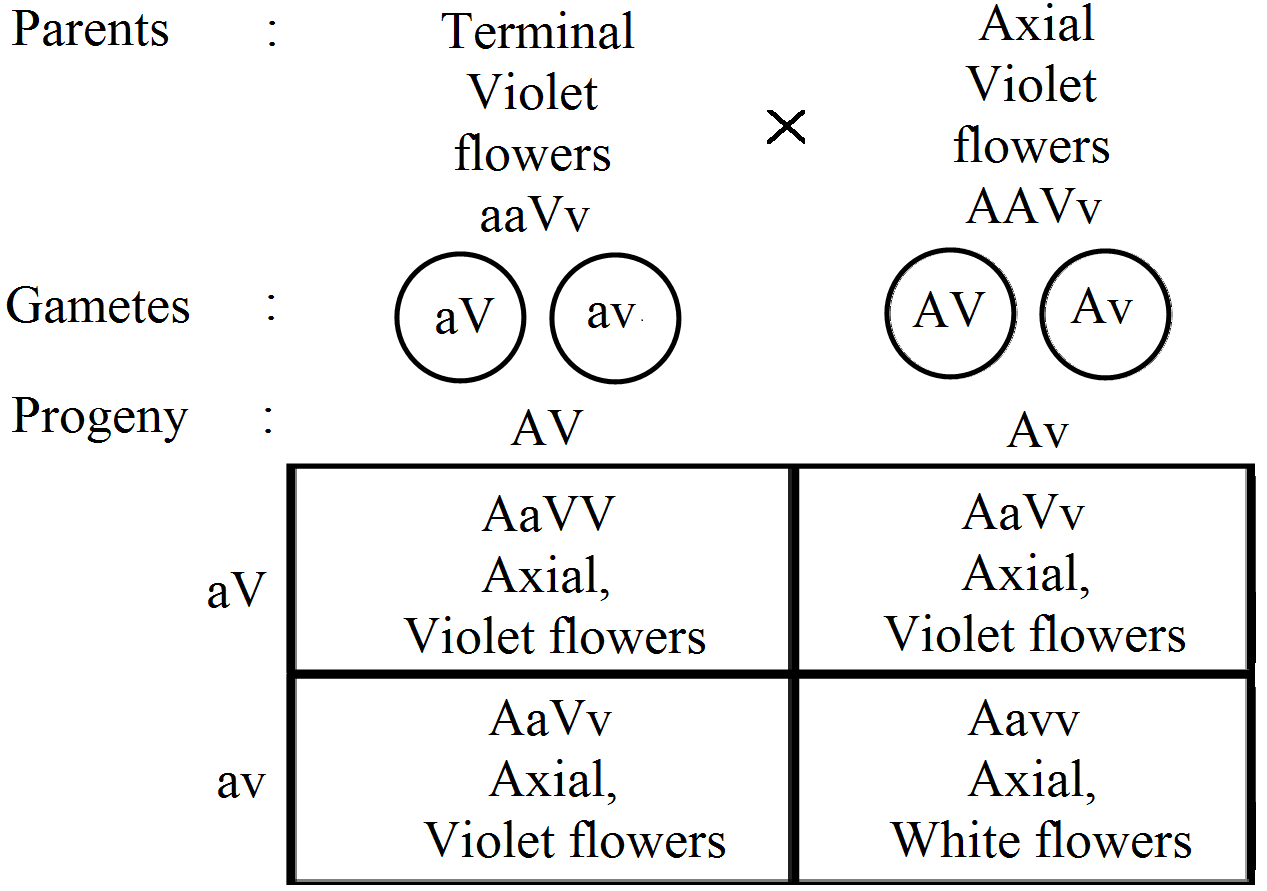
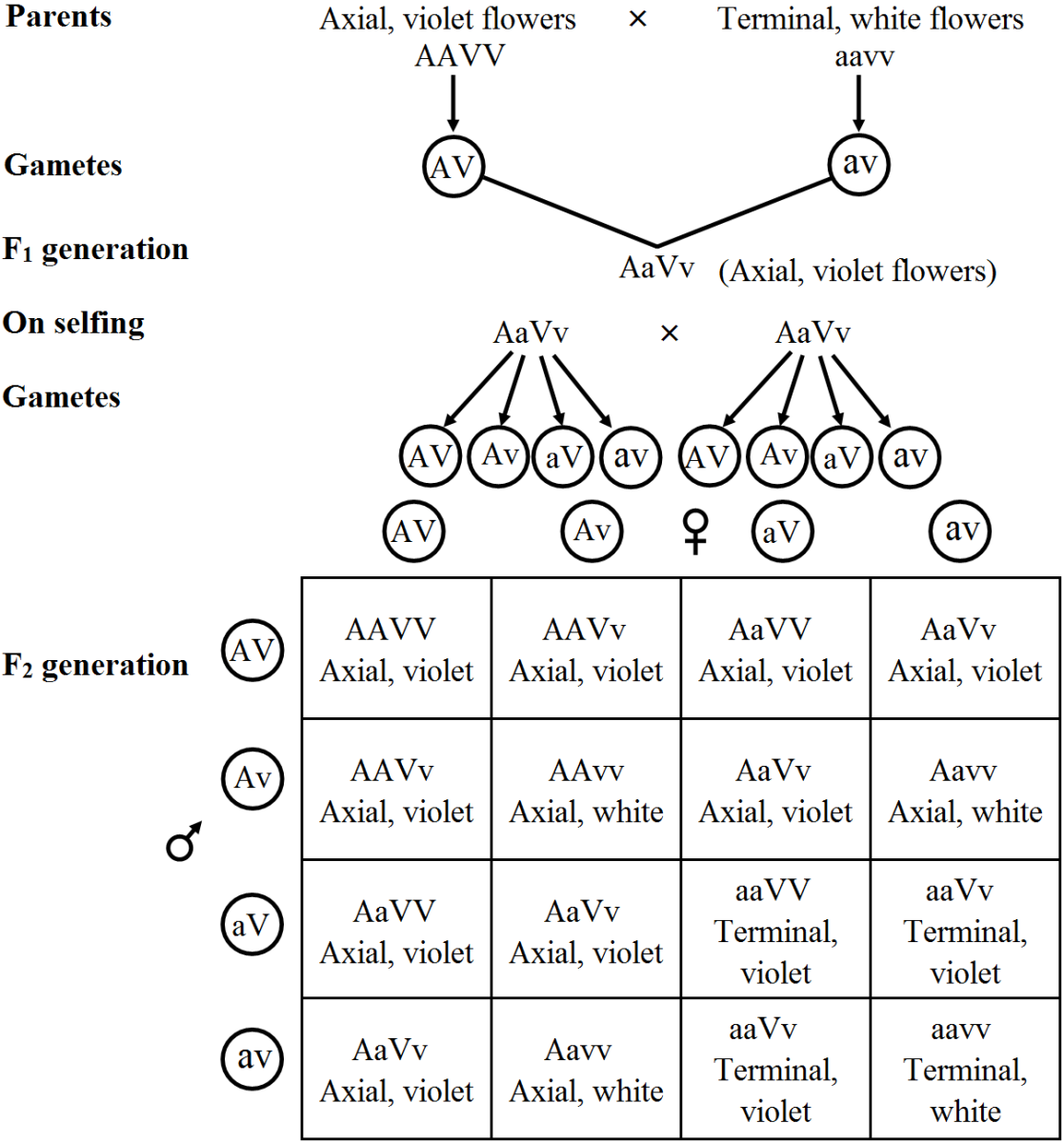
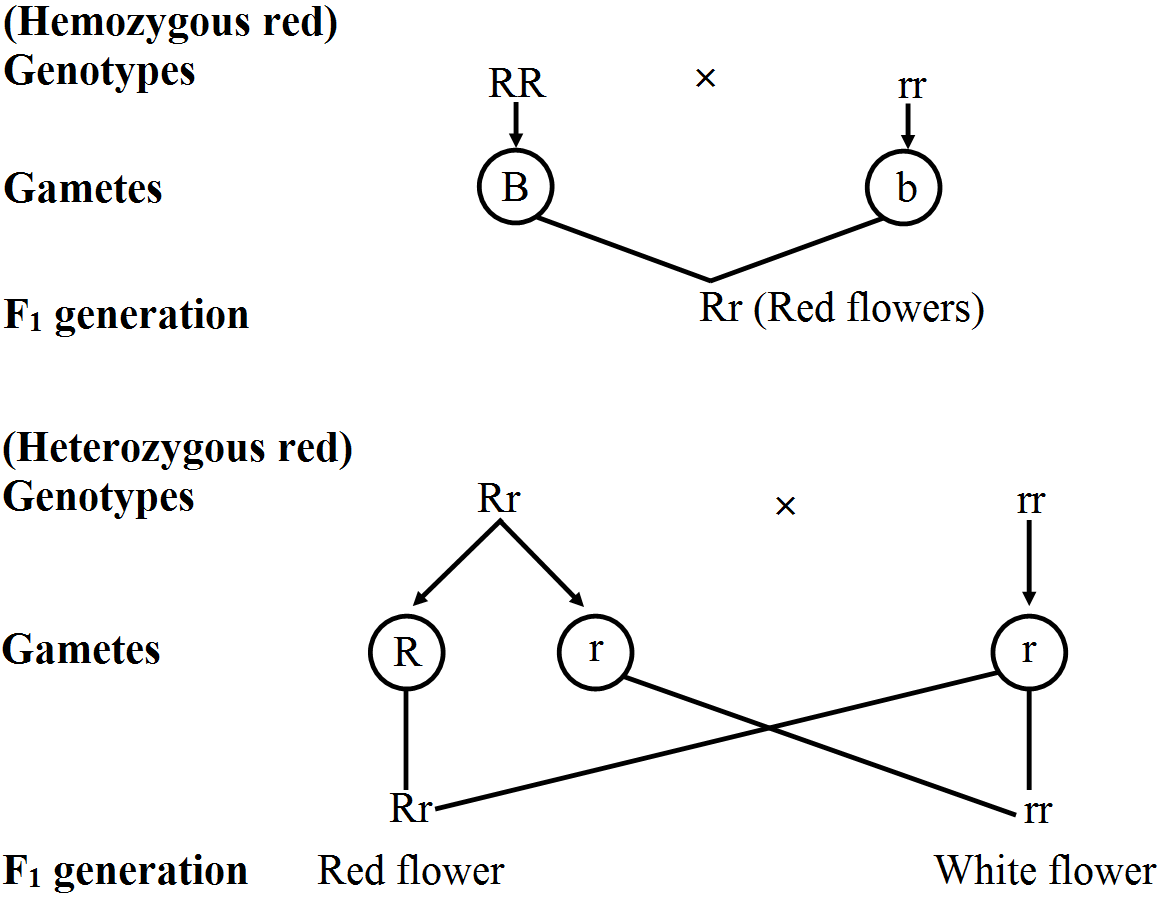
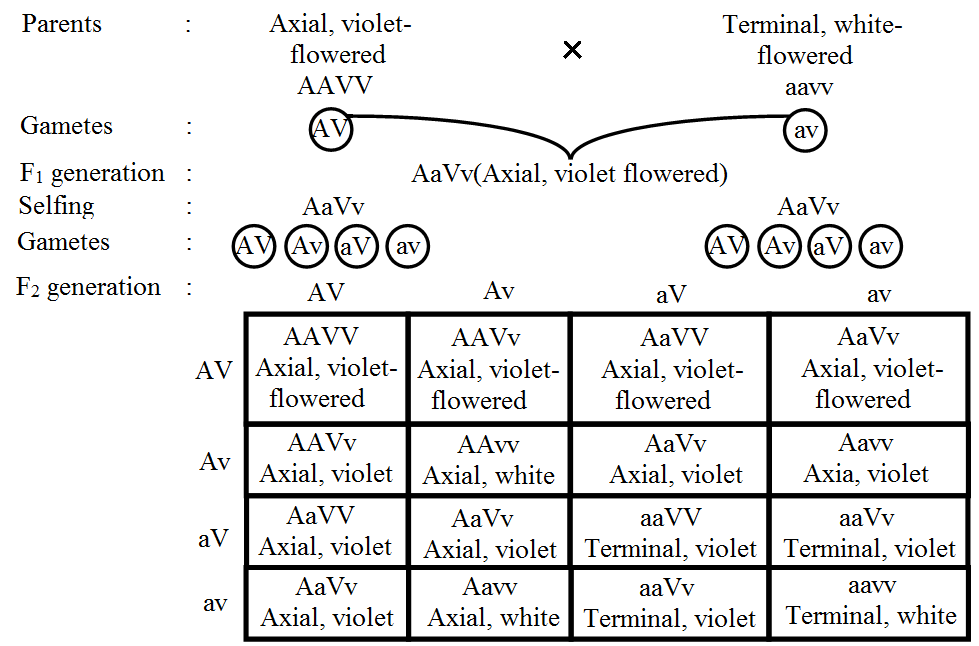
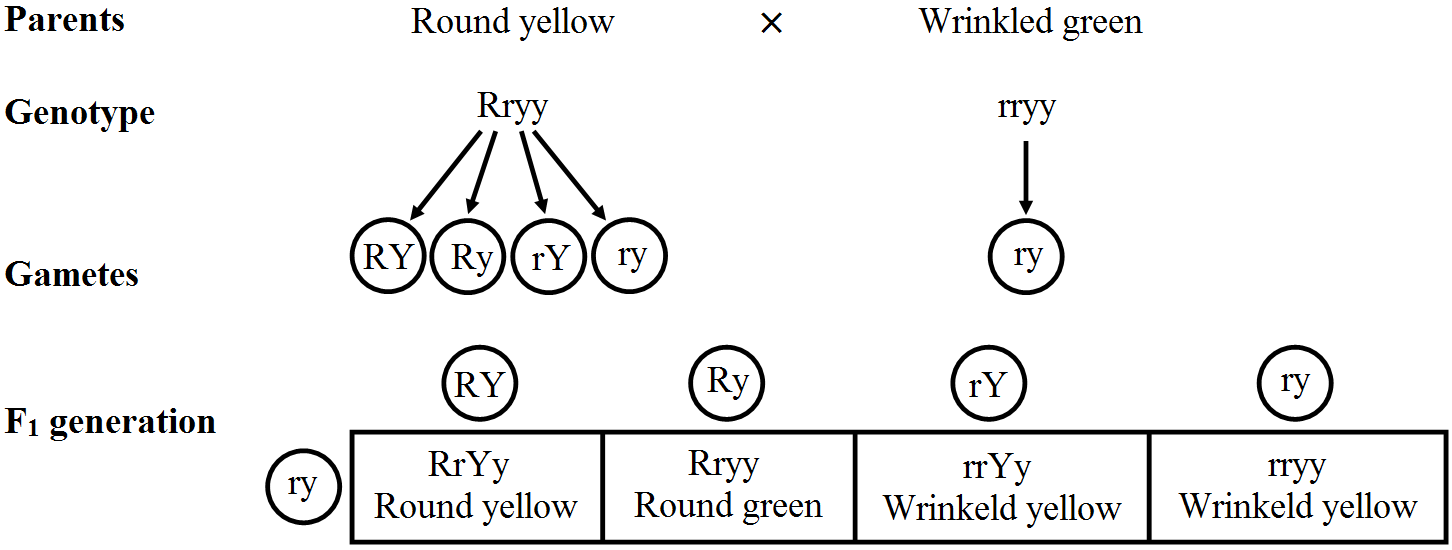
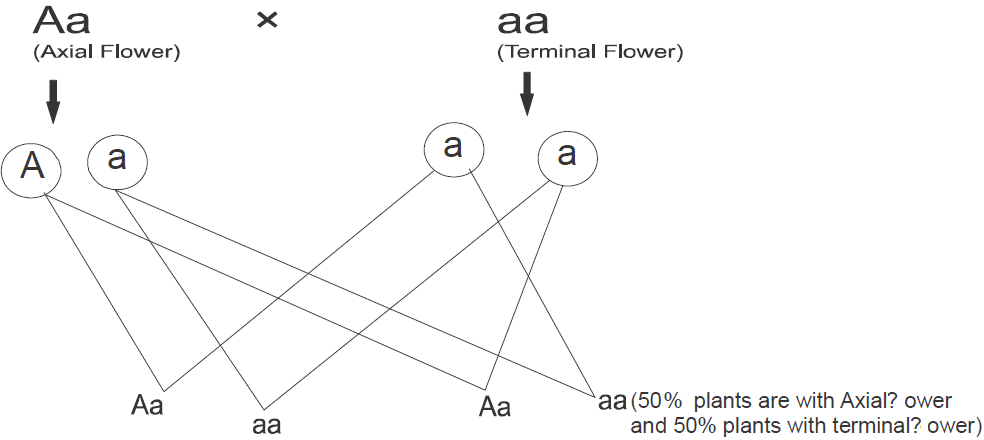 Conclusion: If all progeny show axial flowers ( dominant) the plant is homozygous (AA) , If 50% of Progeny show Axial flower (Dominant) and 50% Terminal flower ( Recessive) the plant is heterozygous.
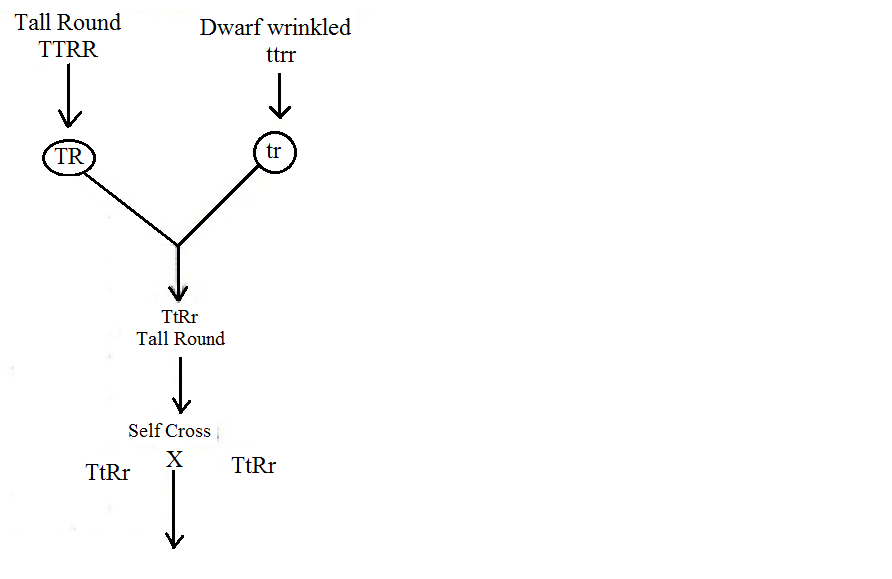
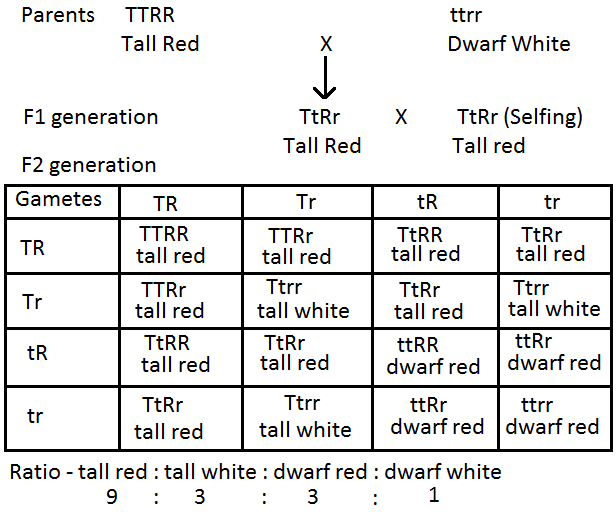
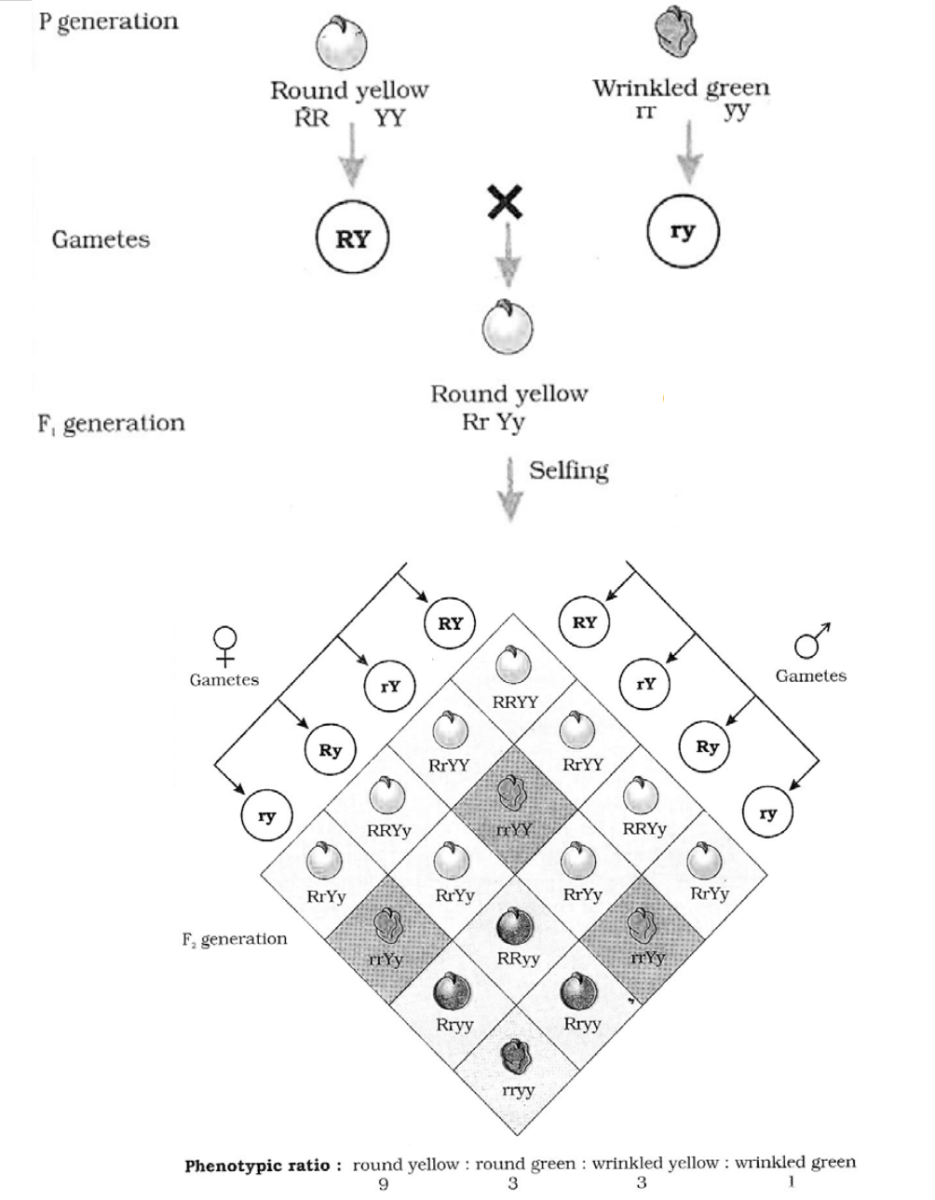 Law of Independent Assortment- It states that when two pairs of traits are combgined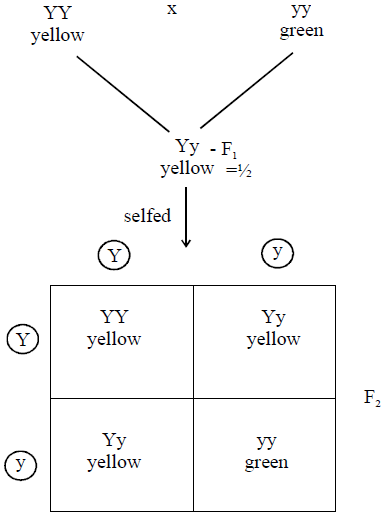


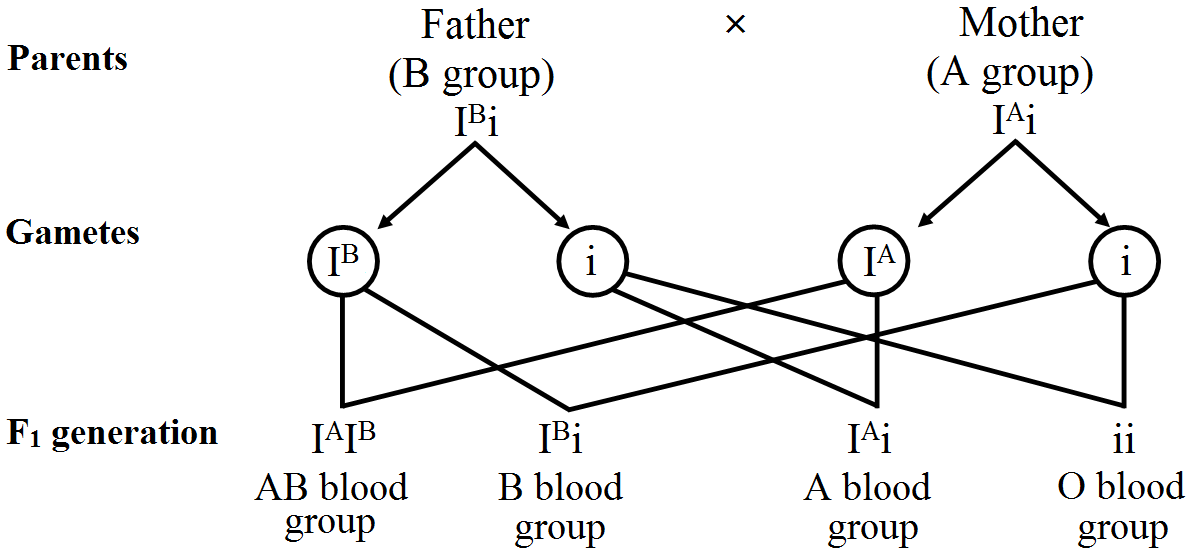
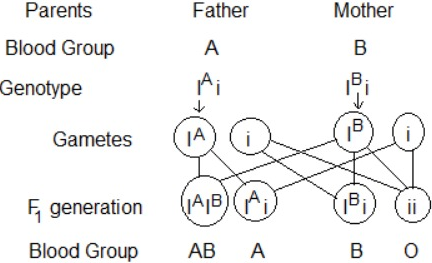
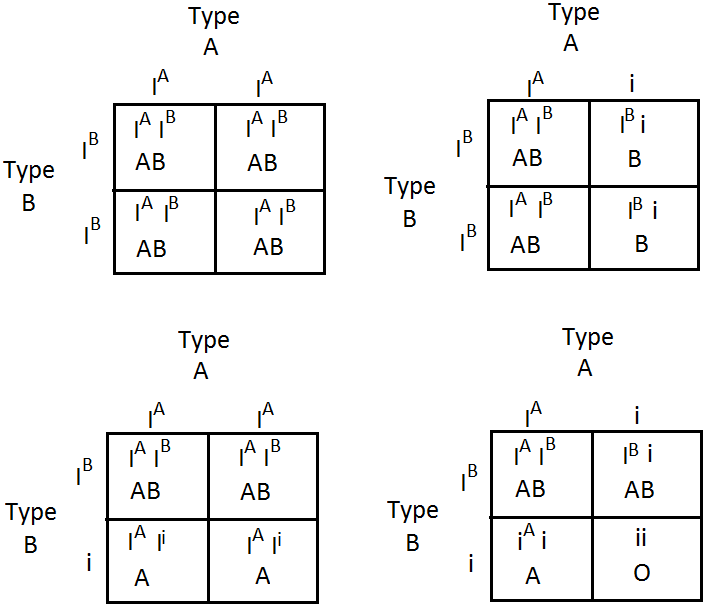
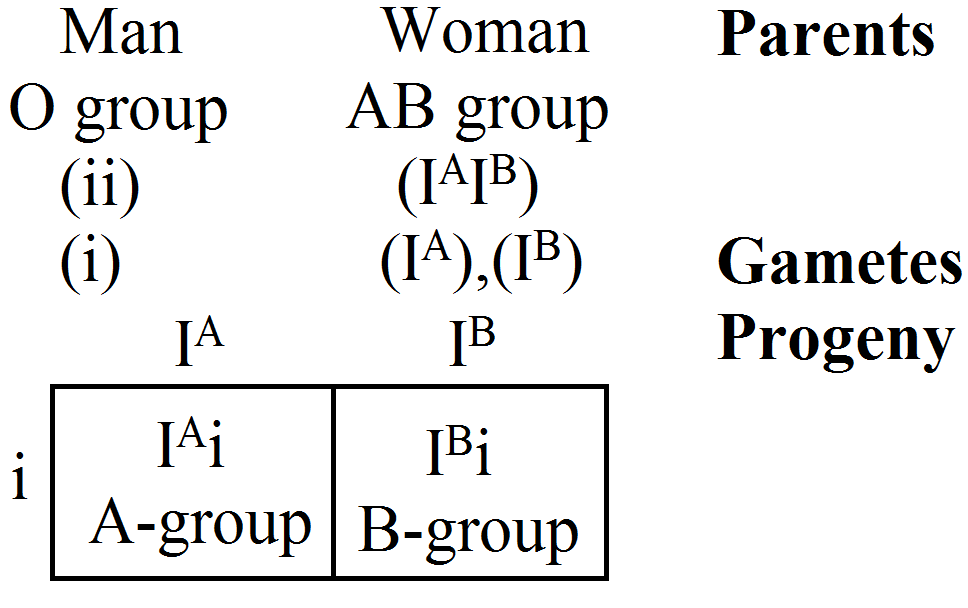
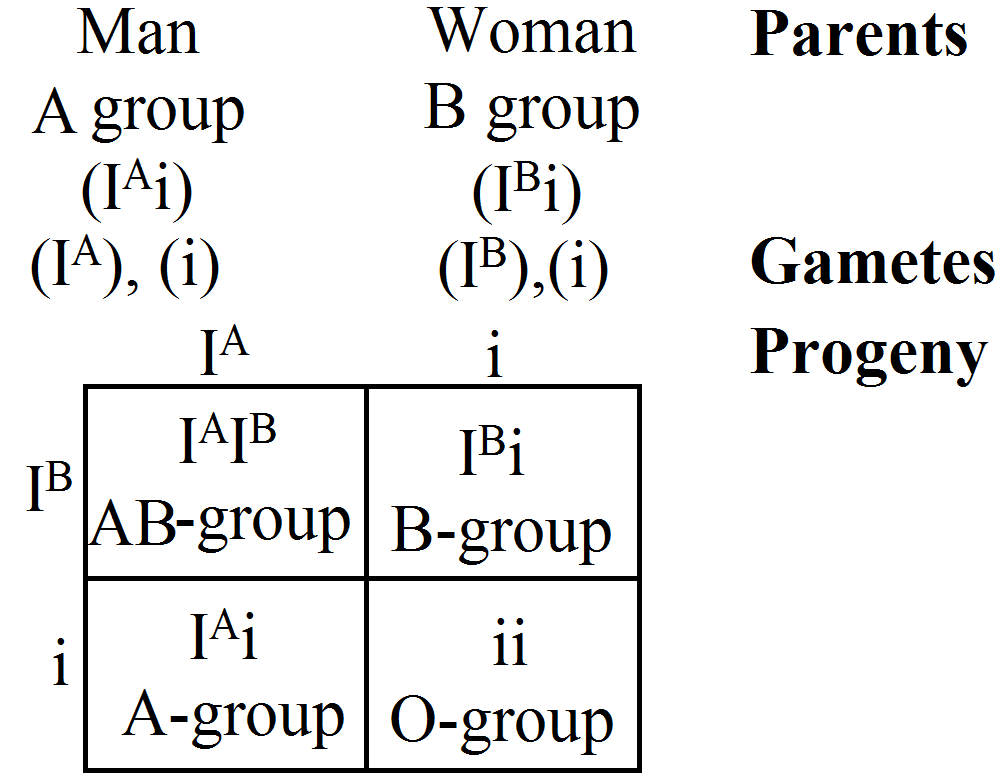
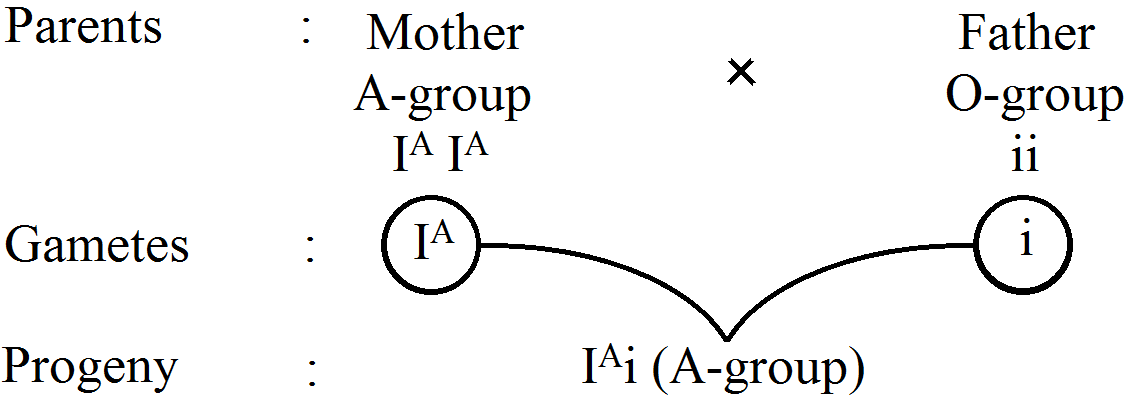
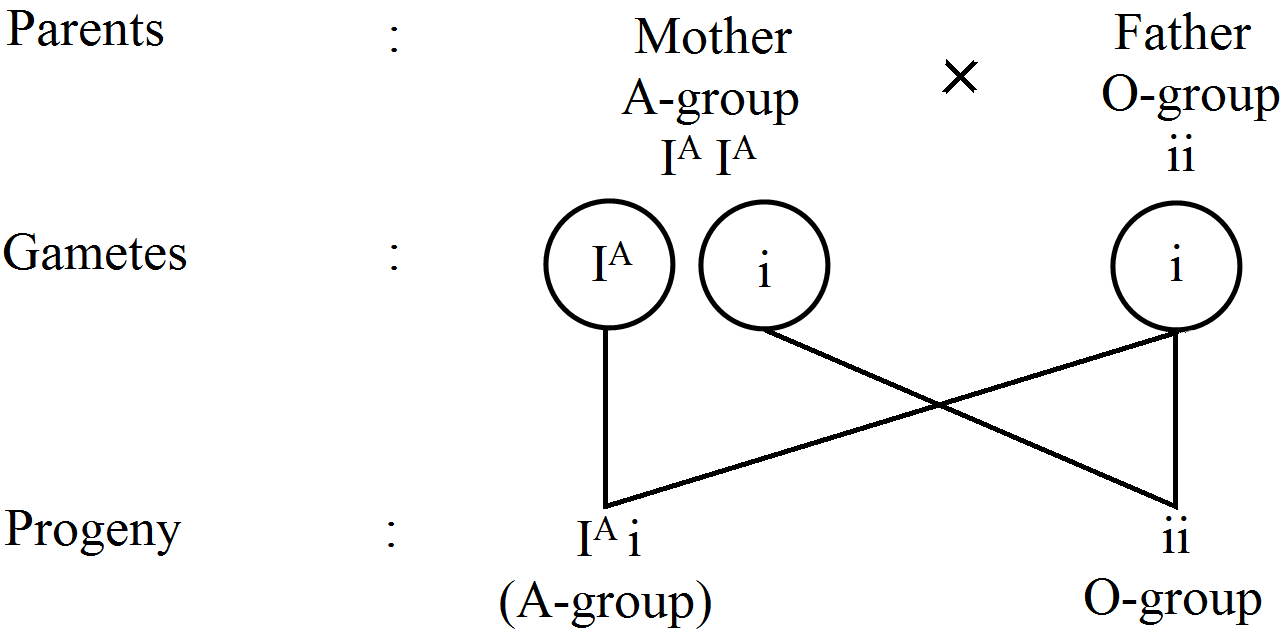
 Law of dominance is the pattern of inheritance as $I^A/ I^B$ dominant over i.
 It is the case of Co-dominance.
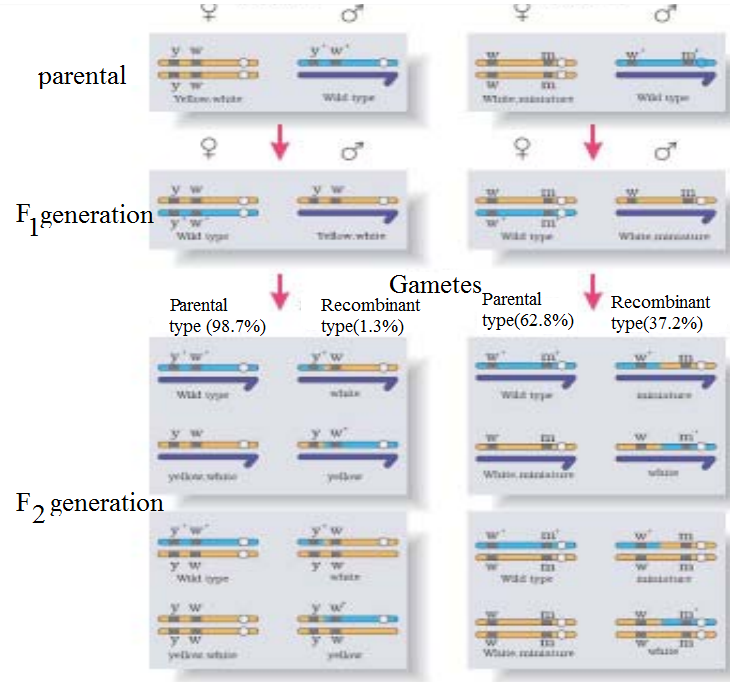
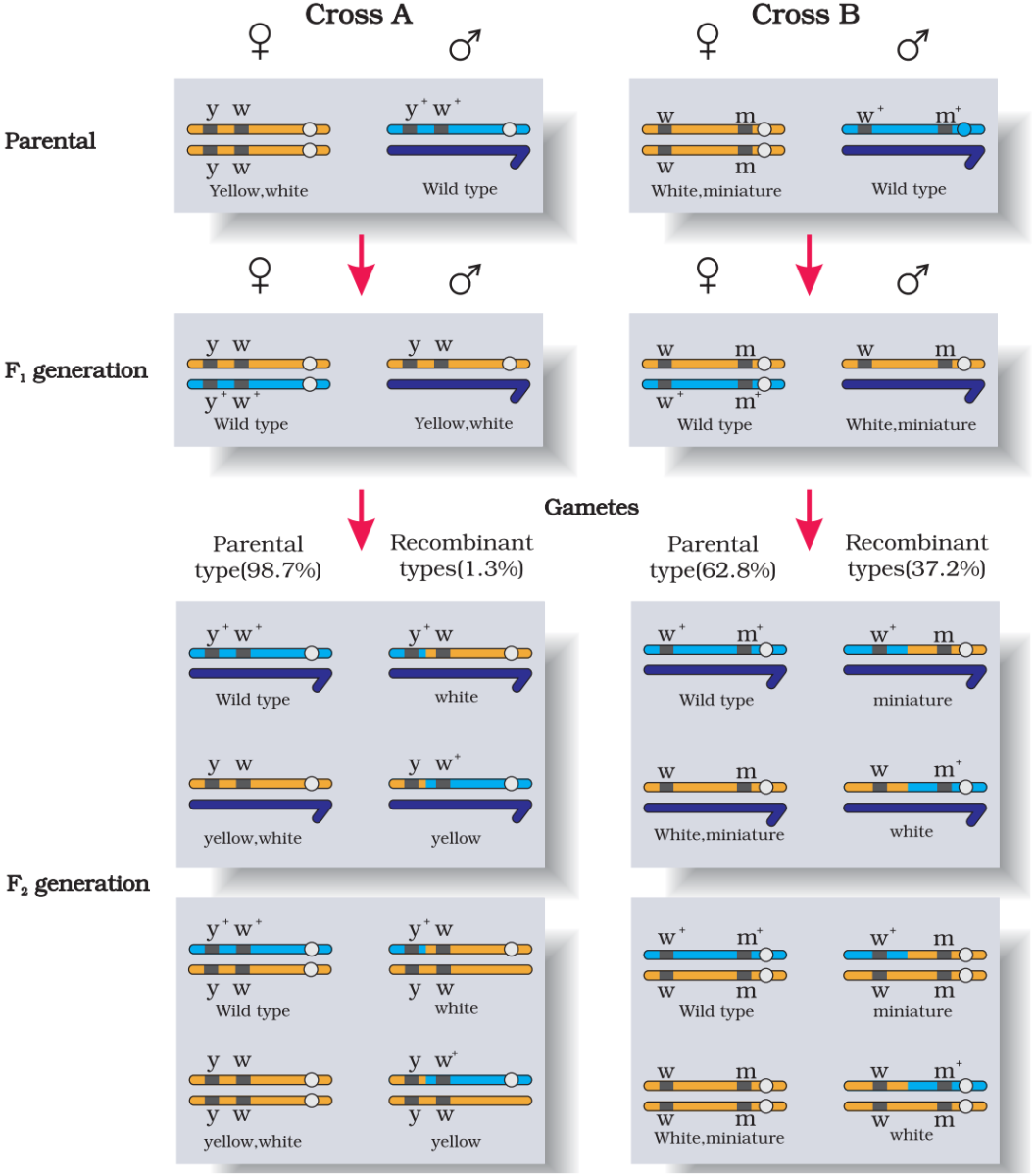
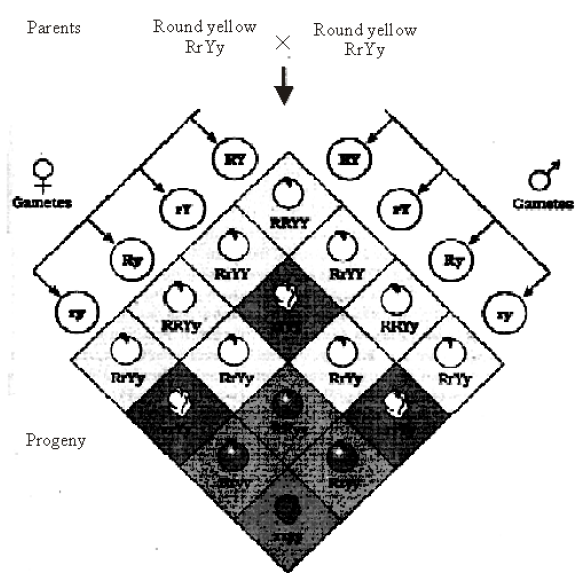 Both parental type and recombinant types are observed to show that genes for the colour and genes for the shape of seeds segregate independently during gamete formation.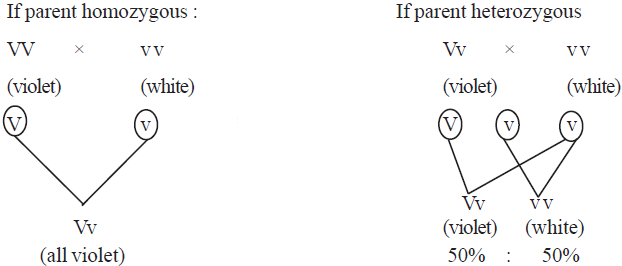
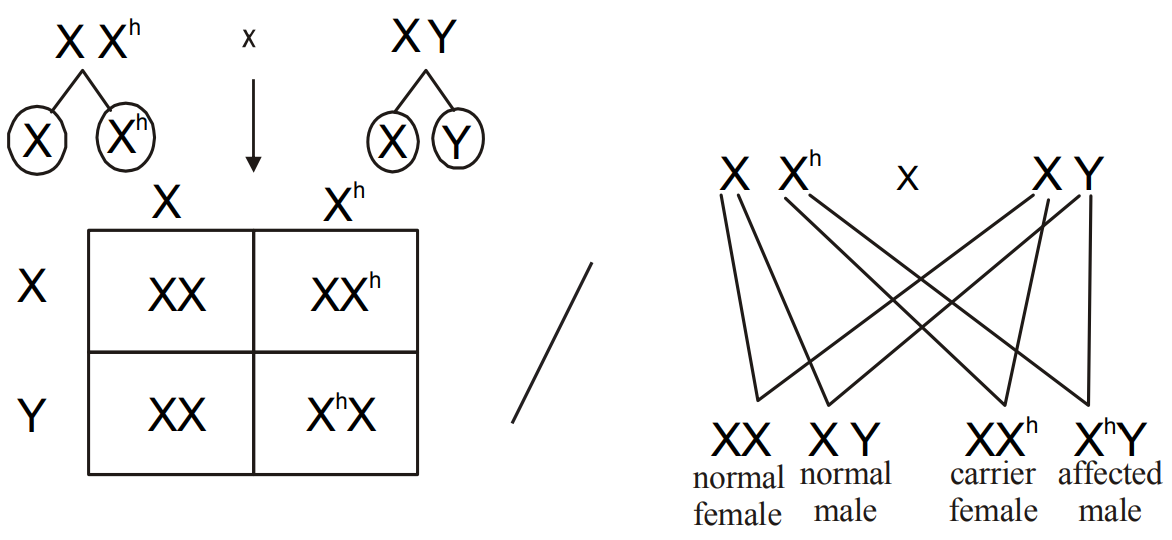
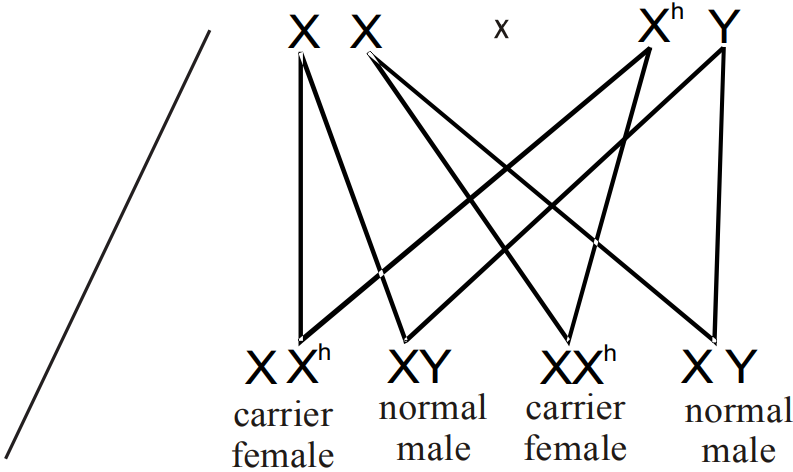
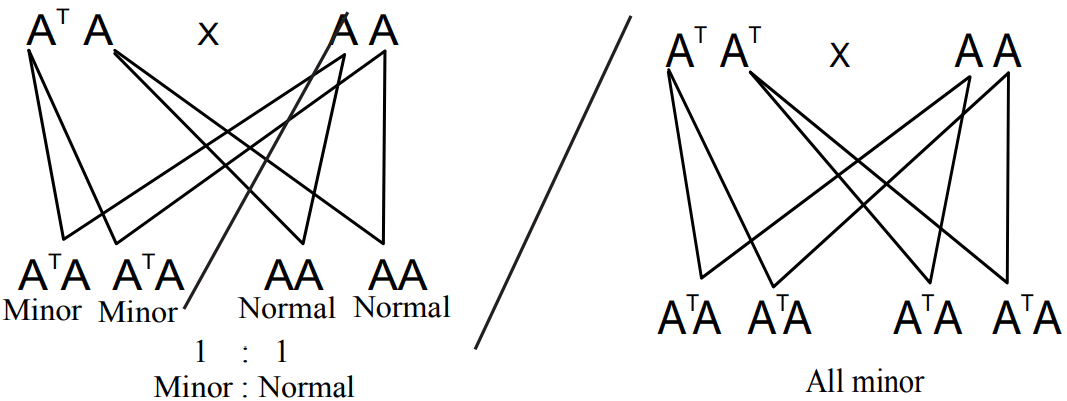
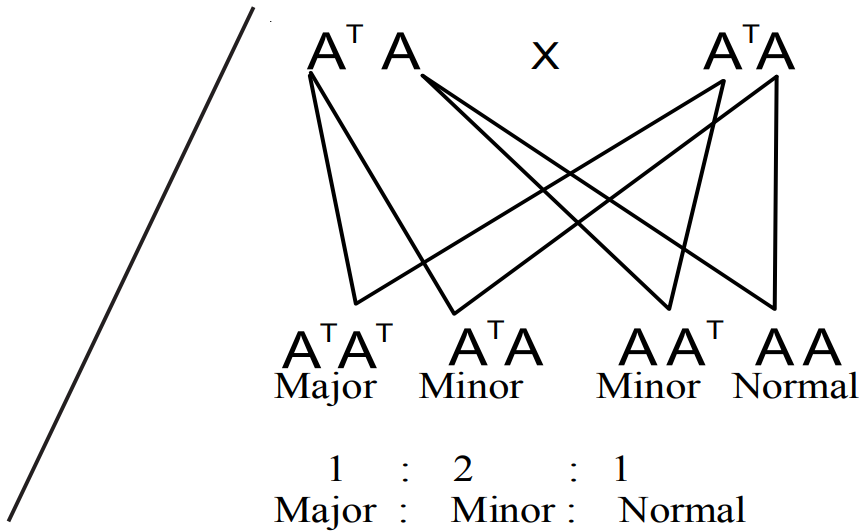
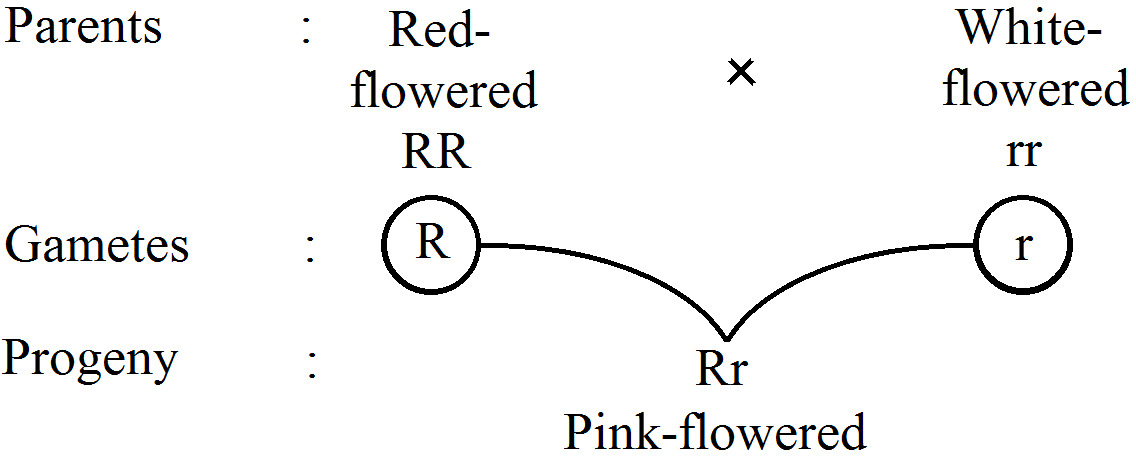
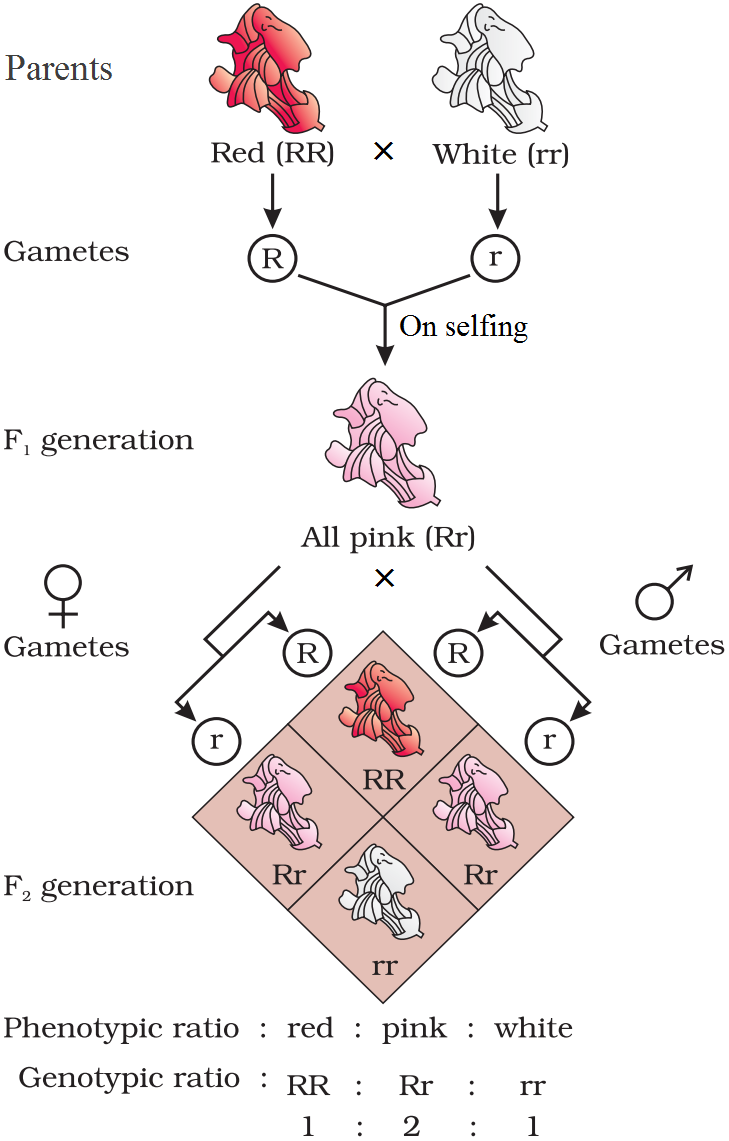
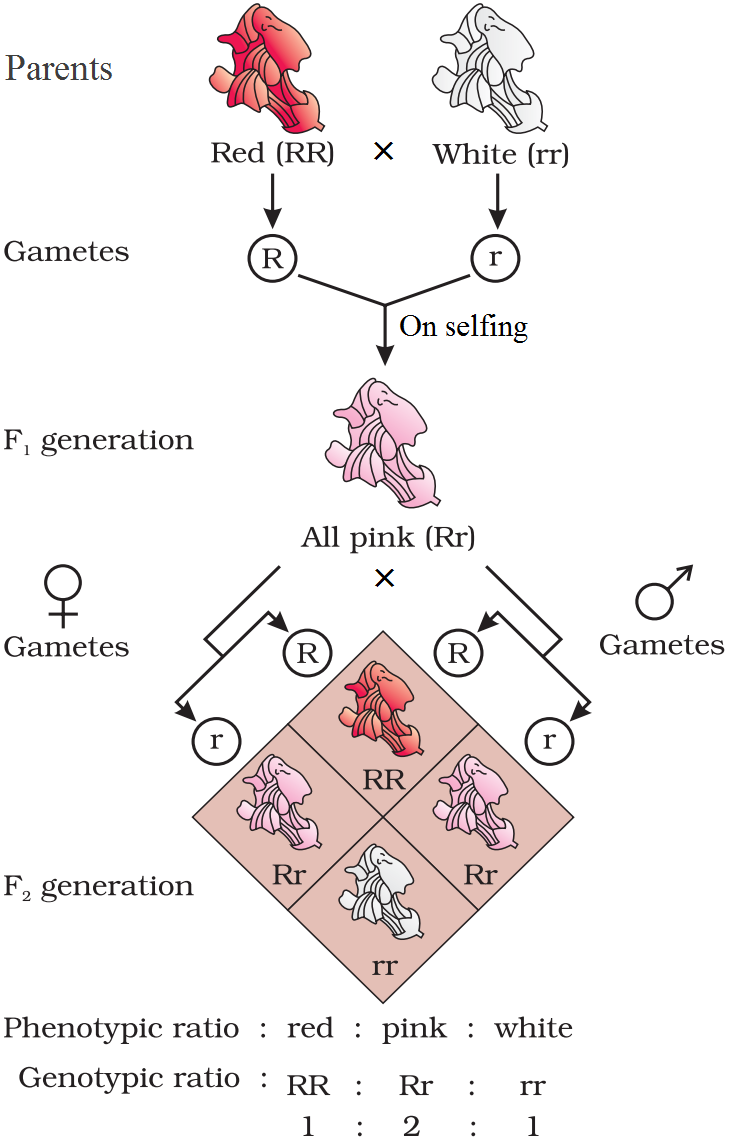
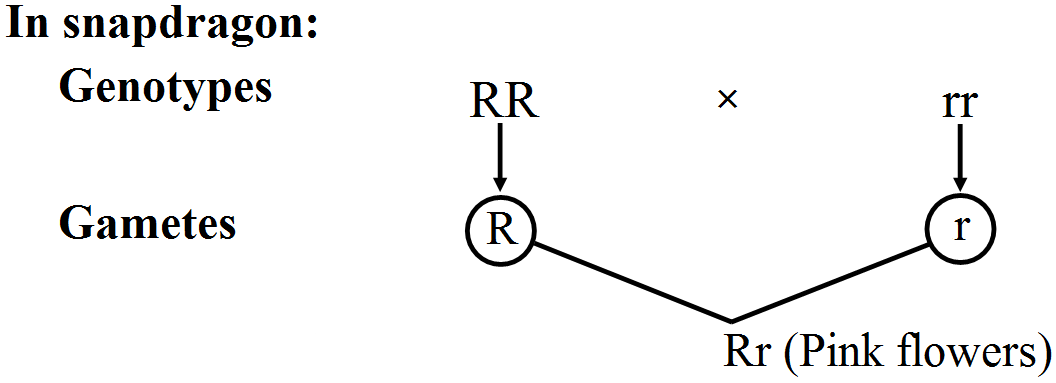
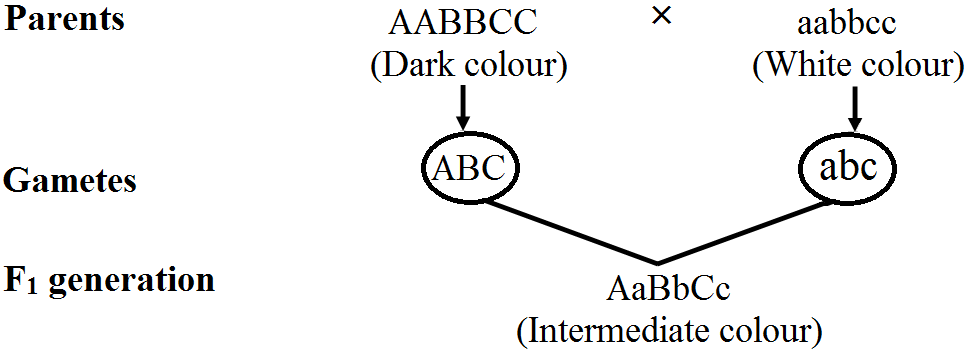
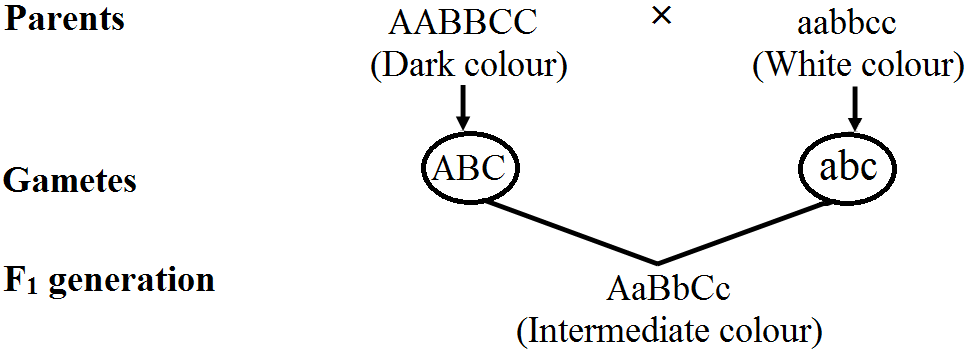
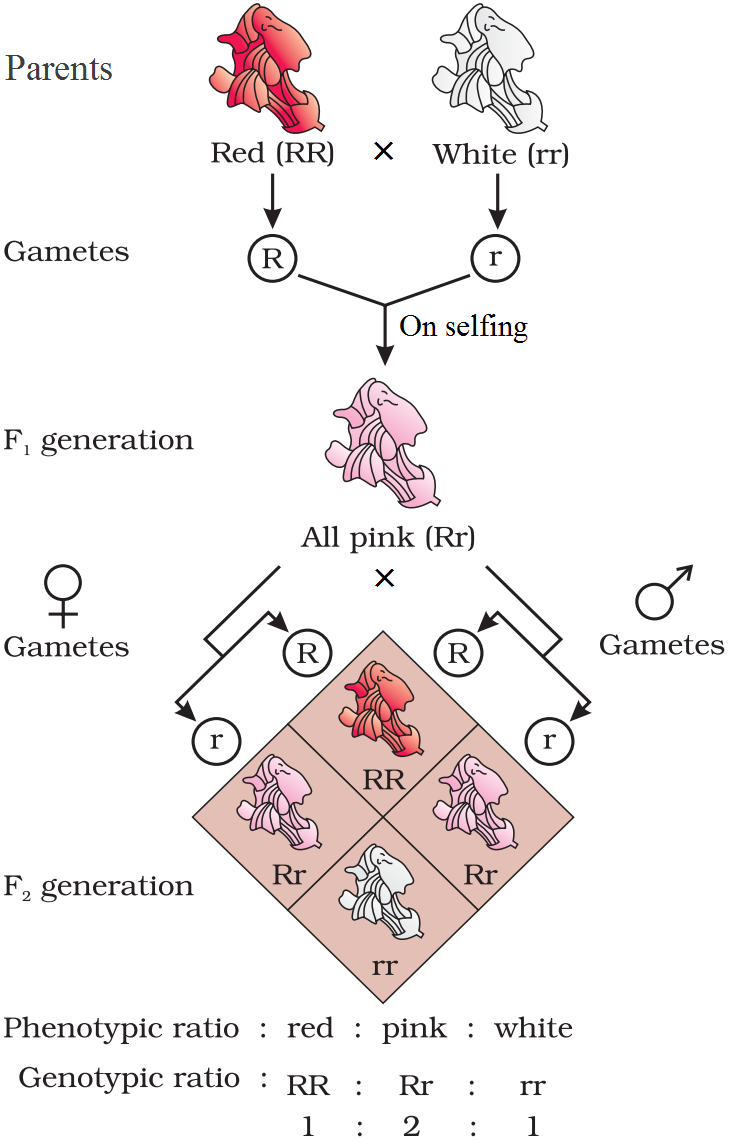
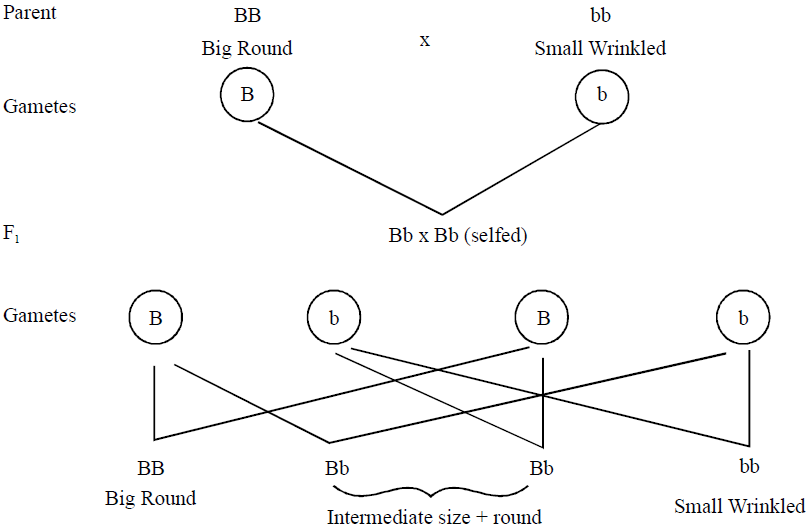 (Deviation fromMendelian Law of Dominance): The trait of size of starch grain shows incomplete dominance. Hence in heterozygous condition the starch grain are of intermediate size. The trait of seed shape follows Law of Dominance and the hybrid will show only dominant trait.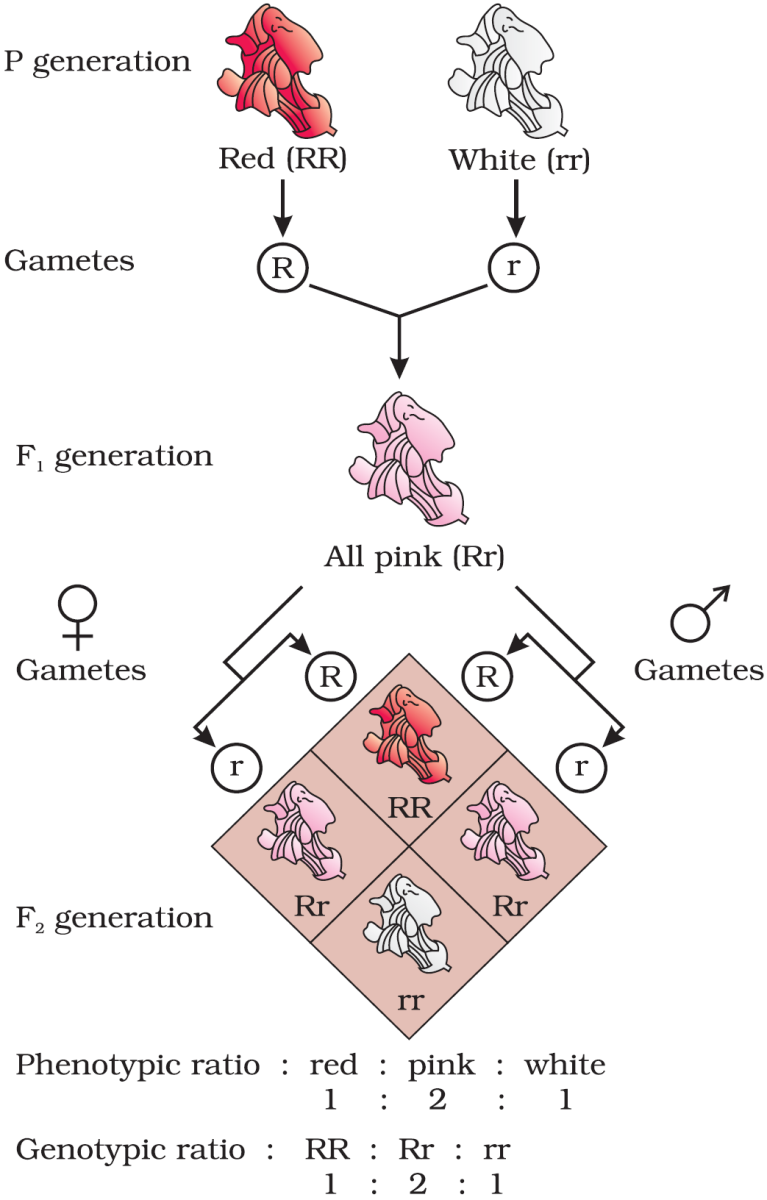
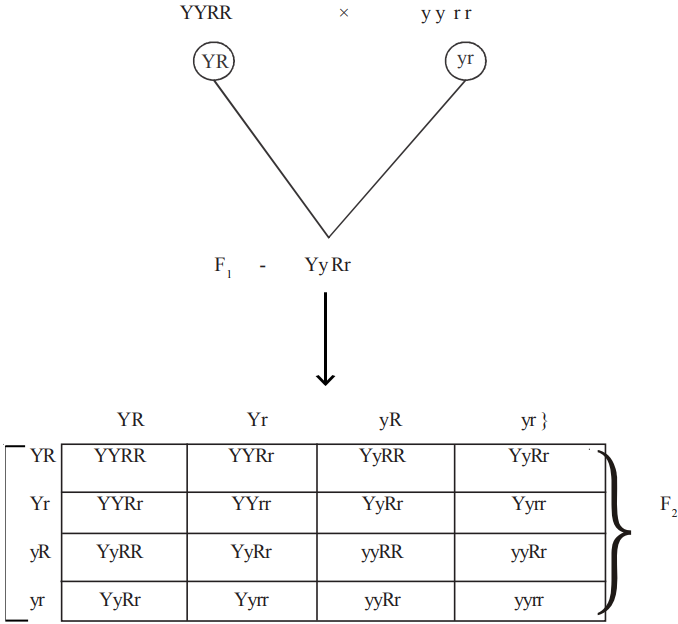
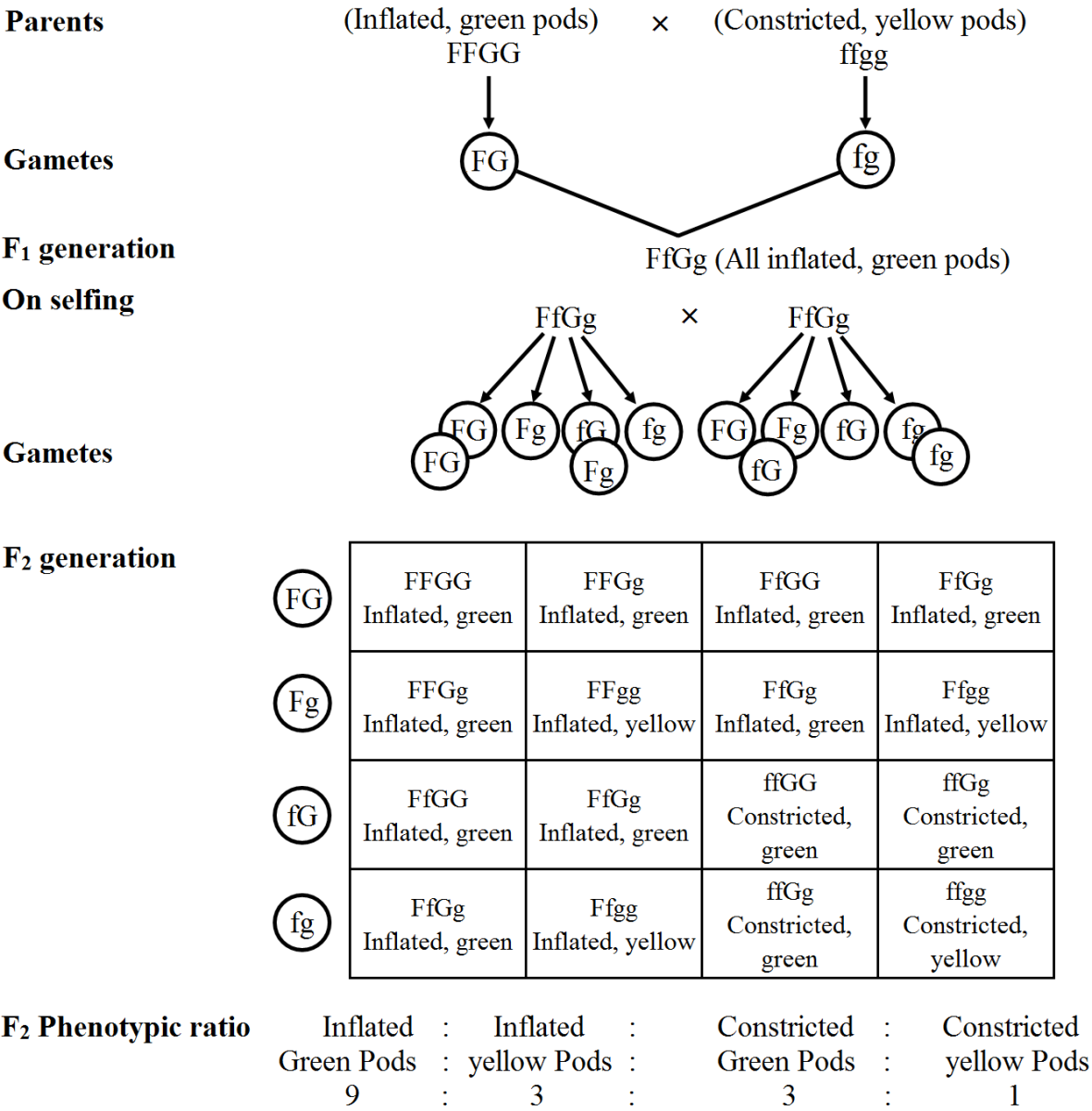
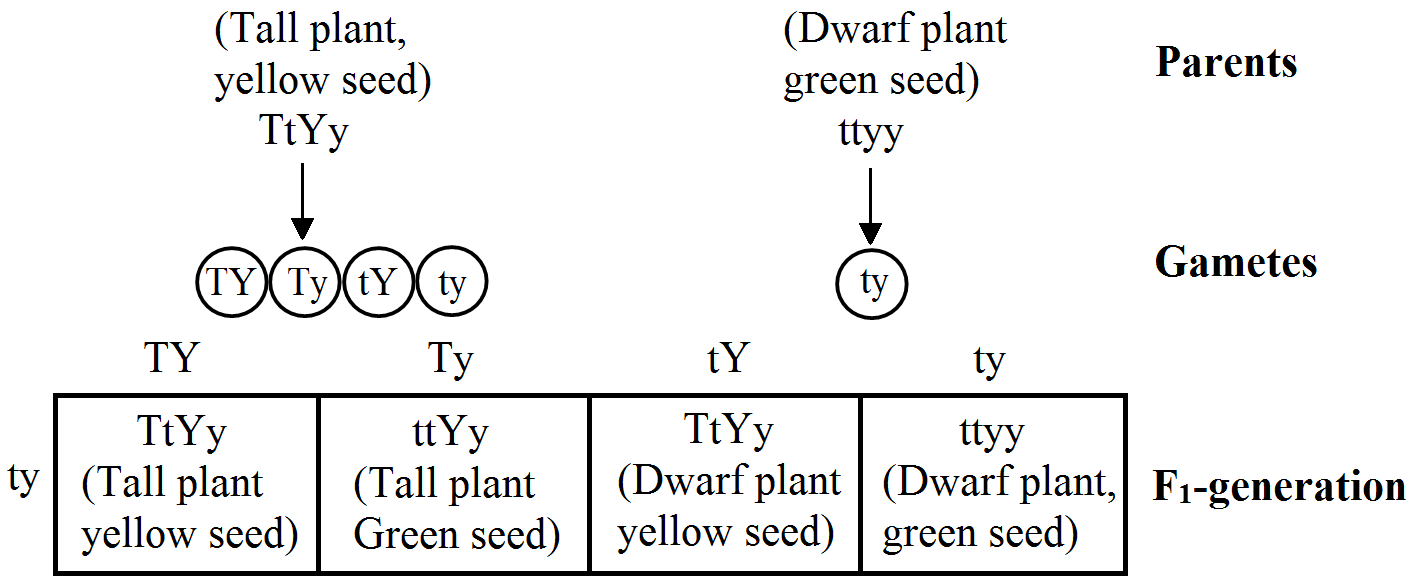
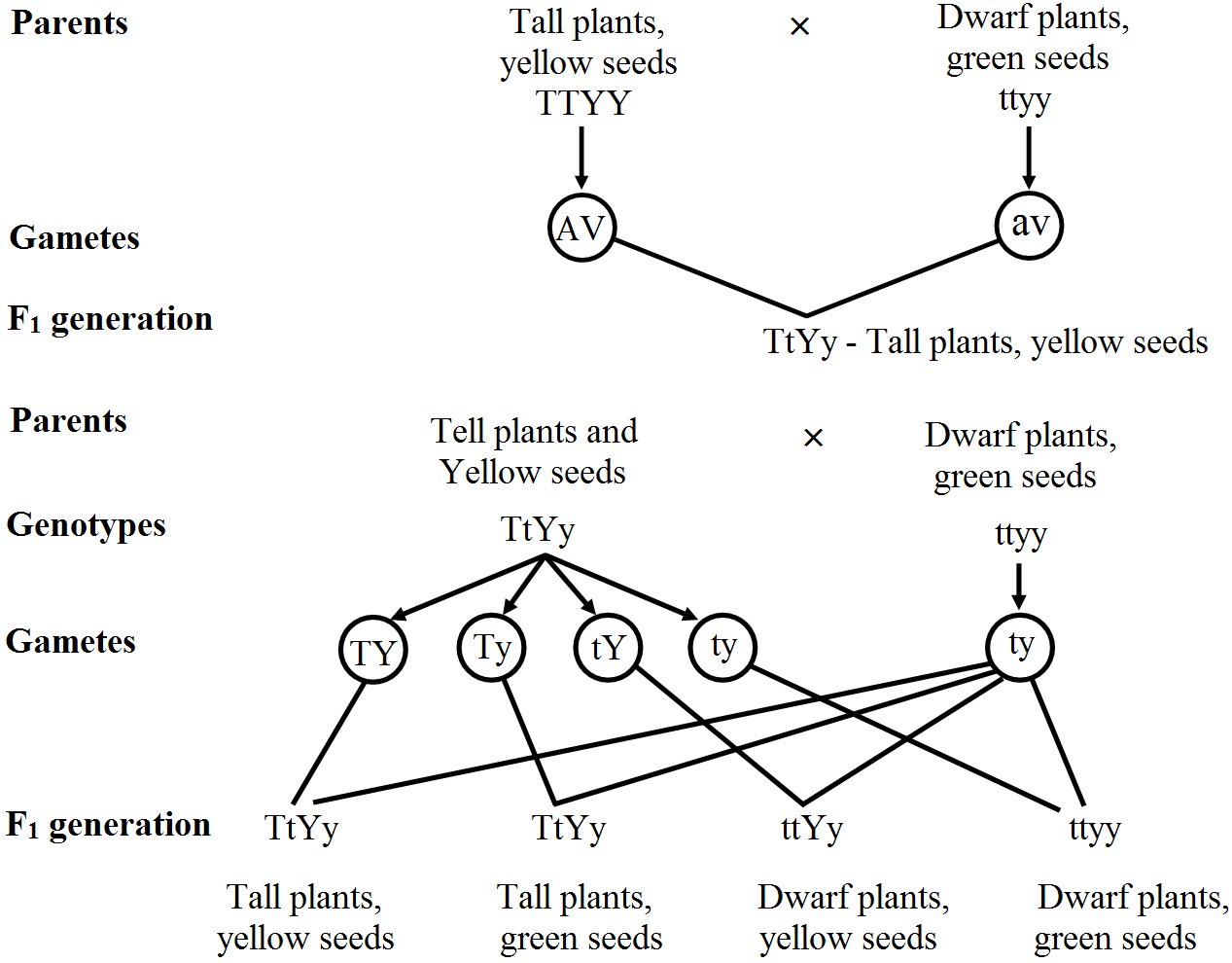
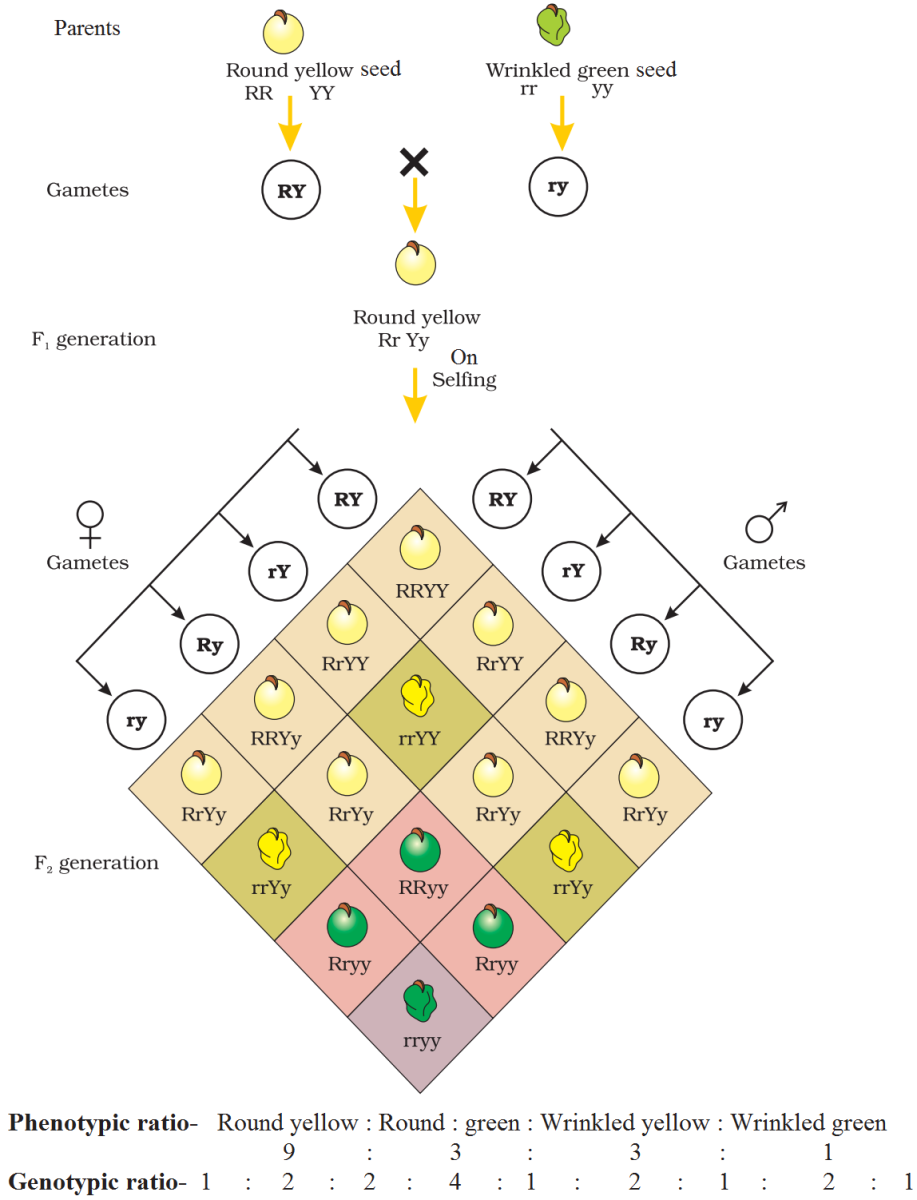 Results of a dihybrid cross where the two parents differed in two pairs of contrasting traits: seed colour and seed shape.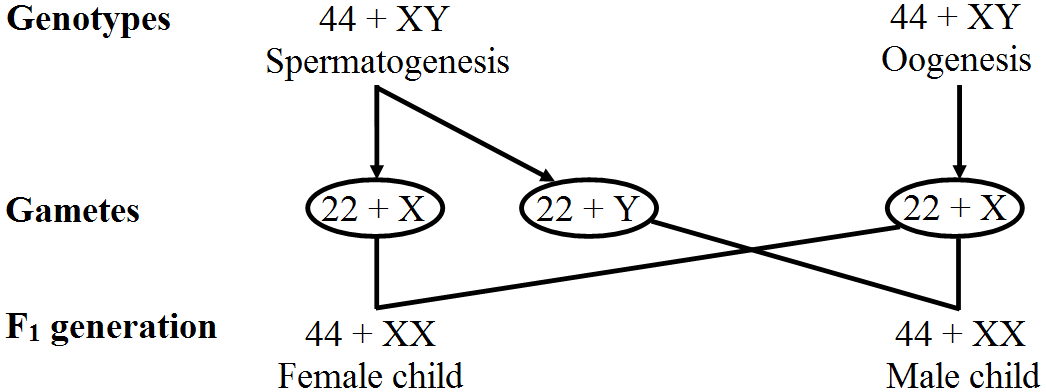

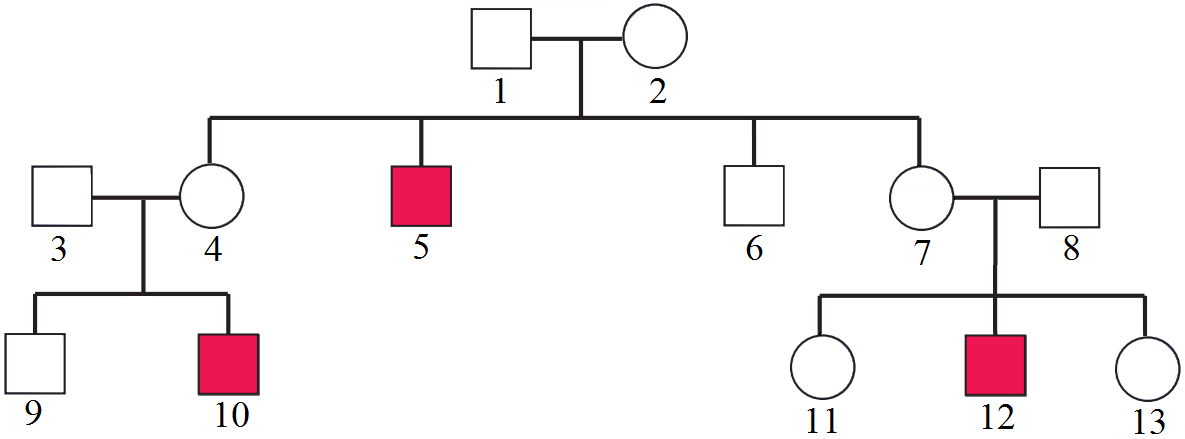

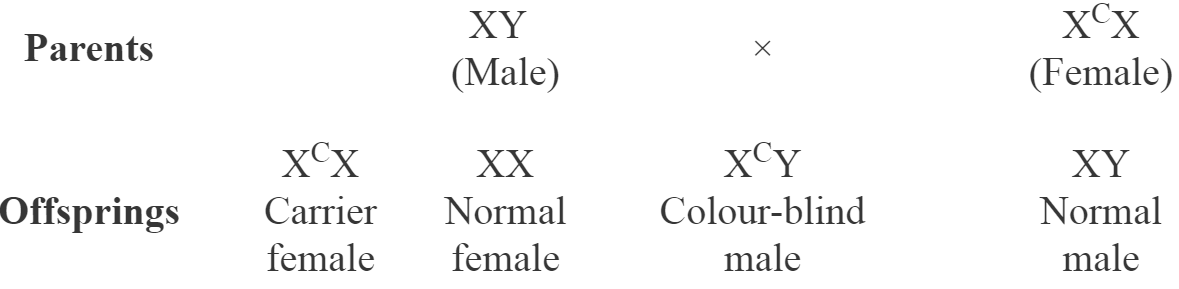
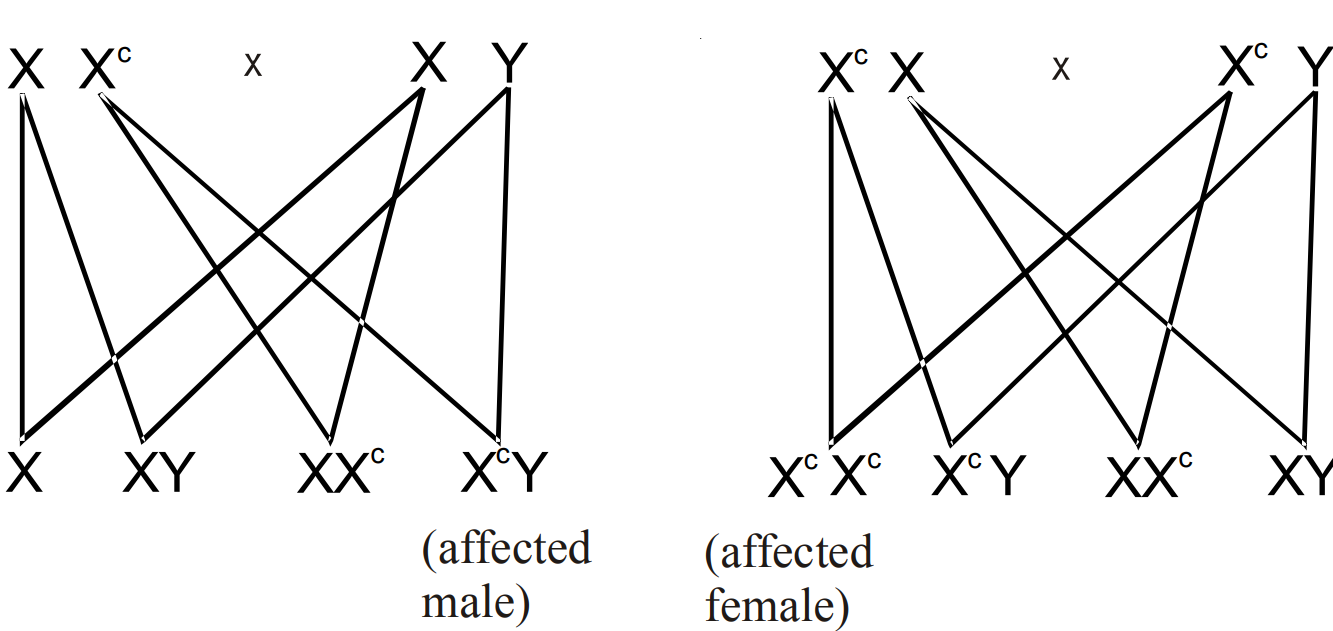
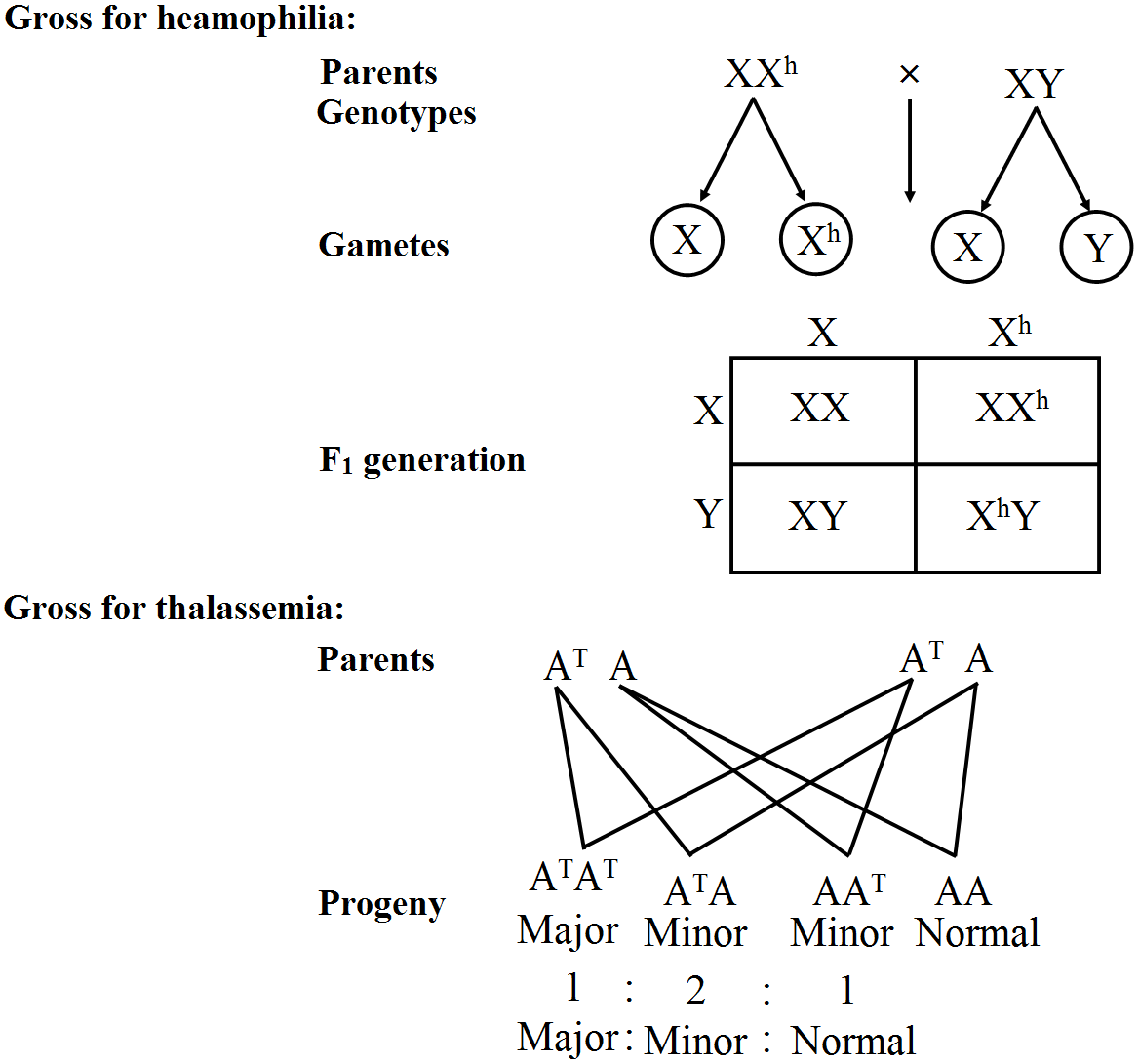
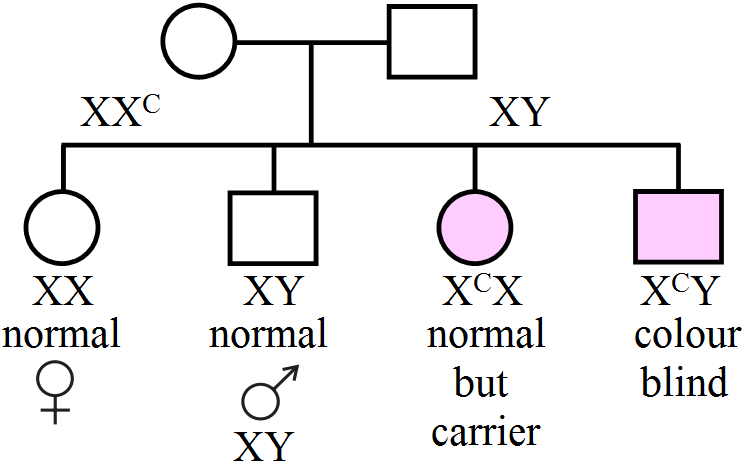 All daughters are normal visioned and 50% of sons are likely to be colour blind.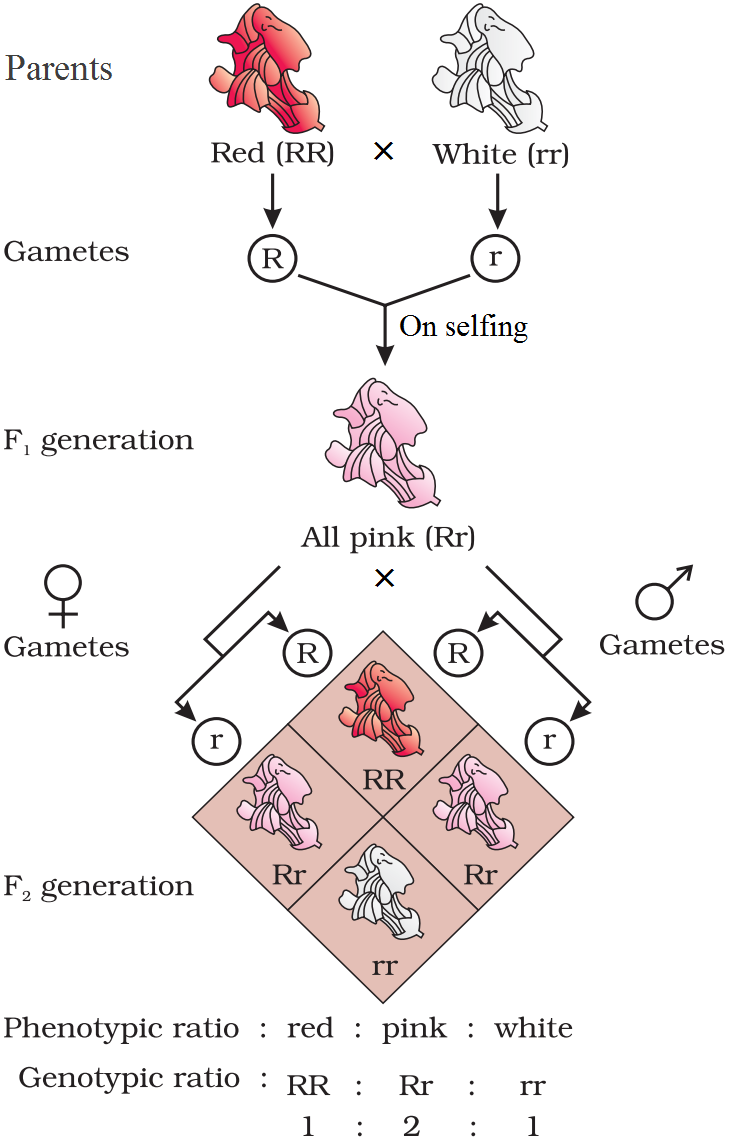
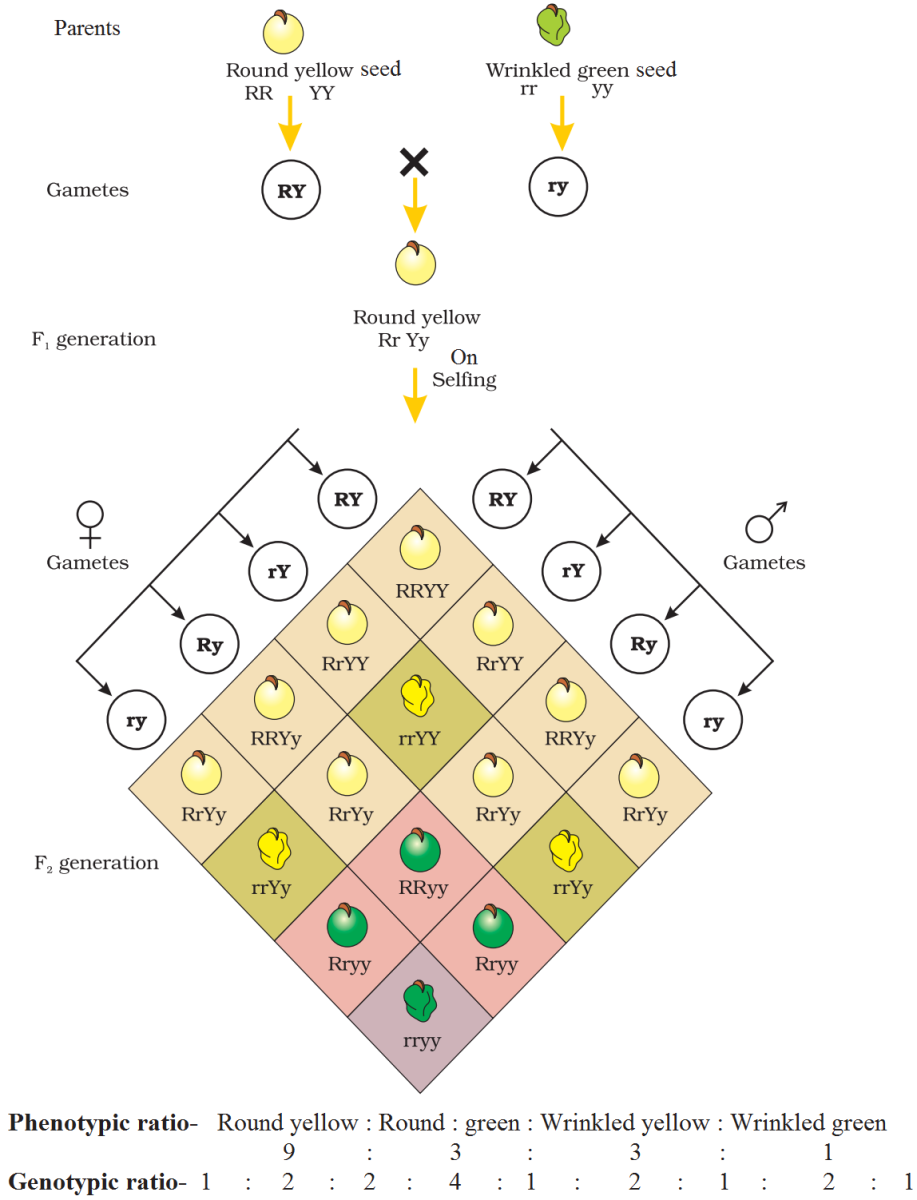 Results of a dihybrid cross where the two parents differed in two pairs of contrasting traits: seed colour and seed shape.