Plasmid DNA and Chromosomal DNA
| Plasmid DNA is an extra-chromosomal DNA molecule in bacteria that is capable of replicating, independent of chromosomal DNA. | Chromosomal DNA is the entire DNA of an organism present inside chromosomes. |
109 questions · self-marked practice — reveal the answer and mark yourself.
| Plasmid DNA is an extra-chromosomal DNA molecule in bacteria that is capable of replicating, independent of chromosomal DNA. | Chromosomal DNA is the entire DNA of an organism present inside chromosomes. |
| It is a type of restriction enzyme that removes the nucleotide from 5' or 3' ends of the DNA molecule. | It is a type of restriction enzyme that makes a cut within the DNA at a specific site to generate sticky ends. |
| RNA is a single stranded molecule. | DNA is a double stranded molecule. |
| It contains ribose sugar. | It contains deoxyribose sugar. |
| The pyrimidines in RNA are adenine and uracil. | The pyrimidines in DNA are adenine and thymine. |
| RNA cannot replicate itself. | DNA molecules have the ability to replicate. |
| It is a component of the ribosomes. | It is a component of the chromosomes. |

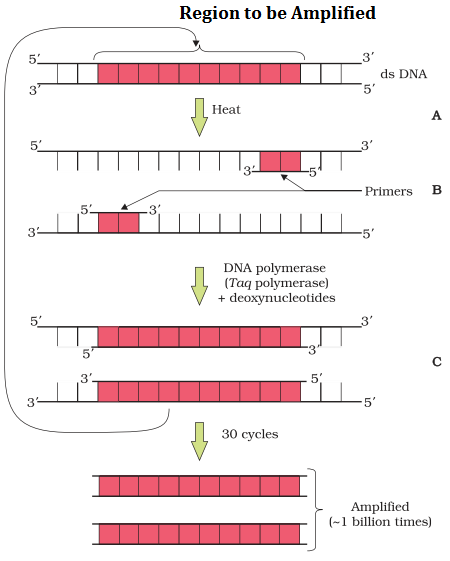
Uses- Amplification of desired gene/ gene cloning.
Advantage- More output, greater efficiency, less error prone, less human interference and cyclic and automated.
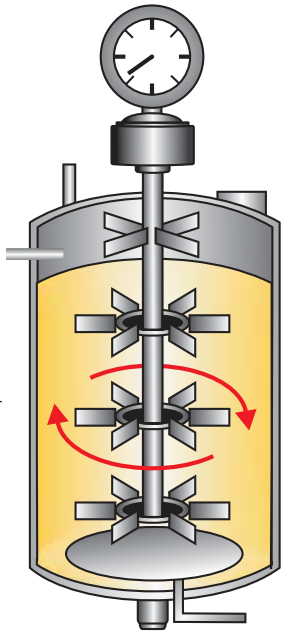
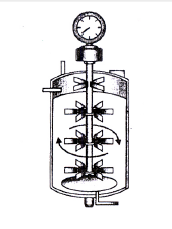
Bioreactors can be thought of as vessels in which raw materials are biologically converted into specific products// A bioreactor provides the optimal conditions for achieving the desired product by providing optimum growth conditions (temperature, pH, substrate, salts, vitamins, oxygen).
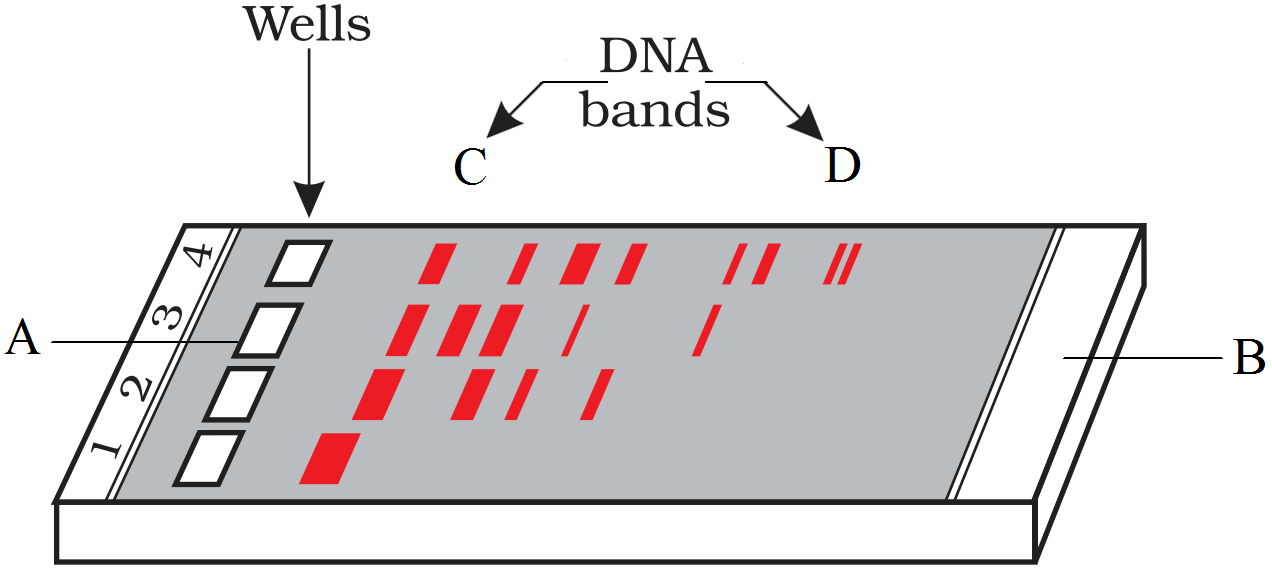
Bands are cut out from agarose gel, extracted from gel piece.
It is useful in the early diagnosis of diseases using antigen–antibody interactions
Used in food industry when detecting potential food allergens.
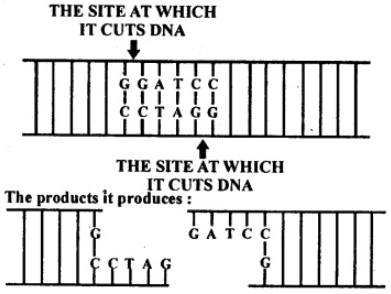
Exonucleases remove nucleotides from the ends of the DNA, whereas Endonucleases make cuts at specific positions within the DNA.
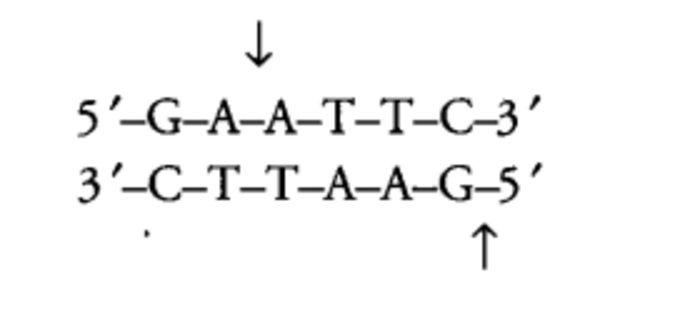
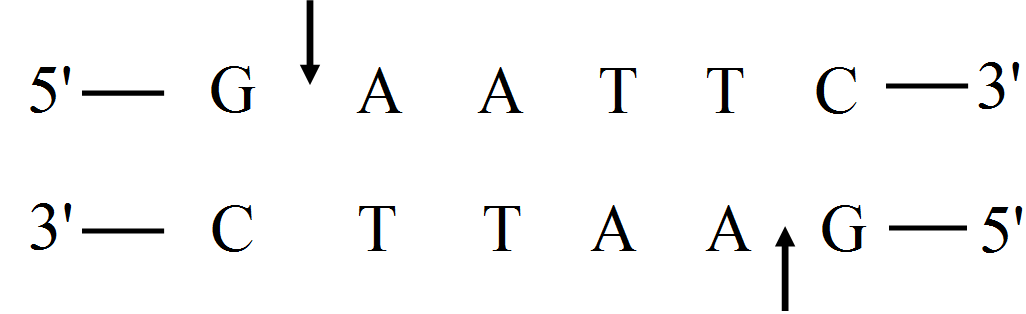
Each restriction endonuclease inspects the DNA molecule in search of a specific recognition sequence. When it gets its specific recognition sequence, it binds to the site and cuts each of the two strands of the double helix at specific points by hydrolysing the phosphodiester backbones.


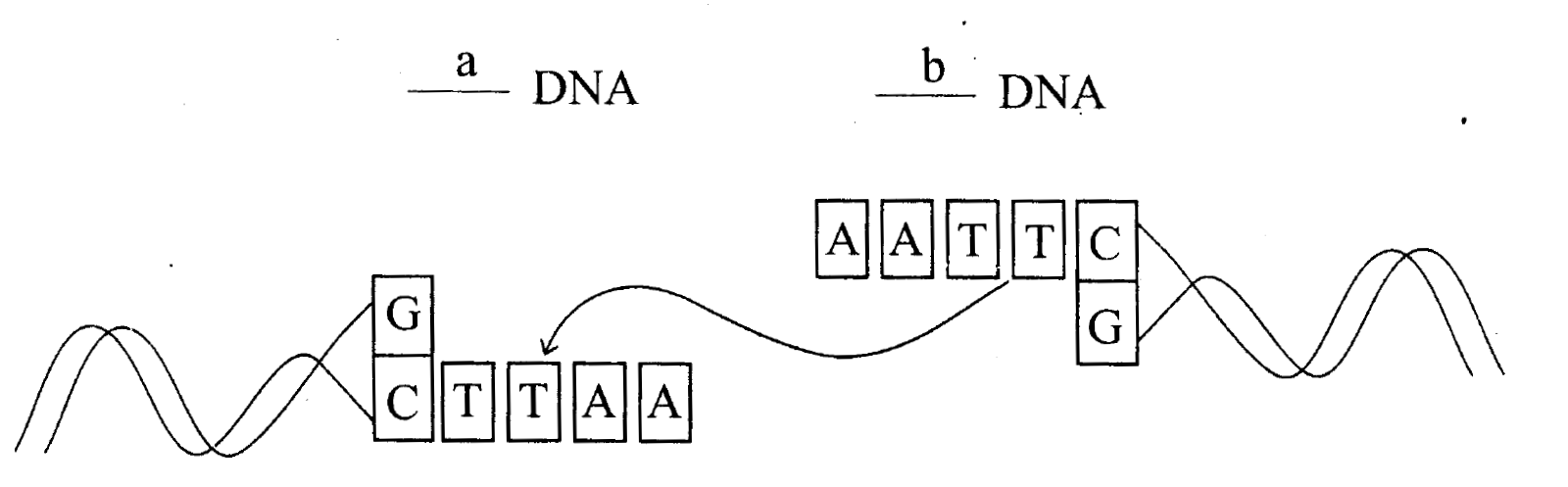
Study the linking of DNA fragments shown above.
Example - Plasmids, Viruses.


| S.No | Simple stirred-tank bioreactor | Sparged stirred-tank bioreactor |
| 1. | A simple stirred-tank bioreactor is usually cylindrical or with a curved base to facilitate even mixing of reactor contents. | The sparged-stirred-tank bioreactor also facilitates the mixing of components and ensures oxygen availability throughout the bioreactor. |
OR
List the four steps to isolate DNA from a bacterium.
Micro-injection: The technique of introducing foreign gene in a target cell by injecting the DNA, directly into the nucleus, by micro-needle is called micro-injection.
Electroporation: It is the process in which transient holes are produced in the plasma membrane of the target cell, to incorporate foreign DNA.
| rDNA | cDNA |
| It is the DNA which is formed by joining together the DNA from two different organisms. | It is the DNA which is obtained from RNA template catalysed by reverse transcriptase enzyme. |
Origin of replication/ ori site: From here the replication starts (and any piece of DNA when linked, can be made to replicate within the host cell).
At least two Selectable markers: Helpful in identifying and eliminating non-transformants.
Unique Restriction sites for more than one restriction enzymes: The foreign DNA links to this region of the plasmid.
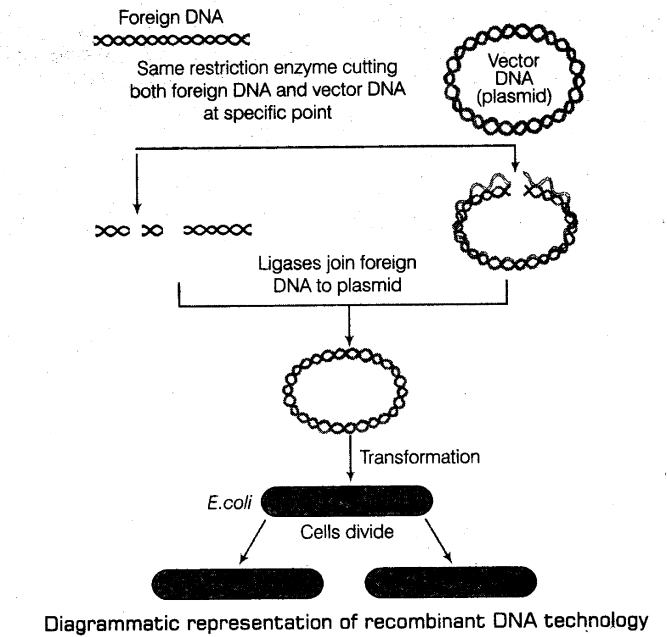
Restriction endonucleases: for cutting the desired DNA at desired places.
Gel electrophoresis: for separating the desired DNA fragments.
Ligase enzyme: for creating recombinant DNA molecule.
DNA delivery system: like electroporation, microinjection, gene gun method.
Competent host (usually bacteria/ yeast): to take up recombinant DNA.
Study the linking of DNA fragments shown above.

Such sequences are called palendromes in DNA.
Or
Name the source of the DNA polymerase used in PCR technique. Mention why it is used?Or
Give the name of the organism from where the thermostable DNA polymerase is isolated. State its role in genetic engineering.Reasons:
Or
How can the desire products formed after genetic engineering be produced on a commercial scale?