Question 15 Marks
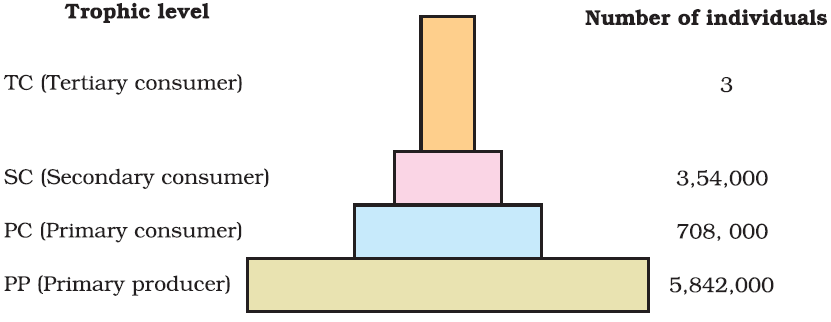
Define ecological pyramids and describe with examples, pyramids of number and biomass.
Answer
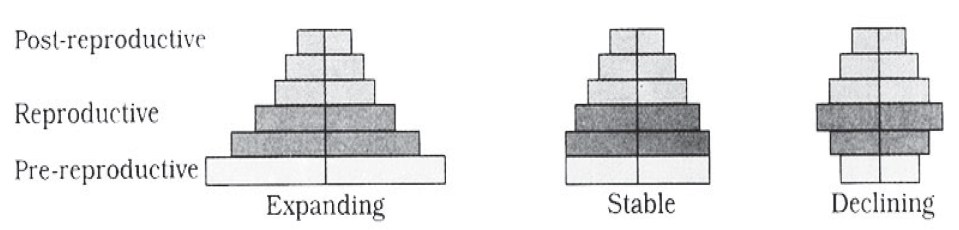
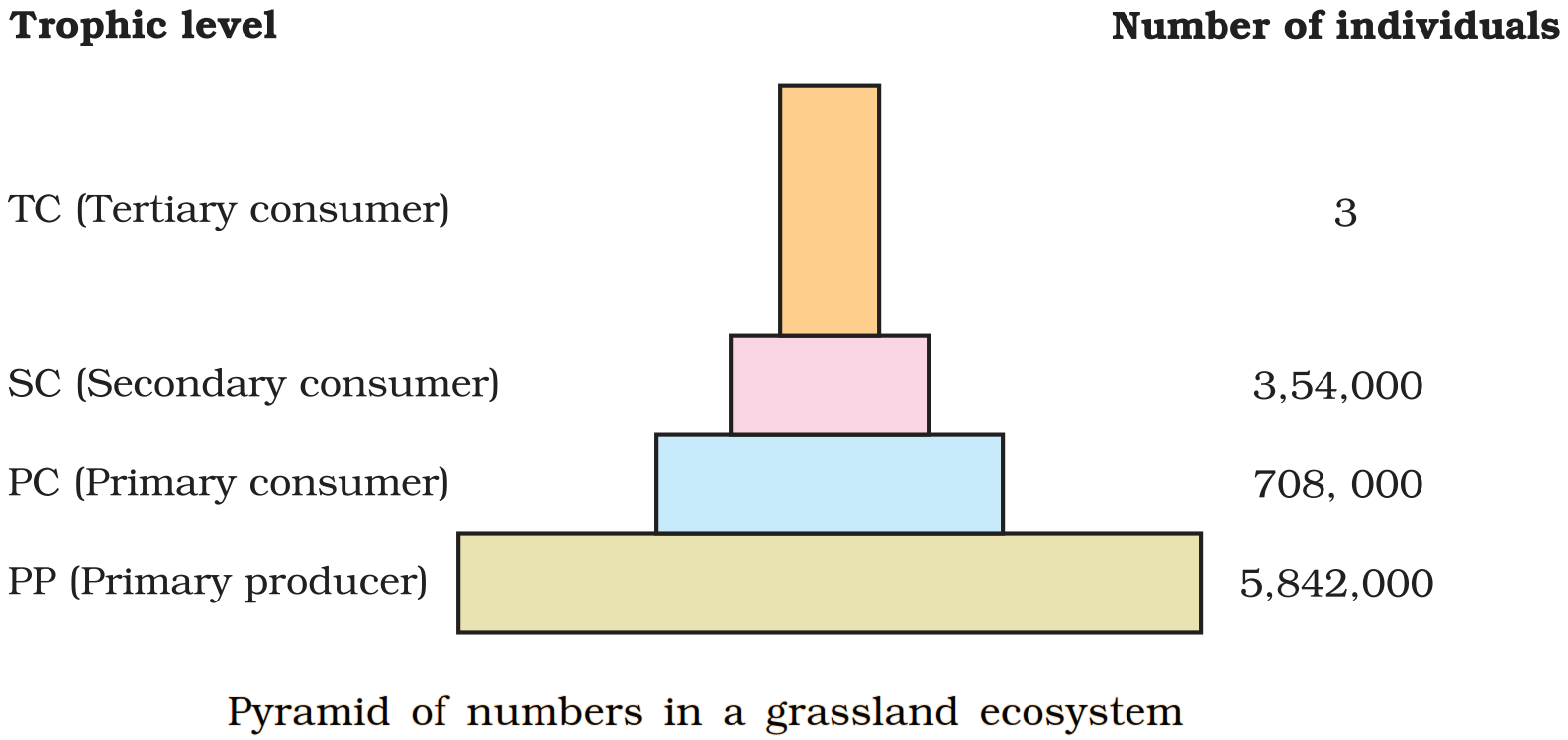
View full question & answer→An ecological pyramid is a graphical representation of various ecological parameters such as the number of individuals present at each trophic level, the amount of energy, or the biomass present at each trophic level. Ecological pyramids represent producers at the base, while the apex represents the top level consumers present in the ecosystem. There are three types of pyramids:
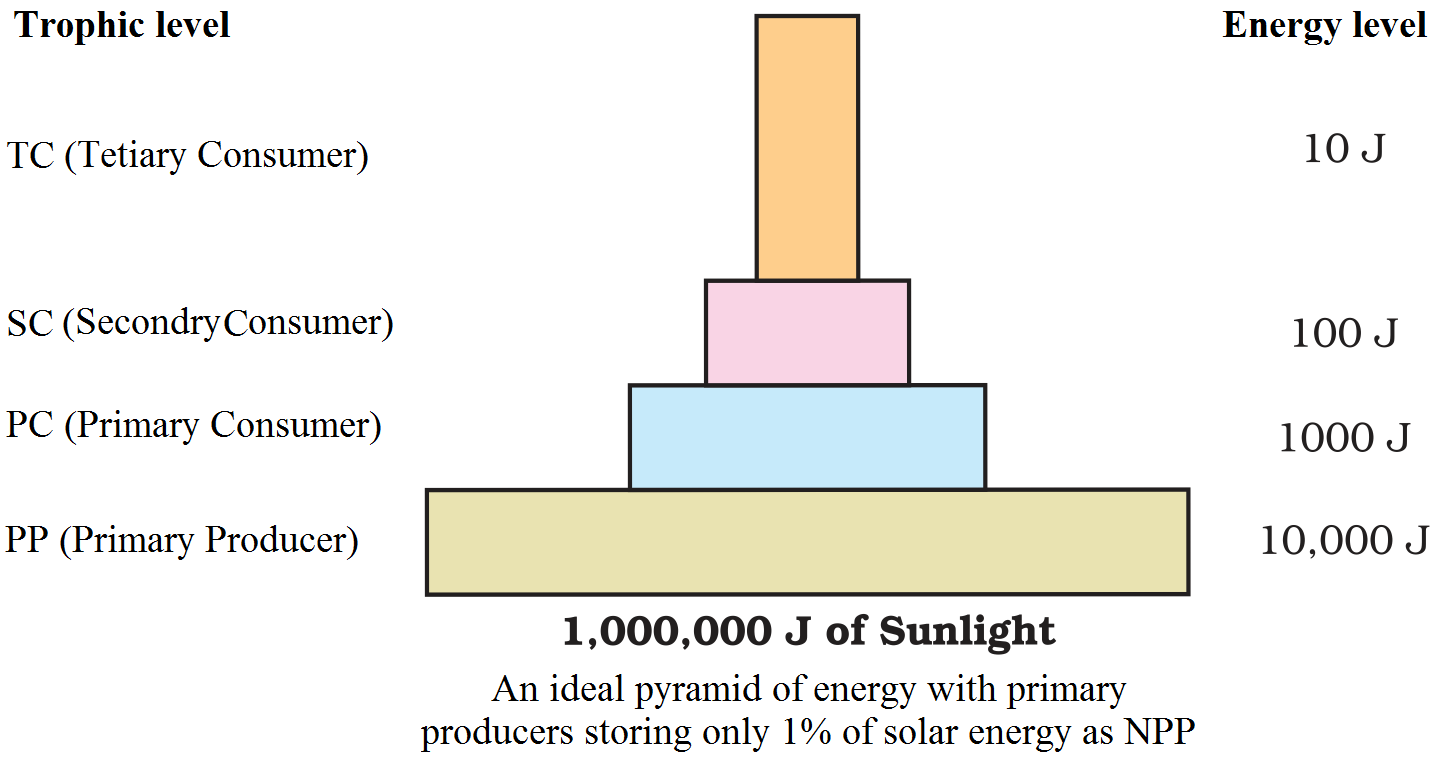
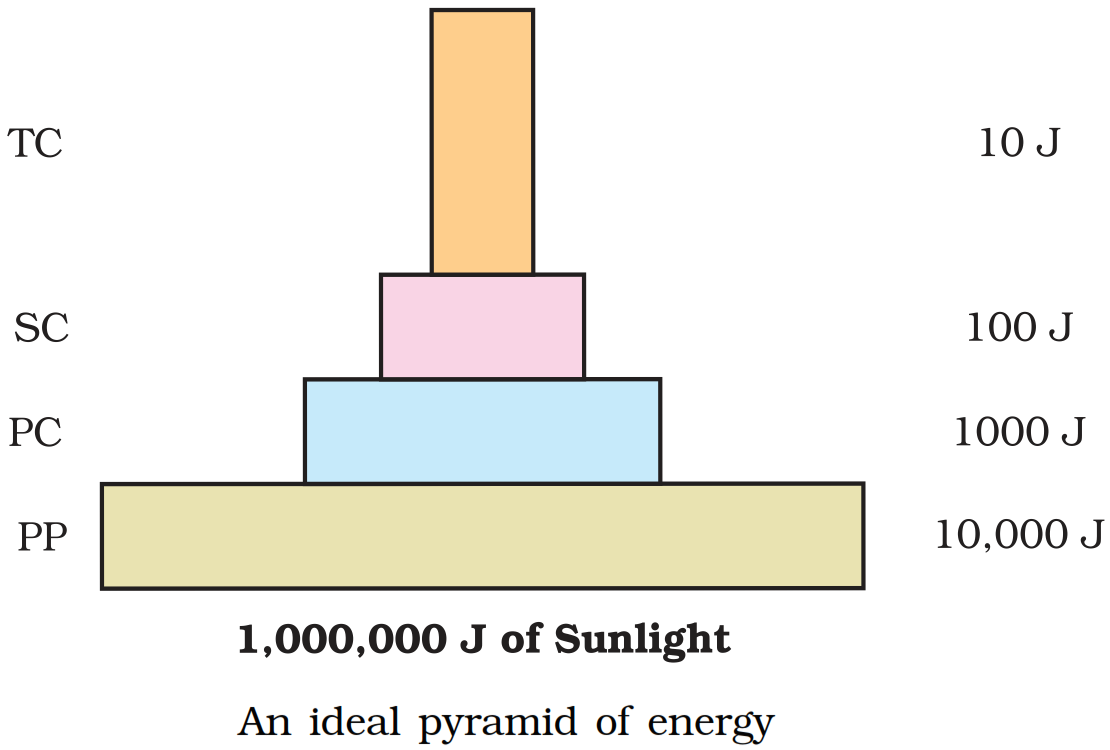
Pyramid of energy: An energy pyramid is a graphical model of energy flow in a community. The different levels represent different groups of organisms that might compose a food chain. From the bottom-up, they are as follows: Producers bring energy from nonliving sources into the community.
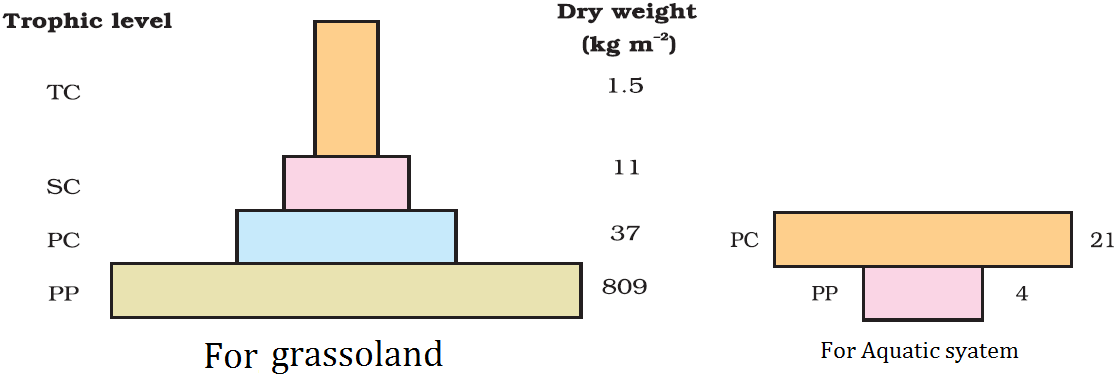
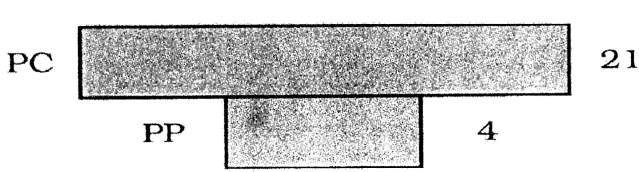
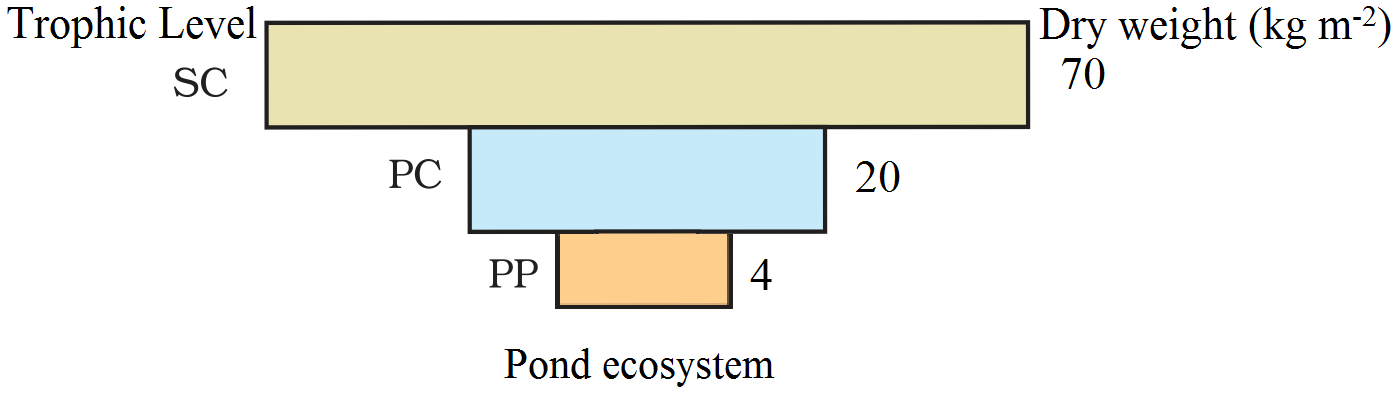
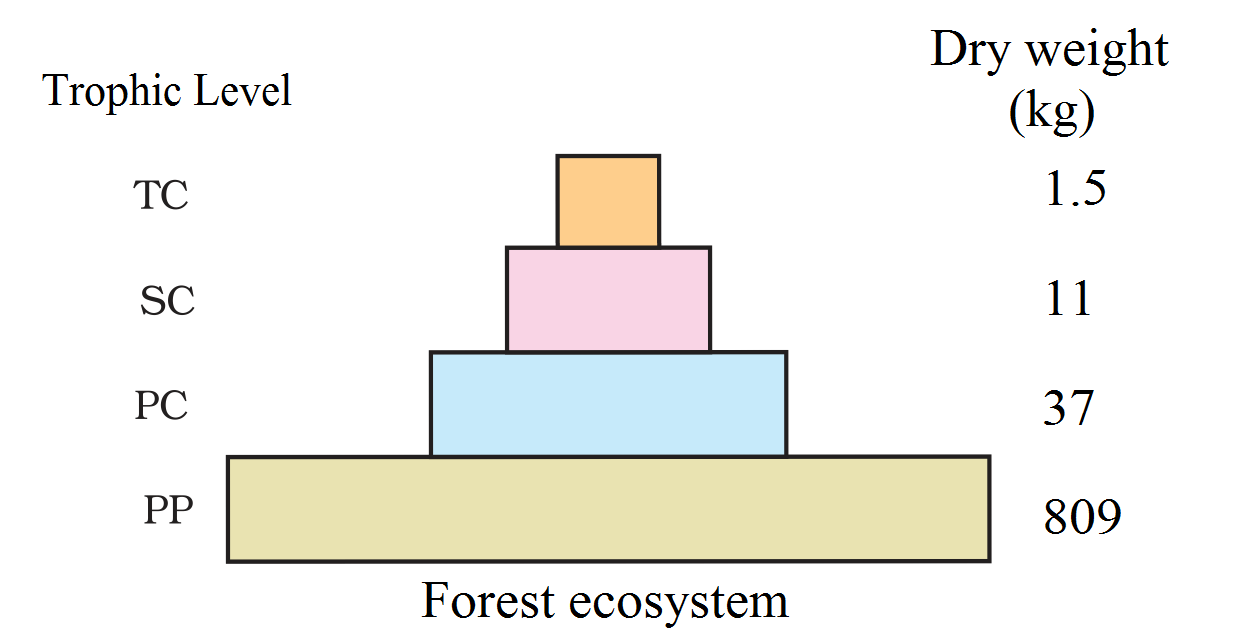
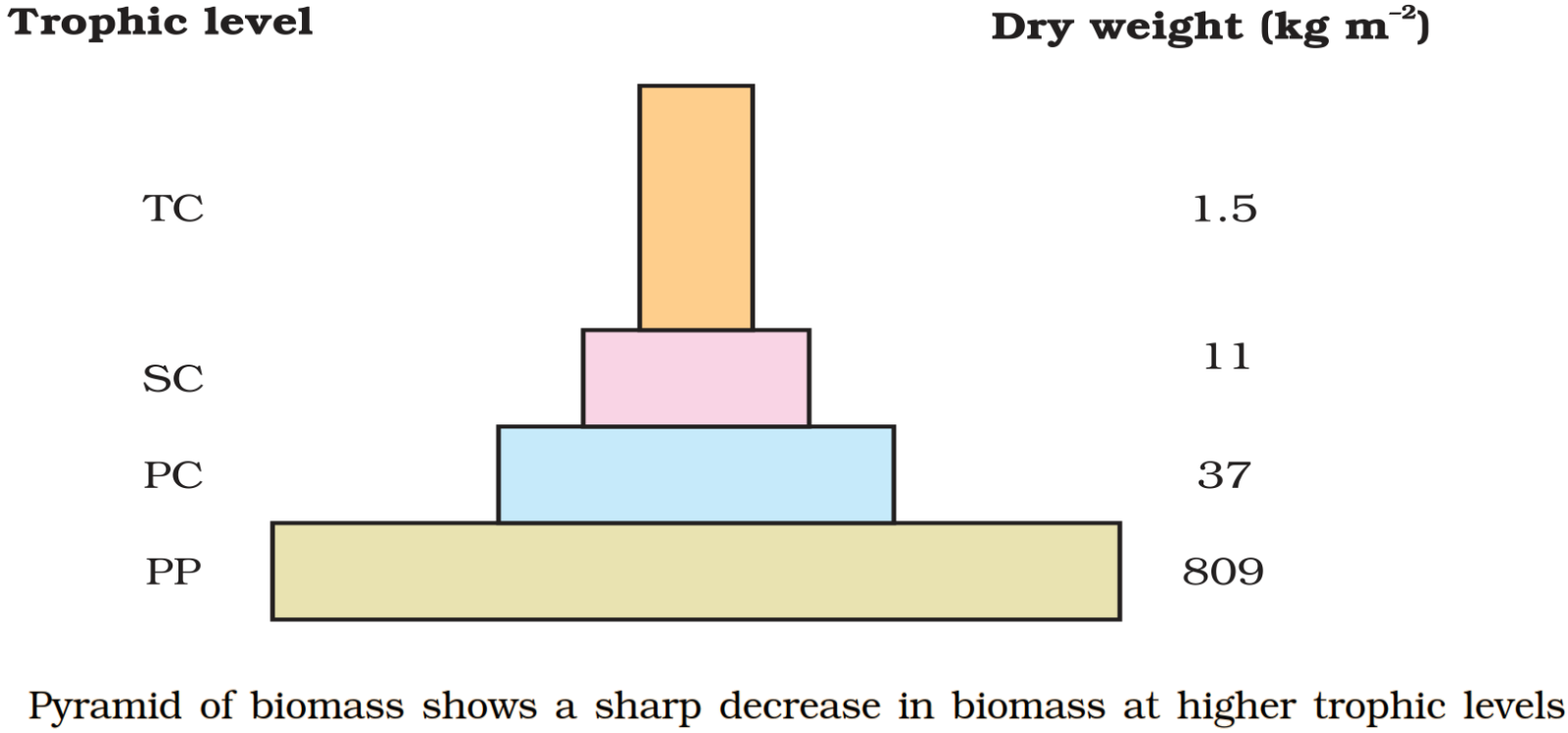
Pyramid of biomass: A pyramid of biomass is a graphical representation of the total amount of living matter present at each trophic level of an ecosystem. It can be upright or inverted. It is upright in grasslands and forest ecosystems as the amount of biomass present at the producer level is higher than at the top carnivore level. The pyramid of biomass is inverted in a pond ecosystem as the biomass of fishes far exceeds the biomass of zooplankton (upon which they feed).east.
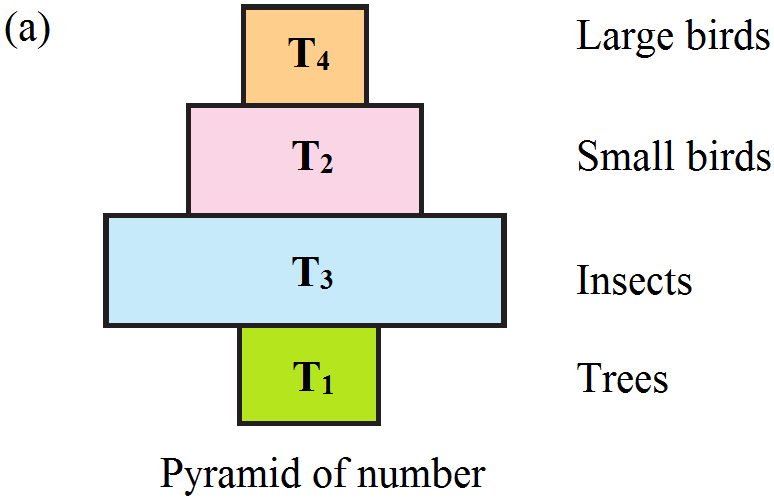
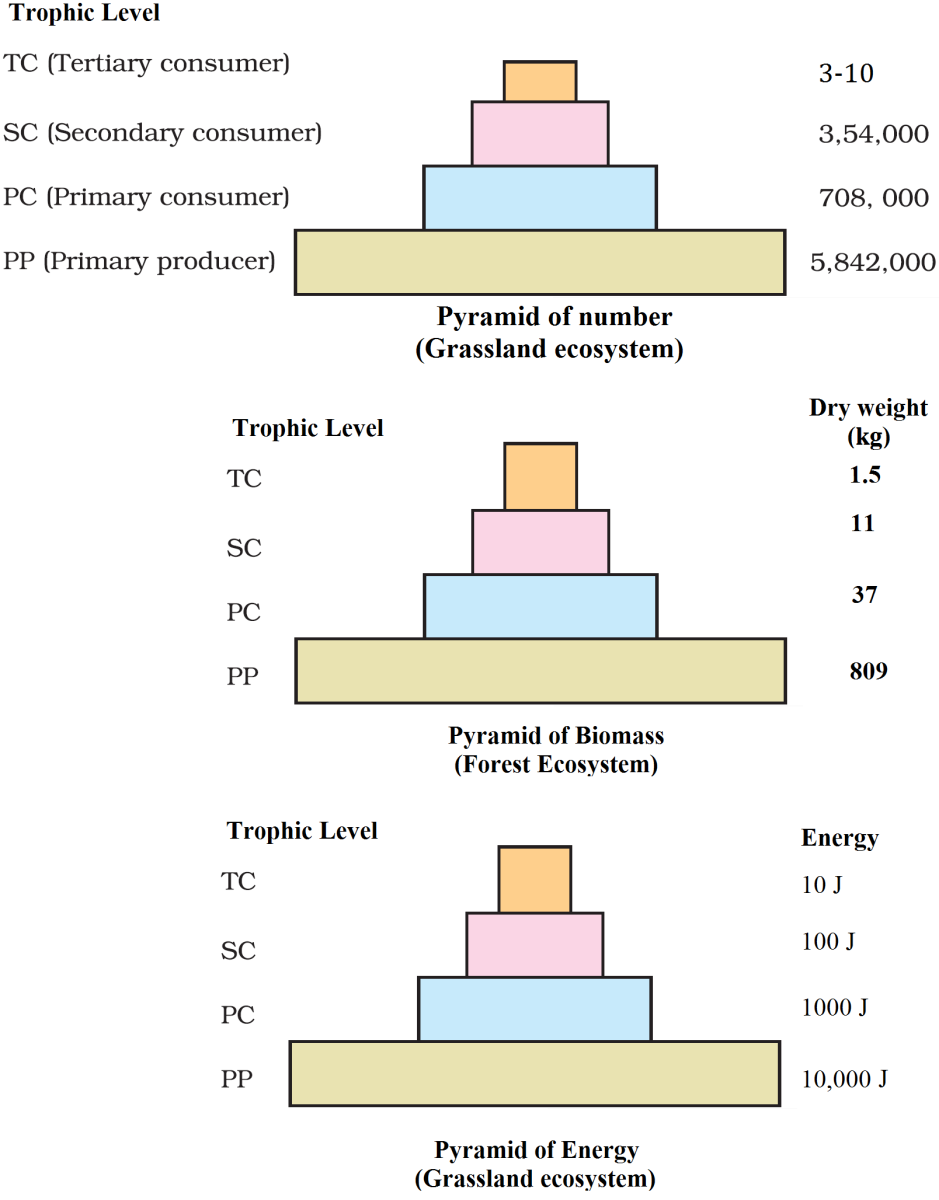
- Pyramid of numbers
- Pyramid of energy
- Pyramid of biomass
Pyramid of energy: An energy pyramid is a graphical model of energy flow in a community. The different levels represent different groups of organisms that might compose a food chain. From the bottom-up, they are as follows: Producers bring energy from nonliving sources into the community.
Pyramid of biomass: A pyramid of biomass is a graphical representation of the total amount of living matter present at each trophic level of an ecosystem. It can be upright or inverted. It is upright in grasslands and forest ecosystems as the amount of biomass present at the producer level is higher than at the top carnivore level. The pyramid of biomass is inverted in a pond ecosystem as the biomass of fishes far exceeds the biomass of zooplankton (upon which they feed).east.
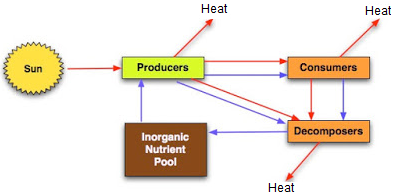 Energy enters an ecosystem from the Sun. Solar radiations pass through the atmosphere and are absorbed by the Earth's surface. These radiations help plants in carrying out the process of photosynthesis. Also, they help maintain the Earth's temperature for the survival of living organisms. Some solar radiations are reflected by the Earth's surface. Only 2-10 percent of solar energy is captured by green plants (producers) during photosynthesis to be converted into food. The rate at which the biomass is produced by plants during photosynthesis is termed as 'gross primary productivity'. When these green plants are consumed by herbivores, only 10% of the stored energy from producers is transferred to herbivores. The remaining 90% of this energy is used by plants for various processes such as respiration, growth, and reproduction. Similarly, only 10% of the energy of herbivores is transferred to carnivores. This is known as ten percent law of energy flow.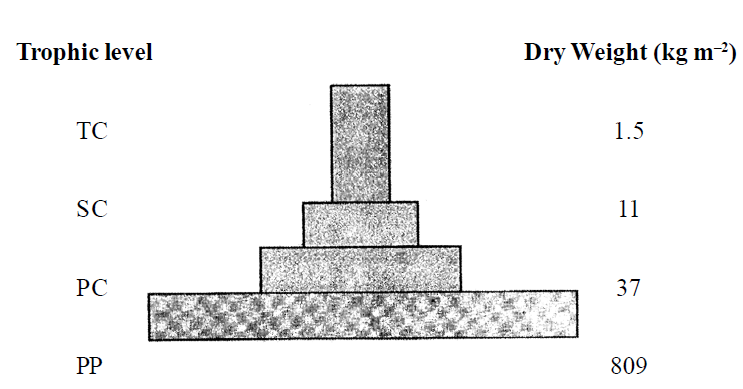
 .
.
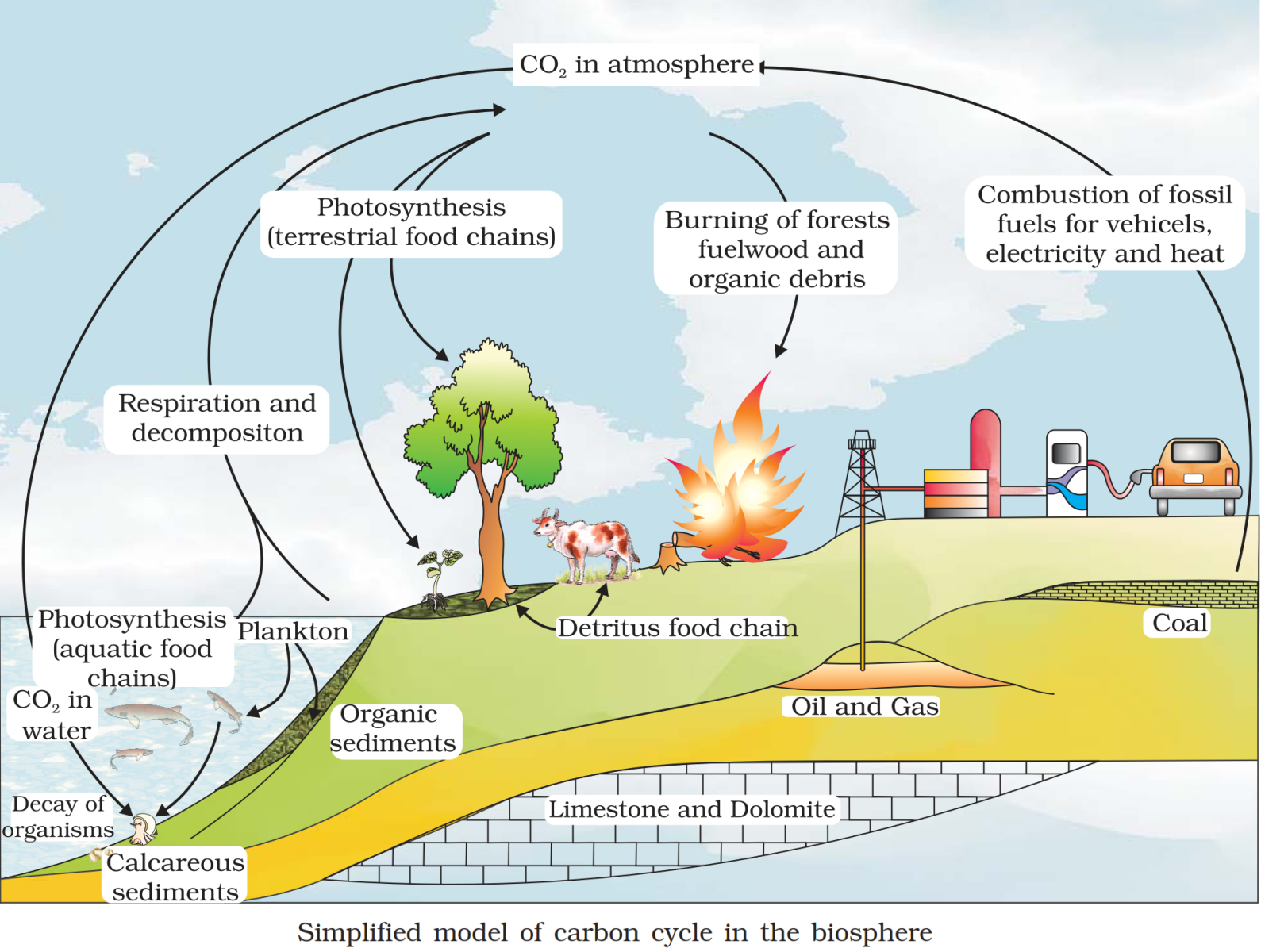
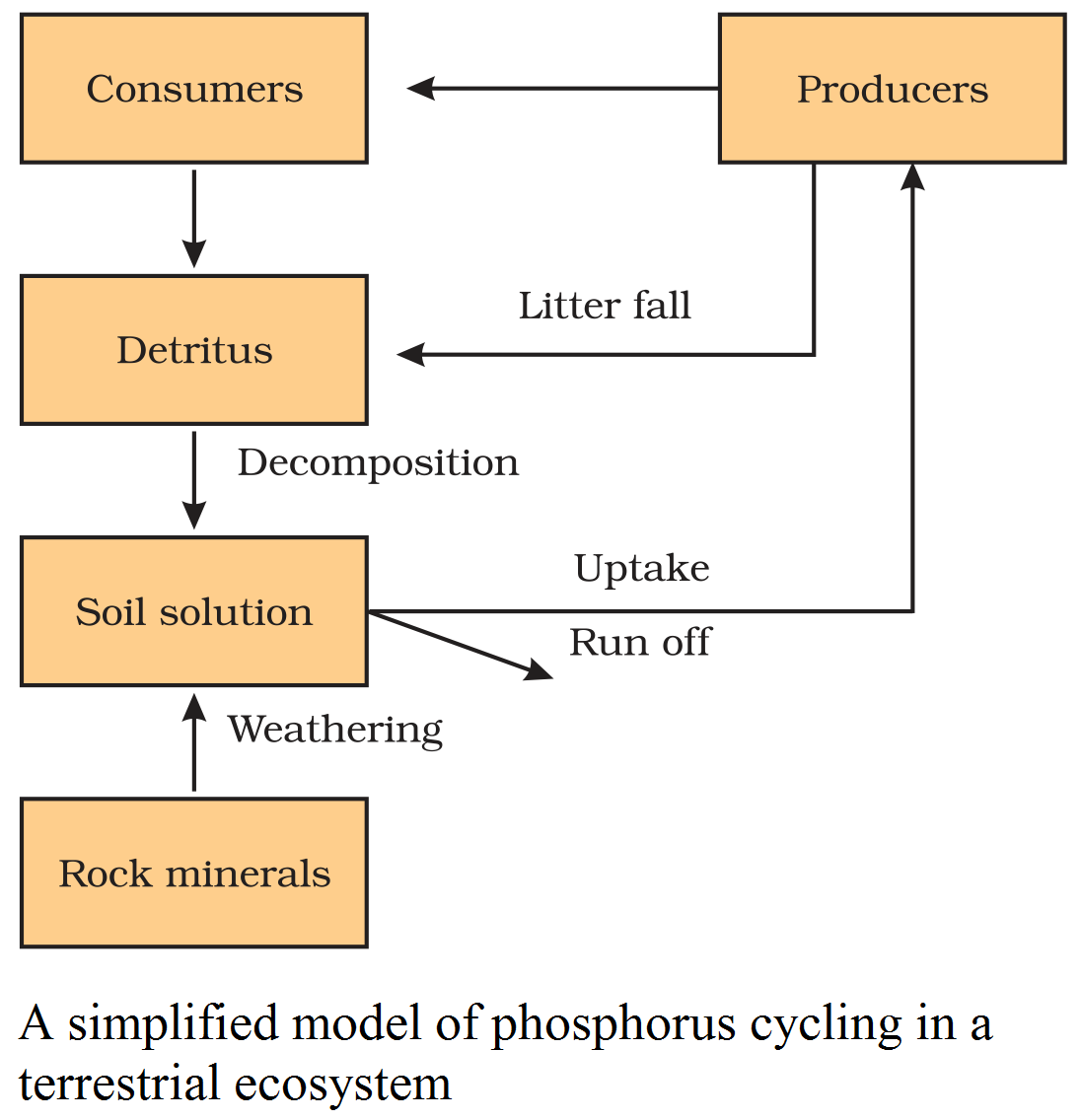
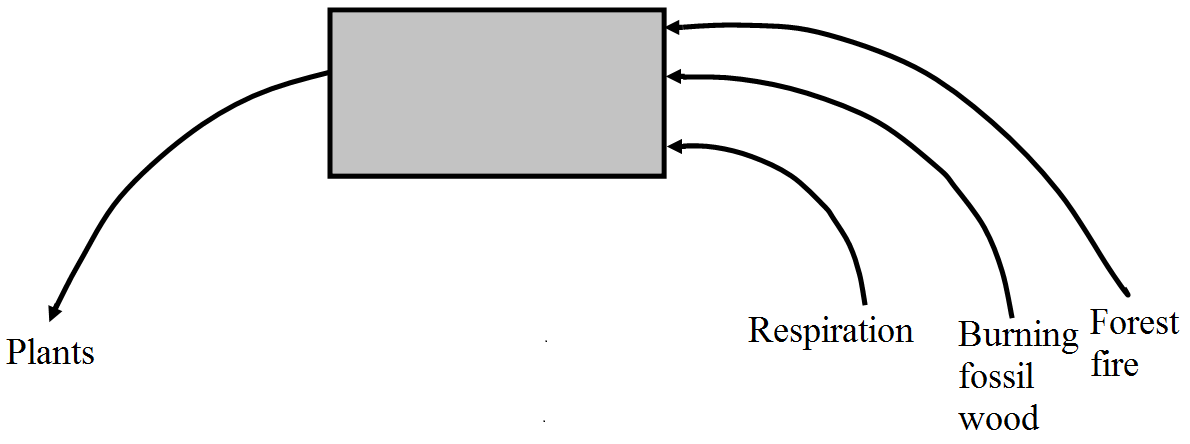
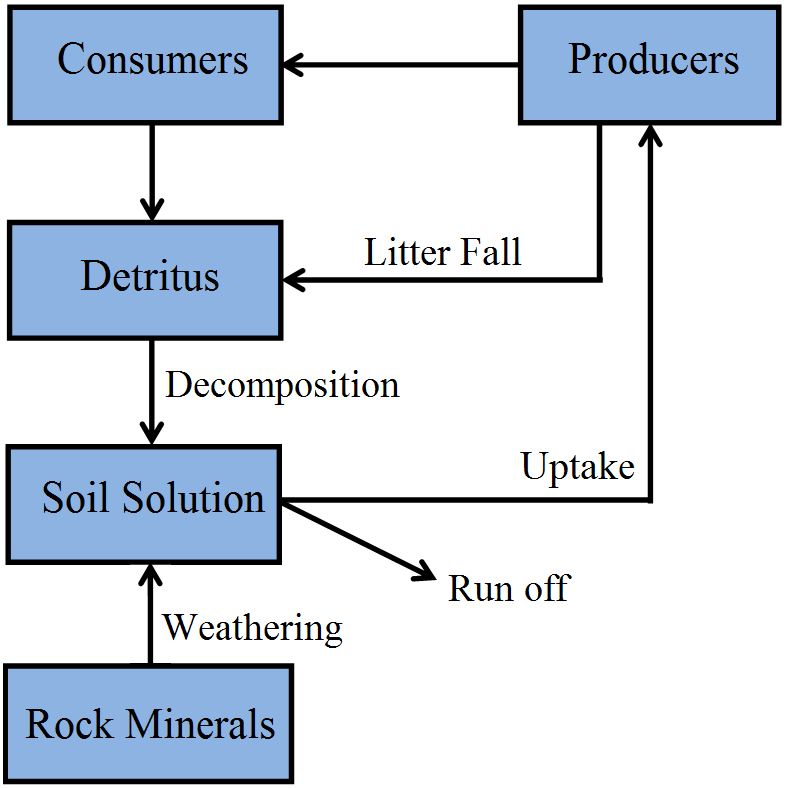
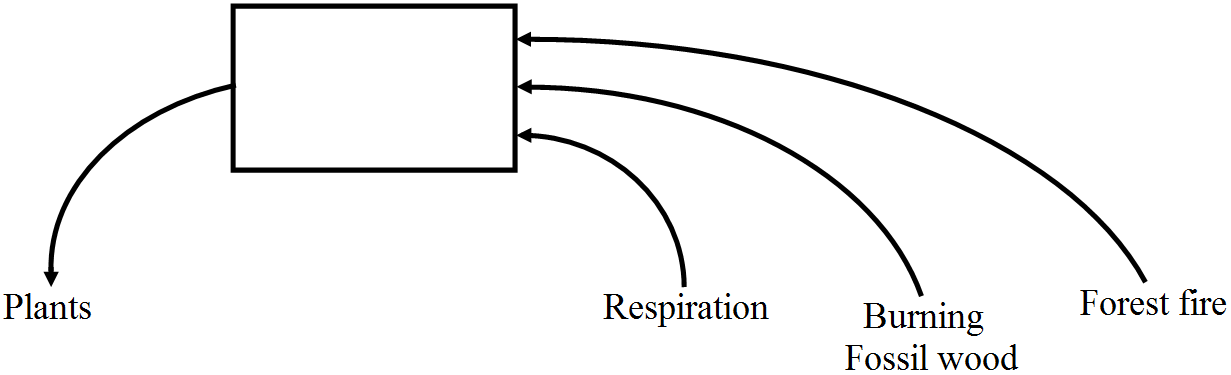 The above diagram shows a simplified biogeochemical cycle.