Questions

Que-Ans (Each of 5 Mark )

🎯

Test yourself on this topic

42 questions · timed · auto-graded

Question 15 Marks
Differentiate between meristematic and permanent tissues in plants.
Answer
Meristematic
Permanent
Cells of this tissue divide throgh out their life.
They lose the ability to divide to take up specific function.
They are located at specific regions of the plant viz apical lateral, intercalary.
They are distributed throught the plant body.
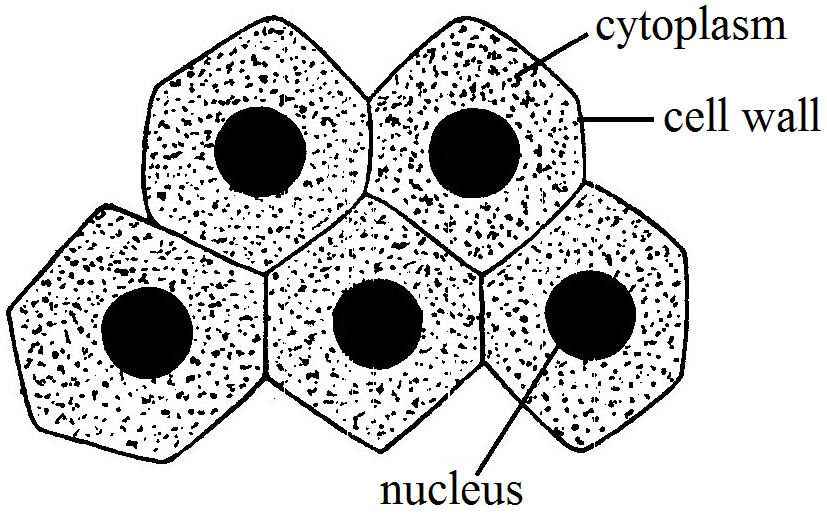
Cells of this tissue are very active, have dense cytoplasm, thin walls and prominent. They lack vacuoles.
They are vacuolated vary in shape and size. their cell wall may be thick.
Cell wall is cellulosic.
Cell wall is made up of cellulose.
View full question & answer
Question 25 Marks
What are the different tissues in alimals.
Answer
The different tissues in animals are:
  1. Epithelial Tissues: These are the protective tissues of the animal body. Depending upon the shape and function of the cells, the epithelial tissues are classified as follows:
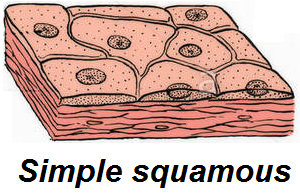
  1. Squamous epithelium.
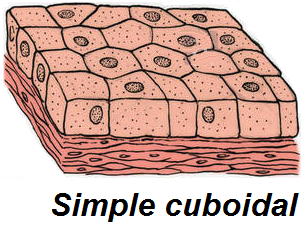
  2. Cuboidal epithelium.
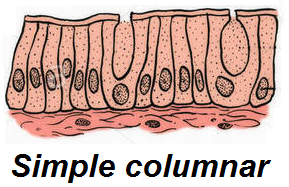
  3. Columnar epithelium.
  4. Glandular epithelium.
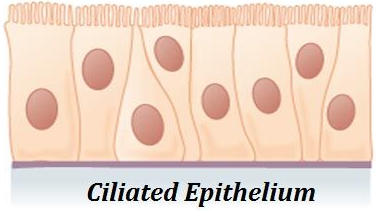
  5. Ciliated epithelium.
  1. Muscular Tissues: The muscular tissues form the contractile tissues and are made up of muscle cells. On the basis of their location, structure and function, there are three types of muscular tissues:
  1. Striated muscles.
  2. Smooth muscles.
  3. Cardiac muscles.
  1. Connective Tissues: The connective tissues are specialised to connect and anchor various body organs. They are of five types:
  1. Aerolar connective tissue.
  2. Dense regular connective tissue.
  3. Adipose tissues.
  4. Skeletal tissues.
  5. Fluid connective tissues.
  1. Nervous Tissues: These tissues are specialised to transmit messages within our body. Brain, spinal cord and nerves are all composed of nervous tissues.
View full question & answer
Question 35 Marks
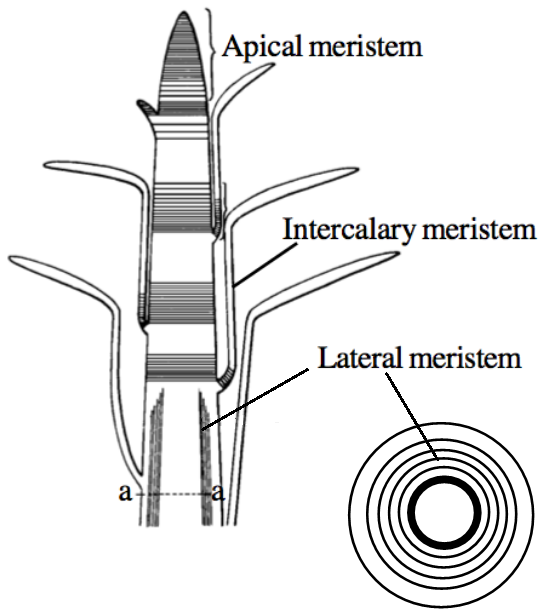
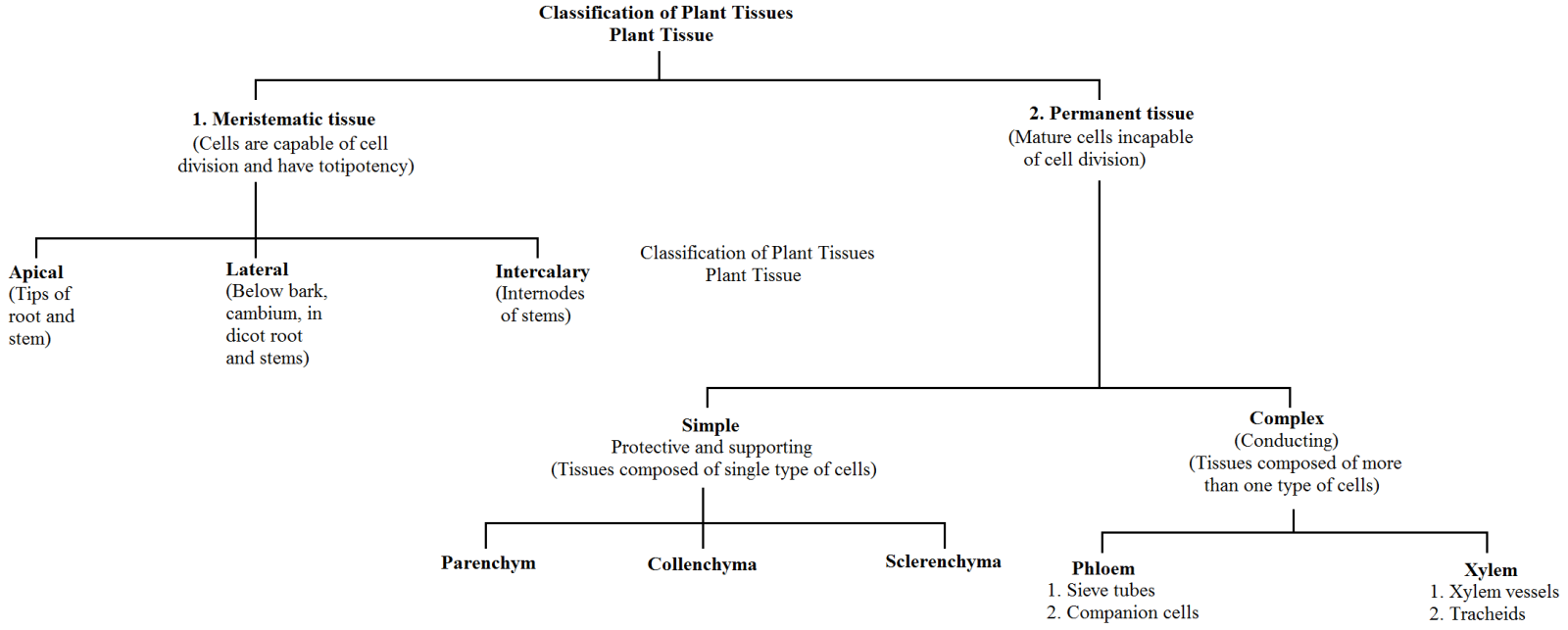
What are meristematic tissues? Explain with the help of suitable diagram. Give their classification on the basis of their position in the plant body.
Answer
Meristematic tissues are the tissues in which the cells divide continuously and help in increasing the length and girth of the plant. According to their position in the plant, meristems are of three types:
  1. Apical Meristems: These are situated at the growing tip of the stems and roots and increase the height of the plant.
  2. Lateral Meristems: These are found beneath the bark and in vascular bundles of dicot roots and stems. These are responsible for the growth of cambium and hence increases the girth of the plant.
  3. Intercalary Meristems: They are located at the base of leaves or internodes or below the nodes. It increases the length of the plant​​​​​​​
View full question & answer
Question 45 Marks
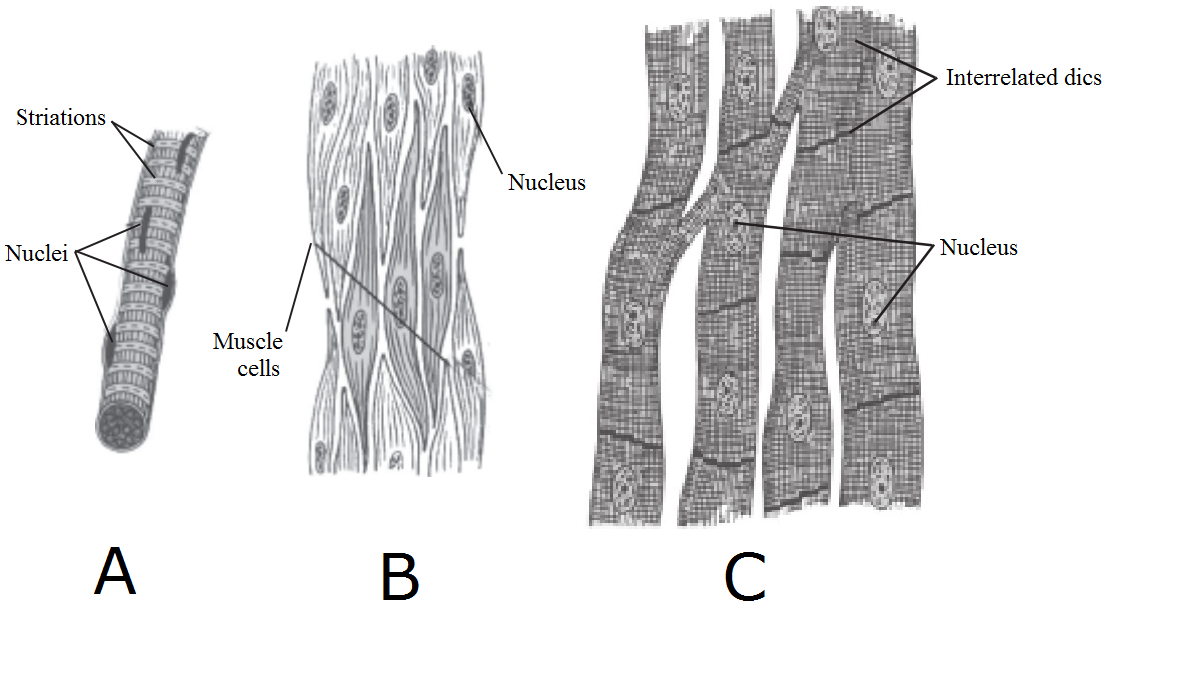
Define muscular tissue, Classify and explain different types of muscles with the help of suitable diagrams.
Answer
Muscular tissues form the muscles in the body and are responsible for movement and locomotion. Muscle cells are elongated and are called muscle fibres. They are capable of contraction and relaxation.
There are three types of muscular tissues:
  1. Striated Muscles or Skeletal muscles: These are called skeletal muscles as they are found attached to the bones and help in the body movements. The cells are cylindrical, unbranched, striated and multi nucleated. They are involuntary in nature.
  2. Non-Striated muscles or smooth muscles: The cells are spindle shaped, uni-nucleated, elongated and have no striations. They are found within the walls of elementary canal, bladder and blood vessels. They are involuntary in nature.
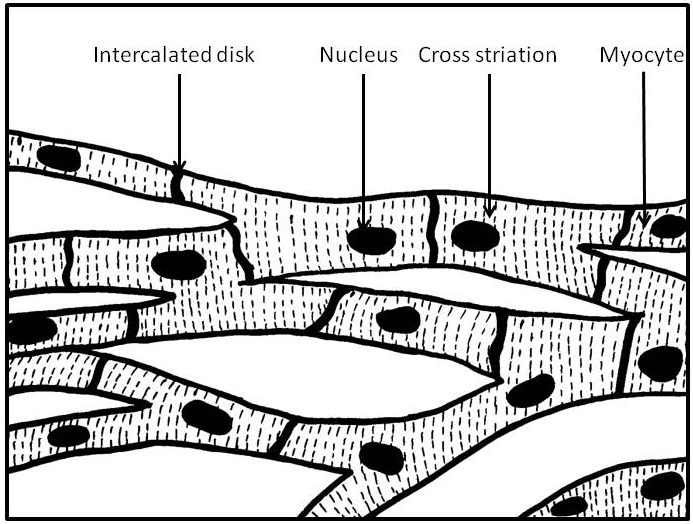
  3. Cardiac Muscles: These are found exclusively in heart. They are cylindrical, non-tapering, branched with faint striations. They have one or two nuclei in each cell. They are involuntary. Their function is rhythmic contraction and relaxation throughout life.

A: Striated muscle.
B: Smooth muscle.
C: Cardiac muscle.
View full question & answer
Question 55 Marks
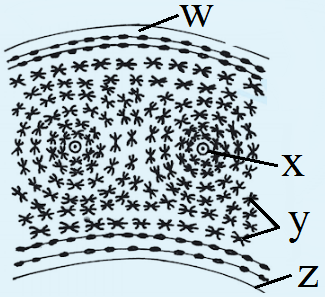
  1. Identify the figure.
  2. Label $W, X, Y$ and $Z$
  3. What is chemical composition of material of the figure
  4. What of the function of $X$?
Answer
  1. It is section of a bone.
  2. $W:$ Periosteum.
$X:$ Haversian canel.
$Y:$Canaliculus (plural canaliculi).
$Z:$ Endosteum.
  1. The chemical composition of material of bone includes:
  1. Ossein $(30-40 \%)$.
  2. Mineral matter $(60-70 \%)$ of calcium and magnesium carbonate and phosphate.
  1. Haversian canal tends to carry nutrients to the interior of the bone.
View full question & answer
Question 65 Marks
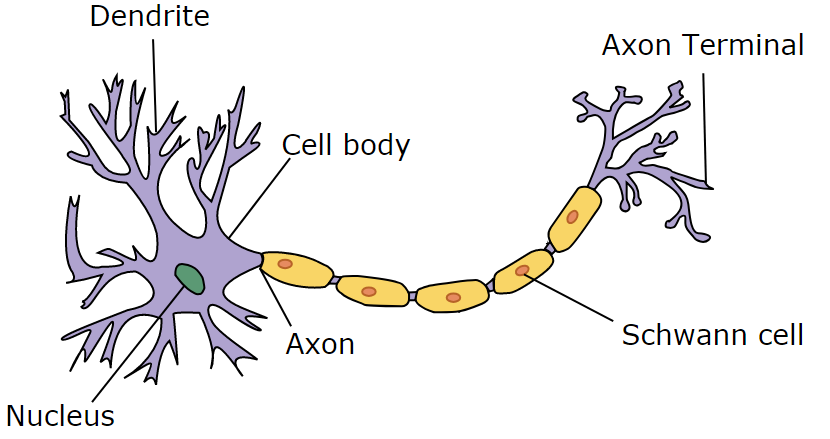
What does a neuron look like?
Answer

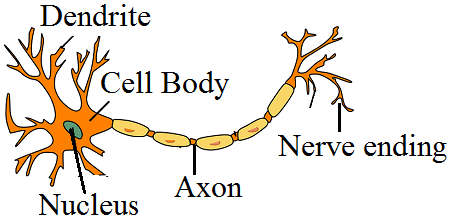
A neuron consists of a cell body witha nucleus and cytoplasm. It has two important extensions known as the axon and dendrites. An axon is a long thread-like extension of nerve cells that transmits impulses away from the cell body. Dendrites, on the other hand, are thread-like extensions of cell body that receive nerve impulses. Thus, the axon transmits impulses away from the cell body, whereas the dendrite receives nerve impulses. This coordinated function helps in transmitting impulses very quickly.
View full question & answer
Question 75 Marks
Give an account of structure and function of xylem.
Answer
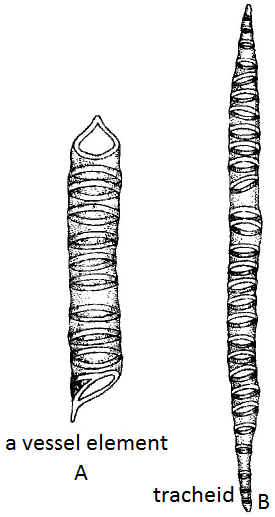
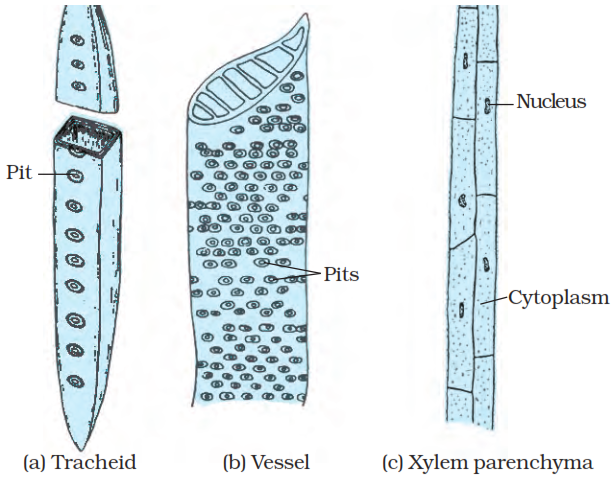
Xylem is a complex vescular tissue which is composed of several types of cells. Xylem consists of tracheids, vessels, xylem parenchyma and xylem fibres. The cells of this tissue have thick walls and many of them are non-living.
  1. Tracheids: These are long elongated tubular cells. Tracheids cells are dead. Its main function is conduction of water and minerals from root to stem.
  2. Vessels: These are pipe-like structure. Vessels are dead and have lignified cell wall. They also participate conduction of water and minerals.
  3. Xylem parenchyma: These are living cells which store food material.
  4. Xylem fibres: These are dead cells provide mechanical support to the plant.
View full question & answer
Question 85 Marks
How are simple tissues different from complex tissues in plants?
Answer
Simple tissue
Complex tissue
These tissues consist of only one type of cells.
These tissues are made up of more than one type of cells.
The cells are more or less similar in structure and perform similar functions.
Different types of cells perform different functions. For example, in the xylem tissue, tracheids help in water transport, whereas parenchyma stores food.
Three types of simple tissues in plants are parenchyma, collenchyma, and sclerenchyma.
Two types of complex permanent tissues in plants are xylem and phloem.
View full question & answer
Question 95 Marks
What are tendons and ligaments? Differenitate between the two.
Answer
Dense connective tissue is of two types- tenonds and ligaments.
Tendon
Ligament
It connects bone to muscle.
It connects bone to bone at joints.
It is strong and non-flexible.
It is elastic and flexible.
View full question & answer
Question 105 Marks
What is lymph? Describe its function.
Answer
Lymph is a colorless or slightly yellowish fluid. It is a medium of circulation in human body which flows only in one direction from body tissues to the heart.
The functions of lymph are:
  1. Lymph helps in removing the waste products.
  2. Lymph carries digested fat from the small intestine to the entire body.
  3. Lymph nodes contain lymphocytes which kill the germs or foreign bodies.
View full question & answer
Question 115 Marks
Why are xylem and phloem called complex tissues? How are they different from one other?
Answer
Both xylem and phloem consist of more than one type of cells, which coordinate to perform a common function.
Xylem
Phloem
Consists of tracheids, vessels, xylem, parenchyma and xylem fibers.
Consist of sieve tubes, comanion cell, phloem parenchyma and phloem fibers.
They transport water and minerals vertically from soli to parts of plant.
They transport parensport food from leaves tp other parts of the plant.
Most of the cells except xylem parenchyma are dead cells.
Most of the cells except phloem fiberes are living cells.
View full question & answer
Question 125 Marks
Write important functional differences between striated and smooth muscle tissues. Draw a labeled diagram of the muscle tissue that shows rhythmic contraction and relaxation throughout the life.
Answer

Differences between striated and smooth muscle tissues:
Striated muscle tissues
smooth muscle tissues
Striated muscles are voluntary
smooth muscles are involuntary in function.
Striated muscles show stripes
smooth muscles do not show stripes.
Skeletal muscle fibres are cylindrical
smooth muscle fibres are spindle shaped.
Diagram of the muscle tissue:
View full question & answer
Question 135 Marks
Describe the composition of human blood.
Answer
Blood is a fluid connective tissue which circulates in our body. The main components of blood are plasma $(55\%)$ and blood corpuscles $(45\%)$. Plasma is straw-coloured fluid which contains $85-90\%$ water and $5-10\%$ other substances like proteins, salts and hormones.There are three types of blood corpuscles:
  • $RBC$ (Red blood cells).
  • $WBC$ (White blood cells).
  • Platelets.
View full question & answer
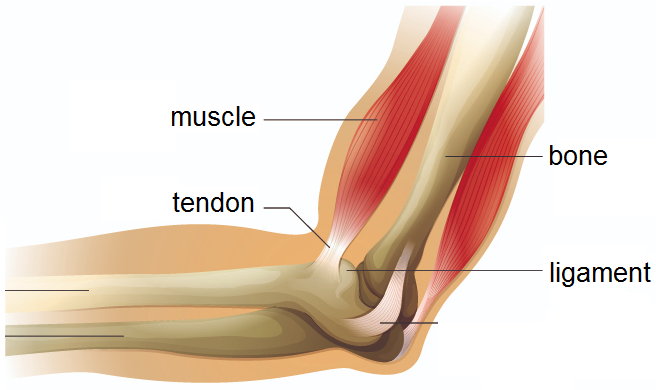
Question 145 Marks
  1. Identify $A, B, C$ and $D.$
  2. Write the functions of $A, B, C$ and $D.$
  3. Write the difference between $A$ and $D.$
Answer
  1. $A-$ Tendon
$B-$ Bone
$C-$ Muscle
$D-$ Ligament
  1. $A-$ The main function of a tendon is to connect skeletal muscles to bones. Tendons are a type of connective tissue, and the primary building blocks of tendons are collagen fibers.
$B-$ Bones have many functions. They support the body structurally, protect our vital organs, and allow us to move. Also, they provide an environment for bonemarrow, where the blood cells are created, and they act as a storage area for minerals, particularly calcium.
$C-$ the main function of the muscular system is movement, but it also helps stabilize our joints, maintain our posture and generate heat during activity. Movement of our body can be voluntary and controlled by the skeletal muscles, or it can be involuntary and controlled by smooth muscles.
$D-$ Ligaments attach two bones or cartilages,it helps in supporting and keeping the organ in position, it is made of fibrous tissue.
  1.  
Tendons
Ligaments
Connects skeletal muscles to bones
Connects bones to bones
Tough and elastic
Elastic
Connects the end of the muscles to bones
Connects the end of the bones at joints
Each muscle contains only one tendon
Each joint contains many ligaments
Proteoglycan content is less
Proteoglycan content is more
White in colour
Yellow in colour
Blood supply is good
Blood supply is poor
Fibroblasts lie in a continuous row
Fibroblasts are scattered
The fibres and compact and present in parallel bundles
They are not arranged in parallel bundles but are compactly packed
No such classification
They are classified into $3$ types, namely: Articular ligaments, Remnant ligaments and Peritoneal Ligaments
View full question & answer
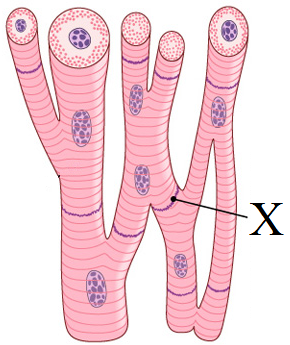
Question 155 Marks
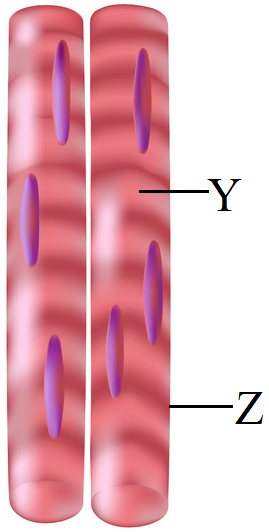
  1.  
  1.  
  1. Identify figures $A$ and $B.$
  2. Label$ X, Y$ and $Z.$
  3. Which one act as impulse booster?
  4. Which one is under control our will?
Answer
  1. Cardiac muscle fibres (Fig $A)$ and striated muscle fibre (Fig $B).$
  2. $X$: Intercalated disc.
$Y: $Light band.
$Z$: Dark band.
  1. Intercalated disc of cardiac muscle acts as an impulse booster
  2. Striated muscles are also known as voluntary muscle as their movement is under control of our will.
View full question & answer
Question 165 Marks
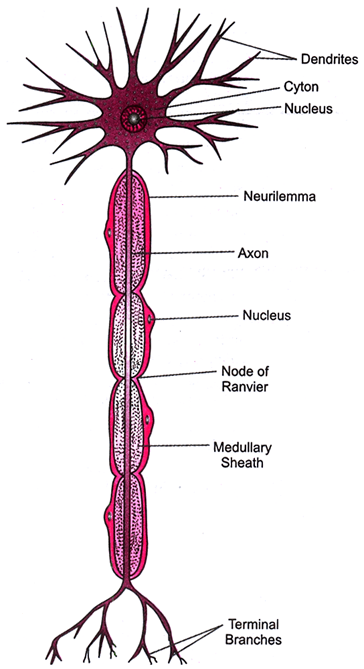
Explain the structure of neuron with the help of a labelled diagram
Answer

The neuron consists of three parts:
  1. The Cyton or Cell body: It contains a central nucleus and cytoplasm with deeply stained particles called Nissl's granules.
  2. Dendrites: The dendrons are short processes arising from the cyton and branches into dendrites.
  3. Axon: It is a single, long cylindrical process which forms fine branches terminally. It has a swollen structure at its end called synaptic knob or bouton. It is also termed as the nerve fibre.
​​​​​​​
View full question & answer
Question 185 Marks
Describe components of phloem. Define translocation.
Answer
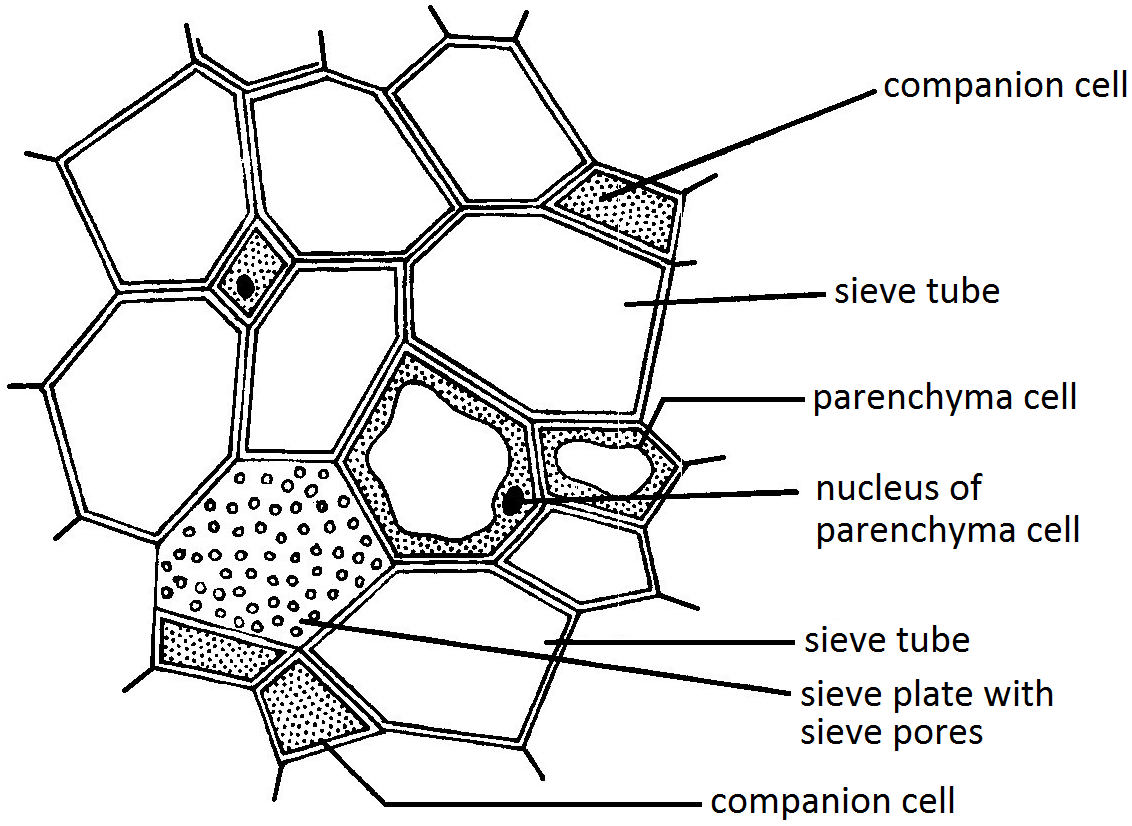
Phloem is made up of four types of elements: Sieve tubes, companion cells, phloem fibres and the phloem parenchyma.
  1. Sieve tubes: These are tubular cells with perforated walls. These cells are responsible for transportation of food and nutrients.
  2. Companion cells: These cells are found associated with sieve tubes and connected with it by simple pits. These cells are long, narrow and thin walled. These cells are living.
  3. Phloem fibres: They have thick cell wall and they provide mechanical support to plant.
  4. Pholem parenchyma: These cells are living and often cylindrical in shape.

The transport of food from leaves to other parts of the plant is called translocation

View full question & answer
Question 195 Marks
What are different types of tissues in plants? Describe simple tissues.
Answer


Simple tissues: These tissues are composed of cells which are structurally and functionally similar.
There are three types of simple tissues:
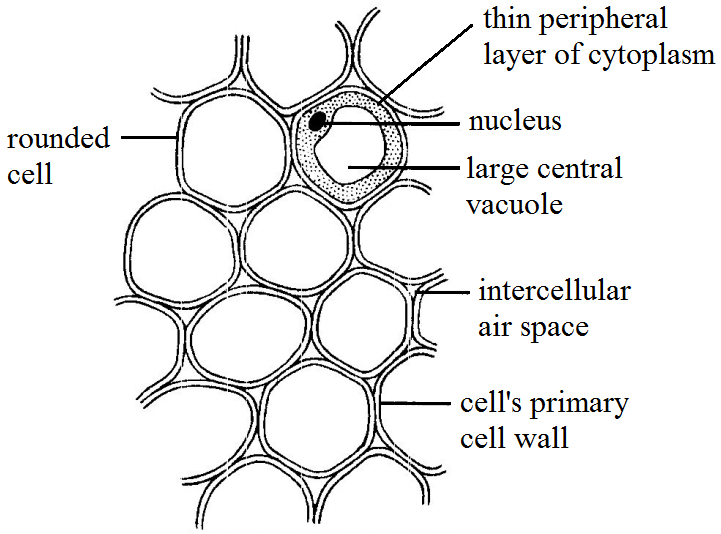
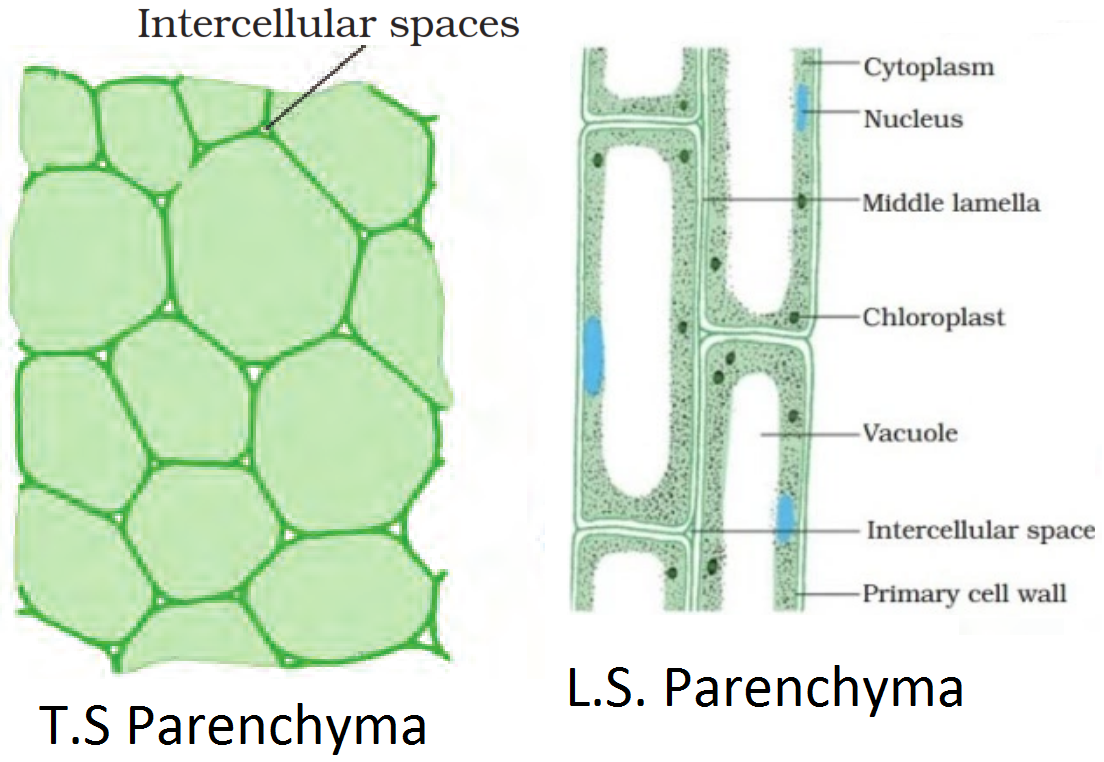
  1. Parenchyma: Parenchyma cells are living and posses the power of division. The cell wall is thin and encloses a dense cytoplasm which contains a small nucleus and surrounds a large central vacuole.
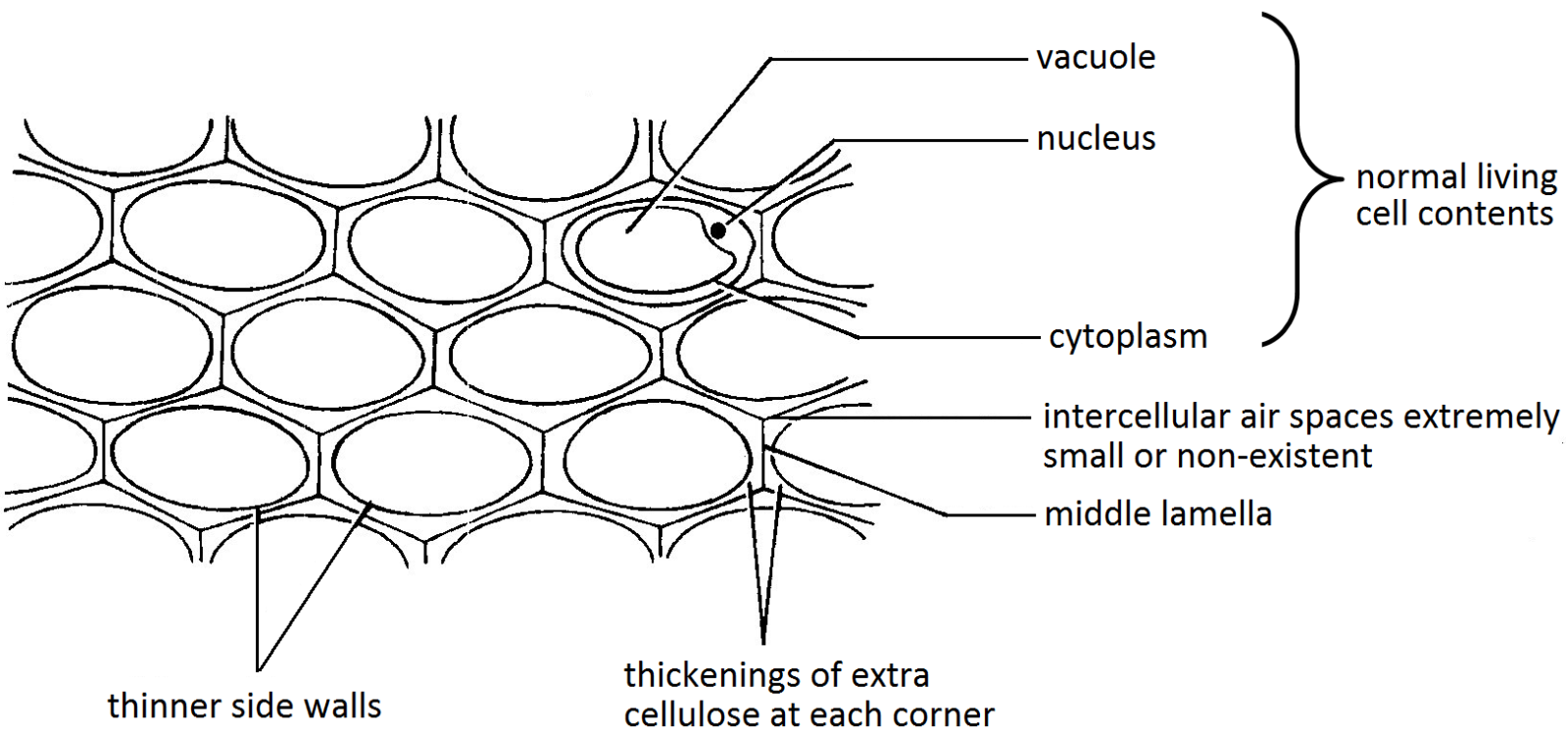
  2. Collenchyma: It tissues also consists of living cells. It is characterized by the deposition of extra cellulose at the corners of the cells. In collenchymas, intercellular spaces are generally absent. Collenchyma cells are elongated in shape. They often contain a few chloroplasts.
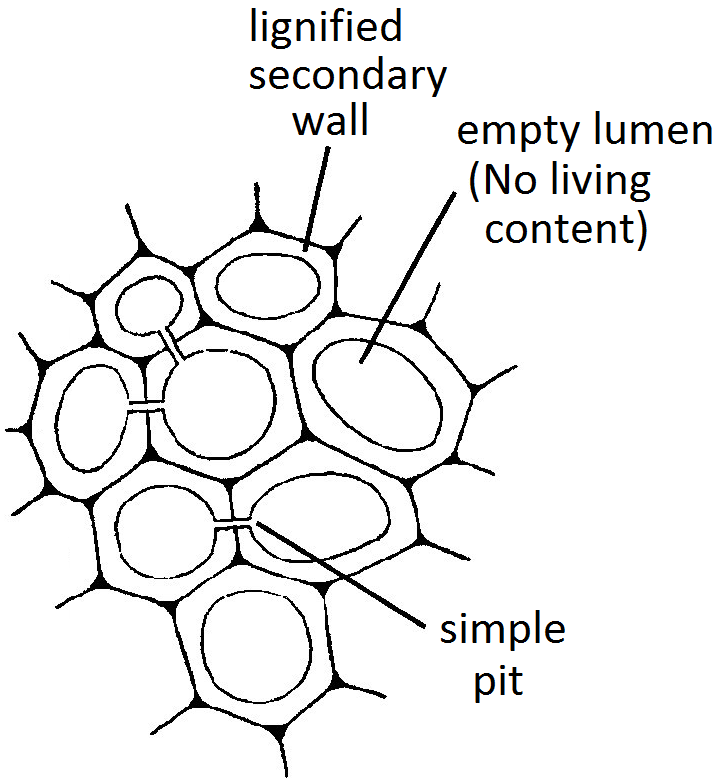
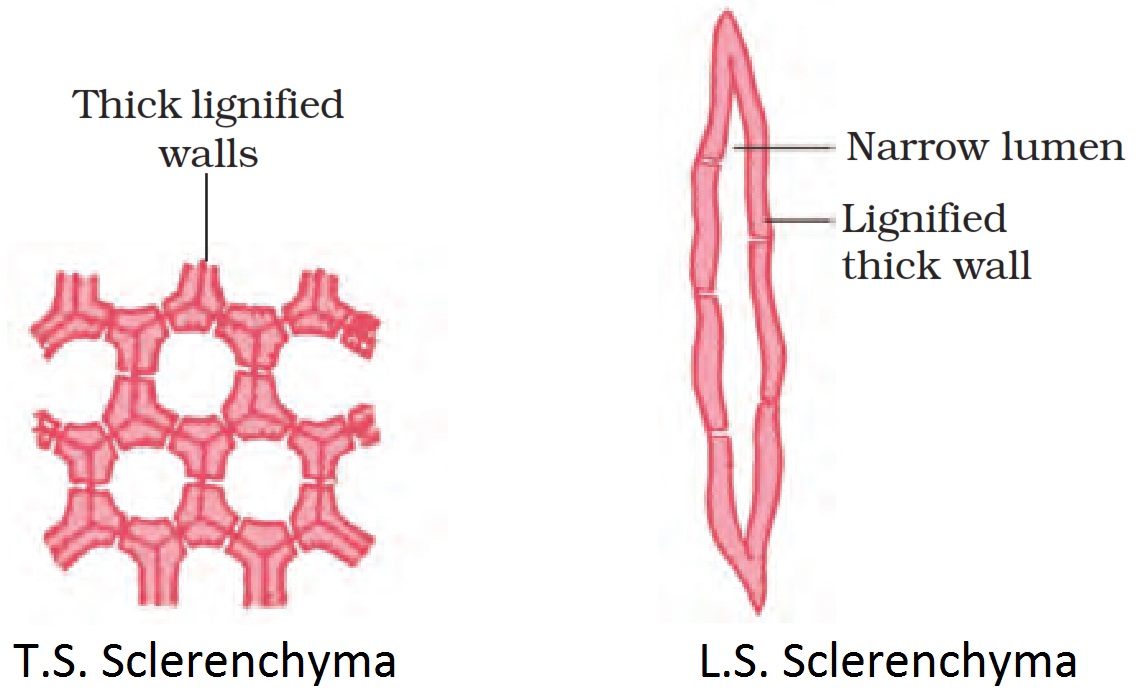
  3. Sclerenchyma: Sclerenchyma cells are dead cells and they are devoid of protoplasm. The cells walls of Sclerenchyma are greatly thickened by the deposition of lignin. The cells of sclerenchyma are closely packed without intercellular spaces.
View full question & answer
Question 205 Marks
What will happen if:
  1. Apical meristem is damaged or cut?
  2. Cork is not formed in older stems and roots.
  3. Lymph is not returned to blood?
Answer
  1. Apical meristems are the growing parts of the roots and stems and are present at the tips of roots, branches, leaves and shoots. If the apical meristems are damanged or cut, the growth of that part of the plant will stop.
  2. If cork is not formed in older stems or roots, the outer tissues will rupture due to increase in girth which expose the interior to dessication and infection.
  3. Lymph is transported through lymph vessels of the lymphatic system. If lymph is not returned to blood, the blood volume will decrease during passage of materials from tissues to blood and vice versa.
View full question & answer
Question 215 Marks
  1.  
  1.  
  1. Identify figures $A$ and $B.$
  2. Which is called tesselated and payement epitheliurn$?$
  3. Which one lines the gastrointestinal tract and epiglottis$?$
  4. Which one allows diffusion of substances$?$
Answer
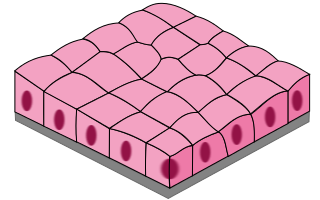
  1. Figure A: squamous epithelium.
Figure B: columnar epithelium.
  1. Squamous epithelium is also known as tesselated epithelium or pavement epithelium.
  2. Simple columnar epithelium lines the gastrointestinal tract and epiglottis.
  3. Simple squamous epithelial cells are extremely thin and flat which allows diffusion of substances through it.
View full question & answer
Question 225 Marks
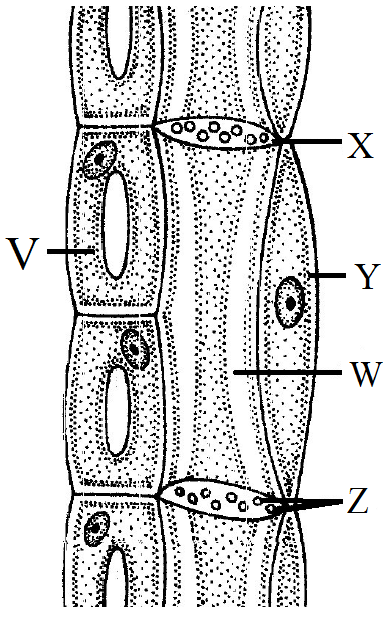
  1. Identify the figure. What is its function$?$
  2. Label $V$ and $W.$
  3. Label $X, Y$ and $Z.$
  4. W loses its nucleus in the mature state, still it remains alive. Explain how$?$
Answer
  1. It is a section of phloem, a complex tissue. Phloem transports food from leaves to the other parts of the plant.
  2. V: Phloem parenchyma.
W: Seive tube.
  1. X: Sieve plate.
Y: Companion cell.
Z: Sieve pores.
  1. Sieve tube are associated with companion cells. A mature sieve tube is living but it lacks a nucleus. Companion cells are living and associated with the sieve tubes. Living state of the mature sieve tube cells is regulated by nucleated cornpanion cells. These cells supply the $RNA$ and proteins that keep the sieve tube alive. is associated with companion cells.
View full question & answer
Question 235 Marks
Give a brief account of cartilage.
Answer
Cartilage is compact with widely spaced cells. Its solid matrix is composed of proteins and sugars. The cells of cartilage are called chondrocytes. They don’t have blood vessels. Cartilage is present in the tip of nose, outer ear joints, between adjacent bones of the vertebral column, limbs and hands in adults. Cartilage smoothens bone surfaces at joints. It provides support and flexibility to the body parts.
View full question & answer
Question 245 Marks
What is simple tissue? Classify and explain its Different types with suitable diagram.
Answer

Simple tissues: These tissues are composed of cells which are structurally and functionally similar.
There are three types of simple tissues:
  1. Parenchyma: Parenchyma cells are living and posses the power of division. The cell wall is thin and encloses a dense cytoplasm which contains a small nucleus and surrounds a large central vacuole.
  1. Collenchyma: It tissues also consists of living cells. It is characterized by the deposition of extra cellulose at the corners of the cells. In collenchymas, intercellular spaces are generally absent. Collenchyma cells are elongated in shape. They often contain a few chloroplasts.
  1. Sclerenchyma: Sclerenchyma cells are dead cells and they are devoid of protoplasm. The cells walls of sclerenchyma are greatly thickened by the deposition of lignin. The cells of sclerenchyma are closely packed without intercellular spaces.
View full question & answer
Question 255 Marks
Differentiate between parenchyma, collenchyma and sclerenchyma on the basis of their cell wall.
Answer
Parenchyma
Collenchyma
Sclerenchyma
Cell walls are relatively thin, and the cells in parenchyma tissues are loosely packed.
The cell wall is irregularly thickened at the corners, and there is very little space between the cells.
The cell walls are uniformly thickened, and there are no intercellular spaces.
The cell wall in this tissue is made up of cellulose.
Pectin and hemicellulose are the major constituents of the cell wall.
An additional layer of the cell wall composed mainly of lignin is found.
View full question & answer
Question 265 Marks
Describe structure and functions of bone.
Answer
Bone is a strong and non-flexible tissue. The cells of bones are called osteocytes. Bone cells are embedded in a hard matrix that is composed of calcium and phosphorus compounds. Each cell is enclosed in a small cavity called the lacuna. Functions:
  1. It provides shape to the body.
  2. It forms the framework that supports the body.
  3. It anchors the muscles.
  4. It protects the vital body organs like brain, lungs, etc.
View full question & answer
Question 275 Marks
Define the process of differentiation.
Answer
Cells derived from the division of meristematic tissues take up specific roles and gradually lose their ability to divide. Thus, they form permanent tissue. The process by which the cells divide meristematically to take a permanent shape, size and function is called differentiation.
View full question & answer
Question 285 Marks
Describe the structure of a nerve cell.
Answer
The cells of the nervous tissue are called nerve cells or neurons. A neuron or nerve cell is structural and functional unit of the nervous tissue. It consists of:
  • Cell body or cyton.
  • Axon.
  • Dendrons or dentrites.
Cell body or cyton has a prominent nucleus and cytoplasm. Cell organelles like golgi bodies, mitochondria, etc are also present in the cytoplasm. From the cell body extend out two kinds of cytoplasmic extensions called dentrites and axons. The axon is covered by a fatty myelin sheath. Myelin sheath is discontinuous and broken at intervals by nodes of Ranvier. Axons usually a long, unbranched, cylindrical process that ends in many terminal end fibres. The axon ending of one nerve cell is lossely placed on the cell body of another nerve cell. The other small branch given out by the cyton are called dendrons which branch further into numerous thin hair-like dentrites.
View full question & answer
Question 295 Marks
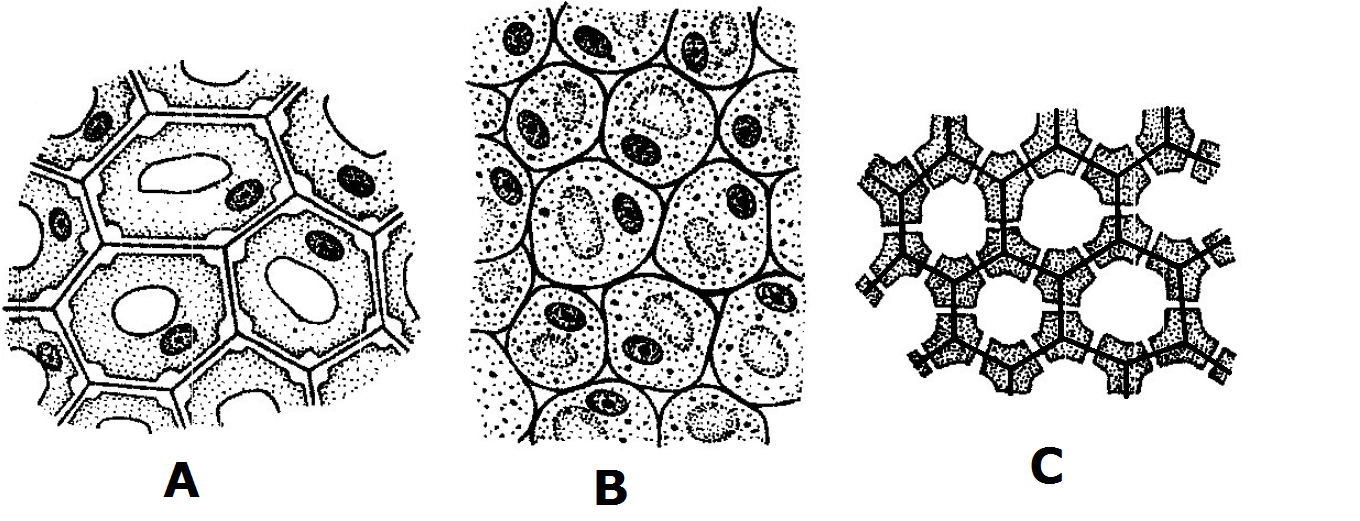
  1. Identify Figure $A, B$ and $C.$
  2. Which one of them has heavy deposition of lignin$?$
  3. Which one of them provides both mechanical strength as well as flexibility$?$
  4. Which one of them can be modified to form air cavities in awuatic plants$?$
  5. Which one of them is commercially exploited to obtain Hemp and Jute$?$
Answer
  1. A: Transverse section of collenchyma.
B: T.S. parenchyma.
C: T.S. sclerenchyma fibres.
  1. Sclerenchym tissue has heavy deposition of lignin.
  2. Collenchyma tissue provides both mechanical strength and flexibility.
  3. In aquatic plants, large air cavities are present in parenchyma tissue to given buoyancy to the plants to help them float. Such a modified parenchyma is called aerenchyma.
  4. Fibres of Hemp and Jute are obtained from the sclerenchyma fibres.
View full question & answer
Question 305 Marks
Differentiate between sclerenchyma and parenchyma tissue. Draw well labelled diagram.
Answer
 
Parenchyma
 
Sclerenchyma
1.
Cells are thin walled and unspecialized.
1.
Cells are thick walled and lignifieg.
2.
These are living cells.
2.
Tissues are made up of dead cells.
3.
Cells are usually loosely packed with large intercellular space.
3.
No intercellular apaces between the calls are found.
4.
Stores nutrient and water in stem and roots.
4.
Provides strength to the plant parts.
5.
Some cells contain chlorophyll called chlorenchyma and photosynthesis. other cells have large air which provid buoyancy to the hydrophytic plants.
5.
The cells are long and narrow. make the plant hard and stiff. The tissue is present in the stem around of leaves and seeds and nuts.

View full question & answer
Question 315 Marks
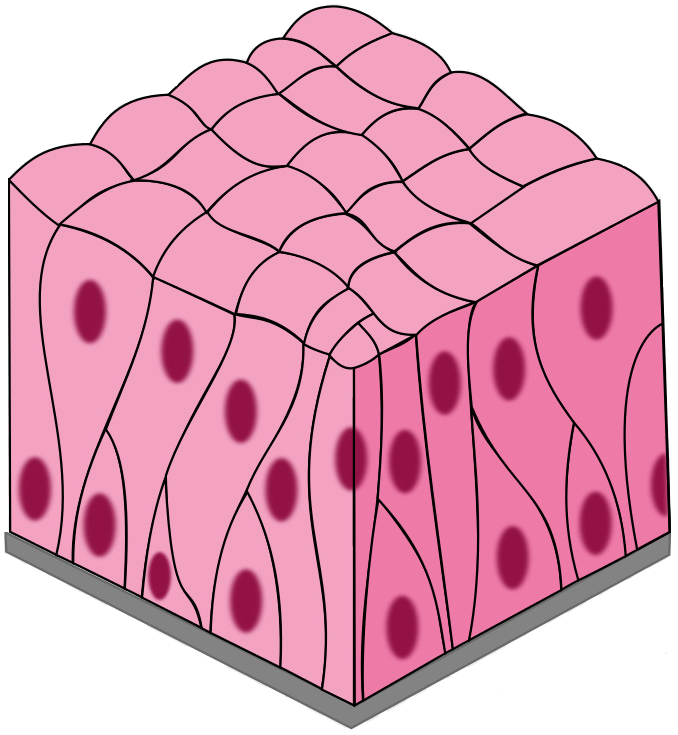
On the basis of shape and functions of cells how epithelial tissues are classified? Explain with diagram the various types of epithelial tissues.
Answer
Epithelial cells of following types:
  1. Squamous Epithelium: These are thin, flat cells that are closely packed. The squamous epithelial cells line the cavities of the mouth, oesophagus, alveoli, and blood vessels. This tissue gives protection against mechanical injury and also blocks the entry of germs. If the squamous epithelium is arranged in many layers, it is a compound squamous tissue called the stratified squamous epithelium. We find these kinds of tissues in the skin and also the lining of the oesophagus.
  1. Cuboidal Epithelium: These cells are cuboidal in shape. They are found in the salivary glands, kidney tubules, sweat glands etc. Their main function includes absorption, secretion, and excretion. If the cuboidal epithelium is arranged in many layers it forms the stratified cuboidal epithelium. It is found on the inner side of the pancreatic ducts and salivary glands. They mainly help in protection.
  1. Columnar Epithelium: The columnar epithelium has cells that are pillar-like and column-like. We can find them in the lining of the stomach and intestine. Its functions include absorption and secretion.
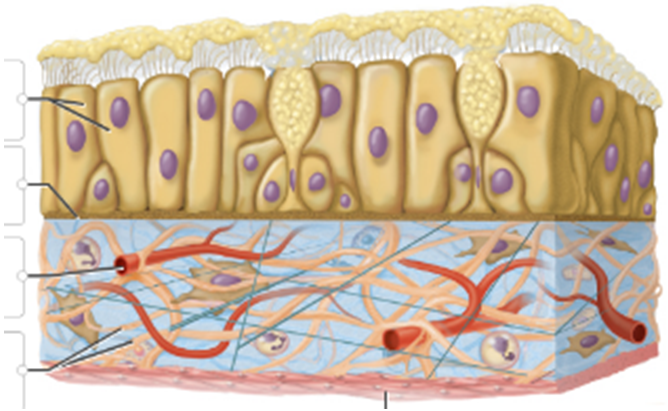
  1. Ciliated Epithelium: When the columnar epithelial tissues have cilia, then they are ciliated epithelium. They are present in the lining of the trachea, kidney tubules etc. The rhythmic movement of the cilia helps in the movement of material in one direction.
  1. Glandular Epithelium: These are modified columnar epithelial tissues. They are large cells that present in the tear glands, sweat glands etc. Their main function is secretion.
View full question & answer
Question 325 Marks
What do you know about complex tissue Classify and explain its different types in plants with suitable diagrams.
Answer
The complex tissue consists of more than one type of cells having a common origin. They are of two types:
  1. Xylem: Xylem is a vascular and mechanical tissue which conducts water. Xylem is composed of cells of four different types:
  1. Tracheids.
  2. Vessels or tracheae.
  3. Xylem parenchyma.
  4. Xylem Sclerenchyma.
Except xylem parenchyma, all other xylem elements are dead and bounded by thick lignified walls. Vessels are shorter and wider than tracheids. Vessels are very long tube-like structures formed by a row of cells placed end to end. Tracheids are elongated cells with tapering ends. They also conduct water.
  1. Phloem: Phloem is also a vascular tissue which transports food from the leaves to the various parts of the plant. It is composed of:
  1. Sieve tubes: Sieve tubes are slender, tube-like structures composed of elongated thin-walled cells, placed end to end. Their end walls are perforated by numerous pores and are called sieve plates.
  2. Companion Cells: It is a small thin-walled cell containing dense and very active cytoplasm and large elongated nucleus.
  3. Phloem parenchyma: These are thin-walled, living cells of parenchyma of phloem. They have two functions, storage and slow lateral conduction of food.
  4. Phloem Fibres: These are thick-walled, elongated spindled shaped dead cells which posses narrow lumen. They provide mechanical strength to the tissue.
View full question & answer
Question 335 Marks
Give reasons for: Meristematic cells have a prominent nucleus and dense cytoplasm but they lack vacuole.
Answer
Meristematic cells are the continously dividing cells of the plant body i.e., they remain metabolically active and as we know that vacuoles serve the purpose of storage in plant cells. Therefore meristematic cells do not require vacuole.
View full question & answer
Question 345 Marks
Describe the structure and function of different types of epithelial tissues. Draw diagram of each type of epithelial tissue.
Answer

Epithelial tissue is the thin protective layer of cells which covers the surface of the body and lines the internal organs. The cells of this tissue are generally packed close together. The shape of the cells depends on the location and function of the tissue. Epithelial tissue originates from the ectoderm. But, epithelial tissue lining the intestine originates from the endoderm.
Epithelial tissue may be simple, i.e., composed of single layer of cells or stratified, i.e., made up of several layers of cells. Depending upon the shape and function of cells epithelial tissues are classified as:
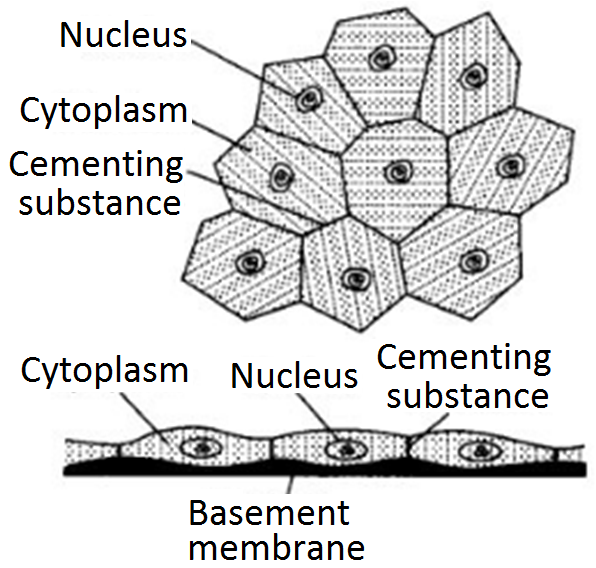
  1. Squamous epithelial tissue: This tissue is composed of a single layer of thin and flat, plate like ceils. The cells fit closely, like the bricks in a wall, to form a smooth membrane. It is also known as tesselated and pavement epithelium. It is found in the outer layer of the skin, and covers internal cavities and ducts. Tongue, oesophagus and the lining of the mouth are made up of squamous epithelium.It is also found in blood vessels and alveoli. It protects the underlying parts of body from mechanical injury, entry of germs, chemicals and drying. It also forms a selectively permeable surface through which filtration occurs.
  1. Cuboidal epithelial tissue: This tissue is composed of cube like cells that fit closely. The cells look like squares in section, but the free surface appears hexagonal. This tissue lines the inside of the kidney tubules (the tubes leading from the cups of nephrons) thyroid vesicles and in glands like sweat glands, exocrine pancreas and the salivary glands. It forms germinal epithelium of gonads (testes and ovaries). It helps in absorption, excretion and secretion. It also provides mechanical support.
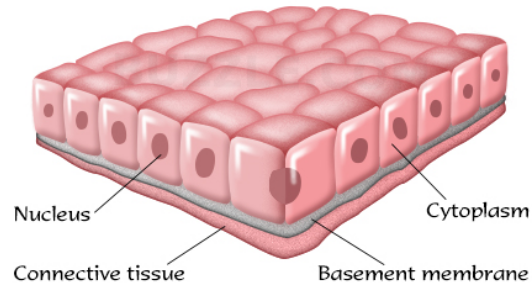
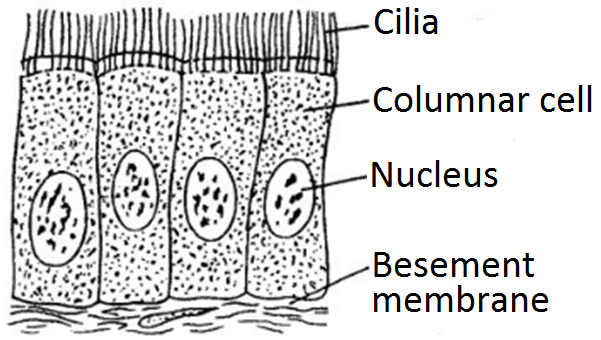
  1. Columnar ciliated epithelial tissue: This tissue is generally composed of a single layer of column like cells. The presence of a conspicuous striated border of microvilli at the free surface end of each cell increases the surface area of the cell for absorption and secretion. It is generally found in the inner lining of the alimentary canal. It also forms the lining of gall bladder and oviducts. The major functions of this tissue includes secretion (e.g., mucus of goblet cells) and absorption (e.g., stomach and intestine).
In some parts of the body, columnar epithelium develops protoplasmic outgrowths called cilia. The constant lashing movements of the cilia help to move substances. It is found in the sperm ducts. It also lines the trachea (wind-pipe), bronchi (lungs), kidney tubules and oviducts (Fallopian tubes). Ciliated epithelium helps the movement of ova in the fallopian tubes and the movement of mucus in the respiratory tract.
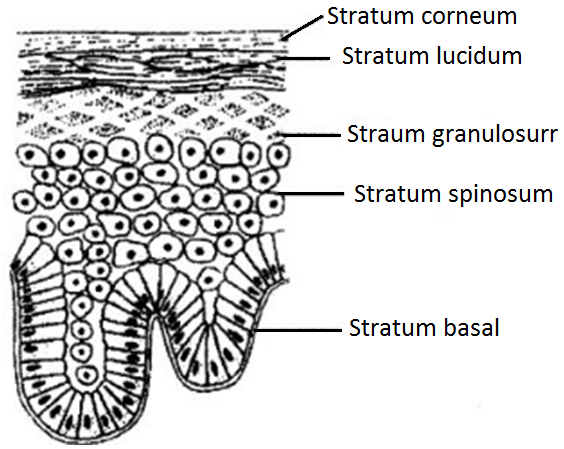
  1. Stratified squamous epithelial tissue: This tissue is found in skin and covers the external dry surface of the skin. Cells of this tissue are arranged in many layers, but the cells forming different layers of this epithelium are not similar. Deeper layers of the tissue have cuboidal cells which become polygonal and finally flattened (squamous) towards the free surface. The flattened cells of superficial layer may contain a fibrous protein, the keratin and become, dead cells and are called keratinised stratified squamous epithelium. This epithelium is water proof and highly resistant to mechanical injury.
  1. Glandular epithelial tissue: Epithelial tissue often acquire additional specialisation as gland cells, which can secrete substances at the epithelial surface. Sometimes, a portion of epithelial tissue folds in wards and a multicellular gland is formed. This is called glandular epithelium.​​​​​​​
View full question & answer
Question 355 Marks
Define connective tissue. Write down functions of connective tissue.
Answer
Connective tissues are most abundant and widely distributed in the body of complex animals. The cells of connective tissue are loosely spaced and embedded in an inercellular matrix. The matrix may be jelly like, fluid, dense or rigid.Functions of connective tissue:
  1. It binds different structure with another like skin with muscles and muscles with bones, etc.
  2. It forms a supporting framework of cartilage and bones in the body.
  3. Blood flows and transports gases, digested food, hormones and waste materials to different parts of the body.
  4. Adipose tissue helps in the storage of fats.
View full question & answer
Question 365 Marks
Describe the structure and functions of epithelium.
Answer
Epithelium is the simplest tissue. It is the protective tissue of the animal body in which the cells are tightly packed having no intercellular matrix. Epithelial cells lie on a delicate non-cellular basement membrane which contains a special form of matrix protein, called collagen. These tissues perform the function of excretion, secretion and absorption. Depending upon the shape and functions of the cells. The epithelial tissue is of various types:
  1. Squamous: The cells are flat and polygonal and are arranged as tiles. These tissues occur in skin, lining of alveoli of lungs, blood vessels etc. Its function includes protection, diffusion and osmosis.
  2. Cuboidal: The cells are cube like. These occur in glands, germinal layer of ovary, kidney tubules etc. Its function is secretion and absorption.
  3. Columnar: The cells are pillar or column like resting on a thin membrane. Such tissues occur in the lining of stomach, intestine etc. Its function includes protection, absorption and secretion.
  4. Ciliated: It has cuboidal, columnar cells with fine hair like structures called cilia. It is present in the lining of respiratory tract, fallopian tube, nephron etc. Its function is protection, spreading of mucus and motion of gases and liquids by cilia.
  5. Glandular: The cells are cubical. These can be branched or unbranched. Such tissues are present in glands. Its main function is secretion.
View full question & answer
Question 375 Marks
Classify connective tissue and give one example of each type.
Answer
The connective tissue is specialized to connect and anchor various body organs. There are five types of connective tissues:
  1. Areolar: This tissue is a loose and cellular connective tissue. Its matrix consists of white collagen fibre and yellow elastic fibre. It joins skin to muscles, fills spaces inside organs and is found around muscles, blood vessels and nerves.
  2. Dense Regular Connective tissue: It is fibrous connective tissue having densely packed fibres and cells. It is the principal component of tendons, ligaments and aponeuroses.
  3. Adipose tissue: It is an aggregation of fat cells or adipocytes. The fat cells are arranged into lobules separated by partitions of collagen and elastin fibres. These are found abundant below the skin, between the internal organs and in yellow bone marrow.
  4. Skeletal tissue: It is a supporting tissue which includes cartilage and bone. Both these tissues form the endoskeleton of a vertebrate body. Cartilage is located in ear pinna, nose tip, epiglottis etc. Bone forms the endoskeleton in human beings and provides shape to the body.
  5. Fluid tissue: It links the different parts of the body and maintains continuity in the body. It includes blood and lymph.
View full question & answer
Question 385 Marks
Describe the composition and functions of blood
Answer
Blood is a fluid connective tissue. There are three types of blood corpuscles:
  1. RBC's or Erythrocytes: These are bi-concave, denucleated, disc like. They contain red coloured respiratory pigment called haemoglobin that helps in the transportation of oxygen.
  2. WBC's or leucocytes: These are irregular, amoeboid, phagocytic cells with one to many lobed nucleus. These cells protect the body against the diseases by producing antibodies.
  3. Blood platelets or thrombocytes: These are spindle shaped cells which help in the clotting of blood.
Functions of blood:
  1. It transports nutrients, hormones and vitamins to the tissues and transports excretory products from the tissues to the liver and kidney.
  2. The $RBCs$ carry oxygen to the tissues for the oxidation of food stuff.
  3. $WBCs$ fight disease by engulfing and destroying foreign bodies.
View full question & answer
Question 395 Marks
What are the various types of animal tissues? Mention briefly the location and one main function of each class of tissue.
Answer
Types of tissues:
  1. Epithelial tissue: Functions of epithelial tissue:
  • The cells of the body's surface form the outer layer of skin.
  • Inside the body, epithelial cells form the lining of the mouth and alimentary canal and protect these organs.
  • Epithelial tissues help in absorption of water and nutrients.
  1. Connective tissue: Connective tissues are fibrous tissues made up of cells separated by non-living material, which is called an extracellular matrix. This matrix can be liquid or rigid. For example, blood contains plasma as its matrix and bone's matrix is rigid. Connective tissue gives shape to organs and holds them in place. Blood, bone, tendon, ligament, adipose, and areolar tissues are examples of connective tissues. One method of classifying connective tissues is to divide them into three types: fibrous connective tissue, skeletal connective tissue, and fluid connective tissue.
  2. Muscular tissue: Muscle cells form the active contractile tissue of the body known as muscle tissue or muscular tissue. Muscle tissue functions to produce force and cause motion, either locomotion or movement within internal organs. Muscle tissue is separated into three distinct categories: visceral or smooth muscle, found in the inner linings of organs; skeletal muscle, typically attached to bones, which generate gross movement; and cardiac muscle, found in the heart, where it contracts to pump blood throughout an organism.
  3. Nervous tissue: Cells comprising the central nervous system and peripheral nervous system are classified as nervous (or neural) tissue. In the central nervous system, neural tissues form the brain and spinal cord. In the peripheral nervous system, neural tissues form the cranial nerves and spinal nerves, inclusive of the motor neurons.
  4. Plant tissues: In plant anatomy, tissues are categorized broadly into three tissue systems: the epidermis, the ground tissue, and the vascular tissue.
  • Epidermis: Cells forming the outer surface of the leaves and of the young plant body.
  • Vascular tissue: The primary components of vascular tissue are the xylem and phloem. These transport fluids and nutrients internally.
  • Ground tissue: Ground tissue is less differentiated than other tissues. Ground tissue manufactures nutrients by photosynthesis and stores reserve nutrients.
  1. Meristematic tissues: Meristematic tissue consists of actively dividing cells, and leads to increase in length and thickness of the plant. The primary growth of a plant occurs only in certain, specific regions, such as in the tips of stems or roots. It is in these regions that meristematic tissues are present. Cells in these tissues are roughly spherical or polyhedral, to rectangular in shape, and have thin cell walls. New cells produced by meristem are initially those of meristem itself, but as the new cells grow and mature, their characteristics slowly change and they become differentiated as components of the region of occurrence of meristematic tissues.
  2. Permanent tissues: Permanent tissues may be defined as a group of living or dead cells formed by meristematic tissue and have lost their ability to divide and have permanently placed at fixed positions in the plant body. Meristematic tissues that take up a specific role lose the ability to divide. This process of taking up a permanent shape, size and a function is called cellular differentiation. Cells of meristematic tissue differentiate to form different types of permanent tissues.
There are three types of permanent tissues:
  • Simple permanent tissues.
  • Complex permanent tissues.
  • Special or secretory tissues (glandular).
View full question & answer
Question 415 Marks
  1. Identify the structures marked below as $A, B$ and $C.$
  2. Complete the labeling of each structure.
  3. Write the function of each structure.
Answer
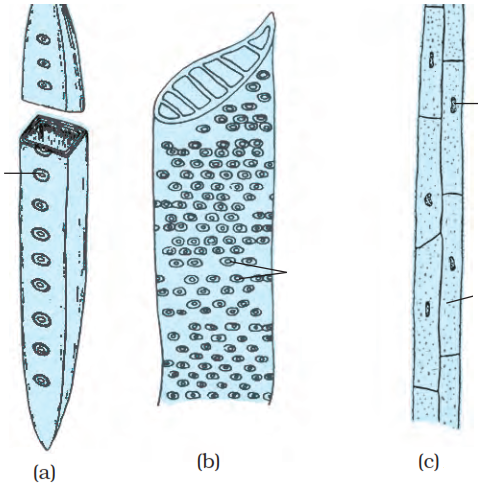
  1. A- Tracheid $B-$ Vessel $C-$ Xylem parenchyma.
  2.  
  1. Tracheids- It helps in transmission of water.
Vessels- It helps in transmission of minerals.
Xylem parenchyma- It stores food and helps in conduction of water.
View full question & answer
Question 425 Marks
What is epithelial tissue? Give its characteristics and functions.
Answer
Epithelial tissue is the simplest animal tissue which composed of one or more layer of cells covering external and internal body organs.
Characteristics of epithelial tissue:
  1. The cells of epithelial tissue are tightly packed and form continuous sheets.
  2. Epithelial cells have small amount of cementing material between them and almost no intercellular space.
  3. The surface of cells may be smooth, columnar or cuboidal.
  4. The cells of the lowermost layer rest on non-cellular basement membrane which separates it from the underlying connective tissue.
Functions:
Epithelial tissue performs following functions:
  1. It protects the organs which it covers.
  2. It absorbs water and other nutrients inside the body.
  3. Some epithelial cells secrete ear wax, mucus and digestive juices.
  4. It keeps different organs separate.
View full question & answer