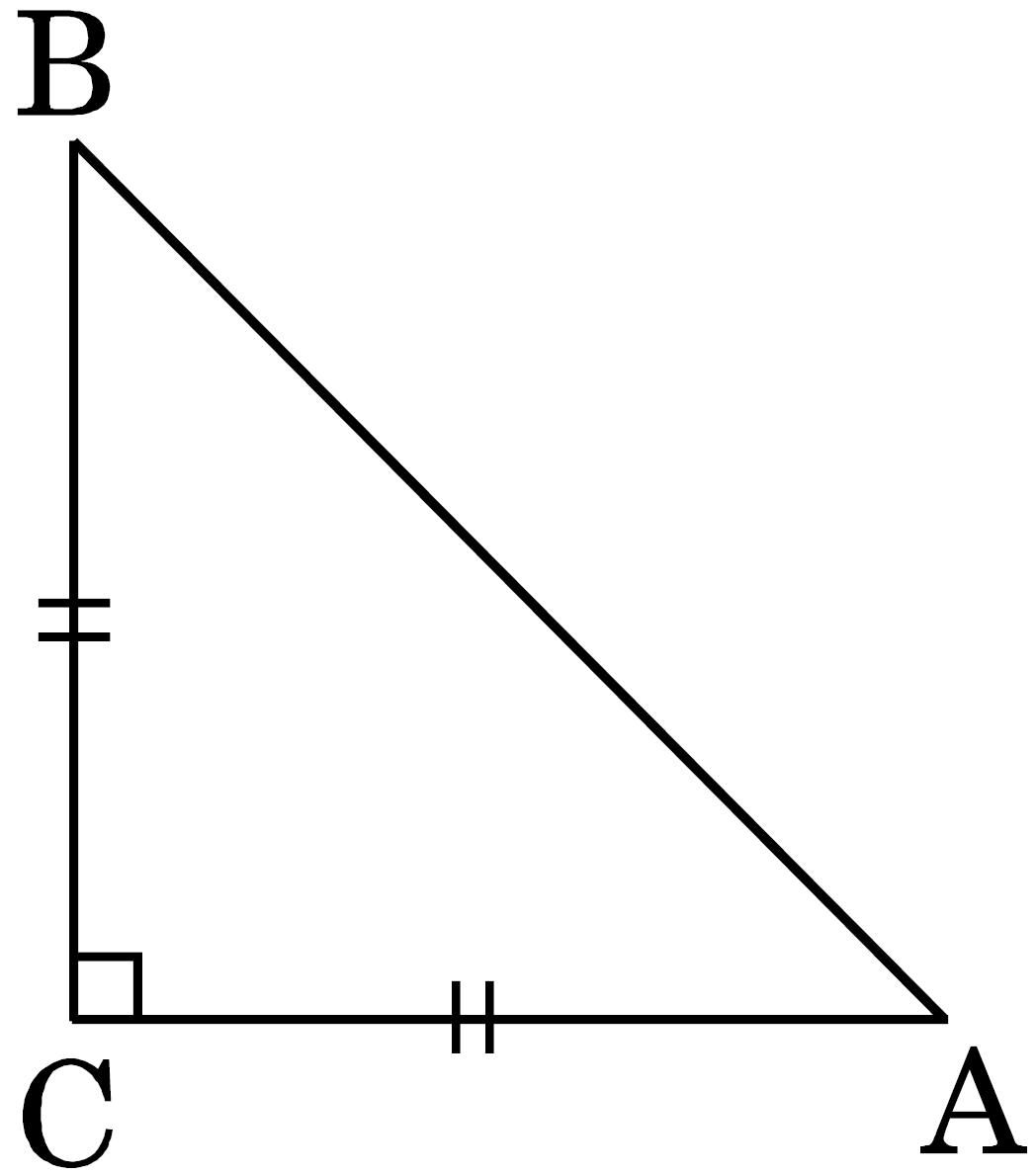
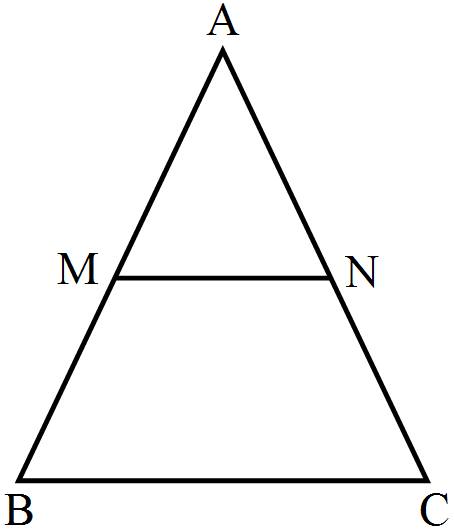
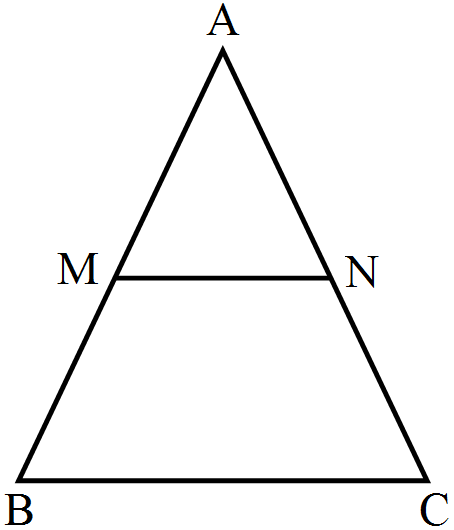
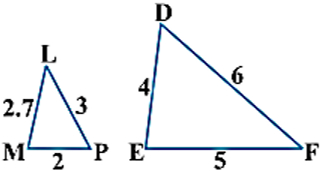
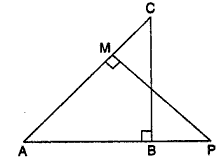
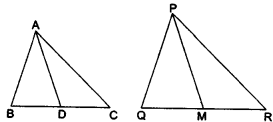
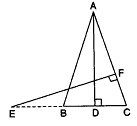
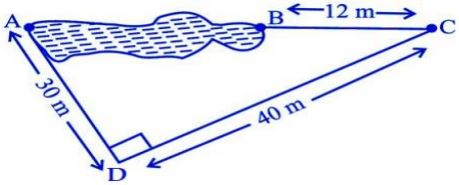
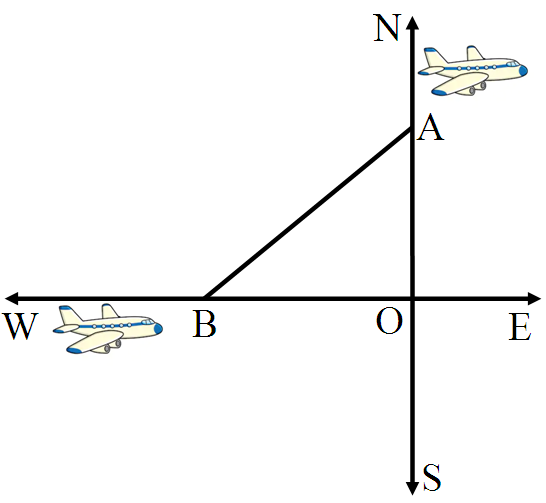
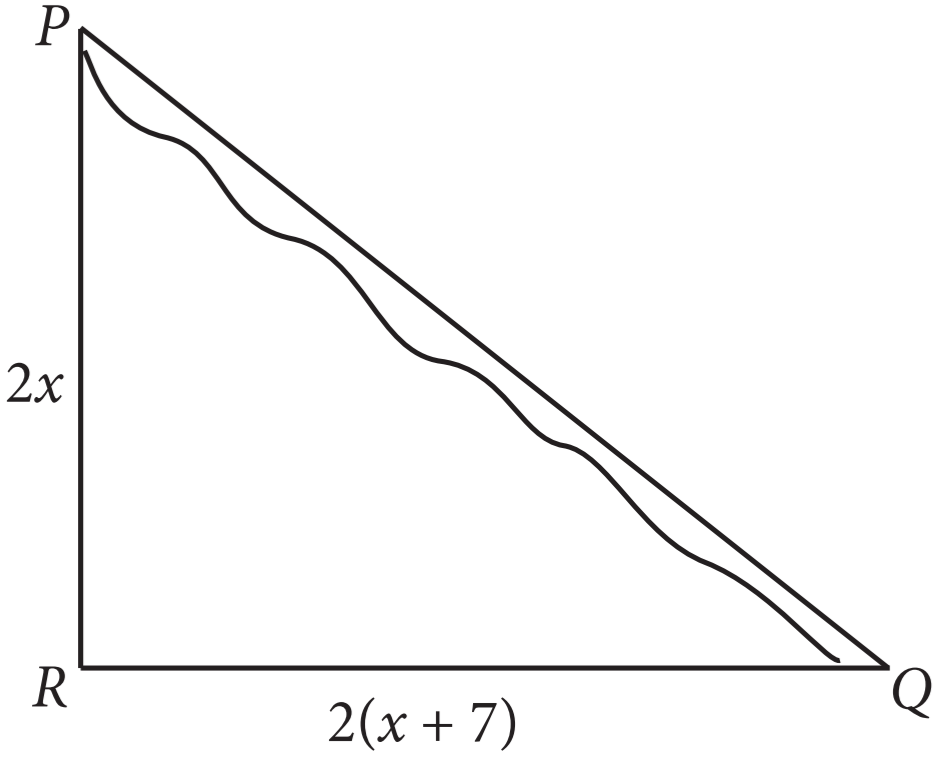
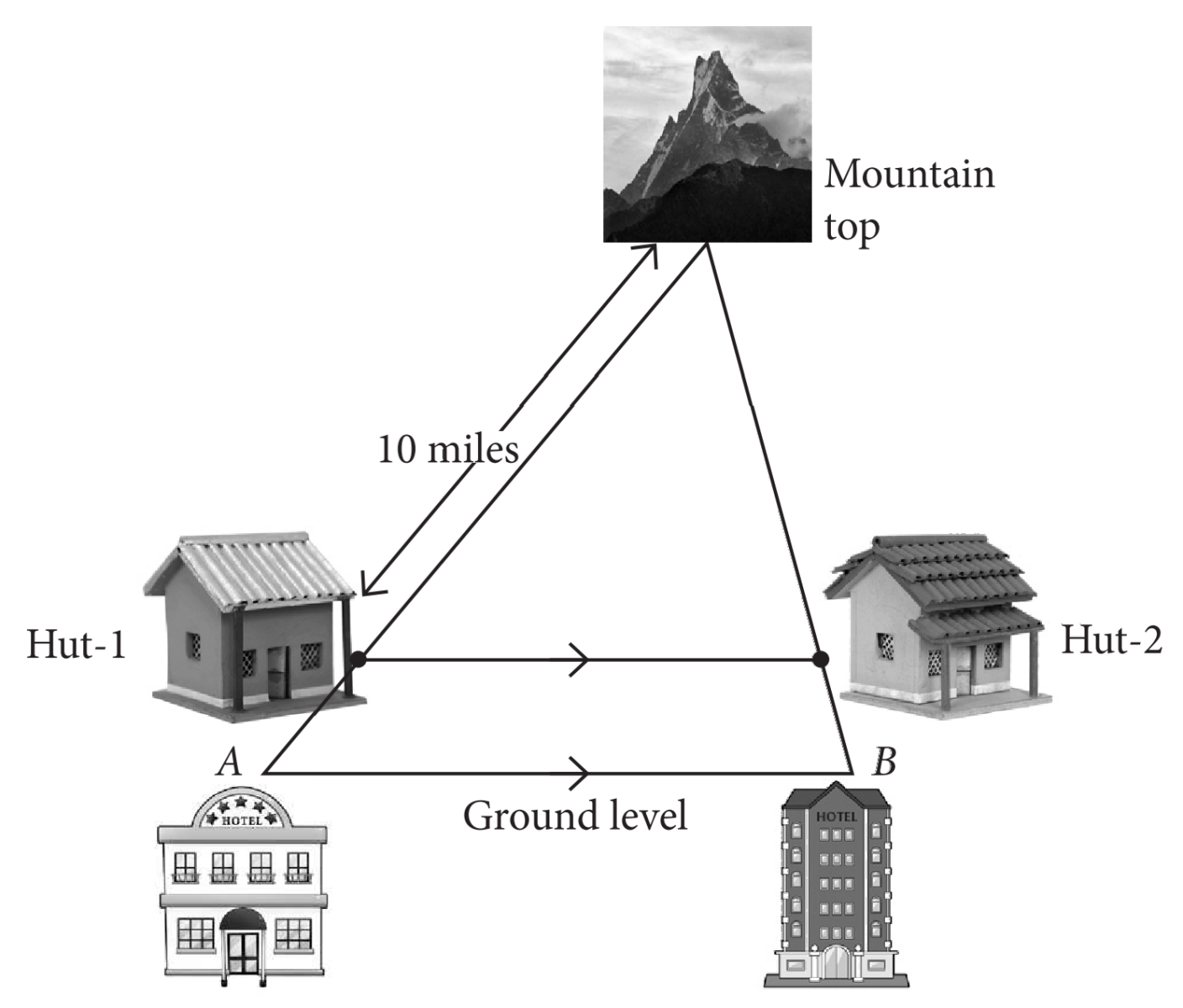
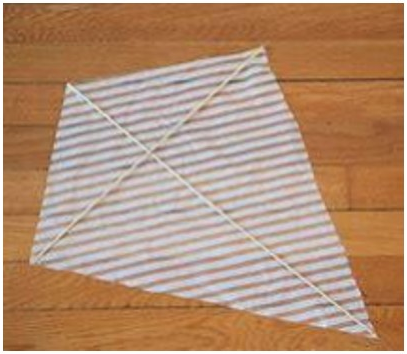
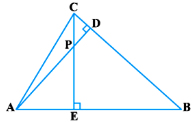
- ✓$\mathrm{AB}^2=2 \mathrm{AC}^2$
- B$\mathrm{BC}^2=2 \mathrm{AB}^2$
- C$\mathrm{AC}^2=2 \mathrm{AB}^2$
- D$\mathrm{AB} 2=4 \mathrm{AC} 2$
Answer: A.
View full solution →358 questions across 9 question groups — pick any mix to generate a Maths paper with step-by-step answer keys.
M.C.Q (1 Marks)
204 Q→02Assertion (A) & Reason (B) MCQ
24 Q→03True False[1 Marks ]
18 Q→04Fill In The Blanks[1 Marks ]
18 Q→051 Marks Question
29 Q→062 Marks Questions
32 Q→073 Marks Question
21 Q→085 Marks Questions
7 Q→09Case study (4 Marks)
5 Q→One sample from each question group in this chapter. Select any group above to see the full set with answer keys.

Answer: A.
View full solution →
Answer: B.
View full solution →Answer: D.
View full solution →
Answer: C.
View full solution →
Answer: D.
View full solution →Answer: A.
View full solution →
Answer: A.
View full solution →Answer: A.
View full solution →Answer: D.
View full solution →


E is a point on side AD produced of a parallelogram ABCD and BE intersects CD at F. Prove that $\Delta A B E \sim \Delta C F B.$


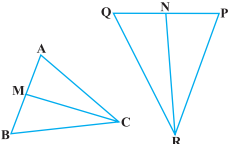
In Fig. CM and RN are respectively the medians of $\triangle$ABC and $\triangle$PQR. If $\triangle$ABC $\sim\triangle$PQR, prove that:


Pick question groups from the list above, set marks and difficulty, and export a branded PDF with step-by-step answer keys. First 3 chapters free — no signup.