Questions · Page 1 of 2

2 Marks Questions

🎯

Test yourself on this topic

50 questions · timed · auto-graded

Question 12 Marks
What happens when.
Boric acid is added to water.
Answer
When boric acid is added to water, it accepts electrons from ${}^-\text{OH}$ ion.
$\text{B(OH)}_3+2\text{HOH}\rightarrow \big[\text{B(OH)}_4\big]^{-}+\text{H}_3\text{O}^+$

View full question & answer
Question 22 Marks
Explain the following reactions:
Hydrated alumina is treated with aqueous NaOH solution.
Answer
When hydrated alumina is added to sodium hydroxide, the former dissolves in the latter because of the formation of sodium meta-aluminate.
$\text{Al}_2\text{O}_3.2\text{H}_2\text{O}+2\text{NaOH}\rightarrow2\text{NaAlO}_2+3\text{H}_2\text{O}$
View full question & answer
Question 32 Marks
How would you explain the lower atomic radius of Ga as compared to Al?
Answer
Atomic radius (in pm)
Aluminium 143
Gallium 135
Although Ga has one shell more than Al, its size is lesser than Al. This is because of the poor shielding effect of the 3d-electrons. The shielding effect of d-electrons is very poor and the effective nuclear charge experienced by the valence electrons in gallium is much more than it is in the case of Al.
View full question & answer
Question 42 Marks
Is boric acid a protic acid? Explain.
Answer
Boric acid is a Lewis acid; it is not a protonic acid.
Boric acid accepts electrons from hydroxyl ion of $\mathrm{H}_2 \mathrm{O}$ molecule.
$\mathrm{B}(\mathrm{OH})_3+2 \mathrm{HOH} \rightarrow\left[\mathrm{~B}(\mathrm{OH})_4\right]^{-}+\mathrm{H}_3 \mathrm{O}^{+}$
View full question & answer
Question 52 Marks
Give reasons:
Graphite is used as lubricant.
Answer
Graphite has layered structure which are held by weak van der Waals forces. Thus, graphite cleaves easily between the layers, therefore it is very soft and slippery. That’s why it is used as lubricant.
View full question & answer
Question 62 Marks
Rationalise the given statements and give chemical reactions:
Lead is known not to form an iodide, $\mathrm{Pbl}_4$.
Answer
Lead is known not to form $\mathrm{Pbl}_4 . \mathrm{Pb}(+4)$ is oxidising in nature and $\mathrm{I}^{-}$is reducing in nature. A combination of $\mathrm{Pb}(\mathrm{IV})$ and iodide ion is not stable. lodide ion is strongly reducing in nature. $\mathrm{Pb}(\mathrm{IV})$ oxidises $\mathrm{I}^{-}$to $\mathrm{I}^2$ and itself gets reduced to $\mathrm{Pb}(\mathrm{II}) . \mathrm{PbI}_4 \rightarrow \mathrm{PbI}_2+\mathrm{I}_2$
View full question & answer
Question 72 Marks
Rationalise the given statements and give chemical reactions:
Lead(IV) chloride is highly unstable towards heat.
Answer
On moving down group IV, the higher oxidation state becomes unstable because of the inert pair effect. Pb(IV) is highly unstable and when heated, it reduces to Pb(II).
$\text{PbCl}_{4\text{(l)}}+\text{Cl}\xrightarrow{\Delta}\text{PbCl}_{2\text{(s)}}+\text{Cl}_{2(\text{g})}$
View full question & answer
Question 82 Marks
Explain the following reactions:
CO is heated with ZnO.
Answer
When CO reacts with ZnO, it reduces ZnO to Zn. CO acts as a reducing agent.
$\text{ZnO}_{\text{(S)}}+\text{CO}_\text{(g)}\xrightarrow{\Delta}\text{Zn}_\text{(s)}+\text{CO}_{2(\text{g})}$
View full question & answer
Question 92 Marks
What happens when.
Aluminium is treated with dilute NaOH.
Answer
Al reacts with dilute NaOH to form sodium tetrahydroxoaluminate(III). Hydrogen gas is liberated in the process.
$2\text{Al}_{\text{(s)}}+2\text{NaOH}_{\text{(eq)}}+6\text{H}_2\text{O}_{\text{(l)}}\rightarrow2\text{Na}^+\big[\text{Al(OH)}_4\big]^-_\text{(eq)}+3\text{H}_{2(\text{g})}$
View full question & answer
Question 102 Marks
What happens when.
Borax is heated strongly.
Answer
When heated, borax undergoes various transitions. It first loses water molecules and swells. Then, it turns into a transparent liquid, solidifying to form a glass-like material called borax bead.
$\text{Na}_2\text{B}_4\text{O}_7.10\text{H}_2\text{O} \ \ \ \ \xrightarrow{\Delta} \ \ \ \ \text{Na}_2\text{B}_4\text{O}_7 \ \ \ \ \xrightarrow{\Delta} \ \ \ \ 2\text{NaBO}_2+\text{B}_2\text{O}_3 \\ \ \ \ \ \ \ \ \ \text{Borax}\ \ \ \ \ \ \ \ \ \ \ \ \ \ \ \ \ \ \ \ \ \ \ \ \ \ \ \ \text{Sodium} \ \ \ \ \ \ \ \ \ \ \ \ \ \ \ \ \ \ \ \text{Boric} \\ \ \ \ \ \ \ \ \ \ \ \ \ \ \ \ \ \ \ \ \ \ \ \ \ \ \ \ \ \ \ \ \ \ \ \ \ \ \ \ \ \ \ \ \ \text{metaborate} \ \ \ \ \ \ \ \ \ \ \ \text{anhydride}$
View full question & answer
Question 112 Marks
Explain what happens when boric acid is heated.
Answer
On heating orthoboric acid $\left(\mathrm{H}_3 \mathrm{BO}_3\right)$ at 370 K or above, it changes to metaboric acid $\left(\mathrm{HBO}_2\right)$. On further heating, this yields boric oxide $\mathrm{B}_2 \mathrm{O}_3$.
$\text{H}_3\text{BO}_3 \ \ \ \ \ \xrightarrow[370\text{k}]{\Delta}\ \ \ \ \ \ \text{HBO}_2 \ \ \ \ \ \ \xrightarrow[\text{red hot}]{\Delta} \ \ \ \ \ \ \text{B}_2\text{O}_3 \\ \ \ \ \ \ \ \ \ \ \ \ \ \ \ \ \ \ \ \ \ \ \ \ \ \ \text{Metaboric acid} \ \ \ \ \ \ \ \ \ \ \ \ \ \ \text{Boric oxide}$
View full question & answer
Question 122 Marks
Give reasons:
A mixture of dilute NaOH and aluminium pieces is used to open drain.
Answer
NaOH reacts with Al to evolve $\mathrm{H}_2$ gas. Thus the pressure of the gas produced can be used for clogged drains.
$2 \mathrm{Al}(\mathrm{s})+2 \mathrm{NaOH}(\mathrm{aq})+2 \mathrm{H}_2 \mathrm{O}(\mathrm{l}) \rightarrow 2 \mathrm{NaAlO}_2(\mathrm{aq})+3 \mathrm{H}_2(\mathrm{g})$
View full question & answer
Question 132 Marks
Give reasons:
Aluminium utensils should not be kept in water overnight.
Answer
Generally, aluminium metal does not react with water quickly but, when it is kept overnight, it reacts slowly with water in presence of air.
$2 \mathrm{Al}(\mathrm{s})+\mathrm{O}_2(\mathrm{~g})+\mathrm{H}_2 \mathrm{O}(\mathrm{l}) \rightarrow \mathrm{Al}_2 \mathrm{O}_3(\mathrm{~S})+\mathrm{H}_2(\mathrm{~g})$
a very small amount of (in ppm) $\mathrm{Al}^{3+}$ produced in the solution is injurious to health if the water is used for drinking purposes.
View full question & answer
Question 142 Marks
Give reasons:
Aluminium alloys are used to make aircraft body.
Answer
Alloys of aluminium, like duralumin, is used to make aircraft body due to some of its property like toughness, lightness and resistant to corrosion.
View full question & answer
Question 152 Marks
Explain why is there a phenomenal decrease in ionization enthalpy from carbon to silicon?
Answer
Ionisation enthalpy of carbon (the first element of group 14) is very high (1086kJ/ mol). This is expected owing to its small size. However, on moving down the group to silicon, there is a sharp decrease in the enthalpy (786kJ). This is because of an appreciable increase in the atomic sizes of elements on moving down the group.
View full question & answer
Question 162 Marks
What happens when.
$\mathrm{BF}_3$ is reacted with ammonia?
Answer
$\mathrm{BF}_3$ (a Lewis acid) reacts with $\mathrm{NH}_3$ (a Lewis base) to form an adduct. This results in a complete octet around B in $\mathrm{BF}_3$.
$\text{F}_3\text{B}+:\text{NH}_3\rightarrow \text{F}_3\text{B}\leftarrow:\text{NH}_3$
View full question & answer
Question 172 Marks
Rationalise the given statements and give chemical reactions:
Lead(II) chloride reacts with $\mathrm{Cl}_2$ to give $\mathrm{PbCl}_4$.
Answer
Lead belongs to group 14 of the periodic table. The two oxidation states displayed by this group is +2 and +4 . On moving down the group, the +2 oxidation state becomes more stable and the +4 oxidation state becomes less stable. This is because of the inert pair effect. Hence, $\mathrm{PbCl}_4$ is much less stable than $\mathrm{PbCl}_2$. However, the formation of $\mathrm{PbCl}_4$ takes place when chlorine gas is bubbled through a saturated solution of $\mathrm{PlCl}_2$.
$\text{PbCl}_{2\text{(s)}}+\text{Cl}_{2\text{(s)}}\rightarrow\text{PbCl}_{4\text{(l)}}$
View full question & answer
Question 182 Marks
Give reasons:
Conc. $\mathrm{HNO}^3$ can be transported in aluminium container.
Answer
Al reacts with cone. $\mathrm{HNO}_3$ to form a very thin film of aluminium oxide on its surface which protects it from further reaction.
$2 \mathrm{Al}(\mathrm{~s})+6 \mathrm{HNO}_3 \text { (conc.) } \rightarrow \mathrm{Al}_2 \mathrm{O}_3(\mathrm{~s})+6 \mathrm{NO}_2(\mathrm{~g})+3 \mathrm{H}_2 \mathrm{O}(\mathrm{l})$
View full question & answer
Question 192 Marks
  1. What is litharge chemically, Is it basic or acidic?
  2. At what temperature, lead of lead pencil melts?
Answer
  1. PbO is litharge chemically. It is basic oxide.
  2. Lead of lead pencils is made up of graphite which has melting point 3170°.
View full question & answer
Question 202 Marks
Element A reacts with aqueous NaOH solution to form B and H . Aqueous solution of B is hetated to $323-33 \mathrm{~K}$ and on passing $\mathrm{CO}_2$ into it, $\mathrm{Na}_2 \mathrm{CO}_3$ and C were formed. When C is heated to $1200^{\circ} \mathrm{C}, \mathrm{Al}_2 \mathrm{O}_3$ is formed. identify A,B, and C and also write the reaction involved.
Answer
The reaction involved are as follow.
$2 \mathrm{Al}+2 \mathrm{NaOH}+2 \mathrm{H}_2 \mathrm{O} \longrightarrow 2 \mathrm{NaAlO}_2+3 \mathrm{H}_2 \uparrow$
$2 \mathrm{NaAlO}_2+\mathrm{CO}_2+3 \mathrm{H}_2 \mathrm{O} \xrightarrow[\Delta]{\Delta}+\mathrm{Na}_2 \mathrm{O}_3+2 \mathrm{Al}(\mathrm{OH})_3$
$2 \mathrm{Al}(\mathrm{OH})_3 \xrightarrow{1200^{\circ} \mathrm{C}} \mathrm{Al}_2 \mathrm{O}_3+3 \mathrm{H}_2 \mathrm{O}$
Thus, $\mathrm{A}, \mathrm{B}$, and C are $\mathrm{Al}, \mathrm{NaAlO}_2$ and $\mathrm{Al}(\mathrm{OH})_3$ respectively.
View full question & answer
Question 212 Marks
Explain the following:
Electron gain enthalpy of chlorine is more negative as compared to fluorine.
Answer
Due to small size, the electron-electron repulsions in the relatively compact 2p-subshell of F are quite strong and hence the incoming electron is not accepted with the same ease as in case of bigger Cl atom where repulsions are comparatively weak. Thus, electron gain enthalpy of chlorine is more negative as compared to that of fluorine.
View full question & answer
Question 222 Marks
Which of the following is not hydrolysed by water and why?
$\text{BF}_3,\text{BCl}$ and $\text{BBr}_3$.
Answer
$\mathrm{BF}_3$ is not easily hydrolysed by water.It forms an adduct $\mathrm{BF}_3 \cdot \mathrm{OH}_2$ whereas $\mathrm{BCl}_3$ and $\mathrm{BBr}_3$ are hydrolysed to given boric acid and HCl or HBr respectively. This is because the $\mathrm{B}-\mathrm{F}$ bond in $\mathrm{BF}_3$ is very strong due to extensive $\mathrm{p} \pi$ - $\mathrm{p} \pi$ back bonding. As a result, it is not hydrolysed by water. The B-F bond energy is far larger than B-OH bond energy and cannot be compensated.

However, in $\mathrm{BCl}_3$ and $\mathrm{BBr}_3$, the corresponding $\mathrm{B}-\mathrm{Cl}$ and $\mathrm{B}-\mathrm{Br}$ bond energy is relatively less than $\mathrm{B}-\mathrm{F}$ because of inefficient $р \pi-p \pi$ back bonding. Therefore, these get hydrolysed.
View full question & answer
Question 232 Marks
  1. Elemental silicon does not form graphite like structure as carbon does. Give reason.
  2. Arrange hyrides of group 14 elements in increasing order of reducing power.
Answer
  1. Silicon cannot form $\text{p}\pi-\text{p}\pi$ bond like 'C' forms in graphite due to bigger atomic size, therefore, it can not form graphite like structure.
  2. CH4 < SiH4 < GeH4 < SnH4 < PbH3 is increasing order of reducing power because bond dissociation enthalpy decreases with increases in bond length due to increase in atomic size of group 14 element.
View full question & answer
Question 242 Marks
What property of anhydrous $\mathrm{AlCl}_3$ makes it a very good preparative reagent in organic chemistry?
Answer
It acts as Lewis acid. It generates electrophile by accepting negativity charged ion, therefore, helps in carrying out electrophilic substitution reactions such as Friedel crafts Alkylation and Acylation.
View full question & answer
Question 252 Marks
  1. What are fullerenes? How are they prepared?
  2. Classify the following compounds into acidic, basic and amphoteric oxides:
$\mathrm{Al}_2 \mathrm{O}_3, \mathrm{Cl}_2 \mathrm{O}_7$
Answer
i. Fullerenes are allotropes of carbon having structure similar to soccer ball. They are made by heating graphite in electric arc in presence of inert gases such as helium or argon.
ii. $\mathrm{Al}_2 \mathrm{O}_3$ is amphoteric whereas $\mathrm{Cl}_2 \mathrm{O}_7$ is acidic oxide.
View full question & answer
Question 262 Marks
Mention the chief reason for the anomalous behavior of boron in Group 13 of the periodic table.
Answer
It is due to small size and higher ionisation enthalpy and high charge/ radius ratio of boron i.e. high polarizing power, high electronegativity and absence of d-orbitals.
View full question & answer
Question 272 Marks
Explain the following:
$\mathrm{PbX}_2$ is more stable than $\mathrm{PbX}_4$.
Answer
Due to inert pair effect, +2 oxidation state of Pb is more stable than its +4 oxidation state. Consequently, PbX 2 in which the oxidation state of Pb is +2 is more stable than $\mathrm{PbX}_4$ in which the oxidation state of Pb is +4 .
View full question & answer
Question 282 Marks
Why does boron form stable electron deficient compounds?
Answer
Boron has three valence electrons, it will share three electrons with other elements to form electron deficient compounds which are stable due to back bonding i.e. lone pair of electrons of halogen is denoted to vacant p-orbital of 'B' forming $\text{p}\pi-\text{p}\pi$ bond making it stable.
View full question & answer
Question 292 Marks
  1. Of Bi(V) and Sb(V) which may be a stronger oxidising agent and why?
  2. Complete the following chemical equation:
$\text{Ca}_3\text{P}_2+\text{H}_2\text{O}\xrightarrow{\ \ \ \ \ \ \ \ }$
Answer
  1. Bi(V) is stronger oxidising agent due to inert pair effect as Bi(III) is more stable as compared to Sb(III).
  2. $\text{Ca}_3\text{P}_3+6\text{H}_2\text{O}\xrightarrow{\ \ \ \ \ \ \ }3\text{Ca(OH})_2+2\text{PH}_3$
View full question & answer
Question 302 Marks
Identify the compounds A, X and Z in the following reactions:
$\text{A}+2\text{HCl}+5\text{H}_2\text{O}\rightarrow2\text{NaCl}+\text{X}$
$\text{X}\frac{\triangle}{370\text{K}}\text{HBO}_2\frac{\triangle}{>370\text{K}}\text{Z}$
Answer
$\text{Na}_2\text{B}_4\text{O}_7+2\text{HCl}+5\text{H}_2\text{O}\rightarrow2\text{NaCl}+4\text{H}_3\text{BO}_3\\ \ \ \ \ \text{(A)}\ \ \ \ \ \ \ \ \ \ \ \ \ \ \ \ \ \ \ \ \ \ \ \ \ \ \ \ \ \ \ \ \ \ \ \ \ \ \ \ \ \ \ \ \ \ \ \ \ \ \ \ \ \ \ \ \ \ \ \ \ \text{(X)}\\ \ \ \ ^ \text{(Borax)} \ \ \ \ \ \ \ \ \ \ \ \ \ \ \ \ \ \ \ \ \ \ \ \ \ \ \ \ \ \ \ \ \ \ \ \ \ \ \ \ \ \ \ \ \ \ \ \ \ \ \ \ \ ^{\text{(Boric acid)}}$
$\text{H}_3\text{BO}_3\xrightarrow{\triangle,370\text{K}}\text{HBO}_2\ \ +\text{H}_2\text{O}\\\ \ \text{(X)}\ \ \ \ \ \ \ \ \ \ \ \ \ \ \ \ ^\text{Metaboric acid}$
$4\text{HBO}_2\xrightarrow[-\text{H}_2\text{O}]{\triangle,370\text{K}}[\text{H}_2\text{B}_4\text{O}_7]\xrightarrow{\text{Red heat}}2\text{B}_2\text{O}_3\ \ \ +\text{H}_2\text{O}\\ \ \ \ \ \ \ \ \ \ \ \ \ \ \ \ \ \ \ \ \ \ \ \ \ \ \ \ ^{\text{Tetraboric acid}}\ \ \ \ \ \ \ \ \ ^\text{Boric trioxide(Z)}$
View full question & answer
Question 312 Marks
What happens when:
  1. Diborane burns in presence of oxygen.
  2. Diborane is hydrolysed.
Answer
  1. When diborane burns in presence of oxygen $\text{B}_2\text{O}_3$ and $\text{H}_2\text{O}$ is formed.
$\text{B}_2\text{H}_6+3\text{O}_2\xrightarrow{ \ \ \ \ \ \ \ \ }\text{B}_2\text{O}_3+3\text{H}_2\text{O}$
  1. When diborane is hydrolysed, it forms boric acid and $\text{H}_2$ gas is formed.
$\text{B}_2\text{H}_6+3\text{H}_2\text{O}\xrightarrow{\ \ \ \ \ \ }2\text{H}_3\text{BO}_3+3\text{H}_2$
View full question & answer
Question 322 Marks
Gallium has higher I.E. than Al. Explain.
Answer
It is due to poor shielding effect of d-electrons in Ga, effective nuclear charge increases as compared to Al, therefore, I.E. of Ga is higher than Al. Secondly, Ga is smaller than Al.
View full question & answer
Question 332 Marks
Explain the following:
Silicon forms $\text{SiF}^{2-}_6$ ion whereas corresponding fluoro compound of carbon is not known.
Answer
Silicon has vacant d orbital in its valence shall due to which it can accommodate 6 electrons from fluorine atoms whereas carbone does not have d orbital and cannot expand its covalence beyond four.
View full question & answer
Question 342 Marks
Explain why $\mathrm{BCl}_3$ is monomer but $\mathrm{BH}_3$ exists as $\mathrm{B}_2 \mathrm{H}_6$.
Answer
In $\mathrm{BCl}_3$, there is back bonding, i.e., lone pair of electrons is donated from chlorine to boron thus reducing its electron deficiency.
In $\mathrm{BH}_3$, back bonding is not possible but H -bridges are possible, therefore, it exists as dimer.
View full question & answer
Question 352 Marks
  1. Which out of $TICl_3$, GaCl, InCl, TICl undergo disproportionation reaction and why?
  2. Why is boric acid used in carom boards for smooth gliding of pawns.
Answer
  1. GaCl and InCl will undergo disproportionation reaction because they can get oxidised to +3 oxidation state and get reduced to oxidation state equal to zero.
$3\text{GaCl}\xrightarrow{\ \ \ \ \ \ \ \ }2\text{Ga}+\text{GaCl}_3$

$3\text{InCl}\xrightarrow{\ \ \ \ \ \ \ \ }2\text{In}+\text{InCl}_3$
  1. H-bonding in $H_3BO_3$ gives it a layered structure which has weak forces of attraction due to which it is soft and makes carom boards for smooth gliding of pawn.
View full question & answer
Question 362 Marks
  1. Name a mineral of ‘Al' which does not contain oxygen. Give its use.
  2. In which light Germanium is transparent?
Answer
i. Cryolite, $\mathrm{Na}_3 \mathrm{AlF}_6$ is mineral of ' $\mathrm{Al}$' which does not contain oxygen. It dissolves bauxite and increases its conductance before electrolytic reduction.
ii. In infrared region, germanium is transparent.
View full question & answer
Question 372 Marks
Explain the following:
$\mathrm{TI}\left(\mathrm{NO}_3\right)_3$ acts as an oxidising agent.
Answer
Due ta strong inert pair effect, the +3 oxidation state of TI is less stable than its +1 oxidation state. Since in $\mathrm{TI}\left(\mathrm{NO}_3\right)_3$, oxidation state of TI is +3 , therefore, it can easily gain two electrons to form $\mathrm{TINO}_3$ in which the oxidation state of TI is +1 . Consequently, $\mathrm{TI}\left(\mathrm{NO}_3\right)_3$ acts as an oxidising agent.
View full question & answer
Question 382 Marks
Account for the following:
Why $\mathrm{BF}_3$ is less acidic than $\mathrm{BCl}_3$ though fluorine is more electronegative than chlorine?
Answer
$\mathrm{BF}_3$ is less acidic because back bonding (donation of lone pair of halogen to vacant p -orbital of ' B ') is most effective due to $2 p-2 p$ overlapping whereas it is less effective in $\mathrm{BCl}_3$ due to $2 p-3 p$ overlapping.
View full question & answer
Question 392 Marks
How does electron deficient compound $\mathrm{BF}_3$ achieve electronic saturation, i.e. fully occupied outer electron shells?
Answer
$\mathrm{BF}_3$ achieve it by the following ways.
i. Multiple bonding or $p \pi-p \pi$ back bonding, e.g. $\mathrm{BF}_3$ in which a lone pair of electrons present in 2 p -orbital of one of the fluorine atoms may be transferred to the vacant p-orbital on the boron atom.
ii. Formation of complexes in which electrons are received from a donor molecule, e.g. $\mathrm{F}_3 \mathrm{B} \leftarrow \mathrm{NH}_3$. Boron compounds, thus, behave as Lewis acids.
View full question & answer
Question 402 Marks
Carbon and silicon are mainly tetravalent but Ge, Sn and Pb show divalency. Give reason.
Answer
Ge, Sn, Pb are divalent due to inert pair effect due to poor shielding effect of d and f-electrons which is not there in carbon and silicon as they do not have electrons in d-orbitals.
View full question & answer
Question 412 Marks
  1. Name an element of group 13 which is best reducing agent and why?
  2. Why is $\mathrm{TI}^{3+}$ good oxidising agent?
Answer
  1. 'Al’ is best reducing agent because it has lowest standard reduction potential.
$\text{E}^\text{o}_{\frac{\text{Al}^{3+}}{\text{Al}}}=-1.66\text{V}.$
  1. $\mathrm{TI}^{3+}$ gain 2 electrons to form $\mathrm{Ti}^{+}$which is more stable due to inert pair effect.
View full question & answer
Question 422 Marks
  1. Why is $\mathrm{B}-\mathrm{F}$ bond dissociation energy in $\mathrm{BF}_3$ is higher than $\mathrm{C}-\mathrm{F}$ in $\mathrm{CF}_4$?
  2. What is formula of borax?
Answer
i. It is because there is significant $\mathrm{p} \pi-\mathrm{p} \pi$ interaction between B and F in BF , whereas there is no possibility of such interaction between C and F in $\mathrm{CF}_4$.
ii. $\mathrm{Na}_2 \mathrm{~B}_4 0_7 \cdot 10 \mathrm{H}_2 \mathrm{O}$ is formula of borax.
View full question & answer
Question 432 Marks
Explain the following:
Aluminium forms $\left[\mathrm{AlF}_6\right]^{3-}$ ion but boron does not form $\left[\mathrm{BF}_6\right]^{3-}$ ion.
Answer
Al has vacant d-orbitals and hence can expand its coordination number from 4 to 6 and hence forms octahedral $\left[\mathrm{A}_1 \mathrm{~F}_6\right]^{3-}$ ion in which Al undergoes $\mathrm{sp}^3 \mathrm{~d}^2$ hybridisation. In contrast, B does not have d -orbitals. Therefore, it can have a maximum coordination number of 4 . Therefore, B forms $\left[\mathrm{BF}_4\right]^{-}$(in which B is $\mathrm{sp}^3$-hybridised) but not $\left[\mathrm{BF}_6\right]^{3-}$.
View full question & answer
Question 442 Marks
Arrange the hydrides of group 14 in increasing order of thermal stability.
Answer
$\mathrm{PbH}_4<\mathrm{SnH}_4<\mathrm{GeH}_4<\mathrm{SiH}_4<\mathrm{CH}_4$ because bond dissociation enthalpy increases due to small bond length as atomic size of element decreases from Pb to C.
View full question & answer
Question 452 Marks
Account for the following.
  1. Graphite is used as lubricant.
  2. Diamond is used as an abrasive.
Answer
  1. Graphite has layered structure. Layers are held together by weak van der Waals' forces and hence can be made to slip over one another. Therefore, graphite acts as a dry.lubricant.
  2. In diamond, each $sp^3$ hybridised carbon atom is linked to four other carbon atoms. It has three-dimensional network of carbon atoms. It is very difficult to break extended covalent bonding and therefore diamond is a hardest substance on the earth. That's why it is used as an abrasive.
View full question & answer
Question 462 Marks
Complete the following chemical equations:
$\text{Z}+3\text{LiAlH}_4\rightarrow\text{X}+3\text{LiF}+3\text{AlF}_3$
$\text{X}+6\text{H}_2\text{O}\rightarrow\text{Y}+6\text{H}_2$
$3\text{X}+3\text{O}_2\xrightarrow{\triangle}\text{B}_2\text{O}_3+3\text{H}_2\text{O}$
Answer
$4\text{BF}_3+3\text{LiAlH}_4\rightarrow2\text{B}_2\text{H}_6+3\text{LiF}+3\text{A1F}_3$
$\text{B}_2\text{H}_6(\text{g})+6\text{H}_20(1)\rightarrow2\text{B}(\text{OH})_3\text{(aq)}+6\text{H}_2\text{(g)}$
$\text{B}_2\text{H}_6+3\text{O}_2\xrightarrow{\triangle}\text{B}_2\text{O}_3+3\text{H}_2\text{O}$
$\text{Z}=\text{BF}_3,\text{X}=\text{B}_2\text{H}_6\text{ and Y=B(OH)}_3\text{ or H}_3\text{BO}_3$
View full question & answer
Question 472 Marks
i. $\mathrm{Ca}_2$
ii. $\mathrm{CaC}_2$
iii. $\mathrm{H}_2 \mathrm{CO}_3$
iv. $HCN$
v. $CO$
Answer
S. No.
Corbon compousds
Oxidation state
i.
$CO_2$
+4
ii.
$CaCO_3$
-1
iii.
$H_2CO_3$
+4
iv.
$HCN$
+2
v.
$CO$
+2
 
View full question & answer
Question 482 Marks
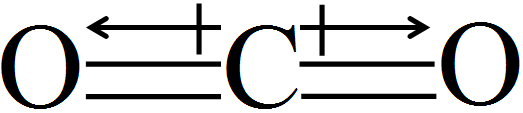
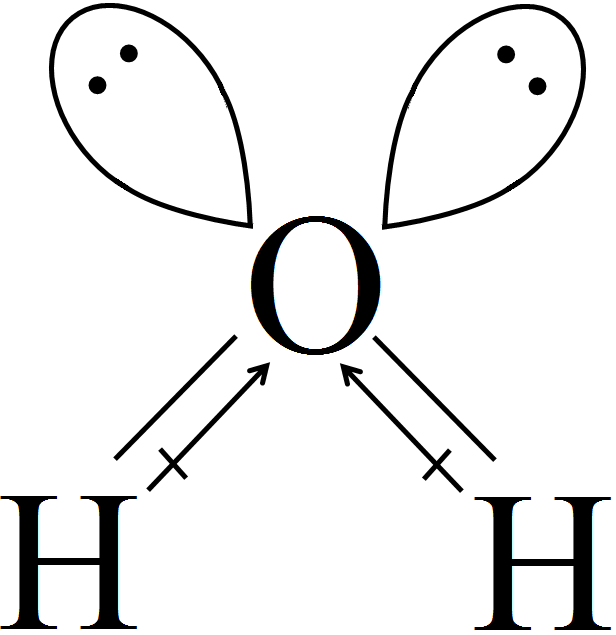
  1. Carbon dioxide is non-polar while water is polar. What conclusion do you draw about their structures from these.
  2. What is dry ice? Why is it so called?
Answer
  1.  

is linear, bond moments are equal and opposite, net dipole moment is zero.
Water is bent molecule, it has net dipole moment.
  1. Solid $\mathrm{CO}_2$ is called dry ice because it directly changes into vapours.
View full question & answer
Question 492 Marks
Why are pentahalides more covalent than trihalides?
Answer
It is because pentavalent cation has more polarising power than trivalent cation due to smaller size and higher charge. Therefore, pentahalides have more tendency to form covalent bond.
View full question & answer
Question 502 Marks
Explain the following:
Gallium has higher ionisation enthalpy than aluminium.
Answer
Due to ineffective shielding of valence electrons by the intervening 3d electrons, the effective nuclear charge on Ga is slightly higher than that on Al and hence the $\Delta \mathrm{H}_{\mathrm{i}}$ of gallium is slightly higher than that of Al. Boron has three electrons in the valence shell. Because of its small size and high sum of the first three ionisation enthalpies $(\text{i.e.,}\triangle).$
View full question & answer
2 Marks Questions - Chemistry STD 11 Science Questions - Vidyadip