Question 15 Marks
In an intrinsic semiconductor the energy gap $E_{g}$ is $1.2eV$. Its hole mobility is much smaller than electron mobility and independent of temperature. What is the ratio between conductivity at $600K$ and that at $300K$? Assume that the temperature dependence of intrinsic carrier concentration $n_i$ is given by,
$\text{n}_{\text{i}}=\text{n}_{\text{0}}\ {\text{exp}}\Big(-\frac{\text{E}_\text{g}}{2{\text{K}_{\text{B}}}{\text{T}}}\Big)$
where $n_0$ is a constant.
$\text{n}_{\text{i}}=\text{n}_{\text{0}}\ {\text{exp}}\Big(-\frac{\text{E}_\text{g}}{2{\text{K}_{\text{B}}}{\text{T}}}\Big)$
where $n_0$ is a constant.
Answer
View full question & answer→Energy gap of the given intrinsic semiconductor $, E_g = 1.2 eV$
The temperature dependence of the intrinsic carrier $-$ concentration is written as: $\text{n}_{\text{i}}=\text{n}_{\text{0}}\ {\text{exp}}\Big[-\frac{\text{E}_\text{g}}{2{\text{K}_{\text{B}}}{\text{T}}}\Big]$
Where $, K_B =$ Boltzmann constant $= 8.62 \times 10^{-5} eV/K T$
$ =$ Temperature $n_0 =$ Constant Initial temperature $, T_1 = 300 K$
The intrinsic carrier $-$ concentration at this temperature can be written as: $\text{n}_{\text{i1}}=\text{n}_{\text{0}}\ {\text{exp}}\Big[-\frac{\text{E}_\text{g}}{2{\text{k}_{\text{B}}}\times300}\Big]...(1)$
Final temperature $, T_2 = 600 k$
The intrinsic carrier $-$ concentration at this temperature can be written as:
$\text{n}_{\text{i2}}=\text{n}_{\text{0}}\ {\text{exp}}\Big[-\frac{\text{E}_\text{g}}{2{\text{k}_{\text{B}}}\times600}\Big]...(2)$
The ratio between the conductivities at $600 K$ and at $300 K$ is equal to the ratio between the respective intrinsic carrier $-$ concentrations at these temperatures.
$\frac{\text{n}_{\text{i2}}}{\text{n}_{\text{i1}}}=\frac{\text{n}_\text{0}\ \text{exp}\Big[-\frac{\text{E}_{\text{g}}}{2\text{K}_{\text{B}}600}\Big]}{\text{n}_\text{0}\ \text{exp}\Big[-\frac{\text{E}_{\text{g}}}{2\text{K}_{\text{B}}300}\Big]}$
$=\text{exp}\frac{\text{E}_\text{g}}{2\text{k}_\text{g}}\bigg[\frac{1}{300}-\frac{1}{600}\bigg]$ $=\text{exp}\bigg[\frac{1.2}{2\times8.62\times10^{-5}}\times\frac{2-1}{600}\bigg] $
$= \text{exp} [11.6] = 1.09 \times 10^5$
Therefore, the ratio between the conductivities is $1.09 \times 10^5$.
The temperature dependence of the intrinsic carrier $-$ concentration is written as: $\text{n}_{\text{i}}=\text{n}_{\text{0}}\ {\text{exp}}\Big[-\frac{\text{E}_\text{g}}{2{\text{K}_{\text{B}}}{\text{T}}}\Big]$
Where $, K_B =$ Boltzmann constant $= 8.62 \times 10^{-5} eV/K T$
$ =$ Temperature $n_0 =$ Constant Initial temperature $, T_1 = 300 K$
The intrinsic carrier $-$ concentration at this temperature can be written as: $\text{n}_{\text{i1}}=\text{n}_{\text{0}}\ {\text{exp}}\Big[-\frac{\text{E}_\text{g}}{2{\text{k}_{\text{B}}}\times300}\Big]...(1)$
Final temperature $, T_2 = 600 k$
The intrinsic carrier $-$ concentration at this temperature can be written as:
$\text{n}_{\text{i2}}=\text{n}_{\text{0}}\ {\text{exp}}\Big[-\frac{\text{E}_\text{g}}{2{\text{k}_{\text{B}}}\times600}\Big]...(2)$
The ratio between the conductivities at $600 K$ and at $300 K$ is equal to the ratio between the respective intrinsic carrier $-$ concentrations at these temperatures.
$\frac{\text{n}_{\text{i2}}}{\text{n}_{\text{i1}}}=\frac{\text{n}_\text{0}\ \text{exp}\Big[-\frac{\text{E}_{\text{g}}}{2\text{K}_{\text{B}}600}\Big]}{\text{n}_\text{0}\ \text{exp}\Big[-\frac{\text{E}_{\text{g}}}{2\text{K}_{\text{B}}300}\Big]}$
$=\text{exp}\frac{\text{E}_\text{g}}{2\text{k}_\text{g}}\bigg[\frac{1}{300}-\frac{1}{600}\bigg]$ $=\text{exp}\bigg[\frac{1.2}{2\times8.62\times10^{-5}}\times\frac{2-1}{600}\bigg] $
$= \text{exp} [11.6] = 1.09 \times 10^5$
Therefore, the ratio between the conductivities is $1.09 \times 10^5$.
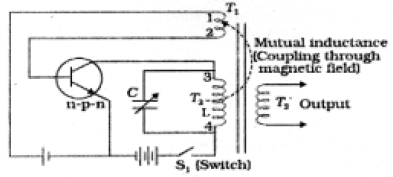
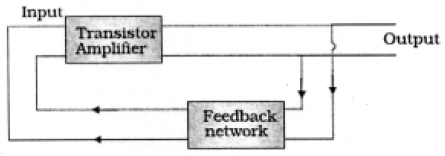

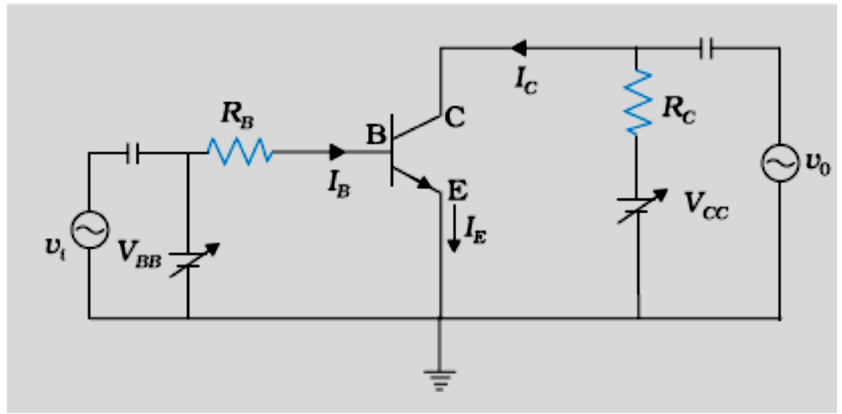


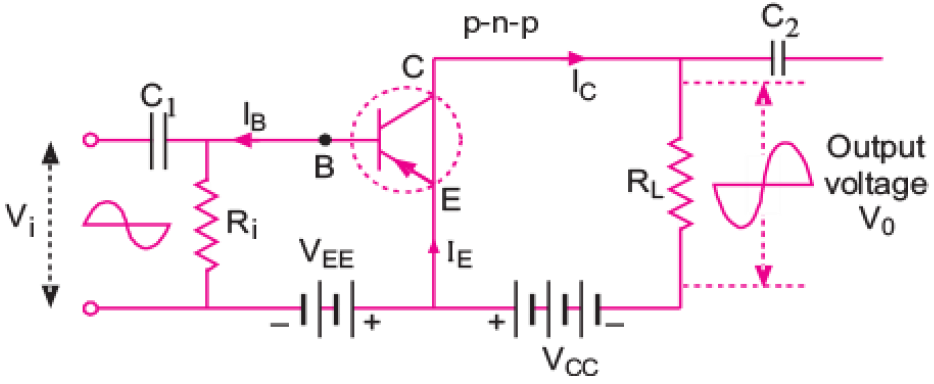
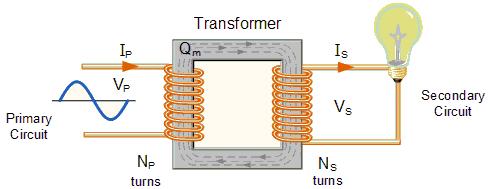
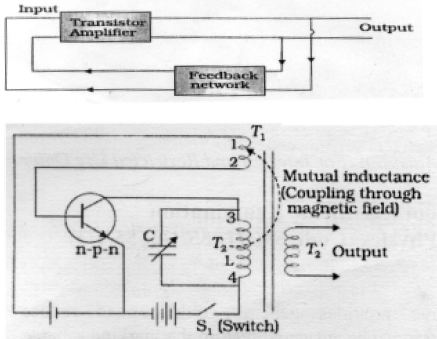 Working principle: In an oscillator, we get ac output without any external input signal, i.e. the output in an oscillator is self-sustained. To attain this, a portion of the output power of an amplifier, is returned back (fedback) to the input in phase with the starting power.
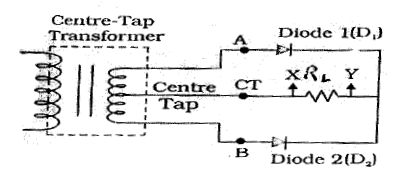
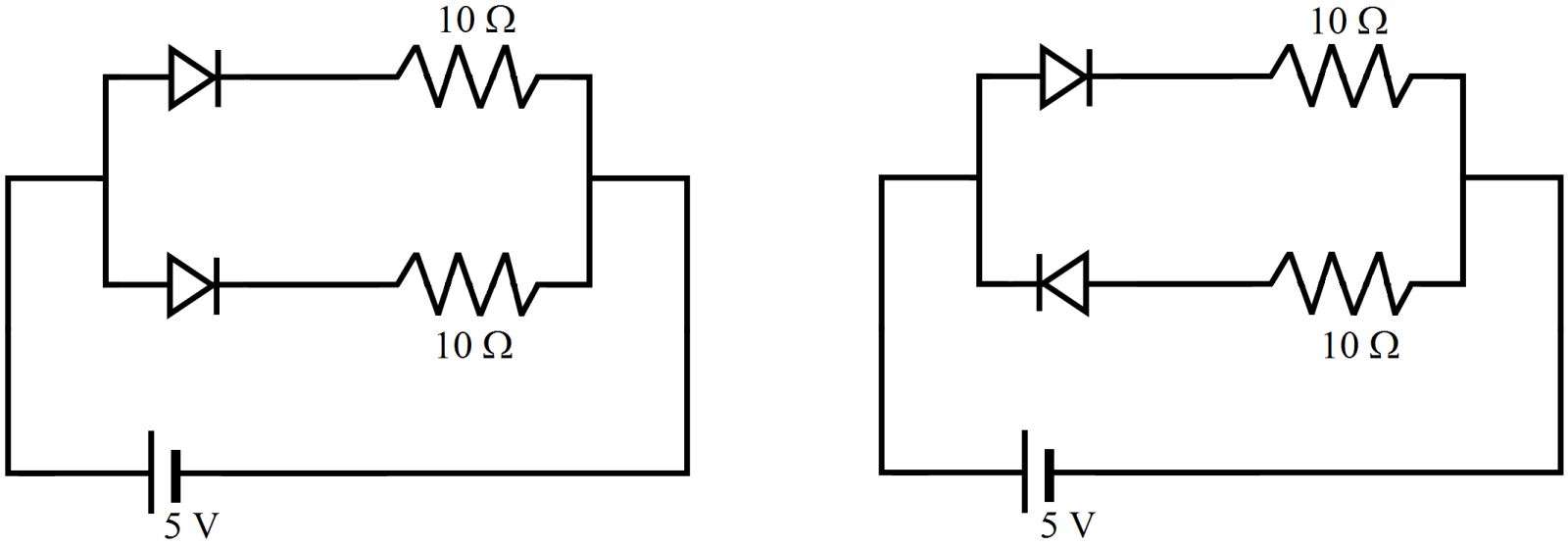
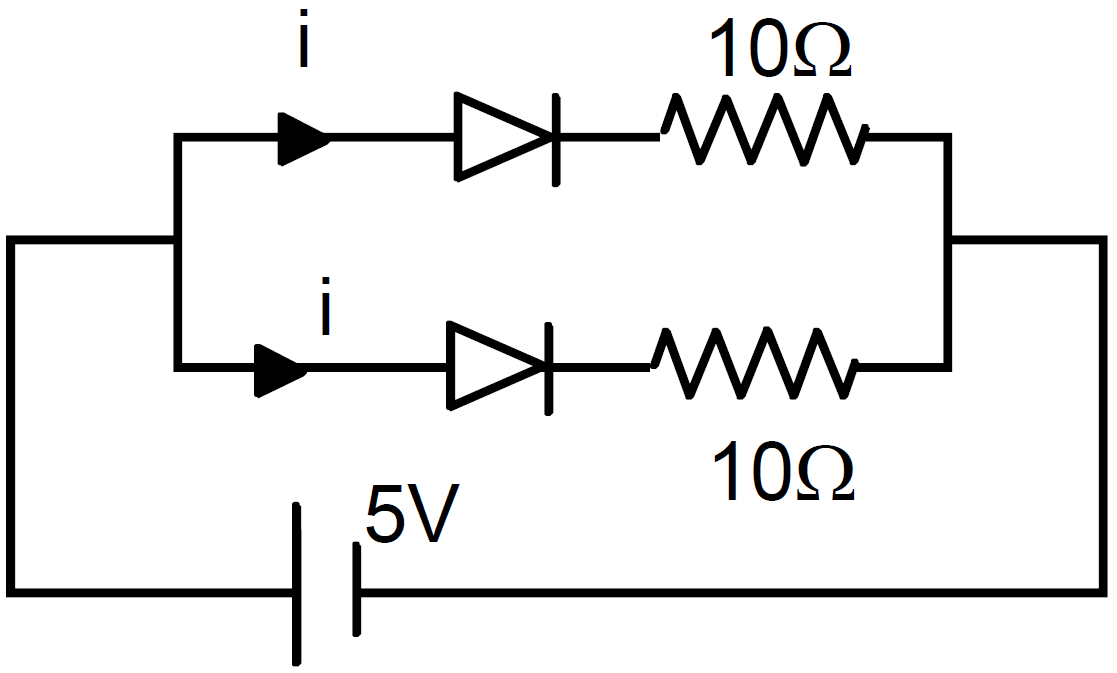
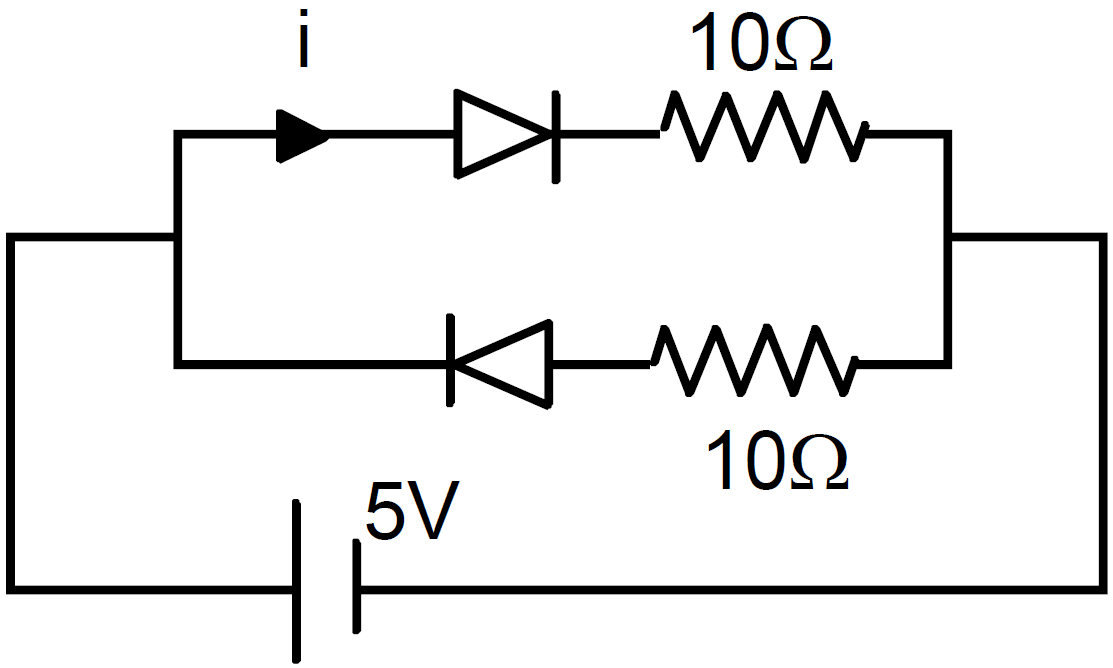
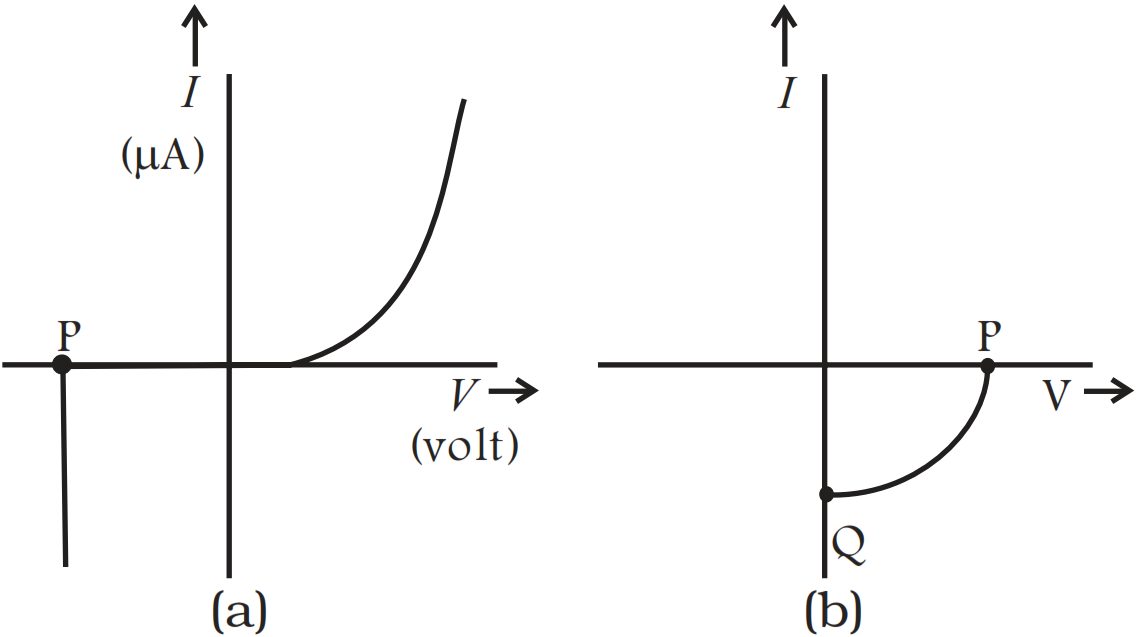
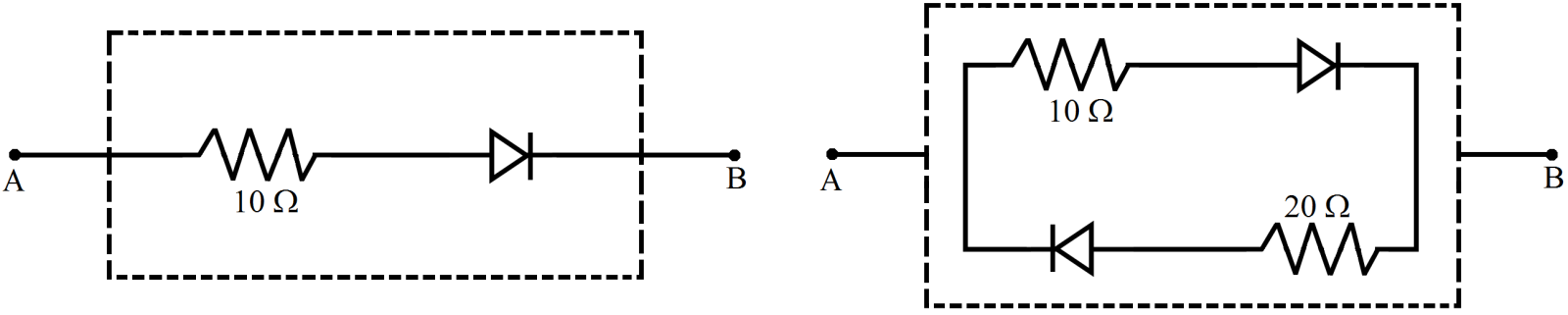
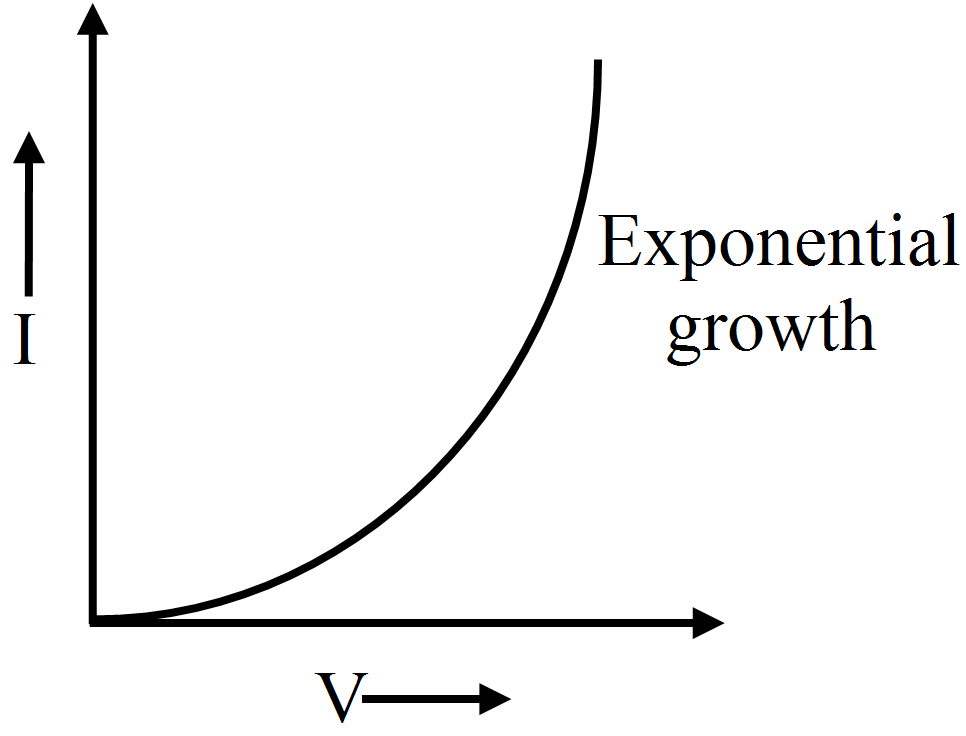
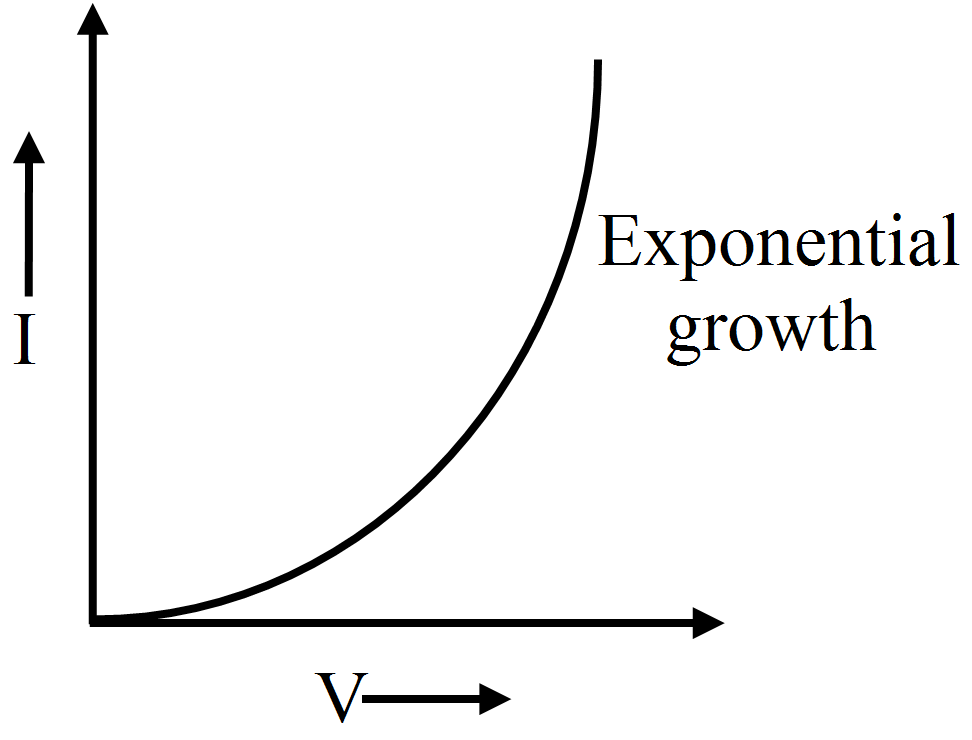
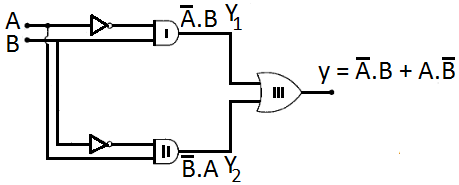
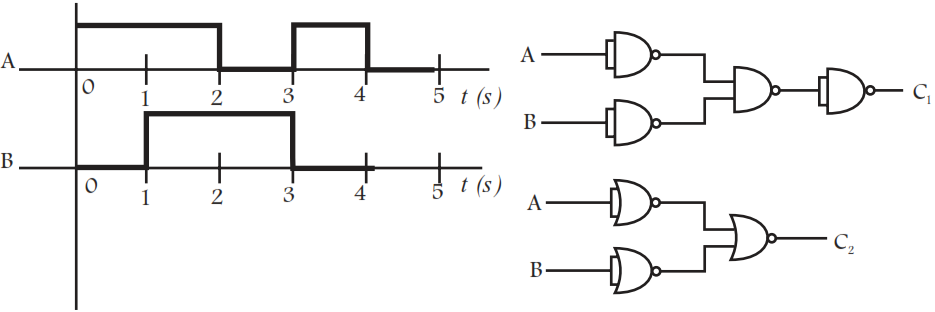
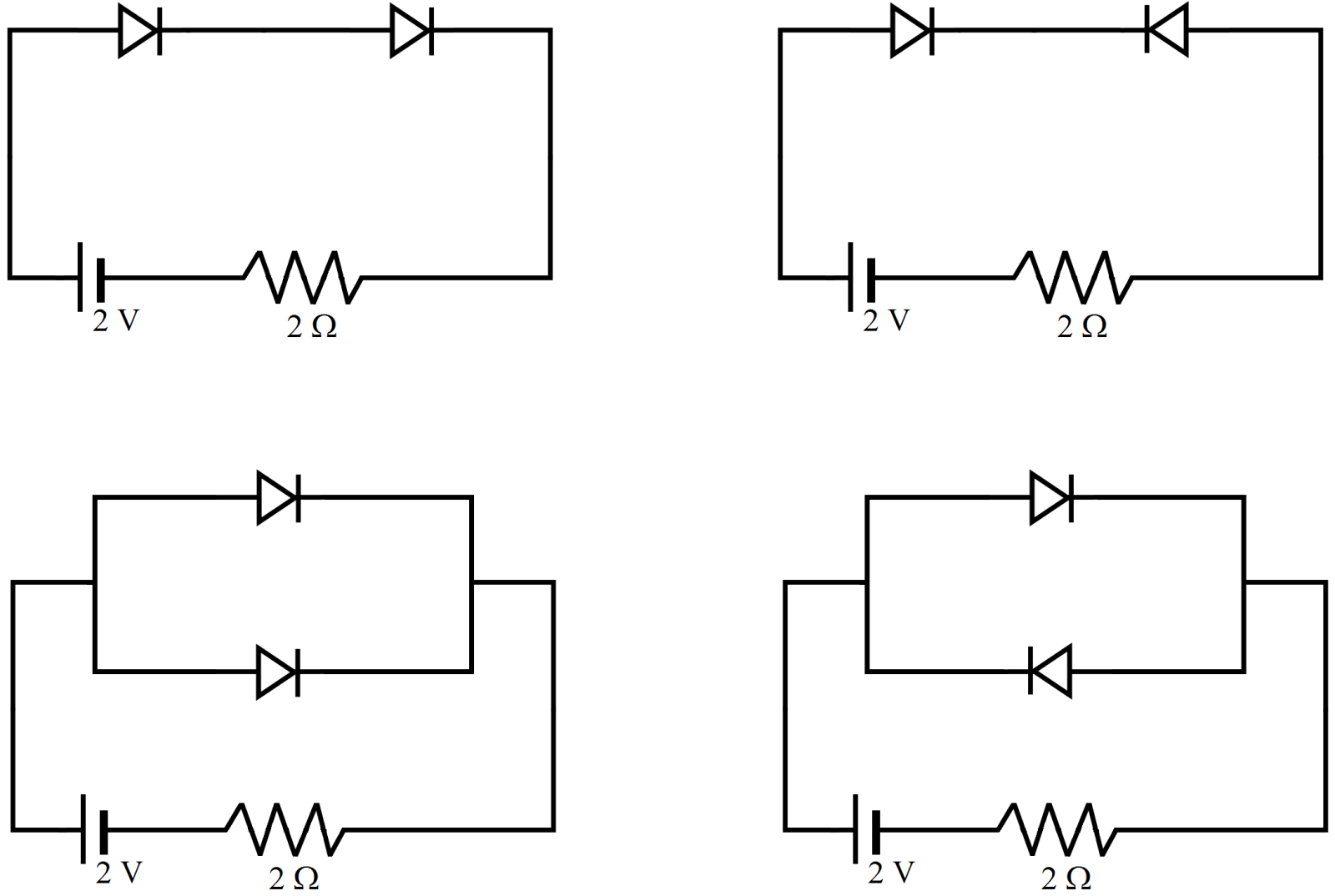
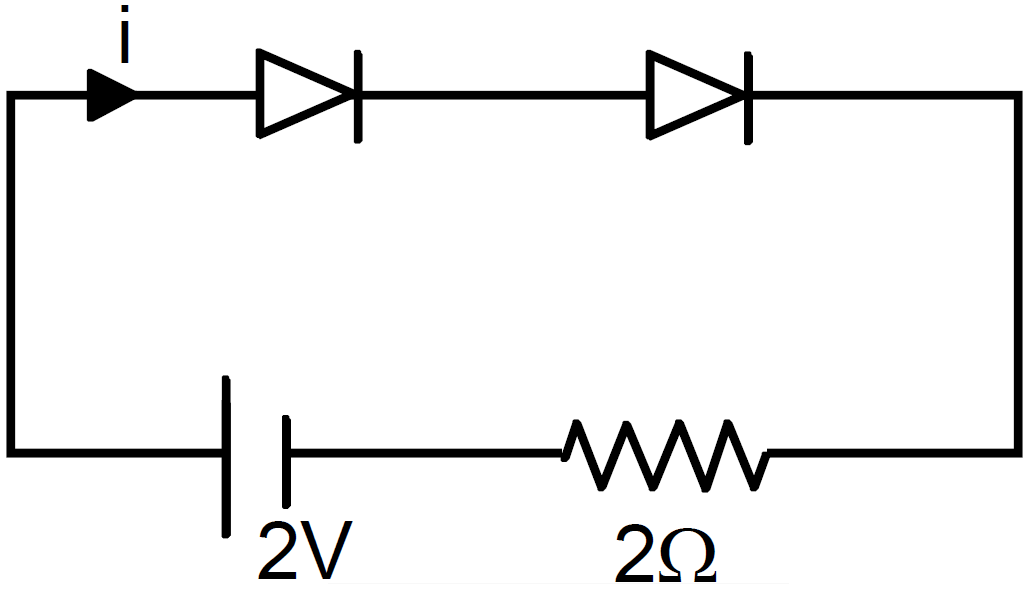
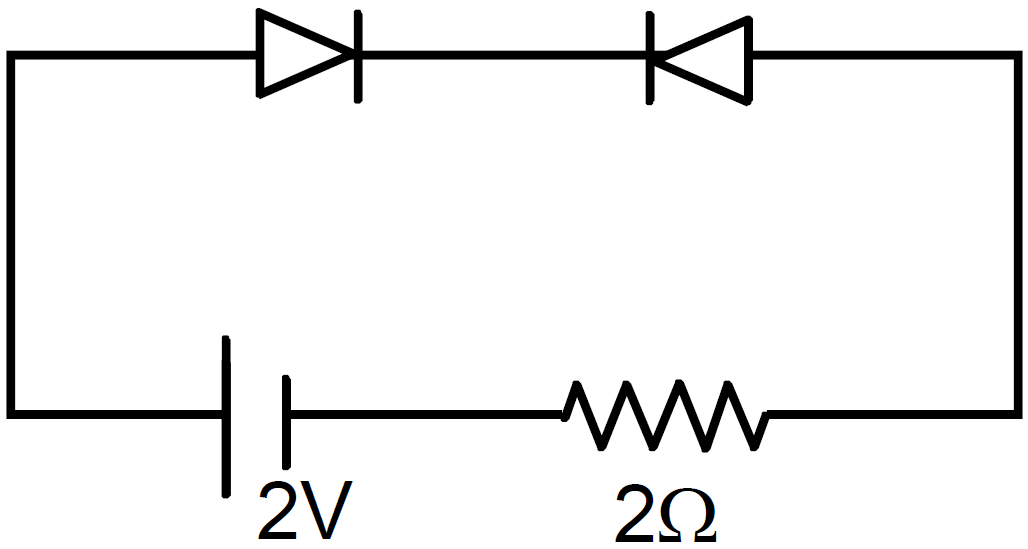
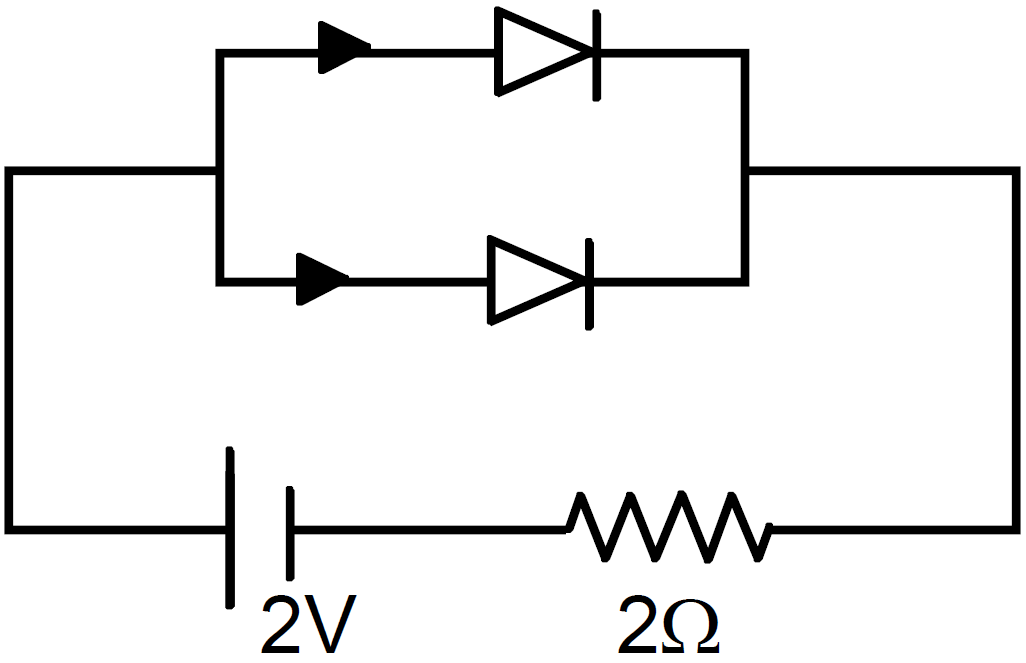
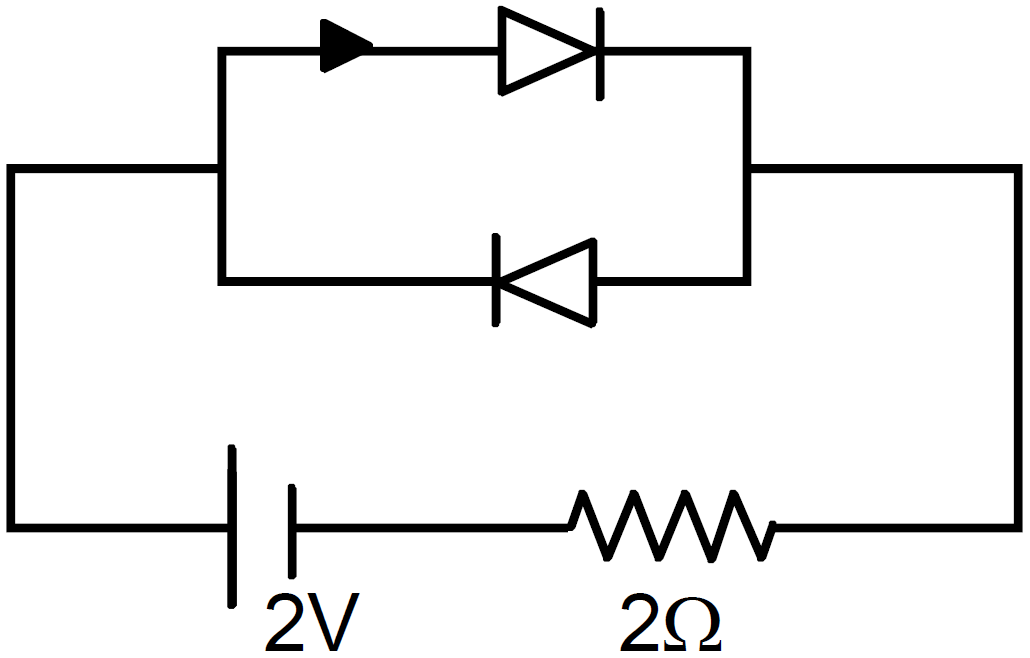
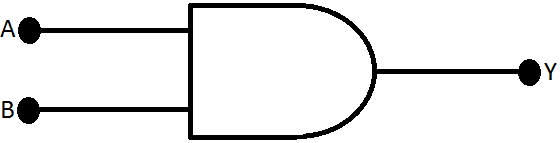
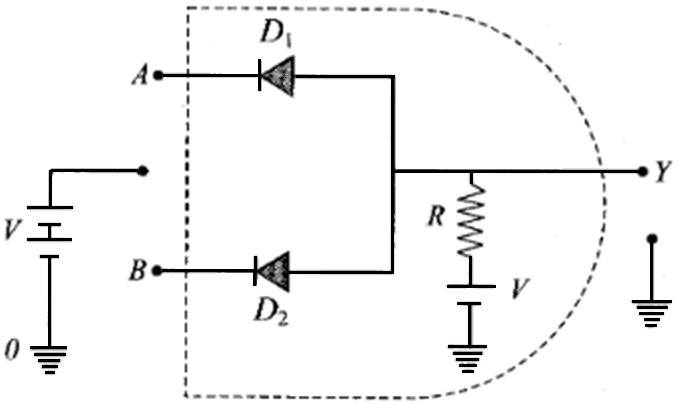
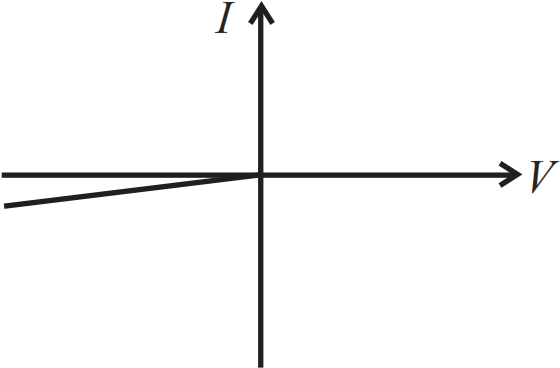
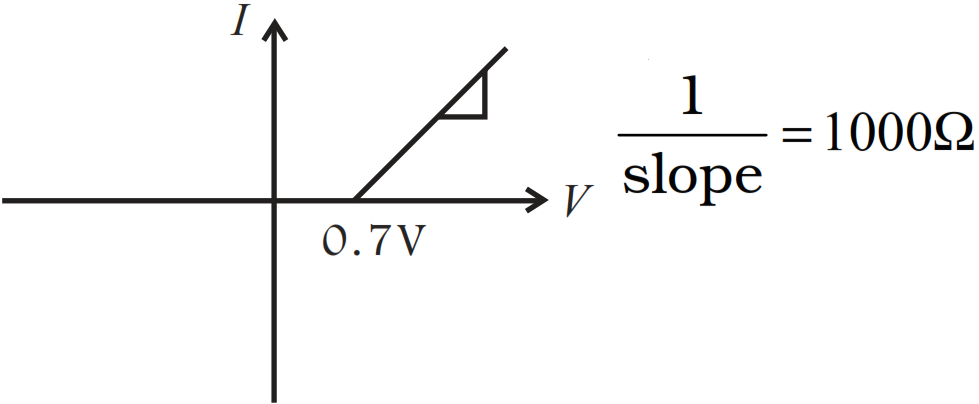
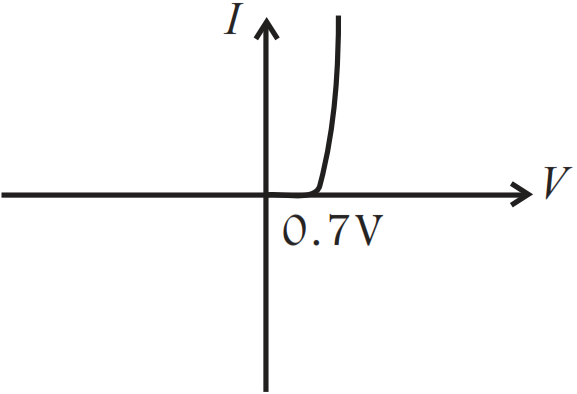
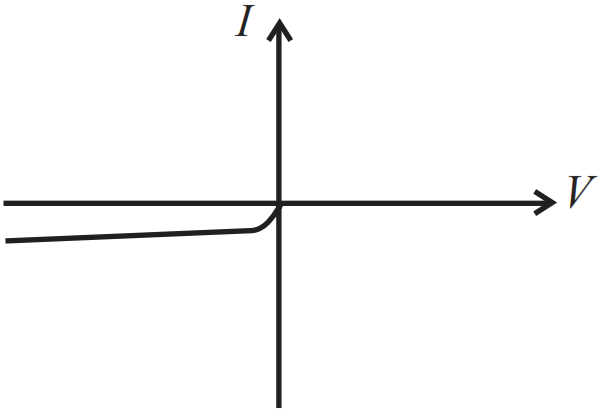
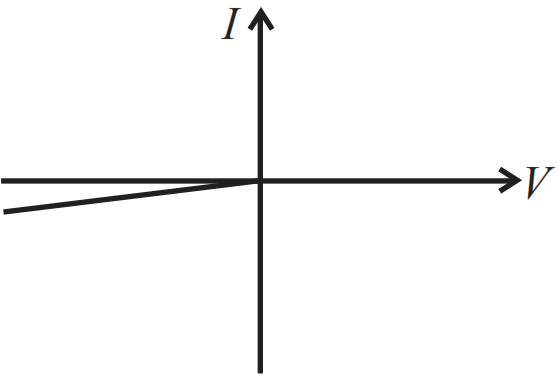
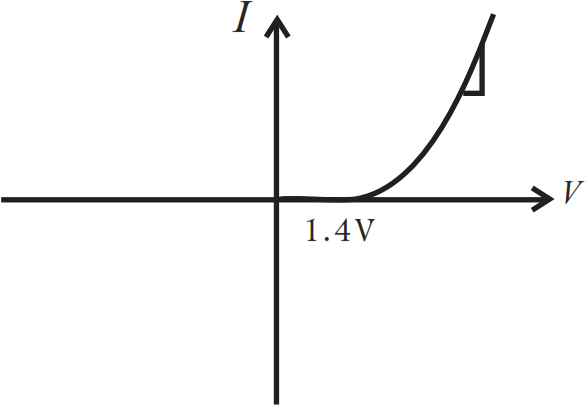
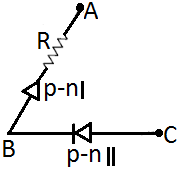
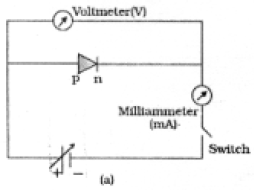
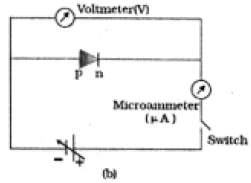
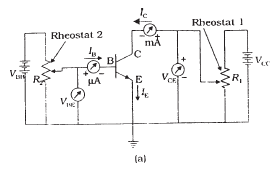
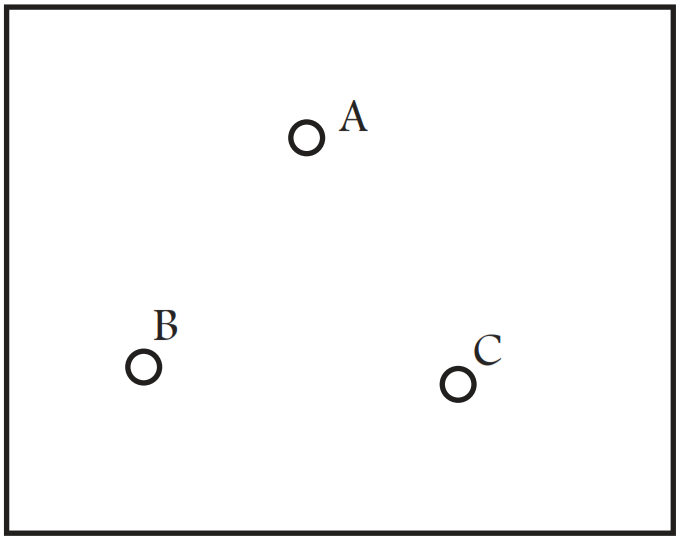 Three components namely, two germanium diodes and one resistor are connected across these three terminals in some arrangement. A student performs an experiment in which any two of these three terminals are connected in the circuit shown in Fig. (b).
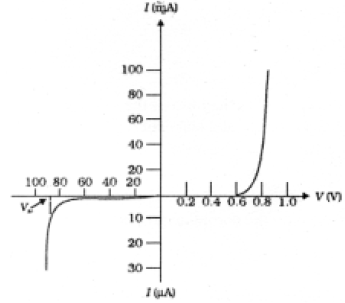
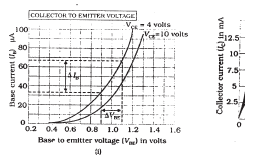
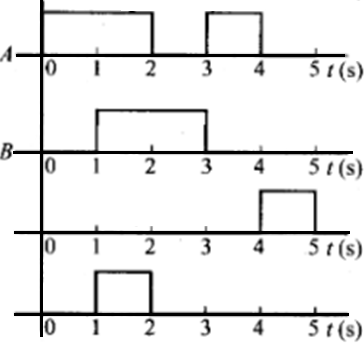
 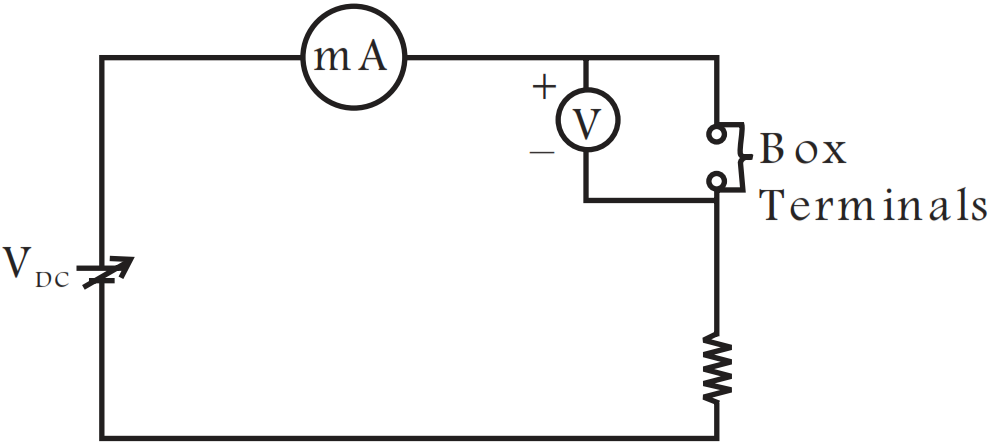 The student obtains graphs of current-voltage characteristics for unknown combination of components between the two terminals connected in the circuit. The graphs are