Question 15 Marks
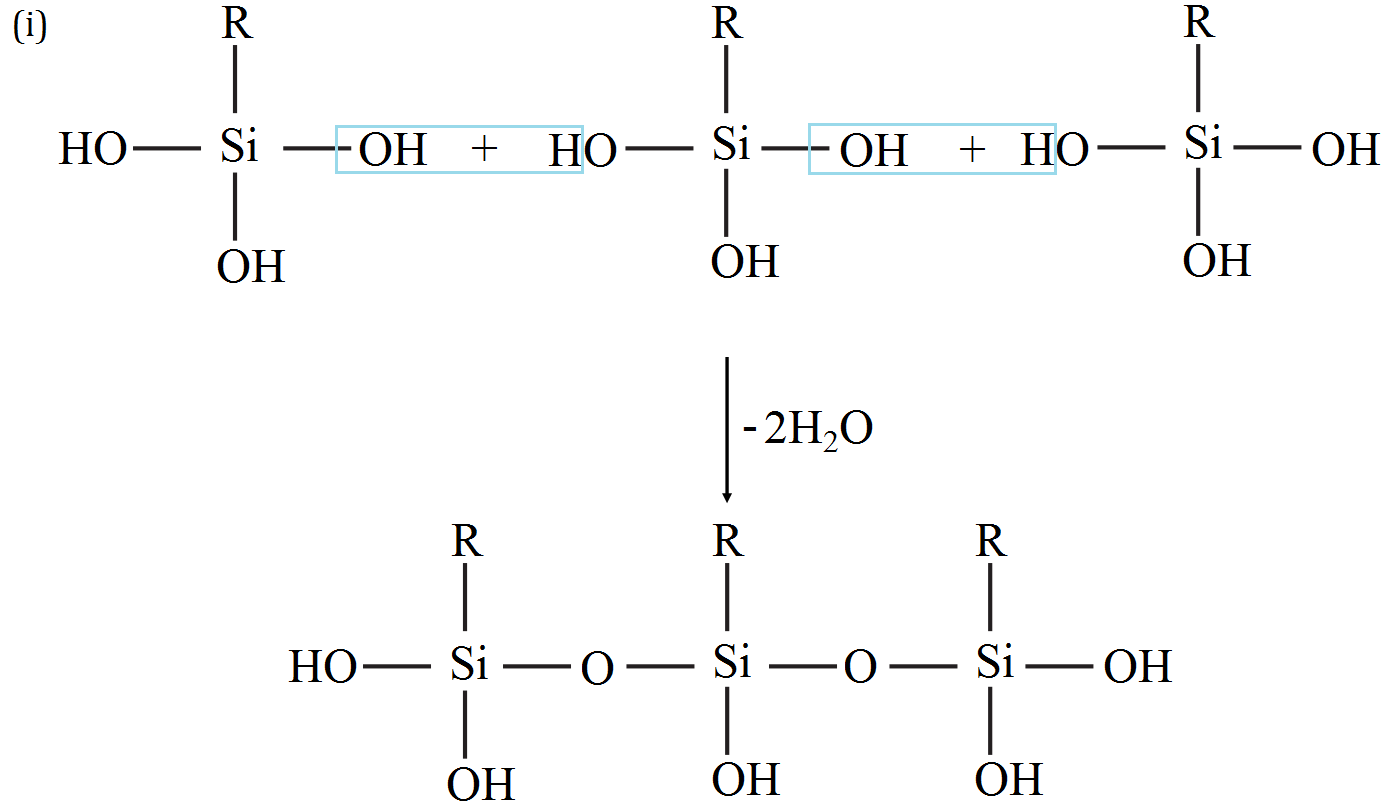
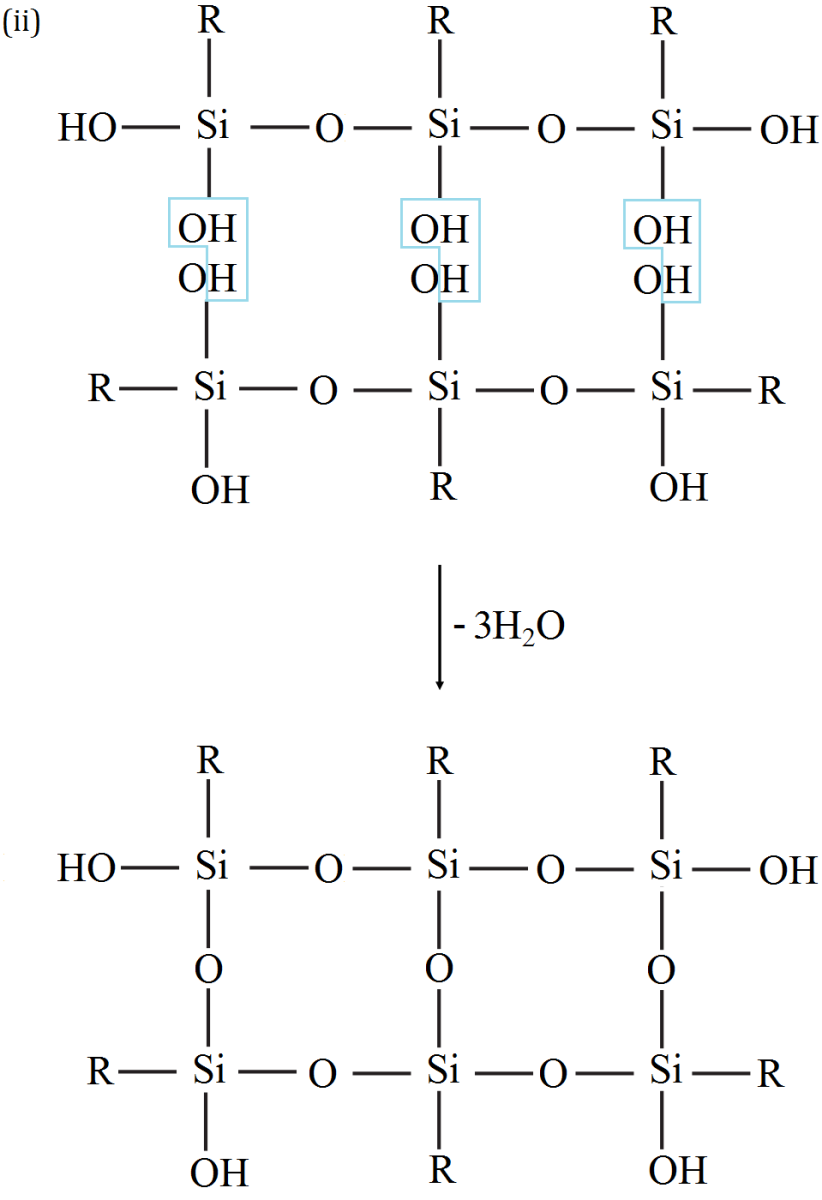
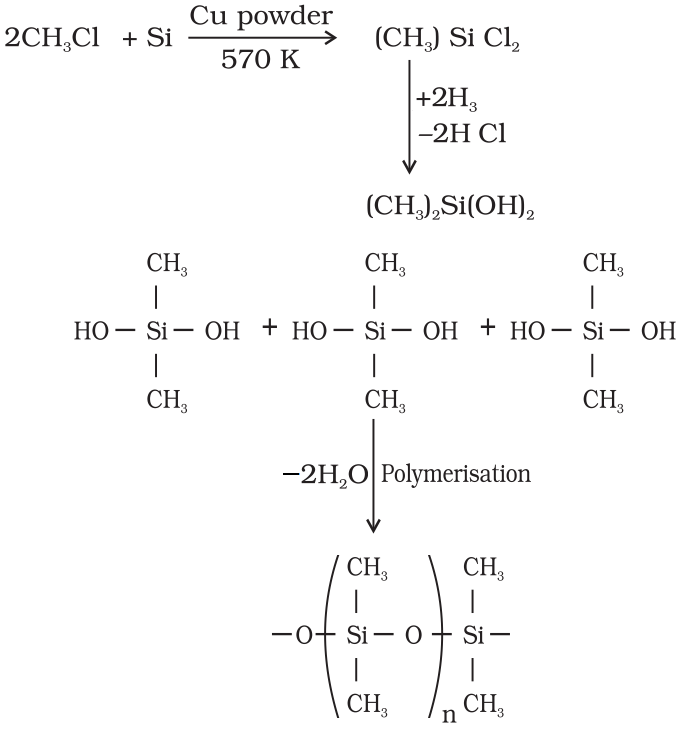
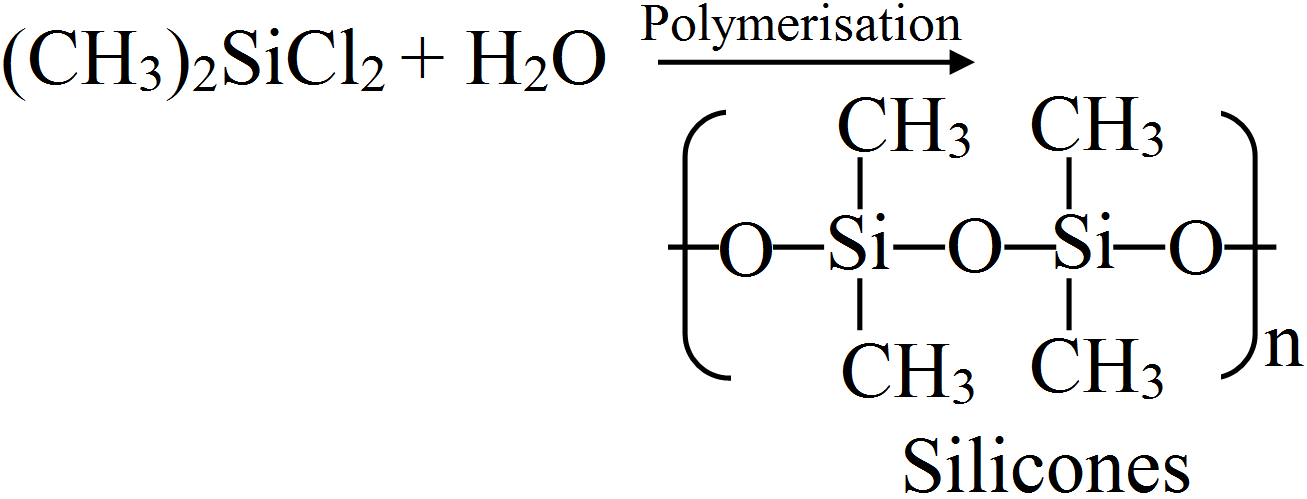
If the starting material for the manufacture of silicones is $RSiCl_3$, write the structure of the product formed.
Answer
View full question & answer→$RSiCl_3 + 3H_2O → RSi(OH)_3 + 3HCl$
44 questions · self-marked practice — reveal the answer and mark yourself.
|
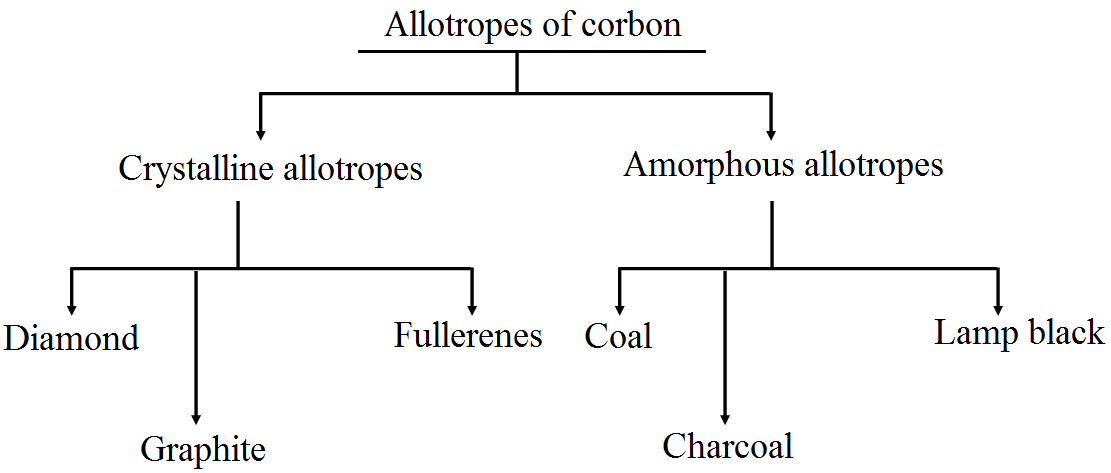
Diamond
|
Graphite
|
|
It has a crystalline lattice.
|
It has a layered structure.
|
|
In diamond, each carbon atom is $s p^3$ hybridised and is bonded to four other carbon atoms through a $\sigma$ bond.
|
In graphite, each carbon atom is $s p^2$ hybridised and is bonded to three other carbon atoms through a $\sigma$ bond. The fourth electron forms a $\pi$ bond.
|
|
It is made up of tetrahedral units.
|
It has a planar geometry.
|
|
The C-C bond length in diamond is 154pm.
|
The C-C bond length in graphite is 141.5pm.
|
|
It has a rigid covalent bond network which is difficult to break.
|
It is quite soft and its layers can be separated easily.
|
|
It acts as an electrical insulator.
|
It is a good conductor of electricity.
|
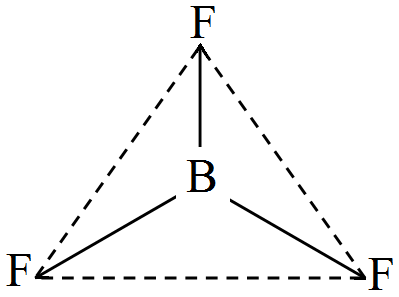
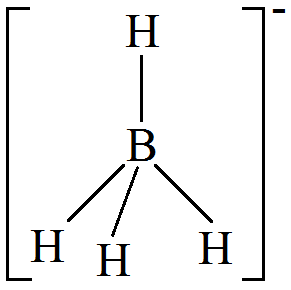
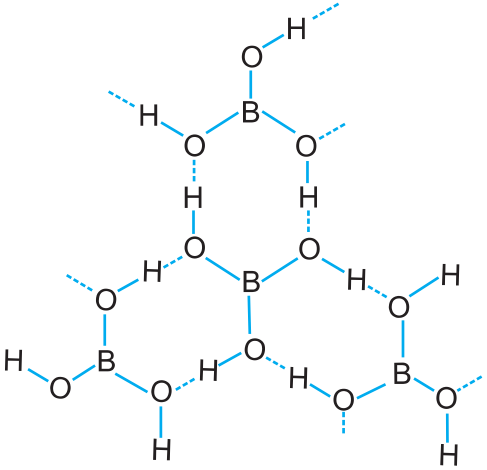
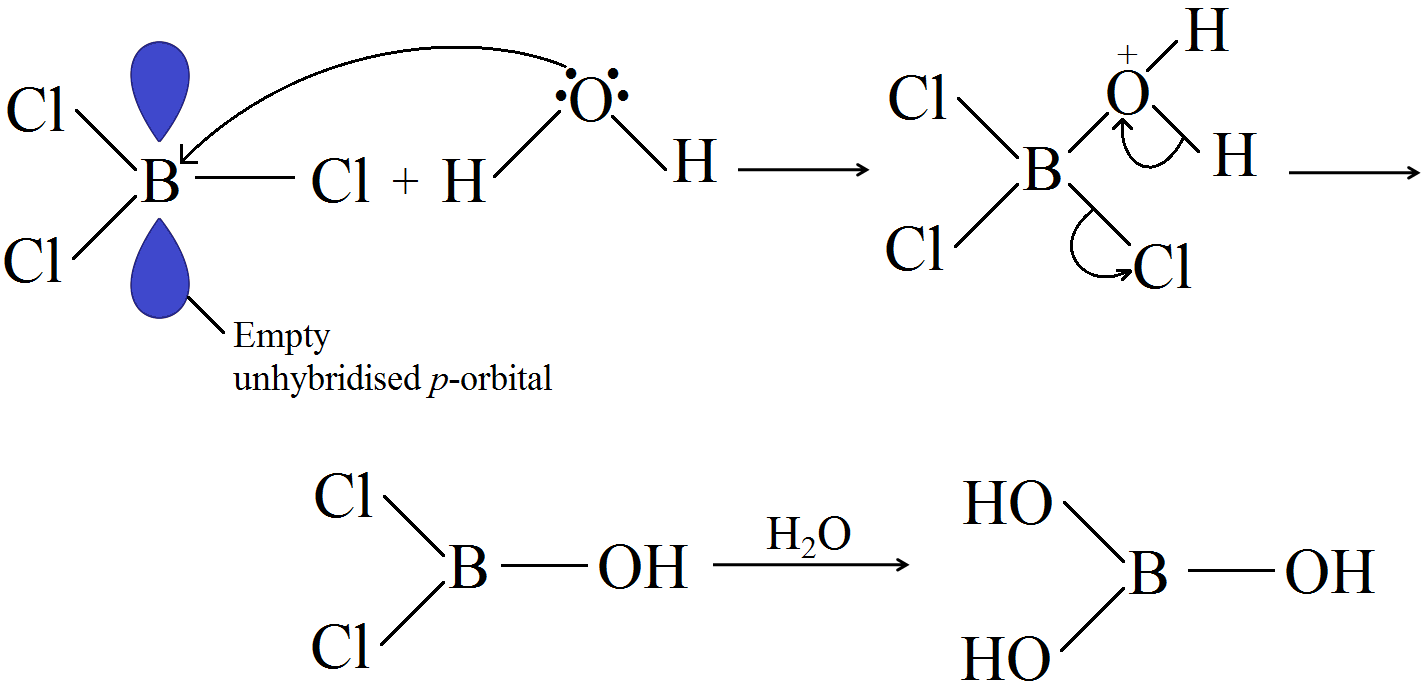
|
Element
|
Oxidation state
|
Element
|
Oxidation state
|
|
B
|
+3
|
C
|
+4
|
|
Al
|
+3
|
Si
|
+4
|
|
Ga
|
+1, +3
|
Ge
|
+2, +4
|
|
In
|
+1, +3
|
Sn
|
+2, +4
|
|
TI
|
+1, +3
|
Pb
|
+2, +4
|
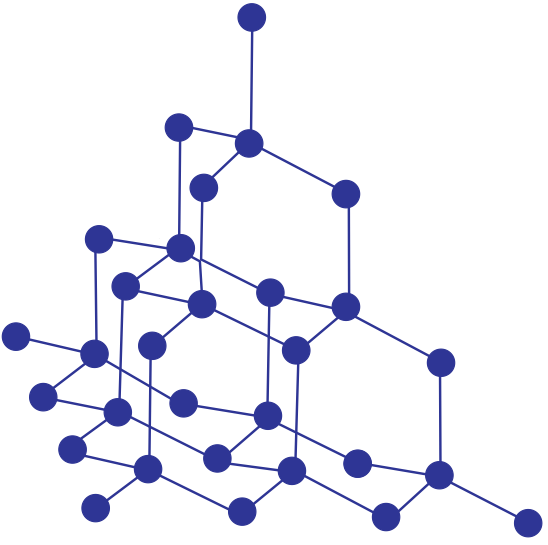
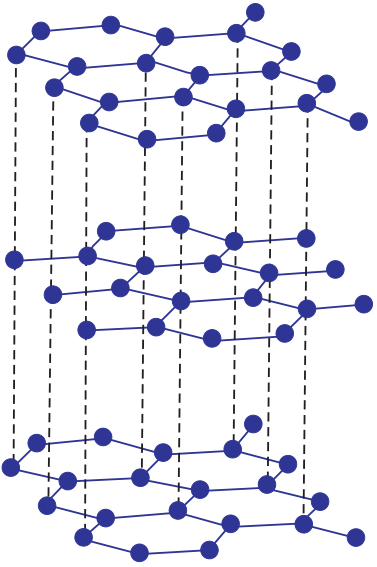
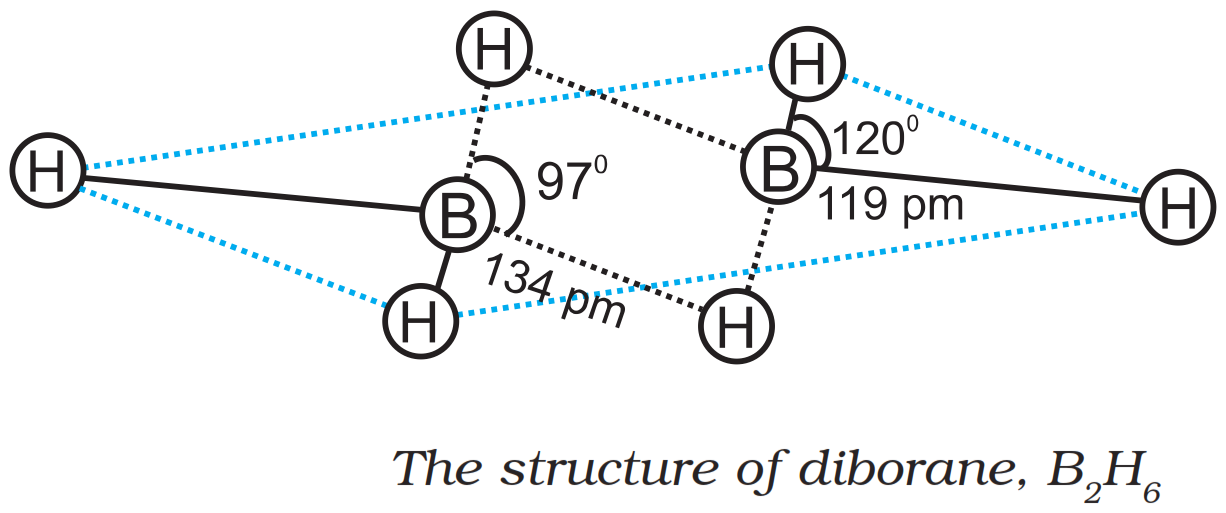
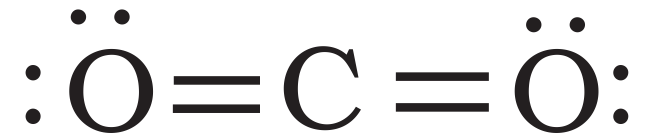 Silicone dioxide is a covalent, three-dimensional network solid in which each silicon atom is covalently bonded in a tetrahedral manner to four oxygen atoms. Each oxygen atom in turn covalently bonded ti another silicon atoms as shown in diagram. Each comer is shared with another tetrahedron. The entire crystal may be considered as giant molecule in which eight membered rings are formed with alternate silicon and oxygen atoms.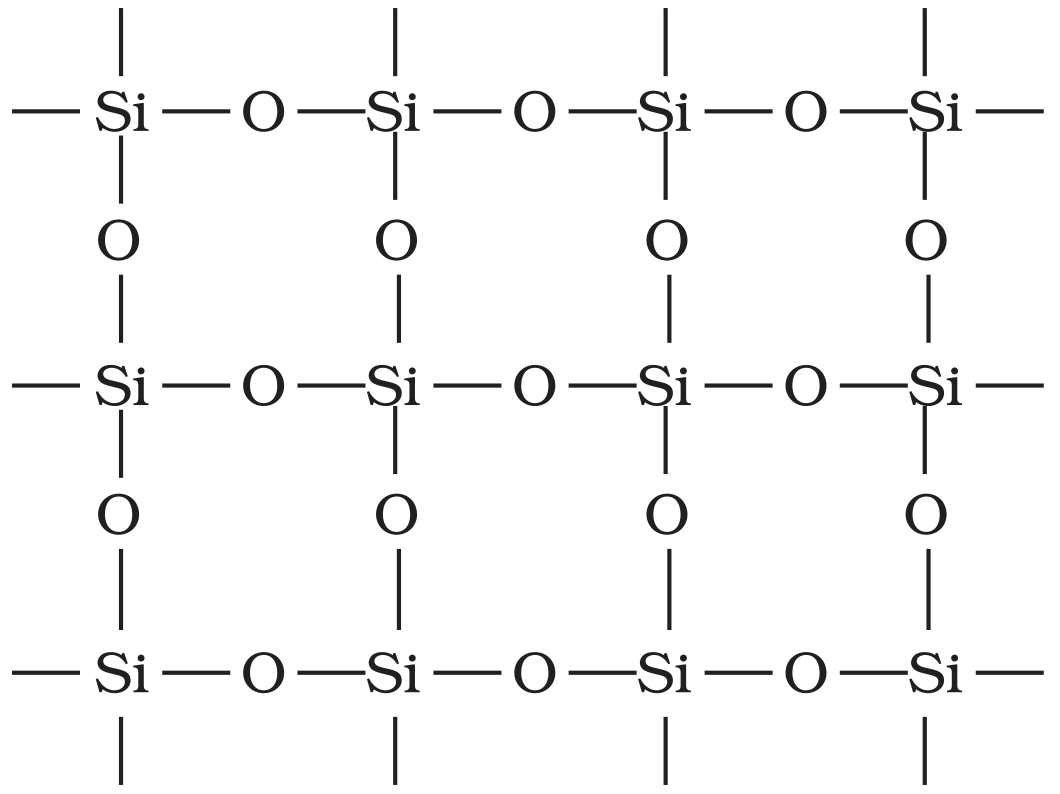
|
S. No.
|
Column I
|
S. No.
|
Column II
|
|
(a)
|
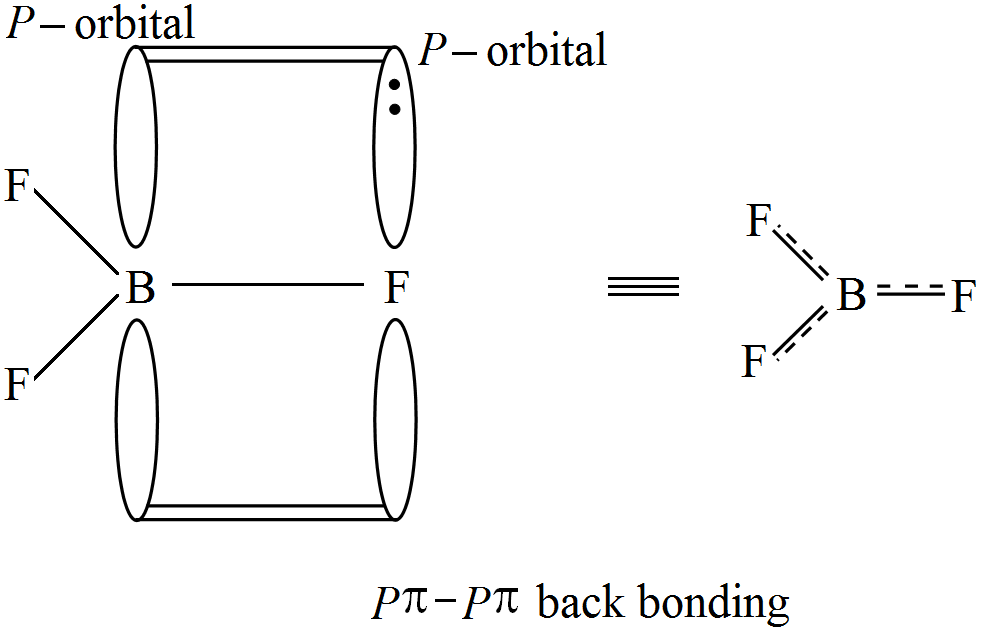
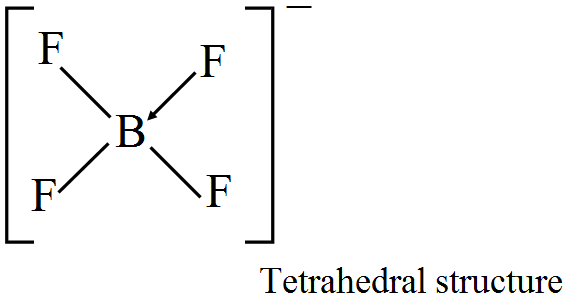
$\text{BF}^-_4$
|
(i)
|
Oxidation state of central atom is +4
|
|
(b)
|
$AlCl_3$
|
(ii)
|
Strong oxidising agent
|
|
(c)
|
$SnO$
|
(iii)
|
Lewis acid
|
|
(d)
|
$PbO_2$
|
(iv)
|
Can be further oxidised
|
|
|
|
(v)
|
Tetrahedral shape
|
|
S. No.
|
Column I
|
S. No.
|
Column II
|
|
(a)
|
$\text{BF}^-_4$
|
(v)
|
Tetrahedral shape
|
|
(b)
|
$AlCl_3$
|
(iii)
|
Strong oxidising agent Lewis acid
|
|
(c)
|
$SnO$
|
(iv)
|
Can be further oxidised
|
|
(d)
|
$PbO_2$
|
(i)
|
Oxidation state of central atom is +4
|
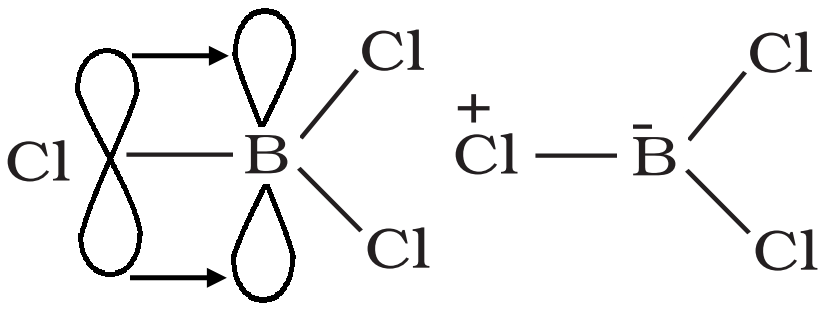
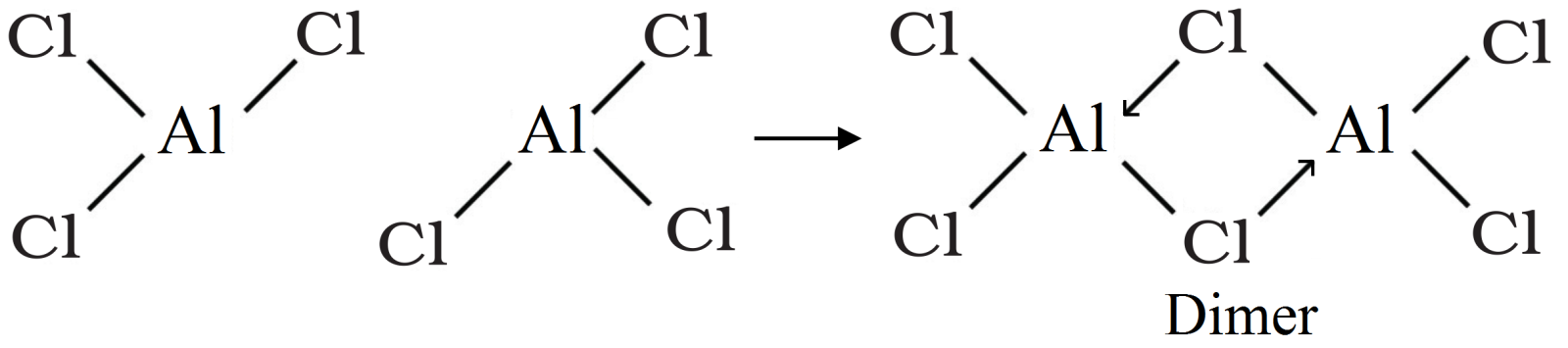

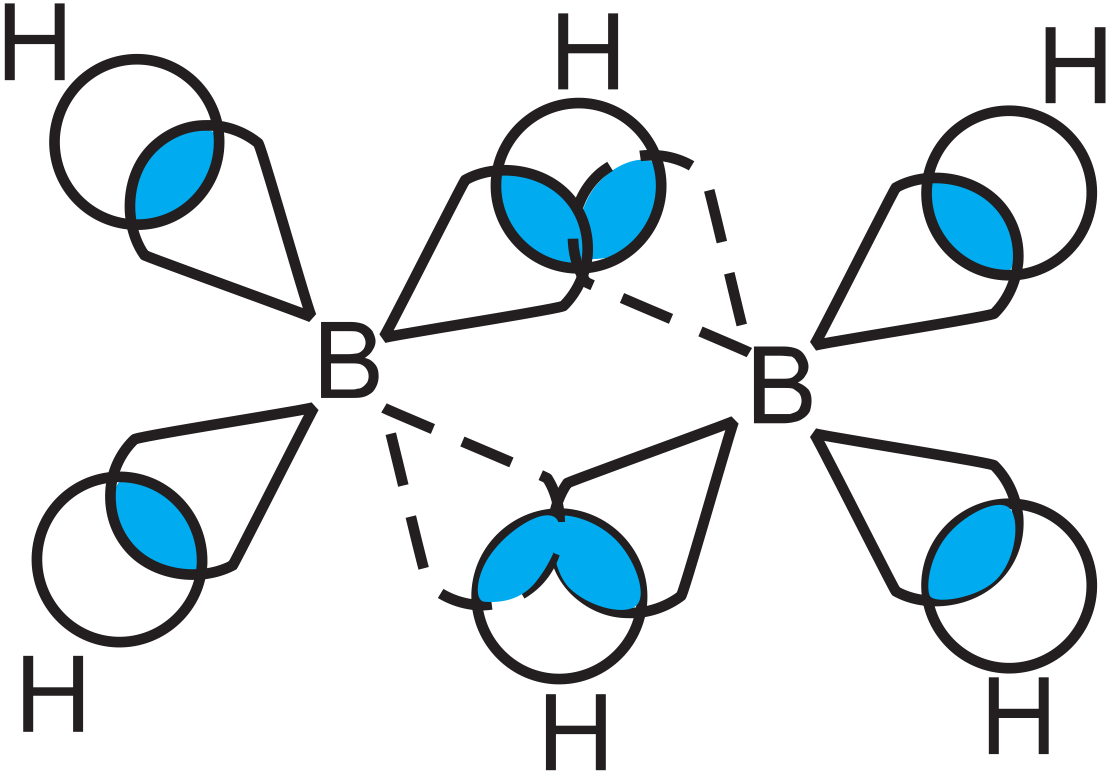
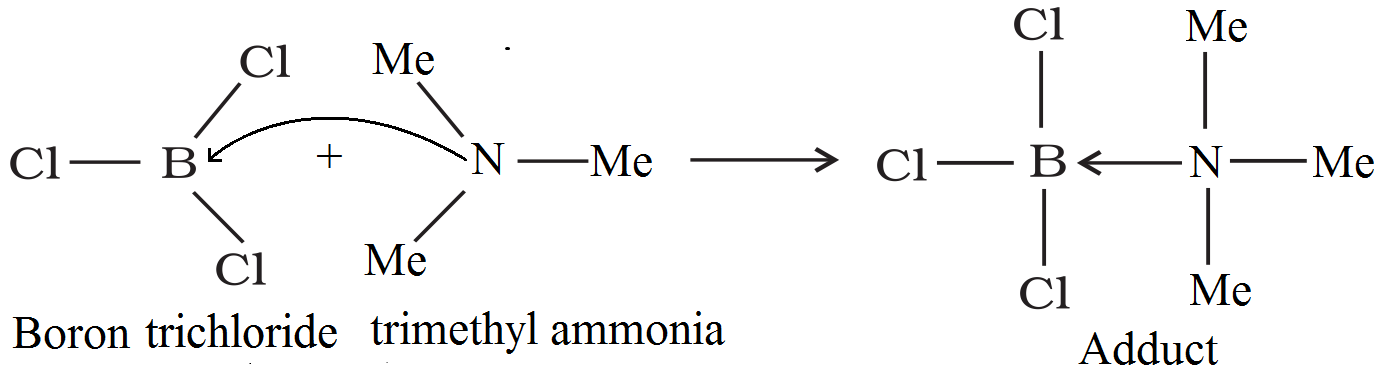
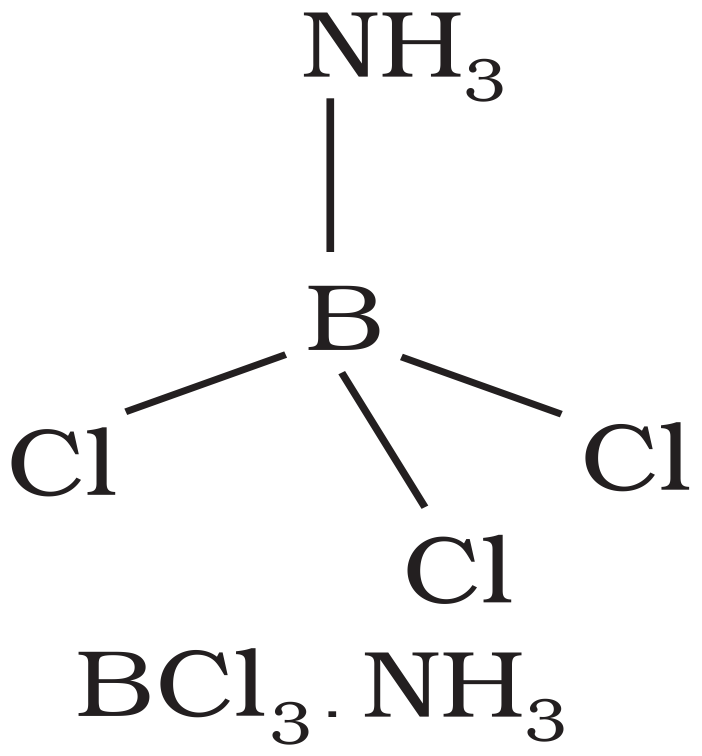
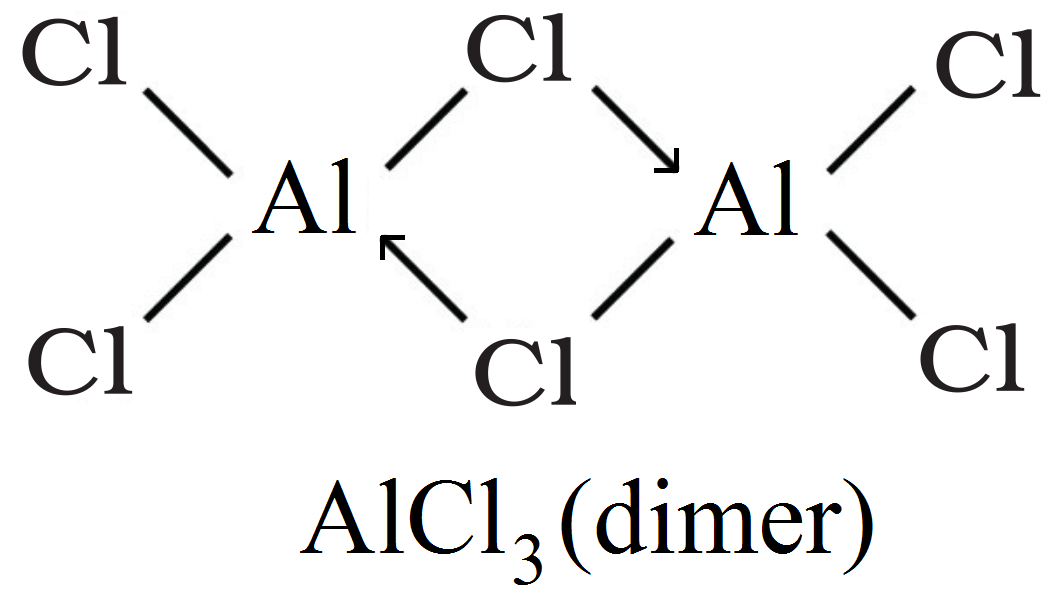
 Structure of $AlCl _3$ :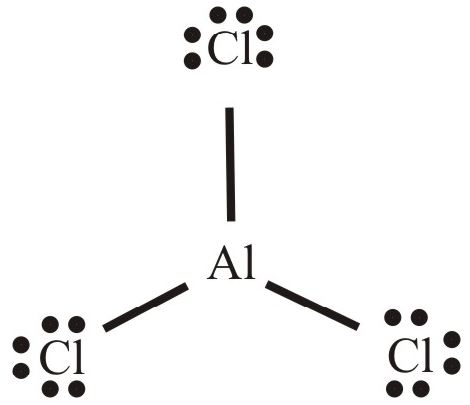
|
S. No.
|
Column I
|
S. No.
|
Column II
|
|
(a)
|
Diborane
|
(i)
|
Used as a flux for soldering metals
|
|
(b)
|
Galluim
|
(ii)
|
Crystalline form of silica
|
|
(c)
|
Borax
|
(iii)
|
Banana bonds
|
|
(d)
|
Aluminosilicate
|
(iv)
|
Low melting, high boiling, useful for measuring high temperatures
|
|
(e)
|
Quartz
|
(v)
|
Used as catalyst in petrochemical industries
|
|
S. No.
|
Column I
|
S. No.
|
Column II
|
|
(a)
|
Diborane
|
(iii)
|
Banana bonds
|
|
(b)
|
Galluim
|
(iv)
|
Low melting, high boiling, useful for measuring high temperatures
|
|
(c)
|
Borax
|
(i)
|
Used as a flux for soldering metals
|
|
(d)
|
Aluminosilicate
|
(ii)
|
Crystalline form of silica
|
|
(e)
|
Quartz
|
(v)
|
Used as catalyst in petrochemical industries
|